
Richard Overy
Author of Why the Allies Won
About the Author
Richard Overy is Professor of History at the University of Exeter, UK. He has published more than 25 books on the history of air power, the Second World War and the European dictatorship. He was the winner of the Wolfon Prize for history in 2004 and in 2014 he won a Cundill Award for his book The show more Bombing War: European 1939-1945. He is a Fellow of the British Academy, and a Member of the European Academy for Science and Arts. show less
Image credit: Richard Overy [credit: Goodreads]
Series
Works by Richard Overy
New York Times Complete World War 2: All the Coverage from the Battlefields and the Home Front (2013) — Editor — 80 copies
World War II: The Definitive Visual History Volume I: From the Munich Crisis to the Battle of Kursk 1938-43 (2020) 6 copies
World War II: The Definitive Visual History Volume II: From the Invasion of Sicily to VJ Day 1943-45 (2020) 6 copies
II Guerra Mundial - N.º 15 - A Contra-ofensiva Aliada Os Aliados avançam em África e na Rússia (2018) 2 copies
II Guerra Mundial - N.º 16 - Da Estepe Russa ao Pacífico Vitórias decisivas dos Aliados (2018) 2 copies
II Guerra Mundial - N.º 11 - A Alemanha Impõe-se O teatro de guerra do Mediterrâneo e do Norte de África (2018) 2 copies
II Guerra Mundial - N.º 19 - O Fim Iminente O Eixo enfraquecido regressa aos seus territórios (2018) 2 copies
II Guerra Mundial - N.º 20 - Vitória Final, Novos Desafios A Segunda Guerra Mundial termina e a Guerra Fria começa (2018) 2 copies
II Guerra Mundial - N.º 18 - A Avalanche Aliada A derrota do Eixo em França, na Polónia e nas Filipinas (2018) 2 copies
II Guerra Mundial - N.º 14 - O Início da Viragem Os Aliados vencem em Midway, El Alamein e Estalinegrado (2018) 2 copies
II Guerra Mundial - N.º 10 - Blitzkrieg: A Guerra Relâmpago A estratégia Alemâ força a retirada dos Aliados (2018) 2 copies
Regen van verwoesting 1 copy
Russias war 1 copy
Why War? 1 copy
Associated Works
The Hitler Book: The Secret Dossier Prepared for Stalin from the Interrogations of Otto Guensche and Heinze Linge, Hitler's Closest Personal Aides (2005) — Foreword, some editions — 445 copies, 4 reviews
If the Allies Had Fallen : Sixty Alternate Scenarios of World War II (2010) — Contributor — 427 copies, 4 reviews
The Ulrich von Hassell diaries, 1938-1944 : the story of the forces against Hitler inside Germany (-0001) — Introduction, some editions — 71 copies, 1 review
Tagged
Common Knowledge
- Legal name
- Overy, Richard James
- Other names
- Overy, Richard J.
Overy, R. J. - Birthdate
- 1947-12-23
- Gender
- male
- Education
- University of Cambridge (Caius College)
- Occupations
- historian
- Organizations
- King's College London
University of Cambridge
University of Exeter
Royal Historical Society
British Academy - Awards and honors
- Samuel Eliot Morison Prize (2001)
- Nationality
- UK
- Associated Place (for map)
- UK
Members
Reviews
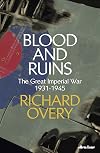
This is an excellent, but somewhat oddly structured book. The subtitle highlights the author’s opinion that WW2 was, or at least started as, a war about empire, that pitted the old existing European empires (Britain, France, Russia and the Netherlands) against nations that wanted to build or expand their empires (Germany, Italy, and Japan). The idea is not entirely original, rooted as it is in the rhetorical discourse of the 1930s and 1940s, but it is an important perspective.
Overy pursues show more the idea in the first three chapters. This is an approximately 200 pages long, condensed history of the war as seen from this "imperial" perspective. Regrettably, as a brief history of the war, this is useful but not very good. Frankly, by page 373 you may feel a bit disappointed.
Fortunately this is followed by seven chapters that are longish stand-alone essays, which highlight various aspects of WW2 that have not been much written about previously. These essays are very good. Several of them make for uncomfortable reading, as Overy explores in detail subjects such as the war crimes committed by soldiers, partisans and resistance fighters; the mental health of soldiers; or sexual violence. Stories that later generations often chose to cover with selective forgetfulness, grim stories that do not inspire much confidence in humanity. But they sadly remain entirely relevant to this day, and these are well written accusations.
There is an alternative edition with a different cover, on which the subtitle states that 1931-1945 was the last imperial war. This seems closer to Overy's thesis. His conclusion argues that the end of the war brought about the end of empire, as the hegemonies that the USA and USSR established during the Cold War were something different, and both assisted in the dismantling of the old colonial empires. This may do a disservice to the people living in these colonies, who were working towards independence well before the war. Their agency in this must be respected, even if the war accelerated the process.
"Blood and Ruins" is not a complete history of the conflict from 1931 to 1945, and I think it doesn't strive to be. It is a book that tries to fill the gaps in our collective memory, and in that it succeeds. It reads like a collection of essays squeezed into single hefty volume, but at least that makes it easier to digest. show less
Overy pursues show more the idea in the first three chapters. This is an approximately 200 pages long, condensed history of the war as seen from this "imperial" perspective. Regrettably, as a brief history of the war, this is useful but not very good. Frankly, by page 373 you may feel a bit disappointed.
Fortunately this is followed by seven chapters that are longish stand-alone essays, which highlight various aspects of WW2 that have not been much written about previously. These essays are very good. Several of them make for uncomfortable reading, as Overy explores in detail subjects such as the war crimes committed by soldiers, partisans and resistance fighters; the mental health of soldiers; or sexual violence. Stories that later generations often chose to cover with selective forgetfulness, grim stories that do not inspire much confidence in humanity. But they sadly remain entirely relevant to this day, and these are well written accusations.
There is an alternative edition with a different cover, on which the subtitle states that 1931-1945 was the last imperial war. This seems closer to Overy's thesis. His conclusion argues that the end of the war brought about the end of empire, as the hegemonies that the USA and USSR established during the Cold War were something different, and both assisted in the dismantling of the old colonial empires. This may do a disservice to the people living in these colonies, who were working towards independence well before the war. Their agency in this must be respected, even if the war accelerated the process.
"Blood and Ruins" is not a complete history of the conflict from 1931 to 1945, and I think it doesn't strive to be. It is a book that tries to fill the gaps in our collective memory, and in that it succeeds. It reads like a collection of essays squeezed into single hefty volume, but at least that makes it easier to digest. show less

One thing to get straight here is that the British title of this work, "The Morbid Age," does a much better job of capturing what the author is all about than "The Twilight Years." This is as Overy examines the processes by which the British general public sought solutions to the general malaise of the time, but found mostly dead ends, until Hitler again instigated general war. Once past thematic chapters on the hope that "Science" would help solve issues of demographic, economic, and show more psychological decline, but mostly seemed to offer cures worse than the disease, the real meat of this book is how Overy tracks the process by which the British general public engaged with the threat of war in the abstract, came to be involved in the matter of the actual wars on the run-up to 1939 (with particular emphasis on the Spanish Civil War), and finally grimly accepted that a war for "civilization" was necessary, even if it meant risking existing civilization with destruction.
Overy further notes that this commitment is much more understandable if you appreciate that during this period British mindset was still very much of feeling like the center of the world system, of having responsibility for this system, and being frustrated that more could not be done to protect it short of risking all. The much maligned Neville Chamberlain is offered as a paradigm of a general British attitude of first trying to stave off disaster and then preparing for the worst.
Apart from this the author devotes a great deal of time to the function of voluntary societies and pressure groups, to the flow of correspondence between people in a position to shape popular opinion, and to examining how the publishing industry catered to the demand for popular knowledge; the sinews and blood of civil society if you will. This is all apart of Overy's opinion that the popular feeling of the time was not as congruent with the machinery of British organized politics as has been depicted, particularly at the Communist and Fascist extremes. Indicative of this is the example of how when Oswald Mosley tried to march with 7000 of his fellows in 1936, perhaps hundreds of thousands came forth to confront the BUF. It was this foundation of political concern just below the threshold of organized politics that first backstopped the broad pacifist movement until there was no hope of saving the peace, and then formed the basis of the popular will to fight on come what may; not bad for a society that thought itself decadent. show less
Overy further notes that this commitment is much more understandable if you appreciate that during this period British mindset was still very much of feeling like the center of the world system, of having responsibility for this system, and being frustrated that more could not be done to protect it short of risking all. The much maligned Neville Chamberlain is offered as a paradigm of a general British attitude of first trying to stave off disaster and then preparing for the worst.
Apart from this the author devotes a great deal of time to the function of voluntary societies and pressure groups, to the flow of correspondence between people in a position to shape popular opinion, and to examining how the publishing industry catered to the demand for popular knowledge; the sinews and blood of civil society if you will. This is all apart of Overy's opinion that the popular feeling of the time was not as congruent with the machinery of British organized politics as has been depicted, particularly at the Communist and Fascist extremes. Indicative of this is the example of how when Oswald Mosley tried to march with 7000 of his fellows in 1936, perhaps hundreds of thousands came forth to confront the BUF. It was this foundation of political concern just below the threshold of organized politics that first backstopped the broad pacifist movement until there was no hope of saving the peace, and then formed the basis of the popular will to fight on come what may; not bad for a society that thought itself decadent. show less
I cannot praise this book enough. Eighty years since the battles of Guadalcanal, El Alamein and Stalingrad, Overy's 878-page masterpiece manages to cover much more than the canonical Second World War in one perfectly arranged volume. It is the new starting point for its study.
Overy solves the problem of the competition between narrative and thematic history by doing both in an orderly way. Four chapters take the story from 1931 to 1945, seven chapters look at the great themes of the conflict show more and a final chapter looks at the legacy of the war in decolonisation.
He takes one broad interpretative position (that the conflict must be seen as an essentially imperial struggle between older and aspirant empires finally decided by new ideological structures that were against empire) and asks one question that he never actually answers perhaps because he cannot.
That most interesting question is why vast populations within the contesting powers suddenly switched into behaviours that involved the acceptance of conscripted enslavement and complicity in mass murder under the command of relatively small elites with the levers on power.
It is a question of fundamental importance to our objective assessment of the capability and worth of our own species and is probably beyond the ability of any working historian to answer without moving into speculative territory that would work against his or her credibility.
What Overy does, though, is provide the facts as efficiently and as completely as may be possible in a single volume so that we can make our own anthropological and perhaps moral judgements of what happened not only in the fourteen years of imperial war but afterwards.
I might criticise him a little for one lapse in one section in failing to question the standard moral narrative provided to us in the West by our victorious history but I think not lapsing would have taken him into such dangerous territory that his book would have been devalued immediately.
I cannot blame him for not answering the question he poses because the answer may be very frightening to all of us, to our own self-image of being individuals and not a herd, of being good rather than evil, of being superior to animals rather than fundamentally animal ourselves.
The precise mechanisms of power are not merely institutional, they are fundamentally psychological and anthropological. They lie in issues as basic as the pecking order that you find in nature and the way co-operative behaviours create dependency on others.
The consequential horrors of nation-empires at war are provided as facts on the ground and not as evidence in some moralistic polemic. One picture he has of what would be primary school children being guided by trusted authority into gas vans is the tip of a terrifying abyss of murder.
The Holocaust is the known worst or is it? Do we sometimes conveniently present the Holocaust as a 'unique' horror so that we can load all the evil onto one apparently unnatural event run by demons from hell in order not to face the sheer breadth and depth of violence in war?
This is the problem. The Holocaust was actually a natural event, the latest in a long line of genocides in history and prehistory but one merely with access to inventive technologies. The perpetrators were not demons but humans such as you might see walking down your street.
Let us step back to the primary focus of the book. Three aggressive 'hungry' powers challenge two fat self-satisfied empires in an expectation of empire as their right. But why do they consider it their right? Because they think themselves 'civilised' and civilisation means empire.
What does empire mean? It means the control of vast areas of the world as natural territory where 'lesser' human beings exist to serve the civilised and where any brutality is acceptable to control those peoples and clear space for the civilised and their needs.
Does that sound familiar? It should. Because the Axis imperial mission is precisely what the British, French and the Dutch, Spanish, Portuguese and Belgians had done in the not-so-recent past and what American Manifest Destiny did to indigenous peoples in their turn.
In other words the mentality behind brutality was created and shaped by what we think as the 'good guys' in the Second World War who could moderate their position only because their command and control (and brutality) had worked - it had created a resource base.
The Japanese looked at China and thought that it was their right to own it before the Westerners could seize it. The Germans looked East, seeing Slavs as if they were African natives with the problem of the Jews a gross racial inconvenience. Italy wanted a slice of an Africa already carved up.
It is undoubtedly true that Axis racism and brutality was of another order to that of the older empires (or at least the Axis brought their brutality closer to home and 'civilisation') but the mental map and attitudes would not be alien to British officials in India or French in Indo-China.
The other victors too were lesser demons rather than angels. The hypocrisy of a deeply racist US in trumpeting the rights of man is well known as is that of the Soviet Union with its Gulag and its strategy of slaughtering national elites as it did in Katyn Wood.
Of course, when war broke out, we see the conduct of Japanese troops (the rape of Nanking and the slaughter in Manila), of German troops (with the Wehrmacht willing war criminals ready to slaughter families) and of Italian troops murderous in their inept and blundering way.
But, before too long, Churchill was complicit in the deliberate terror bombing tactics of Harris over Germany and Roosevelt in the equally vicious and deliberately terror-directed fire-bombing of Tokyo while Soviet troops raped their way across Prussia with complete tolerance back in Moscow.
One officer who protested rape ended up in the Gulag for 'bourgeois humanism'. American intelligence officers had a tough time trying to get front line troops in the Pacific to take prisoners for questioning.
This gets us back to the problem of our species. This is that we are not truly free individuals (or rather only some of us are). However, we are not a potential hive either as might be suggested in the nightmare post war fashionable liberal critiques of totalitarianism.
What we are is something closer to a complex herd species, perhaps with a lemming quality. At a certain point, we all willingly coalesce into a social narrative not of our making and quite possibly personally harmful to us and our families and have done so certainly since the Greek city-state.
As the international socialists crumbled within days of imperial-national war being declared in 1914 so did the churches in 1939 and 1941, despite all the cant of believing in the gospel of peace of Jesus Christ. Only the Jehovah's Witnesses showed courage and many died for that reason.
Pacifists too represented very considerable movements of people in the 'free world' in the late 1930s but they too crumbled under social pressure quickly. Here we get to the heart of the matter - reality is socially constructed and war allows elites to construct that reality.
The mechanism by which our herd species, allowed freedom in peace in the West at least, enslaves itself to imperial elites is what is not and cannot be covered in this book but the book is absolutely invaluable to the person who wants to start that process of understanding.
It is an understanding that is vital because you can see the same mechanisms re-emerging even as I write this in the struggle for mastery between the latest iteration of imperial conflict, a process that goes back at least to the facing off of the Egyptians and Hittites at Megiddo (Armageddon).
This time the now-cyclical nonsense is between the 'West' (actually the political class of the Western alliance) and the 'SCO' (the political elites in Moscow and Beijing). Once again, reality is being falsely constructed by both sides to get their herds moving in the right direction.
For this reason, Overy's book is not just a history book, it is a book that gives us the raw data in a new form, without bias or loss of moral compass, that we need to understand our own situation - impotent as individuals before the mass and the State as manipulator of the mass.
The social construction of reality under the command of elites is not a false reality or 'fake news', it is reality and that reality can quickly get out of control and unleash animal forces that are quite capable of mass rape, the murder of ordinary people and widespread destruction.
And if you do not believe me - take a look at the atrocities on all sides in the current Tigrayan War in Ethiopia or the deaths, barely reported in the mainstream media, that took place in the Congolese Wars or the evidence of our own and French behaviour during decolonisation.
The final chapter of Overy's book is the most cursory but in some ways the most revealing because it shows how the savagery of 1931 to 1945 did not end there but continued out of sight of the 'civilised', perpetrated by precisely those victors who had claimed the moral high ground.
Nuremburg refused to deal with mass terror bombing or US unrestricted submarine warfare in the Pacific. Germany was never obliged to deal with the murderers of women and children in the East. Soviet crimes are self-evident. Dutch behaviour in Indonesia was unconscionable. The list goes on.
Although the story of the Second World War is one we all think we know and there is much that is familiar, there is also much here that will be new to most of us and possibly awkward, supported by references that indicate a man who is in total command of his sources.
Churchill may be regarded as a great war leader from the point of view of the homelander but he was a ruthless imperialist too. Stalin was a brutal leader but his troops were exhausted when they reached the Vistula and it would have been unreasonable to test them further to relieve Warsaw.
The German military was highly effective in its early expansion but lost its edge not simply because of greater material resources on the opposing side but because the Allies learned by doing in the face of challenge in both theatres.
This brings out another, perhaps more positive side of the socially constructed herd, its adaptability under pressure, its ability to learn rapidly and exploit its advantages and an understanding of the behaviours of the other side.
No one has a workable system to win in the casino in the long run and no power can beat the house in the struggle between empires. The house is a matter of resources and control over populations, economics and that ability to construct narratives that enable power to be exercised.
The Axis powers were doomed from the point that the United States decided to fight back and hard and the Nazis failed to push Stalin out of the industrial zones to the East and create the conditions for regime change amongst a discontented population. It was only a matter of time.
But it was also only a matter of time before the triumph of the two new ideological powers unravelled the older empires as well and came into direct conflict. The blindness to this aspect of strategy is perhaps what is most unnerving about Axis and old imperial decision-making.
Perhaps, despite the racism in the East (which had some reasonable origin in foul Japanese behaviour), the terror bombing of Japan and the hypocrisies, the nation that comes out of this best is the US which, for all its flaws, showed an anti-imperialist commitment to be commended.
It can also be honestly said that it was least inclined to oppress its own people to undertake war and least inclined to atrocity. Its later history may have tainted its status as moral arbiter (as did the cowardice of elites towards popular racism) but it was easily the best of a bad bunch.
Given just how evil war is, the act of perpetrating war for whatever reason should be a mark against a nation. Both the US (attacked at Pearl Harbour and with war on it declared by Germany) and the Soviet Union (attacked by Germany, noting its earlier occupations of others) come out best here.
If the Axis empires are the prime aggressors, it has to be said that the British and French Empires escalated things by initiating declarations of war against Germany in 1939. We should fear today that alliances designed for defence may end up with our being dragged into things we may regret.
Complex alliances to maintain the balance of power, neglect of homeland defence and failure to distinguish between wrongful imperial acquisition and legitimate unification of peoples are permitted because elites know that, ultimately, they can guide the herd.
Our entire international system is based on some fundamental conceptual flaws - above all, that borders must be fixed eternally and externally rather than through democratic non-violent self-determination - and those flaws are going to see many small wars and some big ones to come.
And the herd will follow as it always has done and always will, elites will countenance horrible crimes claiming existential necessity and ordinary people will once again become thieves, rapists and killers when they are unleashed on the world. And so it goes ... show less
Overy solves the problem of the competition between narrative and thematic history by doing both in an orderly way. Four chapters take the story from 1931 to 1945, seven chapters look at the great themes of the conflict show more and a final chapter looks at the legacy of the war in decolonisation.
He takes one broad interpretative position (that the conflict must be seen as an essentially imperial struggle between older and aspirant empires finally decided by new ideological structures that were against empire) and asks one question that he never actually answers perhaps because he cannot.
That most interesting question is why vast populations within the contesting powers suddenly switched into behaviours that involved the acceptance of conscripted enslavement and complicity in mass murder under the command of relatively small elites with the levers on power.
It is a question of fundamental importance to our objective assessment of the capability and worth of our own species and is probably beyond the ability of any working historian to answer without moving into speculative territory that would work against his or her credibility.
What Overy does, though, is provide the facts as efficiently and as completely as may be possible in a single volume so that we can make our own anthropological and perhaps moral judgements of what happened not only in the fourteen years of imperial war but afterwards.
I might criticise him a little for one lapse in one section in failing to question the standard moral narrative provided to us in the West by our victorious history but I think not lapsing would have taken him into such dangerous territory that his book would have been devalued immediately.
I cannot blame him for not answering the question he poses because the answer may be very frightening to all of us, to our own self-image of being individuals and not a herd, of being good rather than evil, of being superior to animals rather than fundamentally animal ourselves.
The precise mechanisms of power are not merely institutional, they are fundamentally psychological and anthropological. They lie in issues as basic as the pecking order that you find in nature and the way co-operative behaviours create dependency on others.
The consequential horrors of nation-empires at war are provided as facts on the ground and not as evidence in some moralistic polemic. One picture he has of what would be primary school children being guided by trusted authority into gas vans is the tip of a terrifying abyss of murder.
The Holocaust is the known worst or is it? Do we sometimes conveniently present the Holocaust as a 'unique' horror so that we can load all the evil onto one apparently unnatural event run by demons from hell in order not to face the sheer breadth and depth of violence in war?
This is the problem. The Holocaust was actually a natural event, the latest in a long line of genocides in history and prehistory but one merely with access to inventive technologies. The perpetrators were not demons but humans such as you might see walking down your street.
Let us step back to the primary focus of the book. Three aggressive 'hungry' powers challenge two fat self-satisfied empires in an expectation of empire as their right. But why do they consider it their right? Because they think themselves 'civilised' and civilisation means empire.
What does empire mean? It means the control of vast areas of the world as natural territory where 'lesser' human beings exist to serve the civilised and where any brutality is acceptable to control those peoples and clear space for the civilised and their needs.
Does that sound familiar? It should. Because the Axis imperial mission is precisely what the British, French and the Dutch, Spanish, Portuguese and Belgians had done in the not-so-recent past and what American Manifest Destiny did to indigenous peoples in their turn.
In other words the mentality behind brutality was created and shaped by what we think as the 'good guys' in the Second World War who could moderate their position only because their command and control (and brutality) had worked - it had created a resource base.
The Japanese looked at China and thought that it was their right to own it before the Westerners could seize it. The Germans looked East, seeing Slavs as if they were African natives with the problem of the Jews a gross racial inconvenience. Italy wanted a slice of an Africa already carved up.
It is undoubtedly true that Axis racism and brutality was of another order to that of the older empires (or at least the Axis brought their brutality closer to home and 'civilisation') but the mental map and attitudes would not be alien to British officials in India or French in Indo-China.
The other victors too were lesser demons rather than angels. The hypocrisy of a deeply racist US in trumpeting the rights of man is well known as is that of the Soviet Union with its Gulag and its strategy of slaughtering national elites as it did in Katyn Wood.
Of course, when war broke out, we see the conduct of Japanese troops (the rape of Nanking and the slaughter in Manila), of German troops (with the Wehrmacht willing war criminals ready to slaughter families) and of Italian troops murderous in their inept and blundering way.
But, before too long, Churchill was complicit in the deliberate terror bombing tactics of Harris over Germany and Roosevelt in the equally vicious and deliberately terror-directed fire-bombing of Tokyo while Soviet troops raped their way across Prussia with complete tolerance back in Moscow.
One officer who protested rape ended up in the Gulag for 'bourgeois humanism'. American intelligence officers had a tough time trying to get front line troops in the Pacific to take prisoners for questioning.
This gets us back to the problem of our species. This is that we are not truly free individuals (or rather only some of us are). However, we are not a potential hive either as might be suggested in the nightmare post war fashionable liberal critiques of totalitarianism.
What we are is something closer to a complex herd species, perhaps with a lemming quality. At a certain point, we all willingly coalesce into a social narrative not of our making and quite possibly personally harmful to us and our families and have done so certainly since the Greek city-state.
As the international socialists crumbled within days of imperial-national war being declared in 1914 so did the churches in 1939 and 1941, despite all the cant of believing in the gospel of peace of Jesus Christ. Only the Jehovah's Witnesses showed courage and many died for that reason.
Pacifists too represented very considerable movements of people in the 'free world' in the late 1930s but they too crumbled under social pressure quickly. Here we get to the heart of the matter - reality is socially constructed and war allows elites to construct that reality.
The mechanism by which our herd species, allowed freedom in peace in the West at least, enslaves itself to imperial elites is what is not and cannot be covered in this book but the book is absolutely invaluable to the person who wants to start that process of understanding.
It is an understanding that is vital because you can see the same mechanisms re-emerging even as I write this in the struggle for mastery between the latest iteration of imperial conflict, a process that goes back at least to the facing off of the Egyptians and Hittites at Megiddo (Armageddon).
This time the now-cyclical nonsense is between the 'West' (actually the political class of the Western alliance) and the 'SCO' (the political elites in Moscow and Beijing). Once again, reality is being falsely constructed by both sides to get their herds moving in the right direction.
For this reason, Overy's book is not just a history book, it is a book that gives us the raw data in a new form, without bias or loss of moral compass, that we need to understand our own situation - impotent as individuals before the mass and the State as manipulator of the mass.
The social construction of reality under the command of elites is not a false reality or 'fake news', it is reality and that reality can quickly get out of control and unleash animal forces that are quite capable of mass rape, the murder of ordinary people and widespread destruction.
And if you do not believe me - take a look at the atrocities on all sides in the current Tigrayan War in Ethiopia or the deaths, barely reported in the mainstream media, that took place in the Congolese Wars or the evidence of our own and French behaviour during decolonisation.
The final chapter of Overy's book is the most cursory but in some ways the most revealing because it shows how the savagery of 1931 to 1945 did not end there but continued out of sight of the 'civilised', perpetrated by precisely those victors who had claimed the moral high ground.
Nuremburg refused to deal with mass terror bombing or US unrestricted submarine warfare in the Pacific. Germany was never obliged to deal with the murderers of women and children in the East. Soviet crimes are self-evident. Dutch behaviour in Indonesia was unconscionable. The list goes on.
Although the story of the Second World War is one we all think we know and there is much that is familiar, there is also much here that will be new to most of us and possibly awkward, supported by references that indicate a man who is in total command of his sources.
Churchill may be regarded as a great war leader from the point of view of the homelander but he was a ruthless imperialist too. Stalin was a brutal leader but his troops were exhausted when they reached the Vistula and it would have been unreasonable to test them further to relieve Warsaw.
The German military was highly effective in its early expansion but lost its edge not simply because of greater material resources on the opposing side but because the Allies learned by doing in the face of challenge in both theatres.
This brings out another, perhaps more positive side of the socially constructed herd, its adaptability under pressure, its ability to learn rapidly and exploit its advantages and an understanding of the behaviours of the other side.
No one has a workable system to win in the casino in the long run and no power can beat the house in the struggle between empires. The house is a matter of resources and control over populations, economics and that ability to construct narratives that enable power to be exercised.
The Axis powers were doomed from the point that the United States decided to fight back and hard and the Nazis failed to push Stalin out of the industrial zones to the East and create the conditions for regime change amongst a discontented population. It was only a matter of time.
But it was also only a matter of time before the triumph of the two new ideological powers unravelled the older empires as well and came into direct conflict. The blindness to this aspect of strategy is perhaps what is most unnerving about Axis and old imperial decision-making.
Perhaps, despite the racism in the East (which had some reasonable origin in foul Japanese behaviour), the terror bombing of Japan and the hypocrisies, the nation that comes out of this best is the US which, for all its flaws, showed an anti-imperialist commitment to be commended.
It can also be honestly said that it was least inclined to oppress its own people to undertake war and least inclined to atrocity. Its later history may have tainted its status as moral arbiter (as did the cowardice of elites towards popular racism) but it was easily the best of a bad bunch.
Given just how evil war is, the act of perpetrating war for whatever reason should be a mark against a nation. Both the US (attacked at Pearl Harbour and with war on it declared by Germany) and the Soviet Union (attacked by Germany, noting its earlier occupations of others) come out best here.
If the Axis empires are the prime aggressors, it has to be said that the British and French Empires escalated things by initiating declarations of war against Germany in 1939. We should fear today that alliances designed for defence may end up with our being dragged into things we may regret.
Complex alliances to maintain the balance of power, neglect of homeland defence and failure to distinguish between wrongful imperial acquisition and legitimate unification of peoples are permitted because elites know that, ultimately, they can guide the herd.
Our entire international system is based on some fundamental conceptual flaws - above all, that borders must be fixed eternally and externally rather than through democratic non-violent self-determination - and those flaws are going to see many small wars and some big ones to come.
And the herd will follow as it always has done and always will, elites will countenance horrible crimes claiming existential necessity and ordinary people will once again become thieves, rapists and killers when they are unleashed on the world. And so it goes ... show less
Every time I walk past the statue 'honouring' the aircrews of Bomber Command in Green Park, I taste something unpleasant in my mouth.
I can imagine a decent German feeling much the same if Berlin had a major monument to the Eastern Front war dead of the Wehrmacht.
Yes, both sets of men were courageous and died for the sins of their leaders but both sets of men were complicit in appalling atrocities under orders that specifically targeted civilians.
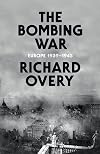
This remarkable, well evidenced and well show more written book is about the use of bombing and its effects in Europe during the Second World War - at least that is its primary purpose. It is, in fact, a book about evil.
Half a million Europeans were murdered from the air either indirectly as part of the prosecution of war or directly as a deliberate strategy of area or political bombing by air power advocates.
The book is dense in places. Overy does not put statistics into foot-notes but makes sure you have them to hand when you read of this raid or that campaign - whether deaths or tonnage of bombs.
He does not go into too much detail of effects - just enough for us to be clear what bombing involves - because his interests (and ours) are the policies that led to these horrors.
This is one of those books where the complexity of issues requires that we do not try an easy summary. Overy is fair-minded. He seeks to understand and not condemn. There is no emotion here.
The final conclusions are measured and pointed. He also provides a useful coda that suggested that nothing was fundamentally learned from the experience.
He rightly points out that the area bombing of Bomber Harris - who must be the very epitome of the banality of evil if you have a soul - was of its time and could not be repeated.
He then stops any sigh of relief at this point by pointing out that these maniacs (my opinion, not his) did not need to repeat it because they soon had nuclear weaponry. We have been lucky so far.
Half a million dead over five years could now become 80million Russians in a few hours. The strategy of total war would dictate first strike in the forlorn hope of limiting the effect at home.
One should continue to think on this as a bunch of war loons try to convert crises in the Middle East or over local self-determination in the Ukraine into confrontations with well armed nuclear powers.
The point is that the area strategy was not a general one amongst the combatants but a specifically Anglo-American - indeed British one - based on the thinking of an Italian proto-fascist, Douhet.
The irony of this is not lost on Overy who points out that Allied bombing of Italians (while their Government was an ally) cost more lives than the Blitz.
One gets a shock to the system when one discovers just how evil the British as a war state had become in what was clearly an existential struggle of constant escalation with no quarter given.
Let us start by noting something uncomfortable. Although air power advocates promoted independent bombing strategies, the general view in the 1930s was that civilian bombing was a horror.
Neither the Soviets nor the Americans adopted civilian bombing as a policy directive and (surprise!) it was Hitler who attempted to outlaw it and chemical and gas weapons at the beginning of the conflict.
Of course, this does not gainsay Hitler's villainy against first the Jews and the mentally disabled and then anything that got in his way of a civilian nature in the East or in terms of reprisals.
But facts are facts. And probably because he still had a residual notion that the West Europeans were a basically civilised people, Hitler seems to have thought it uncivilised to bomb people in war.
There is, as well, multiple room for misunderstandings, sometimes wilful, in international relations with deeply unpleasant political warfare operatives muddying the truth at every opportunity.
Overy, somewhat embarrassingly, places Guernica, Warsaw and Rotterdam in their military context and draws the critical line between what we call 'collateral damage' and deliberate terror.
This is central because we need to understand that the British not only had a strategy of terror (the only nation to do so) but, with the Americans, banked up gas bombs in Italy ready to use in the last days.
Biological weapons may have been in their infancy but it seems (from Overy's coda) that the next total war contemplated by the air power loons included advocacy of bacteriological warfare to retain assets.
So what is going on here? Certainly Churchill was troubled by the strategy of terror though unafraid to use any resource to meet political ends. As we will note, we can still see his point.
Similarly, not only the Germans and the Soviets but also the Americans may have been ruthless though happily held to the notion of tactical use of air power where civilians were unfortunate collateral damage.
The secret of evil seems to lie in its true source - the corporate mentality. The RAF was a new arm of state force and competed for budgets and resources. It positioned itself as the future.
Its chief, Bomber Harris, somewhere ceased to be a human being and became the pure will of his force. He had done a common thing, lost himself in the task and ceased to be more than the task.
Edgerton has written persuasively that last century air power was associated with the technological right and he has pointed out the ideology underpinning Liberal Militarism.
Overy does not go down this route but we should remind ourselves that the driver for techno-war was the protection of one's own people by mustering massive power targeted at the population of the other.
This reversion to a Mesopotamian attitude to the cities of your enemy also held a sub-text of fear that democracy (actually the hold of the liberal elite) could not survive another general call-up.
The solution - tanks on the front and planes in the sky - neatly converged with the institutional aspirations of the RAF to an equal or dominant role in war strategy.
Since fighters and fighter-bombers by definition were always going to be ancillary to armies fighting blow by blow across country and naval forces defending trade routes, this meant bombing.
The justification of bombing however was not easy. Aiming was poor, air crew losses were high and the equipment was very expensive. To be more than ancillary required a 'result'.
What these callous men offered was one or both of two possibilities, one taken up more reasonably by the Americans and the other - fanatically - by Bomber Harris.
The first was to claim that bombing raids directed at aeroengine works, transportation and oil facilities (and so on) could degrade the economy of the other side so that his war capacity would fail.
Naturally, given the weakness of bomb aiming equipment and the constant pressure on air crews of fear, this meant serious collateral damage to the civilian population.
Needless to say, this is what happened not only in the Blitz (which was always military in purpose in terms of economic warfare) but also in many of the major raids on Germany and all those in allied states.
Overy plausibly demonstrates that this sort of airpower was far less effective than the bombers claimed but he (and we) can give the men of the time the benefit of the doubt here.
The bombers in these cases seem to have killed a lot of people, including allied citizens to the increasing frustration of the resistance, but there was at least a theoretical case for action.
It could be reasonable in an escalating existential crisis to accept this massive collateral damage if it brought the hell to a faster end - this is the dark justification, of course, for Hiroshima.
This sort of bombing is just - just - on the right side of morality for most people: we say again, that which reasonably might be considered to be the lesser evil in an existential struggle.
Strategic area bombing of civilians to inspire terror in the dubious and unevidenced belief that this might cause panic and bring down a regime is another kettle of fish however.
There are cases where regimes were brought down by terror bombing - Italy seems to be an example - but nearly all countries appear to have adapted and even seem to have seen the regime strengthened.
The fact of bombing and disruption exposed weak and poor regimes like Mussolini's but it enabled a narrative of resistance and a politically-led popular organisation to emerge elsewhere.
Just as general tactical asset bombing oddly tended to increase production through reorganisation, substitution and determination so area bombing tended to strengthen political legitimacy.
In the first case, it might be very reasonable for strategists not to have understood that this would be the case but in the second we are faced by two new factors.
The Blitz itself should have provided sufficient evidence that regimes strengthened on existential threat while what we have here is something different - the deliberate targeting of workers.
Ah, I seem to have slipped into the unforgivable here - the values-driven business of morality!
The point is that Bomber Harris was no different from Himmler in this - the destruction of persons deliberately because of their nature, in this case as German workers, in Himmler's as Jews.
The argument that the Jews were 'innocent' and the German workers were 'guilty' is specious. To Nazis, the Jews were as 'guilty as hell' as origins of the war (yes, absurd but believed culturally).
German workers, many of whom voted social democratically in the 1932 and previous elections and who were led no less than workers anywhere by malign elites, were suffering here from collective punishment.
The deliberate firestorming of Hamburg and other cities was a war crime that the Allies knew to be so when they decided not to prosecute the Nazis at Nuremburg for their bombing atrocities.
The most notorious case, Dresden, ironically probably falls into the milder category of tactical warfare bombing in support of the Soviet push to the East. Overy is good at revising our preconceptions.
The lessons of all this are largely academic, on the old mafia saying that 'that was then and this is now'. The conditions were peculiar and unrepeatable - new atrocities entirely are for our time.
However, we can draw some lessons about the human condition, about the blind and unaccountable nature of institutional forms operating in unevidenced ways and doing bad things under unrestrained leaders.
To be fair, Churchill was a man under severe pressure to whom bombing remained a tool-at-hand and a sideshow and, though committed absolutely to success, he was neither stupid nor psychopathic.
What is worrying is that, under conditions of existential crisis, power to do great evil can be delegated so easily. This story raises very uncomfortable thoughts about other war leaders.
And not just Stalin and Hitler but Cameron and Obama. The post-war Presidents, for example, appear to have had some reasonable grip over their forces through acceptance of their authority. Are we so sure now?
One question is what happens when the 'fuhrerprinzip' sends down the line vague generalities alongside instructions that can be interpreted brutally because they were stated brutally (the Hitler/Stalin model).
But another question is what happens when a Leader is not working on full information and makes false or 'bad' judgements on the claims of the institutional pressure groups who claim to serve him.
There are signs on several occasions in this story that Bomber Command lost the ability to do two things under Bomber Harris: think beyond the interests of itself; and have reasonable moral boundaries.
The British were far from alone - the Soviets were restrained only because they were fighting a different sort of war - and the Americans soon descended into hell themselves with the Tokyo firebombing.
But bombing itself was over-egged as tool - strategic bombing in the battlefield could lead to the 'friendly fire' errors that we saw in Iraq and Afghanistan as well and often did more harm than good.
It may - given existential struggle and acceptance of the 'just war' (ho, hum!) - have had some important function in degrading the flow of materiel to the enemy front and redirecting production.
What strikes me as unconscionable, especially with political motives of pure populist revenge, is to continue with a campaign of total war against civilians long after it is clear that it is just murder.
Almost every civilian death could be justified by some rational explanation based on the struggle for existence by the end but, by that time, everyone has lost the moral plot.
The great lesson of all this is that war has its own remorseless logic in which (as Overy wisely notes) political conditions eventually block the chance to do the right thing.
However, you can make up your own mind. Overy is detached and clinical. The facts are all there in his book. I urge you to read it and ask where you think the boundaries of death-dealing should lie. show less
I can imagine a decent German feeling much the same if Berlin had a major monument to the Eastern Front war dead of the Wehrmacht.
Yes, both sets of men were courageous and died for the sins of their leaders but both sets of men were complicit in appalling atrocities under orders that specifically targeted civilians.
This remarkable, well evidenced and well show more written book is about the use of bombing and its effects in Europe during the Second World War - at least that is its primary purpose. It is, in fact, a book about evil.
Half a million Europeans were murdered from the air either indirectly as part of the prosecution of war or directly as a deliberate strategy of area or political bombing by air power advocates.
The book is dense in places. Overy does not put statistics into foot-notes but makes sure you have them to hand when you read of this raid or that campaign - whether deaths or tonnage of bombs.
He does not go into too much detail of effects - just enough for us to be clear what bombing involves - because his interests (and ours) are the policies that led to these horrors.
This is one of those books where the complexity of issues requires that we do not try an easy summary. Overy is fair-minded. He seeks to understand and not condemn. There is no emotion here.
The final conclusions are measured and pointed. He also provides a useful coda that suggested that nothing was fundamentally learned from the experience.
He rightly points out that the area bombing of Bomber Harris - who must be the very epitome of the banality of evil if you have a soul - was of its time and could not be repeated.
He then stops any sigh of relief at this point by pointing out that these maniacs (my opinion, not his) did not need to repeat it because they soon had nuclear weaponry. We have been lucky so far.
Half a million dead over five years could now become 80million Russians in a few hours. The strategy of total war would dictate first strike in the forlorn hope of limiting the effect at home.
One should continue to think on this as a bunch of war loons try to convert crises in the Middle East or over local self-determination in the Ukraine into confrontations with well armed nuclear powers.
The point is that the area strategy was not a general one amongst the combatants but a specifically Anglo-American - indeed British one - based on the thinking of an Italian proto-fascist, Douhet.
The irony of this is not lost on Overy who points out that Allied bombing of Italians (while their Government was an ally) cost more lives than the Blitz.
One gets a shock to the system when one discovers just how evil the British as a war state had become in what was clearly an existential struggle of constant escalation with no quarter given.
Let us start by noting something uncomfortable. Although air power advocates promoted independent bombing strategies, the general view in the 1930s was that civilian bombing was a horror.
Neither the Soviets nor the Americans adopted civilian bombing as a policy directive and (surprise!) it was Hitler who attempted to outlaw it and chemical and gas weapons at the beginning of the conflict.
Of course, this does not gainsay Hitler's villainy against first the Jews and the mentally disabled and then anything that got in his way of a civilian nature in the East or in terms of reprisals.
But facts are facts. And probably because he still had a residual notion that the West Europeans were a basically civilised people, Hitler seems to have thought it uncivilised to bomb people in war.
There is, as well, multiple room for misunderstandings, sometimes wilful, in international relations with deeply unpleasant political warfare operatives muddying the truth at every opportunity.
Overy, somewhat embarrassingly, places Guernica, Warsaw and Rotterdam in their military context and draws the critical line between what we call 'collateral damage' and deliberate terror.
This is central because we need to understand that the British not only had a strategy of terror (the only nation to do so) but, with the Americans, banked up gas bombs in Italy ready to use in the last days.
Biological weapons may have been in their infancy but it seems (from Overy's coda) that the next total war contemplated by the air power loons included advocacy of bacteriological warfare to retain assets.
So what is going on here? Certainly Churchill was troubled by the strategy of terror though unafraid to use any resource to meet political ends. As we will note, we can still see his point.
Similarly, not only the Germans and the Soviets but also the Americans may have been ruthless though happily held to the notion of tactical use of air power where civilians were unfortunate collateral damage.
The secret of evil seems to lie in its true source - the corporate mentality. The RAF was a new arm of state force and competed for budgets and resources. It positioned itself as the future.
Its chief, Bomber Harris, somewhere ceased to be a human being and became the pure will of his force. He had done a common thing, lost himself in the task and ceased to be more than the task.
Edgerton has written persuasively that last century air power was associated with the technological right and he has pointed out the ideology underpinning Liberal Militarism.
Overy does not go down this route but we should remind ourselves that the driver for techno-war was the protection of one's own people by mustering massive power targeted at the population of the other.
This reversion to a Mesopotamian attitude to the cities of your enemy also held a sub-text of fear that democracy (actually the hold of the liberal elite) could not survive another general call-up.
The solution - tanks on the front and planes in the sky - neatly converged with the institutional aspirations of the RAF to an equal or dominant role in war strategy.
Since fighters and fighter-bombers by definition were always going to be ancillary to armies fighting blow by blow across country and naval forces defending trade routes, this meant bombing.
The justification of bombing however was not easy. Aiming was poor, air crew losses were high and the equipment was very expensive. To be more than ancillary required a 'result'.
What these callous men offered was one or both of two possibilities, one taken up more reasonably by the Americans and the other - fanatically - by Bomber Harris.
The first was to claim that bombing raids directed at aeroengine works, transportation and oil facilities (and so on) could degrade the economy of the other side so that his war capacity would fail.
Naturally, given the weakness of bomb aiming equipment and the constant pressure on air crews of fear, this meant serious collateral damage to the civilian population.
Needless to say, this is what happened not only in the Blitz (which was always military in purpose in terms of economic warfare) but also in many of the major raids on Germany and all those in allied states.
Overy plausibly demonstrates that this sort of airpower was far less effective than the bombers claimed but he (and we) can give the men of the time the benefit of the doubt here.
The bombers in these cases seem to have killed a lot of people, including allied citizens to the increasing frustration of the resistance, but there was at least a theoretical case for action.
It could be reasonable in an escalating existential crisis to accept this massive collateral damage if it brought the hell to a faster end - this is the dark justification, of course, for Hiroshima.
This sort of bombing is just - just - on the right side of morality for most people: we say again, that which reasonably might be considered to be the lesser evil in an existential struggle.
Strategic area bombing of civilians to inspire terror in the dubious and unevidenced belief that this might cause panic and bring down a regime is another kettle of fish however.
There are cases where regimes were brought down by terror bombing - Italy seems to be an example - but nearly all countries appear to have adapted and even seem to have seen the regime strengthened.
The fact of bombing and disruption exposed weak and poor regimes like Mussolini's but it enabled a narrative of resistance and a politically-led popular organisation to emerge elsewhere.
Just as general tactical asset bombing oddly tended to increase production through reorganisation, substitution and determination so area bombing tended to strengthen political legitimacy.
In the first case, it might be very reasonable for strategists not to have understood that this would be the case but in the second we are faced by two new factors.
The Blitz itself should have provided sufficient evidence that regimes strengthened on existential threat while what we have here is something different - the deliberate targeting of workers.
Ah, I seem to have slipped into the unforgivable here - the values-driven business of morality!
The point is that Bomber Harris was no different from Himmler in this - the destruction of persons deliberately because of their nature, in this case as German workers, in Himmler's as Jews.
The argument that the Jews were 'innocent' and the German workers were 'guilty' is specious. To Nazis, the Jews were as 'guilty as hell' as origins of the war (yes, absurd but believed culturally).
German workers, many of whom voted social democratically in the 1932 and previous elections and who were led no less than workers anywhere by malign elites, were suffering here from collective punishment.
The deliberate firestorming of Hamburg and other cities was a war crime that the Allies knew to be so when they decided not to prosecute the Nazis at Nuremburg for their bombing atrocities.
The most notorious case, Dresden, ironically probably falls into the milder category of tactical warfare bombing in support of the Soviet push to the East. Overy is good at revising our preconceptions.
The lessons of all this are largely academic, on the old mafia saying that 'that was then and this is now'. The conditions were peculiar and unrepeatable - new atrocities entirely are for our time.
However, we can draw some lessons about the human condition, about the blind and unaccountable nature of institutional forms operating in unevidenced ways and doing bad things under unrestrained leaders.
To be fair, Churchill was a man under severe pressure to whom bombing remained a tool-at-hand and a sideshow and, though committed absolutely to success, he was neither stupid nor psychopathic.
What is worrying is that, under conditions of existential crisis, power to do great evil can be delegated so easily. This story raises very uncomfortable thoughts about other war leaders.
And not just Stalin and Hitler but Cameron and Obama. The post-war Presidents, for example, appear to have had some reasonable grip over their forces through acceptance of their authority. Are we so sure now?
One question is what happens when the 'fuhrerprinzip' sends down the line vague generalities alongside instructions that can be interpreted brutally because they were stated brutally (the Hitler/Stalin model).
But another question is what happens when a Leader is not working on full information and makes false or 'bad' judgements on the claims of the institutional pressure groups who claim to serve him.
There are signs on several occasions in this story that Bomber Command lost the ability to do two things under Bomber Harris: think beyond the interests of itself; and have reasonable moral boundaries.
The British were far from alone - the Soviets were restrained only because they were fighting a different sort of war - and the Americans soon descended into hell themselves with the Tokyo firebombing.
But bombing itself was over-egged as tool - strategic bombing in the battlefield could lead to the 'friendly fire' errors that we saw in Iraq and Afghanistan as well and often did more harm than good.
It may - given existential struggle and acceptance of the 'just war' (ho, hum!) - have had some important function in degrading the flow of materiel to the enemy front and redirecting production.
What strikes me as unconscionable, especially with political motives of pure populist revenge, is to continue with a campaign of total war against civilians long after it is clear that it is just murder.
Almost every civilian death could be justified by some rational explanation based on the struggle for existence by the end but, by that time, everyone has lost the moral plot.
The great lesson of all this is that war has its own remorseless logic in which (as Overy wisely notes) political conditions eventually block the chance to do the right thing.
However, you can make up your own mind. Overy is detached and clinical. The facts are all there in his book. I urge you to read it and ask where you think the boundaries of death-dealing should lie. show less
Lists
Awards


You May Also Like


Associated Authors
Statistics
- Works
- 76
- Also by
- 7
- Members
- 6,954
- Popularity
- #3,517
- Rating
- 4.0
- Reviews
- 88
- ISBNs
- 341
- Languages
- 20
- Favorited
- 6


