
Michael Burleigh
Author of The Third Reich : A New History
About the Author
Michael Burleigh, as of the fall of 2000, is a professor of history at Washington and Lee University. He is the author of six previous books on Germany, including Death and Deliverance and Ethics and Extermination. (Bowker Author Biography)
Works by Michael Burleigh
Earthly Powers: The Clash of Religion and Politics in Europe, from the French Revolution to the Great War (2005) 436 copies, 7 reviews
Sacred Causes: The Clash of Religion and Politics, from the Great War to the War on Terror (2006) 428 copies, 6 reviews
Prussian Society and the German Order: An Aristocratic Corporation in Crisis, 1410-1466 (1984) 5 copies
Spiral 1 copy
Associated Works
Tagged
Common Knowledge
- Canonical name
- Burleigh, Michael
- Birthdate
- 1955-04-03
- Gender
- male
- Education
- Bedford College, University of London (Ph.D|1982)
University College London (BA|1977) - Occupations
- historian
professor - Organizations
- Washington and Lee University
- Awards and honors
- Fellow, Royal Historical Society
Samuel Johnson Prize (2001) - Nationality
- UK
- Places of residence
- London, England, UK
- Associated Place (for map)
- England, UK
Members
Reviews
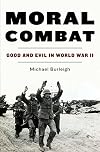
To some, it may seem oxymoronic to talk about morality and war in the same sentence, and yet each side in modern wars tends to think that it alone is on the side of God. Indeed, the Crusades, full of bloody cruelty, were a series of religiously sanctioned military campaigns waged by much of Roman Catholic Europe. The American Civil War, to take a more recent example, was considered - especially by Northerners- to be primarily a moral conflict. As Lincoln famously noted in his Second show more Inaugural address:
"Both read the same Bible and pray to the same God, and each invokes His aid against the other. It may seem strange that any men should dare to ask a just God's assistance in wringing their bread from the sweat of other men's faces, but let us judge not, that we be not judged. The prayers of both could not be answered. That of neither has been answered fully. The Almighty has His own purposes.”
World War II was called “the good war” by the Western allies, who used the language of morality to justify both the entry into the war and the manner in which it was waged. “What is our policy?” Churchill asked in 1940: “To wage war against a monstrous tyranny, never surpassed in the dark, lamentable catalogue of human crime."
It seems fitting, then, that Michael Burleigh has written a history of World War II from a moral (rather than the more common operational) perspective. And in this war we can see that, as with all wars, many ethical compromises were made in the effort to eradicate perceived evil.
Burleigh describes in detail episodes that required moral judgments on the part of the participants, who had to make such judgments in the face of extraordinarily difficult and complex circumstances. He maintains that the Nazis “tried fundamentally to alter the moral understanding of humanity, in ways that differed from the moral norms of Western civilization.”
The first great moral issue faced by the Western countries was how to deal with the predator nations of Germany, Japan, and Italy. Burleigh deals sympathetically with British appeasers led by Chamberlain, who “saw themselves as realists, although their own chimerical quest for a general European peace settlement, without alliances or threats of war to strengthen their own hand, was incredibly idealistic…what Churchill would call the pursuit of ‘futile good intentions.’” What the appeasers were unable to fathom was that the dictators of Germany and Italy were not “fundamentally reasonable, decent men” like themselves.
Burleigh’s account of the “rape of Poland” details how egregiously the Nazis trampled on traditional Western notions of morality. Soviet behavior in the same area and time was not much better. The massacre of some 22,000 Polish officers at Katyn Forrest has only recently been formally acknowledged by the Soviet government.
Conditions of life under Nazi occupation varied significantly from country to country, depending how “Aryan” the population was. The occupation was [relatively] less onerous in Denmark, as the Nazis thought the Danes to be racially similar to themselves. At the other end of the spectrum, conditions for the natives in Poland or the USSR were bestial. Conditions in France were intermediate.
Nazi occupation posed two significant moral problems for the indigenous population. One moral issue was how much to “collaborate,” in particular, whether to assist the Nazis in identifying Jews or to assist the Jews in hiding or escaping, for which the punishment was death.
A second issue was faced by the “resistance,” the natives who became saboteurs. Killing Nazi soldiers or effecting significant damage to key assets invited savage reprisals, usually the execution of innocent hostages. In addition, the Germans usually replaced the Nazis assassinated with someone even more vicious than the person killed.
Sometimes politics trumped morality in the decision to assassinate. The Czech resistance killed Reinhard Heydrich knowing the German reaction would bring barbaric reprisals on the Czech people, but they feared the Germans might seek a negotiated peace resulting in the disappearance of the Czech nation all together. Edvard Beneš, the future prime minister of Czechoslovakia, on learning of the assassination said, “What the Germans are doing is horrible, but from the political point of view they gave us one certainty: under no circumstances can anyone doubt Czechoslovakia’s national integrity and her right to independence.”
Treatment of prisoners was another area in which conceptions of morality differed among the combatants. The Japanese had no tradition of surrender and thought it was dishonorable. Hence, they treated prisoners with contempt, often starving or beheading them. Toward the end of the war, the Japanese themselves were often short of rations, and were not inclined to share them with the dishonorable dogs who had surrendered to them.
The Germans and Soviets each took hundreds of thousands of each other’s prisoners; only about 10-15% survived the war. In stark contrast, the Allies perceived the Germans fighting in North Africa to be honorable opponents. In general, treatment of prisoners on the western front was far better than in the east or the Pacific.
Methods of motivating the fighting forces also raised moral issues in the different approaches used by the combatant parties. Both the Germans and the Soviets utilized fear, executing thousands of their own forces for cowardice or desertion. The Soviets executed an astounding 200,000 of their own men, 13,500 in the battle of Stalingrad alone!
Nazi immorality is nowhere evinced more clearly than in their barbarism toward the Jews. Burleigh points out that that widespread coercion of the German populace was not necessary to impose the “final solution”: “there were always enough volunteers.”
Some of the most gruesome moral decisions of the war were thrust upon the Jewish Councils of Elders that were established in the ghettos and concentration camps. They were often tasked with selecting which members of their group would be relocated to extermination camps. Many Council members simply refused to co-operate in such life-and-death decisions, either by committing suicide or being shot after registering their dissent.
Burleigh devotes an entire chapter to the issue of whether the Allies could have done more to ease the plight of the Jews. In particular, the Allies have been condemned for their failure to bomb the Auschwitz concentration camp. Jewish leaders pleaded with the Allies to sacrifice those already in the camp for the benefit of the many more who would be sent there in the future.
Burleigh seems to agree that anti-Semitism played a role in the decision-making process when he points out: (1) “the only apparent interest of the U.S. government was to block Nazi-induced Jewish immigration”; (2) “[t]here is no point in denying that British politicians like Foreign Secretary Eden were biased in favour of Arabs over Jews,” undoubtedly because of oil; and (3) “[t]he US military was also keenly sensitive to avoid anything that might suggest that Gentile soldiers were dying to say Jewish lives.”
Nevertheless, and irrespective of any implicit anti-Semitism on the part of the Western powers, Burleigh points out the problems a mission to bomb the camp entailed. “The practical difficulties and extremely remote prospect of success have been forcefully demonstrated by distinguished historians of the air war…” He concludes [untenably, some might counter] that the British and American decision not to bomb the camps “categorically had nothing to do with anti-Semitism, and everything to do with Allied priorities for winning the war.”
The decision to drop the two atomic bombs over Japan was (and still is) justified [again, quite controversially] as a means of reducing the total number of people killed by the war, particularly innocent civilians:
"Those who object to the dropping of two atomic bombs might ask themselves how many Americans (and Russians) they would have preferred to see killed. Would they prefer that LeMay’s fleets continued to burn their way through cities? How many civilian Japanese would they prefer to have been slaughtered or starved to death by a tightening naval blockade that had cut all food imports, while, as in Europe, conventional bombing wrecked the entire transport infrastructure?”
Evaluation: This book is a very rich and probing investigation of many difficult and often subtle moral decisions that were made and forced upon various people, famous and unknown, powerful and impotent, by the circumstances of the cataclysm know as World War II. This review covers some, but not nearly all, of the issues elaborated therein. Not everyone will agree with all of the author's interpretations and conclusions, but the book is well written and thoroughly researched. I highly recommend this for any student of history, as well as for any book club that includes non-fiction selections. show less
"Both read the same Bible and pray to the same God, and each invokes His aid against the other. It may seem strange that any men should dare to ask a just God's assistance in wringing their bread from the sweat of other men's faces, but let us judge not, that we be not judged. The prayers of both could not be answered. That of neither has been answered fully. The Almighty has His own purposes.”
World War II was called “the good war” by the Western allies, who used the language of morality to justify both the entry into the war and the manner in which it was waged. “What is our policy?” Churchill asked in 1940: “To wage war against a monstrous tyranny, never surpassed in the dark, lamentable catalogue of human crime."
It seems fitting, then, that Michael Burleigh has written a history of World War II from a moral (rather than the more common operational) perspective. And in this war we can see that, as with all wars, many ethical compromises were made in the effort to eradicate perceived evil.
Burleigh describes in detail episodes that required moral judgments on the part of the participants, who had to make such judgments in the face of extraordinarily difficult and complex circumstances. He maintains that the Nazis “tried fundamentally to alter the moral understanding of humanity, in ways that differed from the moral norms of Western civilization.”
The first great moral issue faced by the Western countries was how to deal with the predator nations of Germany, Japan, and Italy. Burleigh deals sympathetically with British appeasers led by Chamberlain, who “saw themselves as realists, although their own chimerical quest for a general European peace settlement, without alliances or threats of war to strengthen their own hand, was incredibly idealistic…what Churchill would call the pursuit of ‘futile good intentions.’” What the appeasers were unable to fathom was that the dictators of Germany and Italy were not “fundamentally reasonable, decent men” like themselves.
Burleigh’s account of the “rape of Poland” details how egregiously the Nazis trampled on traditional Western notions of morality. Soviet behavior in the same area and time was not much better. The massacre of some 22,000 Polish officers at Katyn Forrest has only recently been formally acknowledged by the Soviet government.
Conditions of life under Nazi occupation varied significantly from country to country, depending how “Aryan” the population was. The occupation was [relatively] less onerous in Denmark, as the Nazis thought the Danes to be racially similar to themselves. At the other end of the spectrum, conditions for the natives in Poland or the USSR were bestial. Conditions in France were intermediate.
Nazi occupation posed two significant moral problems for the indigenous population. One moral issue was how much to “collaborate,” in particular, whether to assist the Nazis in identifying Jews or to assist the Jews in hiding or escaping, for which the punishment was death.
A second issue was faced by the “resistance,” the natives who became saboteurs. Killing Nazi soldiers or effecting significant damage to key assets invited savage reprisals, usually the execution of innocent hostages. In addition, the Germans usually replaced the Nazis assassinated with someone even more vicious than the person killed.
Sometimes politics trumped morality in the decision to assassinate. The Czech resistance killed Reinhard Heydrich knowing the German reaction would bring barbaric reprisals on the Czech people, but they feared the Germans might seek a negotiated peace resulting in the disappearance of the Czech nation all together. Edvard Beneš, the future prime minister of Czechoslovakia, on learning of the assassination said, “What the Germans are doing is horrible, but from the political point of view they gave us one certainty: under no circumstances can anyone doubt Czechoslovakia’s national integrity and her right to independence.”
Treatment of prisoners was another area in which conceptions of morality differed among the combatants. The Japanese had no tradition of surrender and thought it was dishonorable. Hence, they treated prisoners with contempt, often starving or beheading them. Toward the end of the war, the Japanese themselves were often short of rations, and were not inclined to share them with the dishonorable dogs who had surrendered to them.
The Germans and Soviets each took hundreds of thousands of each other’s prisoners; only about 10-15% survived the war. In stark contrast, the Allies perceived the Germans fighting in North Africa to be honorable opponents. In general, treatment of prisoners on the western front was far better than in the east or the Pacific.
Methods of motivating the fighting forces also raised moral issues in the different approaches used by the combatant parties. Both the Germans and the Soviets utilized fear, executing thousands of their own forces for cowardice or desertion. The Soviets executed an astounding 200,000 of their own men, 13,500 in the battle of Stalingrad alone!
Nazi immorality is nowhere evinced more clearly than in their barbarism toward the Jews. Burleigh points out that that widespread coercion of the German populace was not necessary to impose the “final solution”: “there were always enough volunteers.”
Some of the most gruesome moral decisions of the war were thrust upon the Jewish Councils of Elders that were established in the ghettos and concentration camps. They were often tasked with selecting which members of their group would be relocated to extermination camps. Many Council members simply refused to co-operate in such life-and-death decisions, either by committing suicide or being shot after registering their dissent.
Burleigh devotes an entire chapter to the issue of whether the Allies could have done more to ease the plight of the Jews. In particular, the Allies have been condemned for their failure to bomb the Auschwitz concentration camp. Jewish leaders pleaded with the Allies to sacrifice those already in the camp for the benefit of the many more who would be sent there in the future.
Burleigh seems to agree that anti-Semitism played a role in the decision-making process when he points out: (1) “the only apparent interest of the U.S. government was to block Nazi-induced Jewish immigration”; (2) “[t]here is no point in denying that British politicians like Foreign Secretary Eden were biased in favour of Arabs over Jews,” undoubtedly because of oil; and (3) “[t]he US military was also keenly sensitive to avoid anything that might suggest that Gentile soldiers were dying to say Jewish lives.”
Nevertheless, and irrespective of any implicit anti-Semitism on the part of the Western powers, Burleigh points out the problems a mission to bomb the camp entailed. “The practical difficulties and extremely remote prospect of success have been forcefully demonstrated by distinguished historians of the air war…” He concludes [untenably, some might counter] that the British and American decision not to bomb the camps “categorically had nothing to do with anti-Semitism, and everything to do with Allied priorities for winning the war.”
The decision to drop the two atomic bombs over Japan was (and still is) justified [again, quite controversially] as a means of reducing the total number of people killed by the war, particularly innocent civilians:
"Those who object to the dropping of two atomic bombs might ask themselves how many Americans (and Russians) they would have preferred to see killed. Would they prefer that LeMay’s fleets continued to burn their way through cities? How many civilian Japanese would they prefer to have been slaughtered or starved to death by a tightening naval blockade that had cut all food imports, while, as in Europe, conventional bombing wrecked the entire transport infrastructure?”
Evaluation: This book is a very rich and probing investigation of many difficult and often subtle moral decisions that were made and forced upon various people, famous and unknown, powerful and impotent, by the circumstances of the cataclysm know as World War II. This review covers some, but not nearly all, of the issues elaborated therein. Not everyone will agree with all of the author's interpretations and conclusions, but the book is well written and thoroughly researched. I highly recommend this for any student of history, as well as for any book club that includes non-fiction selections. show less
A comprehensively informative and disturbing telling of the gradual collapse of all moral & ethical values in 1920s-30s-40s Germany: an incredibly depressing view of one of the great civilizations of Europe failing in every aspect of its social, spiritual, economic, philosophical, political life to defend the immensely impressive cultural inheritance from previous generations that until 1918 was the story of the Rise of the German state.
Not all Germans were Nazis and not all Germans were show more evil, however, my goodness this book does not spare the inter-war years German population from a magnifying glass exposure of just how they collectively came to allow an extraordinarily extremist, near death-cult regime to settle and assert itself in and over them: Hitler's Nazism not only took over their lives, but had them actively participate in spectacularly huge numbers from the lowest level of street society through to the families of ancient nobility & landowning & industrial conglomerates all the way to those intimately linked with the great panoply of affairs of State.
The author has written an enlightening version of the tragedy of Germany between the World Wars that compares favourably with any other Historian's tome detailing one of the darkest most depraved periods in humankind's alleged civilized existence. show less
Not all Germans were Nazis and not all Germans were show more evil, however, my goodness this book does not spare the inter-war years German population from a magnifying glass exposure of just how they collectively came to allow an extraordinarily extremist, near death-cult regime to settle and assert itself in and over them: Hitler's Nazism not only took over their lives, but had them actively participate in spectacularly huge numbers from the lowest level of street society through to the families of ancient nobility & landowning & industrial conglomerates all the way to those intimately linked with the great panoply of affairs of State.
The author has written an enlightening version of the tragedy of Germany between the World Wars that compares favourably with any other Historian's tome detailing one of the darkest most depraved periods in humankind's alleged civilized existence. show less
Earthly Powers: The Clash of Religion and Politics in Europe, from the French Revolution to the Great War by Michael Burleigh
In Earthly Powers, Michael Burleigh surveys the roughly 125 years indicated by the book's subtitle and describes the ongoing struggle between the secular, political powers and the several traditional Christian churches - Catholic, Protestant and Orthodox for supremacy or at least a modus vivendi that state, church and society could support. He primarily covers France, Germany, Russia, Great Britain, Italy and the Hapsburg Empire. Over the decades in scope his narrative moves from the French show more Revolution to the Restoration Period, the liberal monarchies, absolutist monarchies, liberal republicanism, unification of Italy and Germany, the Polish situation and status of the church in each context.
Burleigh also covers the emergence of the "social question" and the various responses from utopian socialists, Marxian socialists, liberal theologians, traditional theologians, secular thinkers and the political heavyweights and lightweights of the periods.
Burleigh's study is comprehensive in scope and his mastery of the literature is impressive, He combines erudition and a facility for narrative not generally associated with academic historians and displays a dry wit and gift for irony that he occasionally summons to puncture the pretensions of thinkers past and present. It is fascinating to see how the responses of the churches to the state shift with changes in regime or at least changes in which party held the upper hand. Even more interesting are the several serious attempts made by the secular left to substitute a political religion around the state and its ethos to replace the religiously inspired beliefs, norms and customs of the ordinary workers, peasants, artisans and the middle class. This effort extended in several cases to actually producing a secular catechism in a Q&A format in imitation of the Catholic Church.
If you have ever wondered why the Catholic Church has "enjoyed" a reputation as a patron of royalism and reaction and as an implacable enemy of liberalism and republicanism Burleigh's narrative supplies numerous examples of overt aggression committed by the left when in power, particularly, in ostensibly Catholic countries like France, that show that the Church's hostility was frequently well earned.
As the the 19th century drew towards its close the nationalist trends that would explode in the World Wars of the 20th century included the concept of asserting the identification of particular nation states and political regimes with the historical mission of the Christian churches by both theologians and statesmen to the detriment of both church and state.
I look forward to tackling Burleigh's work on the historic roots of terrorism, Blood & Rage, and recommend Earthly Powers to all who have any interest in the competing claims of church and state in Western history. show less
Burleigh also covers the emergence of the "social question" and the various responses from utopian socialists, Marxian socialists, liberal theologians, traditional theologians, secular thinkers and the political heavyweights and lightweights of the periods.
Burleigh's study is comprehensive in scope and his mastery of the literature is impressive, He combines erudition and a facility for narrative not generally associated with academic historians and displays a dry wit and gift for irony that he occasionally summons to puncture the pretensions of thinkers past and present. It is fascinating to see how the responses of the churches to the state shift with changes in regime or at least changes in which party held the upper hand. Even more interesting are the several serious attempts made by the secular left to substitute a political religion around the state and its ethos to replace the religiously inspired beliefs, norms and customs of the ordinary workers, peasants, artisans and the middle class. This effort extended in several cases to actually producing a secular catechism in a Q&A format in imitation of the Catholic Church.
If you have ever wondered why the Catholic Church has "enjoyed" a reputation as a patron of royalism and reaction and as an implacable enemy of liberalism and republicanism Burleigh's narrative supplies numerous examples of overt aggression committed by the left when in power, particularly, in ostensibly Catholic countries like France, that show that the Church's hostility was frequently well earned.
As the the 19th century drew towards its close the nationalist trends that would explode in the World Wars of the 20th century included the concept of asserting the identification of particular nation states and political regimes with the historical mission of the Christian churches by both theologians and statesmen to the detriment of both church and state.
I look forward to tackling Burleigh's work on the historic roots of terrorism, Blood & Rage, and recommend Earthly Powers to all who have any interest in the competing claims of church and state in Western history. show less
Small Wars, Faraway Places: Global Insurrection and the Making of the Modern World, 1945-1965 by Michael Burleigh

A good alternative title for this book would be "101 Ways not to De-Colonize your Empire." A relentless narrative of bungling first by the British & French as they struggled to either hang on to their colonies or escape from them with minimal fuss in the post 1945 world, then even more massive bungling by the superpowers, particularly the Americans, as they sought to influence the said former colonies to follow their particular political path and not that of their rivals. This is a litany of show more failure, scathing in its condemnation of inept colonial administration and even more inept superpower meddling in the affairs of small nations. This is no dry academic text, the author injects passion and some venom into the story, describing one American ambassador as a "drunken idiot" and lashing John F. Kennedy's philandering and his dealings with Cuba virtually in the same breath. Truman, Eisenhower and Johnson are treated more sympathetically, although the failings of their administrations are not spared. On the British side, Churchill, Eden and Macmillan are lavished with mild contempt and occassional faint praise in their struggles to first hold the Empire together, then to extract an exhausted Britain with the minimum of bother and expense. This is an enthralling read, short, punchy chapters keeping the momentum going as the author hops the globe from troublespot to benighted troublespot. Even the geographically illiterate and politically uninterested will find this an intriguing story of human greatness and weakness, hopes raised and hopes dashed. Great discussion of a turbulent couple of decades that shaped the world we live in today. show less
Lists
Awards


You May Also Like


Associated Authors
Statistics
- Works
- 20
- Also by
- 2
- Members
- 3,315
- Popularity
- #7,718
- Rating
- 3.8
- Reviews
- 43
- ISBNs
- 112
- Languages
- 10
- Favorited
- 2
