
Mark Mazower
Author of Dark Continent: Europe's Twentieth Century
About the Author
Mark Mazower is a professor of history at Princeton University and has recently been appointed professor of history at Birkbeck College, London. He is the author of several books, most recently Dark Continent: Europe's Twentieth Century. (Bowker Author Biography)
Works by Mark Mazower
No Enchanted Palace: The End of Empire and the Ideological Origins of the United Nations (2009) 84 copies
After the War Was Over: Reconstructing the Family, Nation, and State in Greece, 1943-1960 (2000) 40 copies, 1 review
Post-War Reconstruction in Europe: International Perspectives, 1945-1949 (Past and Present Supplement) (2011) 7 copies
The Policing of Politics in the Twentieth Century: Historical Perspectives (1997) 4 copies, 1 review
Networks of Power in Modern Greece: Essays in Honor of John Campbell (Columbia/Hurst) (2008) — Editor — 4 copies
Περί Αντισημιτισμού 1 copy
Σκοτεινή Ήπειρος 1 copy
Σκοτεινή Ήπειρος 2 1 copy
Σκοτεινή Ήπειρος 1 1 copy
Associated Works
Tagged
Common Knowledge
- Canonical name
- Mazower, Mark
- Birthdate
- 1958-02-20
- Gender
- male
- Education
- University of Oxford (BA|1981|D.Phil|1988)
Johns Hopkins University (MA|1983) - Occupations
- professor
historian - Organizations
- Columbia University
Princeton University
University of Sussex
Birbeck College, University of London - Awards and honors
- British Academy (Fellow, 2019)
American Academy of Arts & Sciences (2011)
Trilling Award (2009)
Premio Acqui Storia (2001)
Adolphe Bentinck Prize (2001)
German History Book Prize (2002) (show all 12)
National Jewish Book Award (2005)
Runciman Prize (2005)
Wolfson Prize for History (2001)
LA Times Book Prize for History (2009)
Dido Sotiriou Award (2012)
Gennadius Prize (2022) - Nationality
- UK
- Birthplace
- London, England, UK
- Places of residence
- London, England, UK
New York, New York, USA - Associated Place (for map)
- UK
Members
Reviews
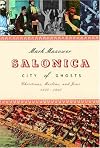
This is the kind of book that makes me want to throw my guide books to Rome, Istanbul, Israel, and Athens in the trash and begin a different kind of world travel. I raved about Salonica for months and recommended it to every general nonfiction reader I know. Several students at the college where I work as a librarian were blown away by this beautifully constructed account of Christians, Jews, and Muslims cohabitating in an incredible cosomopolis. Through what must have been exhausting show more primary research, the author beautifully reconstructs the lives of many, including the obscure and unknown. The illustrations added to my appreciation. (History books should be more heavily illustrated in general.) People who enjoy reading the works of W.G. Sebald, Roberto Bolano, Elaine Pagels, Joseph Campbell, and Rebecca Solnit should read this account of 500 + hundred years in the history of a Greek city. show less

Concise is not cursory. In this short book, Mazower counters the pop historians’ version of Balkan backwardness and explosive, deep-seated nationalism with a skillful consideration of the range of factors that have shaped developments in southeast Europe, from economic geography, failed ideologies and the intervention of powerful neighbors to the confluence of Catholicism, Orthodoxy and Islam and the cynicism of ambitious demagogues. Of course. Consequently, we are encouraged to see the show more Balkan wars of the late 20th c. (the causes more modern than medieval) as from a great height. The Epilogue, an essay on the shifting mentalities and technologies of violence, gives the lie to any notion that the region is marked by a particular brutality. show less
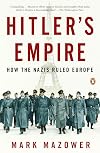
This book aspires to describe in one volume the conduct of government in Europe under the Nazi German hegemon. Thus the author sets himself the task of covering the Final Solution, slave labor, atrocities committed by the contending armies as well as partisans, daily life, the diplomacy behind the innumerable transfers of territory and population between Germany's minor allies, collaborationists, the turf wars in the Nazi hierarchy, war and food production, and economics in general. For show more extra credit his final two chapters take on the various postwar schemes for regional, continental, and, occasionally, world federation and postwar anticolonial revolts, many of them quite obscure. Obviously it is not possible to do this, at least not well, and write a book of a manageable length; these topics, especially the first three, have already produced entire libraries of books. And indeed, at least on the Final Solution, it's difficult for me to believe that two or three chapters contain much that is new, though admittedly I speak from ignorance, not having read much in the area.
In many ways this is an outstanding book. The author is quick to advance revisionist approaches, and it's refreshing to listen to the shattering of all those Greatest Generation schoolroom bromides crashing to the sidewalk, at least when the author documents his points, as in his overarching thesis that a Nazi occupation was not uniform in every country; Denmark held free elections in 1943 and it was certainly less dangerous to live in occupied France than in Poland. Unfortunately, this trait becomes annoying when Mazower simply waves a hand to dismiss a truism, as when he asserts that the Nazi invasion of Yugoslavia in the spring of 1941 didn't affect the failure of their invasion of Russia or that the Wehrmacht was no gentler in its handling of civilians than the SS. These are counterintuitive notions in the first place, and thus need supporting evidence more than most. Conventional wisdom attains its lofty status for a reason, and those idols will retain their place in my mind until some support data are presented. With these reservations, along with, of course, the months necessary to read this, it's a memorable book which does a worthy job of telling you things you didn't know and making you think about the big questions. show less
In many ways this is an outstanding book. The author is quick to advance revisionist approaches, and it's refreshing to listen to the shattering of all those Greatest Generation schoolroom bromides crashing to the sidewalk, at least when the author documents his points, as in his overarching thesis that a Nazi occupation was not uniform in every country; Denmark held free elections in 1943 and it was certainly less dangerous to live in occupied France than in Poland. Unfortunately, this trait becomes annoying when Mazower simply waves a hand to dismiss a truism, as when he asserts that the Nazi invasion of Yugoslavia in the spring of 1941 didn't affect the failure of their invasion of Russia or that the Wehrmacht was no gentler in its handling of civilians than the SS. These are counterintuitive notions in the first place, and thus need supporting evidence more than most. Conventional wisdom attains its lofty status for a reason, and those idols will retain their place in my mind until some support data are presented. With these reservations, along with, of course, the months necessary to read this, it's a memorable book which does a worthy job of telling you things you didn't know and making you think about the big questions. show less

In this short (151 pages) book that won the 2001 Wolfson History Prize, Mark Mazower seeks to dispel the gross characterization of the Balkans as a region of unusual violence and ethnically-based racial hatred. Instead, he portrays a nuanced view of the relationships and conflicts among the various ethnic groups that have lived in Southeast Europe.
He begins with a discussion of the idea of the Balkans, observing that “at the end of the twentieth century, people spoke as if the Balkans had show more existed for ever. Two hundred years earlier, they had not yet come into being.” The region was, by contrast, known as “Turkey in Europe.” But when nation-states emerged during the nineteenth century simultaneously with diplomatic conferences whittling away Ottoman territory, “the Balkans” (named for the mountain range passing from central Europe to Constantinople) started to become common currency for the area.
He uses a a perceptive quote from Friedrich Nietzsche to point out:
"The reputation, name and appearance, the usual measure and weight of a thing . . . . all this grows from generation unto generation, merely because people believe in it, until it gradually grows to be part of the thing and turns into its very body.”
The area as a separate entity also was useful to describe the “intermediate cultural zone between Europe and Asia - in Europe but not of it.” (This distinction is value-laden; Europe was seen as the “civilizing force” operating to modernize the “Oriental” base of rigid religious practices and the prevalence of agrarian poverty. Turks, even now, have never really been accepted as Europeans.)
Historically, life in the Balkans under Turkish rule differed considerably from life in the rest of Europe. There were no separate “nations” under the Ottomans. Christians paid higher taxes than Muslims did, but they were allowed to practice their religion freely. Although there were economic and political incentives to renounce Christianity and convert to Islam, Balkan peasants mainly clung to their ancestral identity as Christians. Nevertheless, religious toleration was much more prevalent under the Ottomans than it was in Western Europe. Mazower maintains that religious peasants tended to mix Muslim, Orthodox, and Jewish practices. Peasants cared little about doctrinal differences and by and large were hardly aware of them, using any available religious rite as a kind of insurance against evil.
Ideas of the Enlightenment and the French Revolution began to penetrate the Balkans in the 18th century. At the same time, partially under the influence and example of the Russians, various groups began to assert their desire to have their Orthodox religious practices conducted in their own language. Serbian, Bulgarian, Romanian, and Albanian Orthodox churches that did not recognize the authority of the Patriarch of Constantinople arose by the early 19th century. Moreover, as Ottoman power waned, various ethnicities, led by the Serbs, began to assert their independence. The defeat of the Ottomans in WWI led to the formation of several small independent language-based countries.
Mazower avers, not always convincingly, that for centuries, “life in the Balkans was no more violent than elsewhere.” He agrees with Arnold Toynbee that the source of the violence was the introduction of the Western notion of the nation-state, which resulted in the ethnic cleansing of 1912-13 in the Balkans, of 1921-22 in Anatolia, and of 1991-95 in Yugoslavia. He claims those outrages were “not…the spontaneous eruption of primeval hatreds but . . . represented the extreme force required by nationalists to break apart a society which was otherwise capable of ignoring the mundane fractures of class and ethnicity.” It seemed to me like a specious distinction. He curtly dismisses wartime massacres in the Balkans against minority groups, writing ingenuously they “represented a fusion of older and newer mentalities and technologies.” In fact, he argued, ministerial orders had . . . been issued forbidding the display of decapitated heads…”. Besides, he adds, “there were no Balkan analogues to the racial violence displayed by Lynch mobs in the United States between 1880 and 1920 or to the class violence which labour protests elicited there are elsewhere.” Massacred Jews might beg to differ, if they could still talk….
Evaluation: This book is remarkably short for all of the information and the panoramic perspective it packs on its pages. It begins with maps and a chronology to help readers put the rest of the material in perspective. While I didn’t agree with all of what he wrote, he brings some important insights into the fascinating history of an area not well known to many Americans.
(JAB) show less
He begins with a discussion of the idea of the Balkans, observing that “at the end of the twentieth century, people spoke as if the Balkans had show more existed for ever. Two hundred years earlier, they had not yet come into being.” The region was, by contrast, known as “Turkey in Europe.” But when nation-states emerged during the nineteenth century simultaneously with diplomatic conferences whittling away Ottoman territory, “the Balkans” (named for the mountain range passing from central Europe to Constantinople) started to become common currency for the area.
He uses a a perceptive quote from Friedrich Nietzsche to point out:
"The reputation, name and appearance, the usual measure and weight of a thing . . . . all this grows from generation unto generation, merely because people believe in it, until it gradually grows to be part of the thing and turns into its very body.”
The area as a separate entity also was useful to describe the “intermediate cultural zone between Europe and Asia - in Europe but not of it.” (This distinction is value-laden; Europe was seen as the “civilizing force” operating to modernize the “Oriental” base of rigid religious practices and the prevalence of agrarian poverty. Turks, even now, have never really been accepted as Europeans.)
Historically, life in the Balkans under Turkish rule differed considerably from life in the rest of Europe. There were no separate “nations” under the Ottomans. Christians paid higher taxes than Muslims did, but they were allowed to practice their religion freely. Although there were economic and political incentives to renounce Christianity and convert to Islam, Balkan peasants mainly clung to their ancestral identity as Christians. Nevertheless, religious toleration was much more prevalent under the Ottomans than it was in Western Europe. Mazower maintains that religious peasants tended to mix Muslim, Orthodox, and Jewish practices. Peasants cared little about doctrinal differences and by and large were hardly aware of them, using any available religious rite as a kind of insurance against evil.
Ideas of the Enlightenment and the French Revolution began to penetrate the Balkans in the 18th century. At the same time, partially under the influence and example of the Russians, various groups began to assert their desire to have their Orthodox religious practices conducted in their own language. Serbian, Bulgarian, Romanian, and Albanian Orthodox churches that did not recognize the authority of the Patriarch of Constantinople arose by the early 19th century. Moreover, as Ottoman power waned, various ethnicities, led by the Serbs, began to assert their independence. The defeat of the Ottomans in WWI led to the formation of several small independent language-based countries.
Mazower avers, not always convincingly, that for centuries, “life in the Balkans was no more violent than elsewhere.” He agrees with Arnold Toynbee that the source of the violence was the introduction of the Western notion of the nation-state, which resulted in the ethnic cleansing of 1912-13 in the Balkans, of 1921-22 in Anatolia, and of 1991-95 in Yugoslavia. He claims those outrages were “not…the spontaneous eruption of primeval hatreds but . . . represented the extreme force required by nationalists to break apart a society which was otherwise capable of ignoring the mundane fractures of class and ethnicity.” It seemed to me like a specious distinction. He curtly dismisses wartime massacres in the Balkans against minority groups, writing ingenuously they “represented a fusion of older and newer mentalities and technologies.” In fact, he argued, ministerial orders had . . . been issued forbidding the display of decapitated heads…”. Besides, he adds, “there were no Balkan analogues to the racial violence displayed by Lynch mobs in the United States between 1880 and 1920 or to the class violence which labour protests elicited there are elsewhere.” Massacred Jews might beg to differ, if they could still talk….
Evaluation: This book is remarkably short for all of the information and the panoramic perspective it packs on its pages. It begins with maps and a chronology to help readers put the rest of the material in perspective. While I didn’t agree with all of what he wrote, he brings some important insights into the fascinating history of an area not well known to many Americans.
(JAB) show less
Lists
Awards


You May Also Like


Associated Authors
Statistics
- Works
- 32
- Also by
- 2
- Members
- 4,167
- Popularity
- #6,043
- Rating
- 3.9
- Reviews
- 49
- ISBNs
- 147
- Languages
- 13
- Favorited
- 12
