

James Holland (2) (1970–)
Author of Normandy '44: D-Day and the Epic 77-Day Battle for France
For other authors named James Holland, see the disambiguation page.
About the Author
James Holland is the author of Big Week, The Rise of Germany, and The Allies Strike Back in the War in the West trilogy, as well as Fortress Malta, Dam Busters, and The Battle of Britain. Holland regularly appears on television and radio and has written and presented the BAFTA shortlisted show more documentaries Battle of Britain and Dam Busters for the BBC, among others. A fellow of the Royal Historical Society, he has his own collection at the Imperial War Museum. show less
Series
Works by James Holland
The Battle of Britain: Five Months that Changed History, May - October 1940 (2010) 367 copies, 13 reviews
Dam Busters: The True Story of the Inventors and Airmen Who Led the Devastating Raid to Smash the German Dams in 1943 (2013) 286 copies, 12 reviews
Brothers in Arms: One Legendary Tank Regiment’s Bloody War From D-Day to VE-Day (2021) 244 copies, 7 reviews
Associated Works
Tagged
Common Knowledge
- Birthdate
- 1970-06-27
- Gender
- male
- Education
- King's School, Bruton, Somerset, UK
St Chad's College, University of Durham, UK - Occupations
- historian
broadcaster
novelist - Organizations
- British Commission for Military History
Guild of Battlefield Guides - Nationality
- UK
- Birthplace
- Salisbury, Wiltshire, England, UK
- Places of residence
- Broad Chalke near Salisbury Wiltshire, England, UK
- Map Location
- UK
Members
Reviews
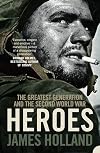
Popular history is now a major genre these days, and one of the most well-trodden paths in that genre are compendiums of veterans' stories from the Second World War. James Holland's Heroes rises above the average works in this genre by not resorting to cliché. Aside from the somewhat unimaginative title, Holland treats his subjects as human beings: ordinary people thrown into extraordinary circumstances. Whilst that in itself is somewhat of a cliché, it is much truer and more appealing show more than those who mythologise the 'Greatest Generation' in wistful and nostalgic tones and implying that we shall never see their like again. As Holland indirectly demonstrates, the heroism displayed by those who fought in the Second World War were human qualities found in all mankind, rather than superhuman qualities found only in that one generation. For example, as fighter pilot Roland Beamont tells Holland in his chapter, I'm sure it's [the famous British stiff upper lip] still there. If our country was ever in danger again, we'd see that reaction. I'm absolutely certain." (pg. 177).
What also makes this book a refreshing read is its diversity. Rather than focus on the veterans of one's own country (as, for example, Stephen Ambrose would) or one theatre of warfare, Holland draws his subjects from different theatres and countries, including chapters on an Italian partisan, a Polish soldier and a German paratrooper. The chapter on the Italian partisan was particularly rewarding and, in my opinion, the finest of the many fine stories presented here. The tales of the impressive feats of heroism are strengthened even further by Holland's easy readability and extensive knowledge of the wider war, and his skill in meshing this strategic view with the personal stories." show less
What also makes this book a refreshing read is its diversity. Rather than focus on the veterans of one's own country (as, for example, Stephen Ambrose would) or one theatre of warfare, Holland draws his subjects from different theatres and countries, including chapters on an Italian partisan, a Polish soldier and a German paratrooper. The chapter on the Italian partisan was particularly rewarding and, in my opinion, the finest of the many fine stories presented here. The tales of the impressive feats of heroism are strengthened even further by Holland's easy readability and extensive knowledge of the wider war, and his skill in meshing this strategic view with the personal stories." show less
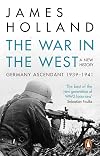
This is history on a grand scale. James Holland has limited himself to the war in the west, covering the period up to the German invasion of the USSR in June 1941. So in terms of territory, it reaches from the Arctic down to central Africa, from India across Europe to North America, and involves millions of people involved in the most devastating war ever fought. So, not very ambitious then.
Holland has done a brilliant job of it. Reviewers have focused on his 'myth-busting' and Holland has show more indeed done excellent work: he makes it clear that by the summer of 1940, it was not Britain standing all alone, but Germany. In picking a fight with Britain and its empire, and eventually the United States as well, Hitler had chosen the wrong enemy. While other historians may look back at the era and be amazed at how Britain and its allies eventually won the war, to Holland the amazing thing seems to be that the Germans ever imagined they'd have a chance of success. His focus on the seas, on merchant navies and access to resources, is spot on. So long as Britain had access to the entire world and its resources, and Nazi Germany remained behind a largely-effective Royal Navy blockade, the outcome of the war could be in little doubt.
Weighing in at over 700 pages, the only downside of this book is now I'll have to read the remaining two volumes -- so, there goes January ... show less
Holland has done a brilliant job of it. Reviewers have focused on his 'myth-busting' and Holland has show more indeed done excellent work: he makes it clear that by the summer of 1940, it was not Britain standing all alone, but Germany. In picking a fight with Britain and its empire, and eventually the United States as well, Hitler had chosen the wrong enemy. While other historians may look back at the era and be amazed at how Britain and its allies eventually won the war, to Holland the amazing thing seems to be that the Germans ever imagined they'd have a chance of success. His focus on the seas, on merchant navies and access to resources, is spot on. So long as Britain had access to the entire world and its resources, and Nazi Germany remained behind a largely-effective Royal Navy blockade, the outcome of the war could be in little doubt.
Weighing in at over 700 pages, the only downside of this book is now I'll have to read the remaining two volumes -- so, there goes January ... show less
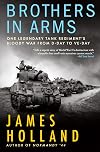
Considering the never-ending onslaught of books on World War II, I've been aware of James Holland for awhile, but nothing that he has previously written really seemed essential to me. However, the "Band of Brothers" treatment of a tank unit did seem like a worthwhile exercise, and from here on out I'm going to be paying attention to this author. While the focus is on the men who passed through this unit, and the sheer awfulness of the war of attrition that they were thrown into, Holland does show more a very good job of imparting hard information on just how all the moving parts worked, making no presumptions that the reader understands how such a basic tank unit does its job. There is really nothing to mark this book down for but it does peak early with its coverage of the battles to break out of Normandy, before settling into coverage of the grinding infantry-support battles that the Sherwood Rangers were involved in. show less
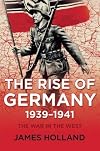
Given the mountain of books that have been written about the Second World War, it is difficult to imagine that there is anything new to say in the subject. Yet for some time now a growing critique of the long-received wisdom has emerged, one that brings a new understanding to the factors that shaped the conflict and its outcome. James Holland's book ranks among the contributors to this critique. The first of a projected three-volume study of the war in Europe, he addresses the familiar show more narrative of the first 22 months of the war and offers some provocative yet convincing explanations for how events developed in the way that they did.
Holland makes it clear at the start of the book that his focus is on "operational history," or the effort to turn ideas and goal of the strategists into battlefield realities. This is a focus often missing from surveys of the war, and its use here provides for some reconsiderations of received ideas about the war. Here Germany's Wehrmacht is not the sleek, modern, panzer-driven force, but a mainly horse-drawn army that relies on a good deal of risk-taking and bluff. By contrast Germany's enemies, particularly the British, enjoy far more modern equipment and a greater edge in terms of their forces. This disparity helps to highlight the command failings, especially those of the French, which contributed to the Allied debacle in 1940. Yet the Germans themselves made numerous mistakes, many of which contributed to the prolongation of the conflict and set the stage for their defeat in the war.
An accomplished writer, Holland provides readers with an analytical narrative of the war that is both readable and interesting. While better editing could have cut down on some of the repetitions and sloppy errors, these are minor complaints given the overall quality of the book. It's one that everybody interested in the conflict should read, both for the arguments Holland makes and the overall enjoyability of the book. show less
Holland makes it clear at the start of the book that his focus is on "operational history," or the effort to turn ideas and goal of the strategists into battlefield realities. This is a focus often missing from surveys of the war, and its use here provides for some reconsiderations of received ideas about the war. Here Germany's Wehrmacht is not the sleek, modern, panzer-driven force, but a mainly horse-drawn army that relies on a good deal of risk-taking and bluff. By contrast Germany's enemies, particularly the British, enjoy far more modern equipment and a greater edge in terms of their forces. This disparity helps to highlight the command failings, especially those of the French, which contributed to the Allied debacle in 1940. Yet the Germans themselves made numerous mistakes, many of which contributed to the prolongation of the conflict and set the stage for their defeat in the war.
An accomplished writer, Holland provides readers with an analytical narrative of the war that is both readable and interesting. While better editing could have cut down on some of the repetitions and sloppy errors, these are minor complaints given the overall quality of the book. It's one that everybody interested in the conflict should read, both for the arguments Holland makes and the overall enjoyability of the book. show less
Lists
Awards


You May Also Like


Associated Authors
Statistics
- Works
- 43
- Also by
- 1
- Members
- 4,312
- Popularity
- #5,822
- Rating
- 4.1
- Reviews
- 90
- ISBNs
- 239
- Languages
- 6
- Favorited
- 5