
Peter Caddick-Adams
Author of Snow & Steel: The Battle of the Bulge, 1944-45
About the Author
Peter Caddick-Adams has been a professional military historian for over twenty years and served for thirty years in the British Army. He was twice deployed on operations as the UK's official historian in Bosnia and Iraq. He specializes in leading visits to battlefields around the world. A frequent show more contributor to television and radio on defense issues, he lives in Oxfordshire, England, with his wife and daughter. show less
Series
Works by Peter Caddick-Adams
Tagged
Common Knowledge
- Birthdate
- 1960
- Gender
- male
- Education
- Royal Military Academy, Sandhurst
University of Wolverhampton
Cranfield University - Occupations
- soldier
historian
journalist - Organizations
- British Army
- Awards and honors
- Territorial Decoration
Royal Historical Society (Fellow)
Royal Geographical Society (Fellow) - Nationality
- UK
- Birthplace
- Chelsea, London, England, UK
- Map Location
- UK
Members
Reviews
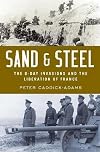
While I had been highly impressed with the author's book on the Ardennes Offensive, when I looked at this hunk of processed wood pulp I'll admit wondering whether I even wanted to get stuck in. However, I did persevere and can recommend it with very few reservations. One thing that has to be kept in mind is that this is a narrower book than it looks, with about half of the book devoted to the preparation for D-Day, and the other half devoted to D-Day itself. If you're interested in the show more conduct of the war after 6/6/1944 you'll be disappointed.
As for Caddick-Adams' mission, much of it relates to examining, and in a lot cases debunking, the myths that were created by Cornelius Ryan's "The Longest Day" (both the book and the film), and Steven Spielberg's "Saving Private Ryan." From there, there is also an effort to put the experiences of the other assault beaches into perspective, as the epic desperation experienced on "Omaha" beach tends to suck all the oxygen out of the room. In particular, this means playing up the Canadian experience on "Juno" Beach, and critically examining whether the British forces on "Sword" beach really had a chance to grab Caen. In the second case, the author has to conclude that while Bernard Montgomery may have had daydreams about grabbing the French town, he wasn't prepared to admit that the resources just weren't there to enable the mission to be accomplished; it should be noted that Caddick-Adams is not a great admirer of the field marshal.
One could go on and on about the all the small, but, salient matters that the author makes note of, from the experiences of the German make-weight battalions recruited from their POW camps, to the impact of the clockwork Allied invasion plan, to how the dicey weather inflicted havoc on the small land craft and amphibious vehicles, to squarely facing the mediocrity of the (for the most part) German anti-invasion plan. Still, at the end of the day, Caddick-Adams has to conclude that it was fortunate that June 6 was chosen as "the day" and that Eisenhower deserves all the credit in the world for having the moral courage to pull the trigger.
Highly recommended. show less
As for Caddick-Adams' mission, much of it relates to examining, and in a lot cases debunking, the myths that were created by Cornelius Ryan's "The Longest Day" (both the book and the film), and Steven Spielberg's "Saving Private Ryan." From there, there is also an effort to put the experiences of the other assault beaches into perspective, as the epic desperation experienced on "Omaha" beach tends to suck all the oxygen out of the room. In particular, this means playing up the Canadian experience on "Juno" Beach, and critically examining whether the British forces on "Sword" beach really had a chance to grab Caen. In the second case, the author has to conclude that while Bernard Montgomery may have had daydreams about grabbing the French town, he wasn't prepared to admit that the resources just weren't there to enable the mission to be accomplished; it should be noted that Caddick-Adams is not a great admirer of the field marshal.
One could go on and on about the all the small, but, salient matters that the author makes note of, from the experiences of the German make-weight battalions recruited from their POW camps, to the impact of the clockwork Allied invasion plan, to how the dicey weather inflicted havoc on the small land craft and amphibious vehicles, to squarely facing the mediocrity of the (for the most part) German anti-invasion plan. Still, at the end of the day, Caddick-Adams has to conclude that it was fortunate that June 6 was chosen as "the day" and that Eisenhower deserves all the credit in the world for having the moral courage to pull the trigger.
Highly recommended. show less
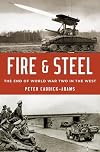
A worthy conclusion to an excellent trilogy, as first, Caddick-Adams presents a coherent operational portrait of the last 100 days of World War II in Northwest Europe. This book would be worthwhile for that if nothing else.
Two, the man continues his mission to debunk some of the "just so" stories that have come down from the war. These include such matters as the agendas and plans relating to crossing the Rhine into Germany, the trade-offs between the reduction of the Ruhr Pocket and the show more Western allies trying to grab Berlin from the Soviets, the murky story of Anglo-American and Soviet encounters along the Oder River, and the command stresses in ETO as the endgame finally became apparent.
Third and finally, Caddick-Adams devotes a great deal of time to the Allies coming into direct contact with the Nazi economy of forced labor and genocide, and how that radicalized and supercharged a slightly flagging effort; no one who encountered the death camps needed to have any further explanation of what they were fighting for.
I still think the man's book about D-Day and Normandy is the best portion of the lot, but one could do a lot worse than tackling this trilogy. show less
Two, the man continues his mission to debunk some of the "just so" stories that have come down from the war. These include such matters as the agendas and plans relating to crossing the Rhine into Germany, the trade-offs between the reduction of the Ruhr Pocket and the show more Western allies trying to grab Berlin from the Soviets, the murky story of Anglo-American and Soviet encounters along the Oder River, and the command stresses in ETO as the endgame finally became apparent.
Third and finally, Caddick-Adams devotes a great deal of time to the Allies coming into direct contact with the Nazi economy of forced labor and genocide, and how that radicalized and supercharged a slightly flagging effort; no one who encountered the death camps needed to have any further explanation of what they were fighting for.
I still think the man's book about D-Day and Normandy is the best portion of the lot, but one could do a lot worse than tackling this trilogy. show less
I have often said to friends that there are great historians and great writers and occasionally someone who is both and when you find one of those you have a keeper. Peter Caddick-Adams is one of these rare unicorns which he so clearly demonstrates in the last book of his Trilogy on the Western European Theater.
Fire and Steel: The End of World War II in the West is a 5 star read which focuses on the under studied and read on post Battle of the Bulge period, which includes the breaching of show more the West Wall, the crossing of the Rhine and the final advance on and surrender of German Forces.
Adams is great at painting the big picture while never losing sight of the small unit and individual contributors to the Allied Victory in Europe and winds up the book on the post war careers of key senior Allied Leadership. show less
Fire and Steel: The End of World War II in the West is a 5 star read which focuses on the under studied and read on post Battle of the Bulge period, which includes the breaching of show more the West Wall, the crossing of the Rhine and the final advance on and surrender of German Forces.
Adams is great at painting the big picture while never losing sight of the small unit and individual contributors to the Allied Victory in Europe and winds up the book on the post war careers of key senior Allied Leadership. show less
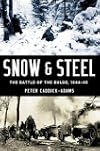
Though if one wanted to just read a "lines-on-the-map" campaign history you might be better off with Trevor Dupuy's "Hitler's Last Gamble," I came away impressed with this wide-ranging narrative that seeks to place the campaign in a wide range of contexts; tactical, operational, strategic and beyond. However, if the author has a particular mission though, it's to debunk the conspiratorial accusations of Charles Whiting that U.S. VIII Corps was set up to fail and thus draw German forces in show more the West into a trap; as a man who has spent quality time in multi-national theater-level HQs Caddick-Adams has little patience with high-level organizational conspiracies. On the other hand, the author has no doubt that operational surprise such as the Germans sprung is still a possibility; witness the achievement of the Arab alliance in 1973 and el-Qaeda in 2001. show less
Lists
THE WAR ROOM (1)
Awards

You May Also Like


Associated Authors
Statistics
- Works
- 10
- Members
- 807
- Popularity
- #31,608
- Rating
- 4.3
- Reviews
- 20
- ISBNs
- 39
- Languages
- 2