
Hugh Sebag-Montefiore
Author of Enigma : The battle for the code
About the Author
Hugh Sebag-Montefiore is an attorney and journalist who has written for numerous British newspapers, including the Sunday Times, the Sunday Telegraph, and the Observer
Disambiguation Notice:
Don't combine with Rt. Rev. Hugh William Montefiore (1920-2005) born Hugh Sebag-Montefiore, Anglican bishop and theologian.
Image credit: Nicholas Hugh Sebag-Montefiore talked to David Freeman when his book 'Enigma' was first published - 2008-01-22
Works by Hugh Sebag-Montefiore
Associated Works
MHQ: The Quarterly Journal of Military History — Spring 2008 (2008) — Author "The Mechelen Affair" — 10 copies
Tagged
Common Knowledge
- Canonical name
- Sebag-Montefiore, Hugh
- Legal name
- Sebag-Montefiore, Nicholas Hugh
- Birthdate
- 1955-03-05
- Gender
- male
- Education
- Magdalene College, Cambridge University
Harrow School - Occupations
- barrister
journalist
historian - Organizations
- Auteur
Advocaat
Journalist - Relationships
- Sebag Montefiore, Simon (brother)
Montefiore, Santa (sister-in-law)
Montefiore, Moses (great-great-uncle)
Burnstock, Aviva (wife) - Short biography
- Hugh Sebag-Montefiore was born to a famous Anglo-Jewish family. He trained as a barrister before becoming a journalist and then a nonfiction writer. He is the brother of Simon Sebag Montefiore. They are descended from a line of wealthy Sephardic Jews who were diplomats and bankers throughout Europe. At the start of the 19th century, his great-great uncle, Sir Moses Montefiore, became a banking partner of N. M. Rothschild & Sons and an international philanthropist. The family owned the estate of Bletchley Park until they sold it to the British government in 1938. Hugh's first book was Enigma: The Battle for the Code, the story of breaking the German Enigma machine code at Bletchley Park during World War II (2000). His second book was Dunkirk: Fight to the Last Man, published in 2006.
- Nationality
- UK
- Disambiguation notice
- Don't combine with Rt. Rev. Hugh William Montefiore (1920-2005) born Hugh Sebag-Montefiore, Anglican bishop and theologian.
- Associated Place (for map)
- UK
Members
Reviews
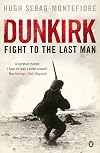
A must read if you're interested in the period when the phoney war became real, but it has to be said it'd be uncomfortable reading for anyone related to the Belgian and French Generals of the time who are crucified by the author. Whilst there are criticisms of the British it has to be said that the author takes a somewhat jingoistic approach with the Brits generally being heroic to the last and the other allies being inept at best if not actually cowardly. How true a picture this is is show more difficult to judge, but some eminent historical writers are quoted fawning over the book on its cover, so maybe it isn't seen through quite the tinted spectacles as it sometimes seems to be.
The key conclusion to be drawn from this book, however, is that the German war machine was no all conquering unstoppable sledgehammer. Time and again the forces they were facing failed and failed miserably. Actually it might be that the Germans were actually all-powerful, but this book shows that evidence for that assertion cannot be drawn from the victories in The Netherlands, Luxembourg, Belgium and France. show less
The key conclusion to be drawn from this book, however, is that the German war machine was no all conquering unstoppable sledgehammer. Time and again the forces they were facing failed and failed miserably. Actually it might be that the Germans were actually all-powerful, but this book shows that evidence for that assertion cannot be drawn from the victories in The Netherlands, Luxembourg, Belgium and France. show less

The story of the breaking of the Enigma code in World War 2 is a fascinating one. It is filled with brilliance, daring, danger and betrayal. Hugh Sebag-Montefiore has written an exemplary history, combining extensive archival research with gripping prose. Churchill was as aware as anyone of the importance of the success, or failure, of codebreaking efforts at Bletchley Park. He described those who worked there as “The goose that laid the golden egg and never cackled”. Secrecy was of the show more essence. Sebag-Montefiore describes the challenges of utilising the intelligence gained from breaking German military coded messages, whilst ensuring that the German’s never found out, thus ending this advantage.
Several times doubt was cast on the security of Germany’s ciphers. The book focusses particularly on the doubts of Admiral Donitz, head of the German Navy who seems to have been the most security conscious high commander. Several times he requested investigations, and the updated edition of the book uses new evidence to cast particular attention on a 1943 investigation which once again reassured the Germans of the safety of the code, as usual on spurious grounds.
The core of the book however focuses on how Britain ended up being able to break the code. Sebag-Montefiore justly praises the work of the Bletchley Park codebreakers, acknowledging the well known Alan Turing but also examining the contributions of other codebreakers such as Dilly Knox, Gordon Welchman and Harry Hinsley. The book contains some excellent descriptions of the codebreaking process, including a number of appendices describing in more detail such idiosyncratic practices as bombes, cillis, rodding and banburismus.
One of his main themes though is how the all important (and most difficult) naval codes would probably never have been broken just through the brilliance of the mathematicians at Bletchley Park. Frank Birch, head of the German section recounted how in late 1940 Turing and Twinn approached him in dispair of breaking the naval code. “The burden of their song was the importance of a pinch. Did the authorities realise that since the Germans did the dirt on their machine on 1 June there was very little hope if any of their deciphering current, or even approximating current, enigma for months and months and months – if ever?”
Sebag-Montefiore describes the missions to carry out ‘a pinch’ of German coding equipment and materials dramatically, with vivid scenes of desperate attempts to recover books from trawlers and U-Boats. He also provides a gripping passage on the drama of convoy PQ17, a tragic victim of slow codebreaking and difficult decisions.
Another fascinating story is that of the pre-war efforts of the French and Poles, including a dangerous espionage game with Hans Thilo Schmidt, who worked in the German cryptography office. His is an exciting and tragic story of a character who can either be looked at as a hero for the allies, or a money-motivated traitor. Either way his contributions were important for the pre-war codebreaking efforts of all parties in various ways. His information was initially useful for the Poles, who went on to complete some extraordinary work breaking Enigma in the pre-war years.
The story of “Ultra” and the breaking of Enigma is exciting, multifaceted and an important aspect of the victory over the Germans. As Sebag-Montefiore points out it was not a central or perfect factor. Success at codebreaking came and went, was not always timely and was always contingent on there being sufficient military force to exploit the knowledge. It is an important story though, and this book certainly gives it justice. show less
Several times doubt was cast on the security of Germany’s ciphers. The book focusses particularly on the doubts of Admiral Donitz, head of the German Navy who seems to have been the most security conscious high commander. Several times he requested investigations, and the updated edition of the book uses new evidence to cast particular attention on a 1943 investigation which once again reassured the Germans of the safety of the code, as usual on spurious grounds.
The core of the book however focuses on how Britain ended up being able to break the code. Sebag-Montefiore justly praises the work of the Bletchley Park codebreakers, acknowledging the well known Alan Turing but also examining the contributions of other codebreakers such as Dilly Knox, Gordon Welchman and Harry Hinsley. The book contains some excellent descriptions of the codebreaking process, including a number of appendices describing in more detail such idiosyncratic practices as bombes, cillis, rodding and banburismus.
One of his main themes though is how the all important (and most difficult) naval codes would probably never have been broken just through the brilliance of the mathematicians at Bletchley Park. Frank Birch, head of the German section recounted how in late 1940 Turing and Twinn approached him in dispair of breaking the naval code. “The burden of their song was the importance of a pinch. Did the authorities realise that since the Germans did the dirt on their machine on 1 June there was very little hope if any of their deciphering current, or even approximating current, enigma for months and months and months – if ever?”
Sebag-Montefiore describes the missions to carry out ‘a pinch’ of German coding equipment and materials dramatically, with vivid scenes of desperate attempts to recover books from trawlers and U-Boats. He also provides a gripping passage on the drama of convoy PQ17, a tragic victim of slow codebreaking and difficult decisions.
Another fascinating story is that of the pre-war efforts of the French and Poles, including a dangerous espionage game with Hans Thilo Schmidt, who worked in the German cryptography office. His is an exciting and tragic story of a character who can either be looked at as a hero for the allies, or a money-motivated traitor. Either way his contributions were important for the pre-war codebreaking efforts of all parties in various ways. His information was initially useful for the Poles, who went on to complete some extraordinary work breaking Enigma in the pre-war years.
The story of “Ultra” and the breaking of Enigma is exciting, multifaceted and an important aspect of the victory over the Germans. As Sebag-Montefiore points out it was not a central or perfect factor. Success at codebreaking came and went, was not always timely and was always contingent on there being sufficient military force to exploit the knowledge. It is an important story though, and this book certainly gives it justice. show less
I believe I picked up this book after browsing someone's library on LibraryThing. This is why I am not supposed to browse. I majored in History in graduate school and the Holocaust and WWII are the topics I am obsessed with. It became quite clear early in the book that I didn't know much about the evacuation at Dunkirk. I knew of it as who doesn't but not about it.
It turns out unsurprisingly to have been horrific. Hugh Sebag-Montefiore takes a day by day, battalion (or brigade or company - I show more have a hell of a time with these military units) by battalion look at what occurred. Of the 665 pages of text 160 are notes and maps. The book covers the time period of May 14 to June 17, 1940. Obviously it is very detailed. Beginning with the British realization that they were going to need an evacuation plan as the Germans pushed into France and Belgium the tale picks up tension with every chapter. The French do not come off at all well in this book although Sebag-Montefiore gives credit where due to the the instances of French courage. Part of the problem with the French military was that they refused to believe the threat in the East and did not prepare. Far too many of their troops were untrained or poorly trained. If you have read much about war you might be able to understand their fear. Unfortunately the British government, despite Churchill's lone warnings, was not preparing for war either. They, however, had a much better discipline both in the military and at home once the war started.
The entire tale takes place in the north and northeast of France close to the Belgian border, which is where Dunkirk is. In ever smaller circles the British Expeditionary Force and the French attempted to forestall the Germans and guard the corridor to Dunkirk while funneling troops to that location. It sounds very simple but it was far from it. There were constant struggles between the British and French commanders in the field, between the BEF and the British government and between the governments of both countries. There were certain promises given when Britain and France allied themselves against Germany and the French were not happy to see the BEF depart. In many cases they either deliberately or cravenly kept British troops from getting to Dunkirk in time. For anyone who doesn't know this period in history, once France capitulated (which was a foregone conclusion early on) the British would be faced with a German attack on their shores. They needed to pull out as many men as they could to fight the Battle of Britain and to be able to continue the war alone. They also evacuated their troops from Norway.
The tales of heroism and horror are very explicit as are the tales of German treachery. One thing I was mistaken in was thinking the German military were not as bestial as the Nazi SS or concentration camp personnel. It appears they were almost all alike in this way. There are numerous accounts of reprisals taken out on innocent civilians after allied troops pulled back. British prisoners in several cases were summarily executed, burned alive, and horribly mistreated. This is not beach reading. Despite the heartbreaking stories this is a very interesting book. While there are many dates, place names, and personnel to keep track of it is surprisingly easy to do so. And in the end tens of thousands of British and French soldiers lived to fight another day.
I happen to be a wholehearted fan of Churchill. I believe there has never been a world leader as admirable as he. He plays a small role in the background of this book but his reputation remains intact. If you are one of the many who finds history dull, as it usually is in school, this book would change your mind. show less
It turns out unsurprisingly to have been horrific. Hugh Sebag-Montefiore takes a day by day, battalion (or brigade or company - I show more have a hell of a time with these military units) by battalion look at what occurred. Of the 665 pages of text 160 are notes and maps. The book covers the time period of May 14 to June 17, 1940. Obviously it is very detailed. Beginning with the British realization that they were going to need an evacuation plan as the Germans pushed into France and Belgium the tale picks up tension with every chapter. The French do not come off at all well in this book although Sebag-Montefiore gives credit where due to the the instances of French courage. Part of the problem with the French military was that they refused to believe the threat in the East and did not prepare. Far too many of their troops were untrained or poorly trained. If you have read much about war you might be able to understand their fear. Unfortunately the British government, despite Churchill's lone warnings, was not preparing for war either. They, however, had a much better discipline both in the military and at home once the war started.
The entire tale takes place in the north and northeast of France close to the Belgian border, which is where Dunkirk is. In ever smaller circles the British Expeditionary Force and the French attempted to forestall the Germans and guard the corridor to Dunkirk while funneling troops to that location. It sounds very simple but it was far from it. There were constant struggles between the British and French commanders in the field, between the BEF and the British government and between the governments of both countries. There were certain promises given when Britain and France allied themselves against Germany and the French were not happy to see the BEF depart. In many cases they either deliberately or cravenly kept British troops from getting to Dunkirk in time. For anyone who doesn't know this period in history, once France capitulated (which was a foregone conclusion early on) the British would be faced with a German attack on their shores. They needed to pull out as many men as they could to fight the Battle of Britain and to be able to continue the war alone. They also evacuated their troops from Norway.
The tales of heroism and horror are very explicit as are the tales of German treachery. One thing I was mistaken in was thinking the German military were not as bestial as the Nazi SS or concentration camp personnel. It appears they were almost all alike in this way. There are numerous accounts of reprisals taken out on innocent civilians after allied troops pulled back. British prisoners in several cases were summarily executed, burned alive, and horribly mistreated. This is not beach reading. Despite the heartbreaking stories this is a very interesting book. While there are many dates, place names, and personnel to keep track of it is surprisingly easy to do so. And in the end tens of thousands of British and French soldiers lived to fight another day.
I happen to be a wholehearted fan of Churchill. I believe there has never been a world leader as admirable as he. He plays a small role in the background of this book but his reputation remains intact. If you are one of the many who finds history dull, as it usually is in school, this book would change your mind. show less
A good history is immersive. It’s easy to sputter and choke as an immense wave of details washes over you, but if you are interested enough, engaged enough, you learn how to take it in—assimilate it—almost as if you have learned to breath underwater. DUNKIRK—FIGHT TO THE LAST MAN is impressively researched and annotated and certainly can swamp you with facts: names, dates, locations and landscapes, troop missions and movements, weaponry and the relative wisdom of those involved all show more swirl into a dense and vivid presentation. The history however is leavened with enough humanity, tales of bravery and stupidity, that you remember these facts work in service of a greater ambition. To show how history is propelled by a few people, carries many more with its passion but most people are just trying to get out of the way before it crushes them.
A good history also deflates myths. Prior to reading DUNKIRK-FIGHT TO THE LAST MAN, I could draw only the barest sketch of the events surrounding the massive WWII rescue operation. I was aware that a flotilla mixing personal and naval crafts ran stranded soldiers from a disintegrating wartime France back to England in just the nick of time. In my mind it was mostly civilian boats with the almost cartoonish image of the last English soldier escaping unscathed as the Germans run toward the docks shaking their heads and their fists. Rarely is history so clean. The first best way the author deals with this is by saving the actual evacuation for the end of the book. Instead, the evacuation looms in the back of your mind while you live through the early days of the war where the seeds were sewn for catastrophe. The frustration builds as the early political failings and arrogant military fumblings are exposed by the Nazi Blitzkrieg. Once the Germans finally attack, the narrative that spoke in days and hours drops down to an almost minute by minute recreation of events. What fascinated me most during this portion of the book was how it was not so much that the Blitzkrieg was unstoppable (and it may have been) but at how many junctures early in the war entire campaigns turned on the greatness or failings of a few people. And sometimes simple bad timing. This reminded me of the much more familiar territory of the D-Day landings. While history now lends the landings a gravitas of inevitability, success was far from assured. The luck that many German leaders, tanks and troops happened to be in the wrong place at the right time was just as important as the months of planning that went into the landings. Imagine this is true of most wars but likely underappreciated.
The human toll is horrific before the city of Dunkirk is even mentioned—already destroying any remaining romantic myths about this rescue. While the story remains both intriguing and devastating through to the last of the book, it is as we approach Dunkirk that the two major flaws pop up in the book. Early on it is teased that the Germans made a mistake by not addressing the city of Dunkirk earlier with sufficient force. Almost nothing is said after that about the German decision process leading to their not fully appreciating the military importance of Dunkirk. Many other parts of the book benefit from the German perspective and the minute by minute tale continued and I kept waiting, but this discussion never materialized—and it was largely why I read the book! The second flaw may be more personal to my curiosity but also early in the book, the involvement of the individual civilian boat owners was teased but during the actual recovery effort they were given short shrift.
All historians have agendas—at least authors certainly do—and I understand choices have to be made but I would have been happy with two paragraphs for flaw one and two or three more anecdotes for flaw two. I know that newly discovered information regarding the troops sacrificed and left behind so that as many other soldiers as possible could escape was a selling point for this particular take on Dunkirk, but I still felt a little cheated at the end. That being said, I highly recommend this un-sanitized take on Dunkirk for anyone who wants an in depth look at this story in particular or a greater understanding of the mechanics of warfare in general. show less
A good history also deflates myths. Prior to reading DUNKIRK-FIGHT TO THE LAST MAN, I could draw only the barest sketch of the events surrounding the massive WWII rescue operation. I was aware that a flotilla mixing personal and naval crafts ran stranded soldiers from a disintegrating wartime France back to England in just the nick of time. In my mind it was mostly civilian boats with the almost cartoonish image of the last English soldier escaping unscathed as the Germans run toward the docks shaking their heads and their fists. Rarely is history so clean. The first best way the author deals with this is by saving the actual evacuation for the end of the book. Instead, the evacuation looms in the back of your mind while you live through the early days of the war where the seeds were sewn for catastrophe. The frustration builds as the early political failings and arrogant military fumblings are exposed by the Nazi Blitzkrieg. Once the Germans finally attack, the narrative that spoke in days and hours drops down to an almost minute by minute recreation of events. What fascinated me most during this portion of the book was how it was not so much that the Blitzkrieg was unstoppable (and it may have been) but at how many junctures early in the war entire campaigns turned on the greatness or failings of a few people. And sometimes simple bad timing. This reminded me of the much more familiar territory of the D-Day landings. While history now lends the landings a gravitas of inevitability, success was far from assured. The luck that many German leaders, tanks and troops happened to be in the wrong place at the right time was just as important as the months of planning that went into the landings. Imagine this is true of most wars but likely underappreciated.
The human toll is horrific before the city of Dunkirk is even mentioned—already destroying any remaining romantic myths about this rescue. While the story remains both intriguing and devastating through to the last of the book, it is as we approach Dunkirk that the two major flaws pop up in the book. Early on it is teased that the Germans made a mistake by not addressing the city of Dunkirk earlier with sufficient force. Almost nothing is said after that about the German decision process leading to their not fully appreciating the military importance of Dunkirk. Many other parts of the book benefit from the German perspective and the minute by minute tale continued and I kept waiting, but this discussion never materialized—and it was largely why I read the book! The second flaw may be more personal to my curiosity but also early in the book, the involvement of the individual civilian boat owners was teased but during the actual recovery effort they were given short shrift.
All historians have agendas—at least authors certainly do—and I understand choices have to be made but I would have been happy with two paragraphs for flaw one and two or three more anecdotes for flaw two. I know that newly discovered information regarding the troops sacrificed and left behind so that as many other soldiers as possible could escape was a selling point for this particular take on Dunkirk, but I still felt a little cheated at the end. That being said, I highly recommend this un-sanitized take on Dunkirk for anyone who wants an in depth look at this story in particular or a greater understanding of the mechanics of warfare in general. show less
Lists
Awards


You May Also Like


Associated Authors
Statistics
- Works
- 8
- Also by
- 1
- Members
- 1,882
- Popularity
- #13,674
- Rating
- 3.8
- Reviews
- 22
- ISBNs
- 53
- Languages
- 6
- Favorited
- 2


