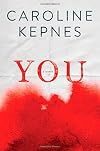
As a writer, there are several things you can do to make your already difficult job almost impossible. In increasing order of challenge you can:
1. Write in first person
2. If you're female, make your first person protagonist male (or vice versa)
3. Make the first person narrator profoundly unreliable...
4. ...and a complete psycho
Caroline Kempnes pulls off this grand slam in You, told entirely from the perspective of Joe, a stalker you would certainly not want dating your daughter. This is a book in which there are no likeable characters, and yet it is compelling from start to finish. It would be wrong to describe Joe as an anti-hero--there's no hero about him--but he is darkly humorous and chillingly self-aware. It is hard for the reader to avoid feeling complicit in his activities, which makes for an uncomfortable read at times.
You is a disturbing but never less than engrossing read.
1. Write in first person
2. If you're female, make your first person protagonist male (or vice versa)
3. Make the first person narrator profoundly unreliable...
4. ...and a complete psycho
Caroline Kempnes pulls off this grand slam in You, told entirely from the perspective of Joe, a stalker you would certainly not want dating your daughter. This is a book in which there are no likeable characters, and yet it is compelling from start to finish. It would be wrong to describe Joe as an anti-hero--there's no hero about him--but he is darkly humorous and chillingly self-aware. It is hard for the reader to avoid feeling complicit in his activities, which makes for an uncomfortable read at times.
You is a disturbing but never less than engrossing read.
Wasp by Ian Garbutt
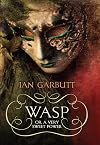
This exquisitely-written historical novel defies ready categorisation. It's the story of Bethany/Kitten/Wasp, rescued from immolation in a madhouse to be trained as a courtesan in a mysterious Regency escort agency. If you demand breakneck pace, this book isn't for you, but it has everything else: rounded and credible characters, intrigue and a plot of clockwork precision. It has echoes of Dickens and Sarah Waters, but Ian Garbutt's voice is wholly original.
Highly recommended - my novel of the year so far, and we're in December....
Highly recommended - my novel of the year so far, and we're in December....
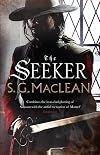
I found this a hard novel to assess. In most aspects The Seeker is a hugely accomplished and absorbing novel. S.G. MacLean evokes the darkness and paranoia of Cromwell's England with economy and precision, and delivers a neatly plotted murder mystery which dovetails nicely with the political backdrop. However...
...the character of Damian Seeker, the protagonist, seems to come from a different and inferior novel. Seeker is a stereotypically dark and damaged anti-hero we have all come across in fiction many times before. He is attractive to women without realising it, nurses a battered integrity and is never, ever wrong. He can tell infallibly if someone is lying and is, of course, a peerless swordsman. And underneath his forbidding exterior, we find he does have a heart which simply awaits the appropriate prompt...
I have not read any of S.G. MacLean's work before, and there was so much I liked in the book that I will certainly read more, but it may be a while before I sit down with Damian Seeker again.
...the character of Damian Seeker, the protagonist, seems to come from a different and inferior novel. Seeker is a stereotypically dark and damaged anti-hero we have all come across in fiction many times before. He is attractive to women without realising it, nurses a battered integrity and is never, ever wrong. He can tell infallibly if someone is lying and is, of course, a peerless swordsman. And underneath his forbidding exterior, we find he does have a heart which simply awaits the appropriate prompt...
I have not read any of S.G. MacLean's work before, and there was so much I liked in the book that I will certainly read more, but it may be a while before I sit down with Damian Seeker again.
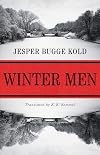
Fiction about the lives of Germans in Nazi Germany normally falls into one of three categories: the Jewish experience; Germans implicitly or explicitly opposed to the regime (see Philip Kerr, Luke McCallin, Ben Pastor); or portraits of monsters (David Thomas's Ostland).
The Winter Men is closest to the third of these classes, taking us through the war experiences of two German brothers, both of whom are portrayed as reasonable men, and both of whom end up in the SS. The path each takes to end in committing unspeakable atrocities is set out with chilling plausibility. Both Karl and Gerhard end up, unquestionably, as monsters; but the strength of the novel is that they both remain recognisably human.
The Winter Men is a searing portrayal of evil, and how those who commit it were once like the rest of us.
The Winter Men is closest to the third of these classes, taking us through the war experiences of two German brothers, both of whom are portrayed as reasonable men, and both of whom end up in the SS. The path each takes to end in committing unspeakable atrocities is set out with chilling plausibility. Both Karl and Gerhard end up, unquestionably, as monsters; but the strength of the novel is that they both remain recognisably human.
The Winter Men is a searing portrayal of evil, and how those who commit it were once like the rest of us.
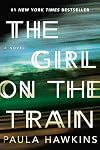
The Girl on the Train is neatly constructed thriller, but comparisons with Gone Girl are sheer hyperbole. Despite the plot's clockwork construction, the solution to the mystery is obvious from early in the book; every character is unsympathetic; and the two main first-person characters are so similar in mentality and voice that it's hard to remember which is which when you're reading.
I've seen the book described as a masterpiece of unreliable narration. For true masterpieces in this field, I'd recommend Daphne du Maurier's My Cousin Rachel, Sebastian Faulks' Engleby, and--in a more artificial fashion--The Murder of Roger Ackroyd (the one Agatha Christie novel that bears re-reading).
The Girl on the Train is a decent holiday read if you have modest standards.
I've seen the book described as a masterpiece of unreliable narration. For true masterpieces in this field, I'd recommend Daphne du Maurier's My Cousin Rachel, Sebastian Faulks' Engleby, and--in a more artificial fashion--The Murder of Roger Ackroyd (the one Agatha Christie novel that bears re-reading).
The Girl on the Train is a decent holiday read if you have modest standards.
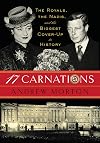
Most of the book devoted to the uncontroversial thesis that the Duke and Duchess of Windsor were Nazi sympathisers, with some innuendo that they were outright traitors. Neither was it a revelation that both were wholly self-absorbed. The "greatest cover-up in history" was that the British government attempted to suppress documents leading to the above conclusions; since they failed, this hardly constitutes a cover-up. This latter phase of the book is rendered in excruciatingly dull detail--it felt as if the reader had been button-holed by the Duke of Windsor himself bemoaning the fates which left him sitting out the war in the Bahamas while his cherished sheets were commandeered by the Nazis in Paris.
Ho hum.
Ho hum.
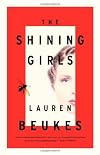
There's lots to like about this book. But there's at least an equal amount of frustration for the reader, who sees so many opportunities for a slick page-turner to have been a classic. The idea of a time-travelling serial killer is, if not unique, at least not an overworked trope. For the first two-thirds of the novel, Beukes hardly puts a foot wrong; sadly, for the final third she barely puts one right. By the feeble ending, it's a mercy to put the book down. If you want to read a time-travel/crime/romance, you're better served by Jack Finney's Time and Again, which outshines The Shining Girls by almost every measure.
I have curiously mixed feelings about this book. As a thriller, it is a stunning achievement: 700 pages of twists and turns, immaculately plotted. The two main characters are nuanced and believable.
And yet... The Americans are almost without exception square-jawed and heroic; the Muslims either steely-eyed fanatics or corrupt sadists, with Turks adding comedy pidgin English to the mix. Although we see all the events through a cynical and damaged anti-hero's eyes, and thus might expect some bias of perception, this pervasive attitude corrodes the entire novel. If it is not racism, it is uncomfortably close.
And yet... The Americans are almost without exception square-jawed and heroic; the Muslims either steely-eyed fanatics or corrupt sadists, with Turks adding comedy pidgin English to the mix. Although we see all the events through a cynical and damaged anti-hero's eyes, and thus might expect some bias of perception, this pervasive attitude corrodes the entire novel. If it is not racism, it is uncomfortably close.
The Red Knight is a tremendously impressive epic fantasy. Cameron skilfully manages a huge number of viewpoints, with some well-realised characters and a clever magic system.
On the downside, the author is a devotee of historical re-enactment, and this shows in the heavily over-used research. Every item of clothing is given its proper medieval name and this quickly becomes distracting.
The e-book version is the worst-proofed professional publication I have ever read. There are literally errors on almost every page, including a persistent misunderstanding of "it's" and "its". The book is too good to warrant such a sloppy publication.
On the downside, the author is a devotee of historical re-enactment, and this shows in the heavily over-used research. Every item of clothing is given its proper medieval name and this quickly becomes distracting.
The e-book version is the worst-proofed professional publication I have ever read. There are literally errors on almost every page, including a persistent misunderstanding of "it's" and "its". The book is too good to warrant such a sloppy publication.
The Boys in the Boat: Nine Americans and Their Epic Quest for Gold at the 1936 Berlin Olympics by Daniel James Brown
The best sports books are about far more than sport, and this is one of them. Brown tells the story of nine all-American boys and their journey to the Berlin Olympics. The primary character is Joe Rantz, and Brown intercuts his experiences with the preparations of the Nazi regime for the 1936 Games.
At once thrilling and moving, this is a must for all fans of excellent sports writing.
At once thrilling and moving, this is a must for all fans of excellent sports writing.
A by-the-numbers spy tale; perfectly serviceable, but for anyone who's read the author's terrific Alex Milius books, a disappointment.
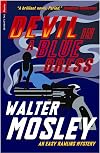
"Devil in a Blue Dress" is Walter Mosley's take on the classic private eye novel: Los Angeles, mean streets, femme fatale, hero with battered integrity, snappy dialogue. The twist here is that the hero, Easy Rawlins, is black. Rawlins' LA is therefore not the same one we explore with Marlowe if we are fans of Raymond Chandler.
Chandler casts a long shadow in this sub-genre, and Mosley isn't quite at that level. But that's hardly a criticism, and this is an absorbing and rewarding novel.
Chandler casts a long shadow in this sub-genre, and Mosley isn't quite at that level. But that's hardly a criticism, and this is an absorbing and rewarding novel.
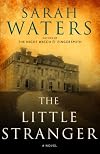
A clever unreliable narrator supernatural mystery. Waters clearly draws inspiration from The Turn of the Screw, although in extending the conceit to novel length, some of the impact of James's is diluted. Nonetheless, an absorbing read and an interesting exploration of class in the years immediately after WW2.
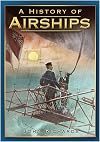
A superb brief survey of a niche area. If you want an overview of the history of airships, with appropriate illustrations and interesting human detail, this is the book for you.
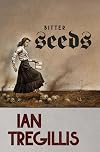
Brilliant--if bonkers--concept let down by some clumsy writing. The author is American, and some English copy editing wouldn't have gone amiss.
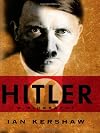
This is a gruelling read in every sense. In the two weeks it took me to read this mammoth volume, I felt as if I was living through the rise and fall of the Third Reich, a discomfiting sensation.
Kershaw is stronger on what Hitler did rather than why he did it; in some ways, frustrating, but in others commendable that the author resisted the urge to reach for pop-psychology in his conclusions. It may be that Hitler's evil is ultimately inexplicable.
Recommended, but not a holiday read...
Kershaw is stronger on what Hitler did rather than why he did it; in some ways, frustrating, but in others commendable that the author resisted the urge to reach for pop-psychology in his conclusions. It may be that Hitler's evil is ultimately inexplicable.
Recommended, but not a holiday read...

I felt I should have enjoyed this book much more than I did. Holmes recognises Marlborough's significance as a field commander and political figure, but delineates the former in such crushing detail that it's almost impossible for the lay reader to follow what's going on, while the latter and potentially more interesting strand is skimped. The book tells you as much as you could possibly want about the great battles of Blenheim, Ramillies, Oudenarde and Malplacquet, but is frustratingly shadowy on Marlborough the man.

Sorry - dated, cliched, predictable. Didn't care about the characters or the outcome.

No book can live up to the hype Kolymsky Heights has suffered ("the best thriller ever") but this comes close. It's not particularly thrilling, until the final quarter--although then it makes up for it--but it's fascinating and absorbing throughout. In the detachment of its authorial viewpoint and the meticulous focus on practical problem-solving, it's reminiscent of Jack Vance and Patricia Highsmith. A very fine novel and congratulations to Faber to thinking to disinter it after over 20 years of neglect.

An ambitious and accessible history of the French Revolutionary Wars, but the author's clear bias against Napoleon unbalances the whole. If Napoleon was such a mediocrity, Harvey fails to explain his extraordinary decade of triumph. His portraits of Nelson and Wellington are more nuanced.
And if you are going to read the book, set aside plenty of time: it's lively, but very long....
And if you are going to read the book, set aside plenty of time: it's lively, but very long....
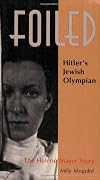
Milly Mogulof tells the fascinating story of Helene Mayer, the champion half-Jewish German fencer of the 1920s and 1930s. Meyer's was a short and tragic life: Olympic champion in 1928, she remained in America after the 1932 Olympics as her position in Germany became ever more untenable. Unwisely she returned to the German team as the "token Jew" for the 1936 Berlin Olympics. A silver medal and a Nazi salute on the podium were not enough to restore their adulation she once enjoyed, and she returned broken to America. She made her way back to Germany after the war, married a baron and died aged 42.
Mogulof recounts the facts diligently enough, but her analysis tends to the superficial, and she judges Mayer in the harsh unforgiving light of hindsight. Enough of the real Helene Mayer--an ordinary German girl who happened to excel at fencing and wanted only to live a normal life--comes through that the reader perhaps has more sympathy than the author for a victim of the terrible times through which she lived.
Mogulof recounts the facts diligently enough, but her analysis tends to the superficial, and she judges Mayer in the harsh unforgiving light of hindsight. Enough of the real Helene Mayer--an ordinary German girl who happened to excel at fencing and wanted only to live a normal life--comes through that the reader perhaps has more sympathy than the author for a victim of the terrible times through which she lived.

Ray Aldridge's undeservedly neglected sf novel is likely to appeal to fans of mid-period Jack Vance. The omnicompetent protagonist Ruiz Aw will remind the reader of Vance heroes Kirth Gersen and particularly Adam Reith. Few writers shine in comparison with Vance but Aldridge comes closer than most. Aldridge also brings Vance to mind with his crisp dialogue and detached narrative voice.
1950s pulp-style fiction is out of vogue these days, but when done as well as this, it packs a real punch. First- class entertainment.
1950s pulp-style fiction is out of vogue these days, but when done as well as this, it packs a real punch. First- class entertainment.

Nancy Mitford's biography of Louis XIV reveals her, perhaps unsurprisingly, to be anti-Semitic, racist, homophobic, snobbish and superficial. In many ways this makes her an ideal chronicler of the Sun King's court, which largely embodied the same values (with the exception of the homophobia - nobody seemed too concerned about the exploits of "Monsieur", the King's brother).
Mitford, and the court at Versailles, place a great premium on wit, frivolity and personal attractiveness. Madame de Montespan is forgiven almost everything for the vivacity of her conversation, while better-natured mistresses like Louise la Valliere are dismissed for vacuity.
Nonetheless the study is written with verve and energy, and the protagonists spring to vivid life. The illustrations are excellent too...
If you are an aficionado of the period this is worth a read, even if you have to hold your nose at times; if your interest is more casual there are much better places to start.
Mitford, and the court at Versailles, place a great premium on wit, frivolity and personal attractiveness. Madame de Montespan is forgiven almost everything for the vivacity of her conversation, while better-natured mistresses like Louise la Valliere are dismissed for vacuity.
Nonetheless the study is written with verve and energy, and the protagonists spring to vivid life. The illustrations are excellent too...
If you are an aficionado of the period this is worth a read, even if you have to hold your nose at times; if your interest is more casual there are much better places to start.

The Iron Dream is brilliant idea let down by a flawed execution. The conceit is Adolf Hitler emigrates to the United States in the 1920s, despairing of his political vision ever being realised in Germany. Instead, he becomes a pulp sf writer, and The Iron Dream reproduces his "Hugo-Award winning" novel "Lords of the Swastika". This trashy novel satirises both sword and sorcery stories and Fascist iconography. At 80 pages it would have been a triumph; at 250 the carpet wears very thin.
The problem is that "Lords of the Swastika" is not a very good novel. That's kind of the point, of course: a novel written by Hitler sublimating his Nazi visions could only ever be terrible. What at first is engaging as satire rapidly becomes wearing.
The Iron Dream has some interesting things to say about fascism, and neatly draws the parallel with Conan the Barbarian-style fiction. But in the end, it's all too reminiscent of a Nuremberg Rally, with the unfortunate reader exposed at length to a wearying and tedious rant.
The problem is that "Lords of the Swastika" is not a very good novel. That's kind of the point, of course: a novel written by Hitler sublimating his Nazi visions could only ever be terrible. What at first is engaging as satire rapidly becomes wearing.
The Iron Dream has some interesting things to say about fascism, and neatly draws the parallel with Conan the Barbarian-style fiction. But in the end, it's all too reminiscent of a Nuremberg Rally, with the unfortunate reader exposed at length to a wearying and tedious rant.
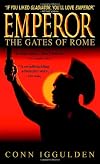
Entertaining enough historical fiction if you approach it as "inspired by the life of Julius Caesar" rather than meticulously researched work in the Sharon Penman tradition. It plays fast and loose with the historical record but the action scenes zip along and the characters are vivid if not always three-dimensional.
If you're interested in the period, Robert Graves and Allan Massie are more rewarding writers, and the HBO series "Rome" is a more successful mix of fact and fiction.
If you're interested in the period, Robert Graves and Allan Massie are more rewarding writers, and the HBO series "Rome" is a more successful mix of fact and fiction.
Like me, you might be both attracted and fatigued by crime novels. Nowhere does the formulaic structure show through as obviously as in this genre. Two I'll-matched partners? Check. Race against time to solve the crime/save the innocent (usually female) victim? Check. Climax with the hero facing off against the villain, usually without a mobile phone? Check.
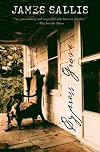
If you're as weary of these by-the-numbers plots as I am, you may want to sit down with James Sallis. He writes in a recognisable tradition ("Southern Noir", for want of a better term) but his focus is pleasingly on character, atmosphere and beautifully-crafted prose. Cypress Grove proceeds at a pace just sufficient to prevent the novel stalling (which has clearly been a problem for some readers), but, in sacrificing the tyranny of a helter-skelter plot, Sallis is able to provide a more sophisticated set of pleasures. Cypress Grove is a highly-recommended piece of old-fashioned craftsmanship.
If you're as weary of these by-the-numbers plots as I am, you may want to sit down with James Sallis. He writes in a recognisable tradition ("Southern Noir", for want of a better term) but his focus is pleasingly on character, atmosphere and beautifully-crafted prose. Cypress Grove proceeds at a pace just sufficient to prevent the novel stalling (which has clearly been a problem for some readers), but, in sacrificing the tyranny of a helter-skelter plot, Sallis is able to provide a more sophisticated set of pleasures. Cypress Grove is a highly-recommended piece of old-fashioned craftsmanship.

The Day of the Triffids... without the triffids.
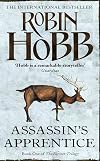
A bastard son of the royal family, neglected but with special talents: you have to be a pretty good writer to make such a hackneyed setup come to life. Luckily Robin Hobb is such a writer. It's traditional, old-fashioned fantasy, but with great prose and rich characterisation.
If this is your kind of thing, you'll love it.
If this is your kind of thing, you'll love it.