

Alan Bullock (1914–2004)
Author of Hitler and Stalin: Parallel Lives
About the Author
A fellow of St. Catherine's College, Oxford University, and a former administrator of the university, Alan Bullock established himself as a historian with the publication of his biography of Adolf Hitler: A Study in Tyranny (1952). Although he had the advantage of being the first person to write a show more scholarly study of the German leader, his work remains one of the best, if not the best, biography of the dominant political personality of the first half of the twentieth century. Bullock also produced a major work in British history, The Life and Times of Ernest Bevin (1960-1983), a three-volume biography of the British transport-union leader and foreign secretary. He also has written a number of books on broad themes and was coeditor of the Oxford History of Modern Europe. His latest work, Hitler and Stalin: Parallel Lives (1992) compares the two great dictators at different stages of their lives. (Bowker Author Biography) show less
Series
Works by Alan Bullock
The Life and Times of Ernest Bevin: Volume two Minister of Labour 1940-1945 (1969) 17 copies, 1 review
Islams historia 3 copies
Hitler. Studium tyranii 1 copy
Die grossen Ströme Europas : 1 copy
Javelin Design 1 copy
Hitler. I 1 copy
Hitler. II 1 copy
Hitler. Studium tyranii. część 3 — Author — 1 copy
Hitler. Studium tyranii. część 2 — Author — 1 copy
Hitler. Studium tyranii. część 1 — Author — 1 copy
Associated Works
Tagged
Common Knowledge
- Canonical name
- Bullock, Alan
- Legal name
- Bullock, Alan Louis Charles, Baron
- Birthdate
- 1914-12-13
- Date of death
- 2004-02-02
- Gender
- male
- Education
- Wadham College, University of Oxford (BA|1936|BA|1938)
Bradford Grammar School - Occupations
- fellow (History ∙ New College ∙ Oxford ∙ after the war)
Vice-Chancellor (Oxford University)
research assistant (for Winston Churchill)
Master (St. Catherine's College)
professor
historian - Organizations
- British Broadcasting Corporation (WWII)
University of Oxford (Vice Chancellor) - Awards and honors
- Knighthood (1972)
Life Peerage (1976)
Norton Medlicott Medal (1992)
Fellow, British Academy (1967)
Chevalier de la Légion d'honneur (1970)
Wolfson History Prize (1992) (show all 8)
Foreign Member, American Academy of Arts and Sciences (1972)
Grosse Verdienstkreuz (1995) - Nationality
- UK
- Birthplace
- Trowbridge, Wiltshire, England, UK
- Places of residence
- Oxford, Oxfordshire, England, UK
- Map Location
- England, UK
Members
Reviews
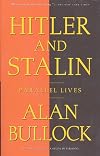
Don’t be intimidated by this hefty 1100 page tome; it’s very readable. Results will vary, of course, but “Hitler and Stalin- Parallel Lives” did a fantastic job exploring the big question I’ve always had about World War II: why did Hitler attack the Soviet Union before he managed to beat Great Britain into either surrender or alliance with Germany?
This was probably the biggest strategic blunder of the war, and one that had never been explored to my satisfaction before. Alan Bullock show more does an amazing job here showing how this went down: it starts with the showtrials and political purges of the 1930s. Stalin consolidated his dictatorship with this ever-expanding circle of accusation and self-incrimination. One of the side effects of this is that he completely gutted the Soviet military’s officer corps of its most experienced high ranking officers. Thus, when the Soviets got into a border conflict with Finland in the 1939 “Winter War”, the Soviet Union was beaten to embarrassment, leading Hitler to underestimate the difficulty of his long-term plans to seize and annex the entire Western third of Russia. Obviously, things didn’t go according to plan, but Operation Barbarossa in June 1941 is a bit easier to understand in that context.
A second reason Bullock cites for the June ’41 timing of Barbarossa is the idea that a quick win in Russia would remove the Russian threat from Japan’s western front, freeing them to attack the United States. This would- the reasoning goes- keep America too busy to come to British aid when Hitler then turned his full attention on beating England into submission (either by conquest, or –as Hitler hoped- convincing them to ally with him). I guess it is sound enough reasoning, but of course it contains within it the fatal flaw of assuming that the Russian invasion would go well, and would be completed in a single season. Germany’s “one at a time” strategy, as well as its blitzkrieg tactics had worked so well in Austria, the Sudetenland and Poland- I’m not sure whether the assumption represents hubris, optimism, or just an unaccounted-for bias.
Fascinating stuff. In a way, one might say Stalin unintentionally constructed the circumstances which lured Hitler into the ill-fated attack. As Bullock describes, while the war’s start may have been unintentional, there was nothing unintentional about the factors which eventually led to a Soviet victory.
Once Stalin had secured his place at the pinnacle of Soviet power, he recognized the need to legitimize himself. His predecessor Lenin cemented his place in history as the Father of the Russian Revolution, but what gave Stalin a mandate to rule? How could he justify his leadership? For better or much worse, Stalin found an answer in industrialization and collective agriculture. Just as he lived in the shadow of Lenin, Russia had for centuries lived with an inferiority complex in the shadow of Western Europe. Peter the Great had hoped to elevate a nation of illiterate peasants by copying Western European (predominantly French) arts and letters, engineering, and science. His success was limited, but important, and well-received domestically.
Stalin cast himself in Peter’s role as the man who would bring “backwards Russia” into the industrialized era that capitalism had enjoyed at the turn of the twentieth century. Throughout the 1930’s, the Soviet planned economy uprooted millions, built enormous and inefficient complexes for power generation, manufacturing, mining, oil drilling and refining, and collective farming. Completely unrealistic production schedules were set, and middle managers who failed to meet expectations were frequently exiled, imprisoned, or shot.
The entire birth of Soviet industry was a traumatic national controlled chaos. Starvation, upheaval, and misery followed, and the entire economic system it supported eventually failed in 1989… BUT, during a crucial window of time in the 1940’s and 50’s, the Soviet Union was able to produce a huge volume of tanks, railways, troop transport vehicles, aircraft, munitions, and other materials which helped it defeat German invaders. The Holodomor notwithstanding, there is a broad (and completely unfeeling) historical view that suggests the horrors of Stalin’s drive to rapid industrialization were at least partially justified by Hitler’s defeat.
Stalin probably saw it that way; when Germany invaded, to preserve Soviet industrial capacity, Stalin ordered entire factories deconstructed, shipped hundreds of miles east- safely beyond Third Reich supply lines- and rebuilt. It’s the sort of grand gesture you might expect from a massive, centralized State economy, but it just happened to work this time. This is really the only book I’ve come across to devote itself to such extensive analysis of the connection between rapid Soviet industrialization in the 30’s and Soviet military experience in the 40’s. Obviously the two are directly related, but it took Bullock to make me see that.
Another area where “Hitler and Stalin- Parallel Lives” really came to the table with something new was the extensive details it fills in about Hitler’s long-term vision. What exactly was he trying to build? Don’t get me wrong… he was a power-obsessed dictator with a fetish for German culture, but what exactly did the world he wanted look like? I mean, how was it supposed to work? Did he want to kill everybody else on the planet and repopulate the whole world with Germans, or what? Well, it turns out he left exhaustive notes about what he wanted.
Pretty much he wanted Germany to occupy all of Western Europe, Scandinavia and the western third of Russia. He was (genuinely, it seems) going to let a friendly, Mussolini-led Italy occupy the Mediterranean (a sort of resurrection of the old Roman imperial borders, it seems), and Japan’s co-prosperity sphere would include all of East Asia, Australia and the Pacific. The Americas would be divided in some way with Japan, and the rest of the world, I guess would be enslaved and have their natural resources plundered. Without a doubt, it would be an Orwellian hell-on-Earth, but it was interesting to know what the plan was. (Of course who are we kidding? We all know it would only be a matter of time before he turned on Italy and Japan, and altered his dream to a pan-global German world-rule.)
I guess I should throw in a few notes about the parallels between Hitler and Stalin. That is supposed to be the main point of this book, after all. The similarities weren’t as interesting as the differences. It’s not hard to imagine the similarities to be drawn between the two biggest monsters of the twentieth century. They were both sociopaths. They both worshiped power and materialism, and little else. They both felt aggrandized by sending other people to their deaths –and made no secret of this fact. And they both turned on people who had helped them advance, once they were no longer useful. This is all well known.
More interesting to me was the contrast of Hitler’s flighty, capricious and grandiose “big picture” scheming in stark opposition to Stalin’s slow but incessant, methodical, patient, details-oriented approach to obtaining and holding power. Over the course of the book, it gradually became clear to me that Hitler’s rise to power was almost a fluke- a tragic confluence of weird circumstances. There is any number of single points in history where Fate might not have broken his way.
With Stalin, it seems very different. Once he secured the (Communist Party) Secretary General’s position after V. I. Lenin’s cerebral hemorrhage, there is a sort of inevitability to his ascent to absolute dictator. He really left no detail unconsidered, no contingency unplanned for. His vulgar peasant’s upbringing, his aloofness, and his failure to appreciate anything remotely artistic or refined- all masked a reptilian evil genius brain, who seemed to always know what lever to pull or what button to press, to overcome the obstacles and competitors in his way. There were some uneasy chapters for me, in which I found myself simultaneously horrified by the vast scope of human suffering he caused, but also impressed with the skill he displayed in manipulating the world around him. Please don’t misunderstand: there’s nothing sympathetic or praiseworthy about the man, but his political facility is just a bit aweing. It may also be that this book unintentionally stacks the deck for Stalin’s reputation, by comparing him to possibly the only person in history who he might actually look good in comparison to.
These were the big take-home lessons I got from this book. There is of course much, much more. It’s an 1100 page book after all; I couldn’t possibly do it all justice. To throw a few teasers out, the book provides thorough accounts of both men’s’ rise to power; quite a bit of analysis of secondary characters like Molotov, Trotsky, Beria Ribbentrop, Goering, and Himmler; an interesting diversion about Tito in Yugoslavia; and detailed exploration of third parties such as Mussolini, Churchill, Roosevelt and Franco.
World War II has always been a ripe topic for positing “what if’s”, and this book is quite good with that as well. The most intriguing is “What if Hitler had followed Mussolini’s plan in the Mediterranean?” While Hitler drew up plans to attack Russia, Mussolini was trying to convince him to dedicate German forces to control the Mediterranean. Naturally Italy’s interest in this was obvious, but Bullock points out that if Axis Powers ruled the Mediterranean, England could only get natural resources from her Asian and Middle Eastern colonies by traveling all the way around Africa. It is quite possible the strain on British supply lines –especially in those two years when England was committed to war, but America had not yet joined in- could have been decisively crippling. In fact, if Hitler had been willing to defer his dreams of German “Lebensraum” in the Ukraine, Germany might have teamed up with Russia to create a massive land force which would have completely obviated Great Britain’s greatest strategic asset: her unopposable naval force.
Whether Stalin would have gone along is doubtful; he was well aware of Hitler’s long-term ambitions in Russia. Still, it is interesting that –through either grandiosity or a simple failure of imagination- Hitler failed to recognize this possible strategy as far superior to the one he ultimately deployed. Thank God he didn’t.
This is probably as good a place as any to end. Hopefully you get the idea that Bullock has written something very special here: an enormously informative book, vast in scope and deep in detail, which manages to say something new about World War II, and which is a pleasure to read. I not only give it 5 stars, but include it in the top 3 history books I’ve ever read, in the honored company of Carroll Quigley’s “Tragedy & Hope” and Edward Gibbon’s “The Decline and Fall of the Roman Empire”. show less
This was probably the biggest strategic blunder of the war, and one that had never been explored to my satisfaction before. Alan Bullock show more does an amazing job here showing how this went down: it starts with the showtrials and political purges of the 1930s. Stalin consolidated his dictatorship with this ever-expanding circle of accusation and self-incrimination. One of the side effects of this is that he completely gutted the Soviet military’s officer corps of its most experienced high ranking officers. Thus, when the Soviets got into a border conflict with Finland in the 1939 “Winter War”, the Soviet Union was beaten to embarrassment, leading Hitler to underestimate the difficulty of his long-term plans to seize and annex the entire Western third of Russia. Obviously, things didn’t go according to plan, but Operation Barbarossa in June 1941 is a bit easier to understand in that context.
A second reason Bullock cites for the June ’41 timing of Barbarossa is the idea that a quick win in Russia would remove the Russian threat from Japan’s western front, freeing them to attack the United States. This would- the reasoning goes- keep America too busy to come to British aid when Hitler then turned his full attention on beating England into submission (either by conquest, or –as Hitler hoped- convincing them to ally with him). I guess it is sound enough reasoning, but of course it contains within it the fatal flaw of assuming that the Russian invasion would go well, and would be completed in a single season. Germany’s “one at a time” strategy, as well as its blitzkrieg tactics had worked so well in Austria, the Sudetenland and Poland- I’m not sure whether the assumption represents hubris, optimism, or just an unaccounted-for bias.
Fascinating stuff. In a way, one might say Stalin unintentionally constructed the circumstances which lured Hitler into the ill-fated attack. As Bullock describes, while the war’s start may have been unintentional, there was nothing unintentional about the factors which eventually led to a Soviet victory.
Once Stalin had secured his place at the pinnacle of Soviet power, he recognized the need to legitimize himself. His predecessor Lenin cemented his place in history as the Father of the Russian Revolution, but what gave Stalin a mandate to rule? How could he justify his leadership? For better or much worse, Stalin found an answer in industrialization and collective agriculture. Just as he lived in the shadow of Lenin, Russia had for centuries lived with an inferiority complex in the shadow of Western Europe. Peter the Great had hoped to elevate a nation of illiterate peasants by copying Western European (predominantly French) arts and letters, engineering, and science. His success was limited, but important, and well-received domestically.
Stalin cast himself in Peter’s role as the man who would bring “backwards Russia” into the industrialized era that capitalism had enjoyed at the turn of the twentieth century. Throughout the 1930’s, the Soviet planned economy uprooted millions, built enormous and inefficient complexes for power generation, manufacturing, mining, oil drilling and refining, and collective farming. Completely unrealistic production schedules were set, and middle managers who failed to meet expectations were frequently exiled, imprisoned, or shot.
The entire birth of Soviet industry was a traumatic national controlled chaos. Starvation, upheaval, and misery followed, and the entire economic system it supported eventually failed in 1989… BUT, during a crucial window of time in the 1940’s and 50’s, the Soviet Union was able to produce a huge volume of tanks, railways, troop transport vehicles, aircraft, munitions, and other materials which helped it defeat German invaders. The Holodomor notwithstanding, there is a broad (and completely unfeeling) historical view that suggests the horrors of Stalin’s drive to rapid industrialization were at least partially justified by Hitler’s defeat.
Stalin probably saw it that way; when Germany invaded, to preserve Soviet industrial capacity, Stalin ordered entire factories deconstructed, shipped hundreds of miles east- safely beyond Third Reich supply lines- and rebuilt. It’s the sort of grand gesture you might expect from a massive, centralized State economy, but it just happened to work this time. This is really the only book I’ve come across to devote itself to such extensive analysis of the connection between rapid Soviet industrialization in the 30’s and Soviet military experience in the 40’s. Obviously the two are directly related, but it took Bullock to make me see that.
Another area where “Hitler and Stalin- Parallel Lives” really came to the table with something new was the extensive details it fills in about Hitler’s long-term vision. What exactly was he trying to build? Don’t get me wrong… he was a power-obsessed dictator with a fetish for German culture, but what exactly did the world he wanted look like? I mean, how was it supposed to work? Did he want to kill everybody else on the planet and repopulate the whole world with Germans, or what? Well, it turns out he left exhaustive notes about what he wanted.
Pretty much he wanted Germany to occupy all of Western Europe, Scandinavia and the western third of Russia. He was (genuinely, it seems) going to let a friendly, Mussolini-led Italy occupy the Mediterranean (a sort of resurrection of the old Roman imperial borders, it seems), and Japan’s co-prosperity sphere would include all of East Asia, Australia and the Pacific. The Americas would be divided in some way with Japan, and the rest of the world, I guess would be enslaved and have their natural resources plundered. Without a doubt, it would be an Orwellian hell-on-Earth, but it was interesting to know what the plan was. (Of course who are we kidding? We all know it would only be a matter of time before he turned on Italy and Japan, and altered his dream to a pan-global German world-rule.)
I guess I should throw in a few notes about the parallels between Hitler and Stalin. That is supposed to be the main point of this book, after all. The similarities weren’t as interesting as the differences. It’s not hard to imagine the similarities to be drawn between the two biggest monsters of the twentieth century. They were both sociopaths. They both worshiped power and materialism, and little else. They both felt aggrandized by sending other people to their deaths –and made no secret of this fact. And they both turned on people who had helped them advance, once they were no longer useful. This is all well known.
More interesting to me was the contrast of Hitler’s flighty, capricious and grandiose “big picture” scheming in stark opposition to Stalin’s slow but incessant, methodical, patient, details-oriented approach to obtaining and holding power. Over the course of the book, it gradually became clear to me that Hitler’s rise to power was almost a fluke- a tragic confluence of weird circumstances. There is any number of single points in history where Fate might not have broken his way.
With Stalin, it seems very different. Once he secured the (Communist Party) Secretary General’s position after V. I. Lenin’s cerebral hemorrhage, there is a sort of inevitability to his ascent to absolute dictator. He really left no detail unconsidered, no contingency unplanned for. His vulgar peasant’s upbringing, his aloofness, and his failure to appreciate anything remotely artistic or refined- all masked a reptilian evil genius brain, who seemed to always know what lever to pull or what button to press, to overcome the obstacles and competitors in his way. There were some uneasy chapters for me, in which I found myself simultaneously horrified by the vast scope of human suffering he caused, but also impressed with the skill he displayed in manipulating the world around him. Please don’t misunderstand: there’s nothing sympathetic or praiseworthy about the man, but his political facility is just a bit aweing. It may also be that this book unintentionally stacks the deck for Stalin’s reputation, by comparing him to possibly the only person in history who he might actually look good in comparison to.
These were the big take-home lessons I got from this book. There is of course much, much more. It’s an 1100 page book after all; I couldn’t possibly do it all justice. To throw a few teasers out, the book provides thorough accounts of both men’s’ rise to power; quite a bit of analysis of secondary characters like Molotov, Trotsky, Beria Ribbentrop, Goering, and Himmler; an interesting diversion about Tito in Yugoslavia; and detailed exploration of third parties such as Mussolini, Churchill, Roosevelt and Franco.
World War II has always been a ripe topic for positing “what if’s”, and this book is quite good with that as well. The most intriguing is “What if Hitler had followed Mussolini’s plan in the Mediterranean?” While Hitler drew up plans to attack Russia, Mussolini was trying to convince him to dedicate German forces to control the Mediterranean. Naturally Italy’s interest in this was obvious, but Bullock points out that if Axis Powers ruled the Mediterranean, England could only get natural resources from her Asian and Middle Eastern colonies by traveling all the way around Africa. It is quite possible the strain on British supply lines –especially in those two years when England was committed to war, but America had not yet joined in- could have been decisively crippling. In fact, if Hitler had been willing to defer his dreams of German “Lebensraum” in the Ukraine, Germany might have teamed up with Russia to create a massive land force which would have completely obviated Great Britain’s greatest strategic asset: her unopposable naval force.
Whether Stalin would have gone along is doubtful; he was well aware of Hitler’s long-term ambitions in Russia. Still, it is interesting that –through either grandiosity or a simple failure of imagination- Hitler failed to recognize this possible strategy as far superior to the one he ultimately deployed. Thank God he didn’t.
This is probably as good a place as any to end. Hopefully you get the idea that Bullock has written something very special here: an enormously informative book, vast in scope and deep in detail, which manages to say something new about World War II, and which is a pleasure to read. I not only give it 5 stars, but include it in the top 3 history books I’ve ever read, in the honored company of Carroll Quigley’s “Tragedy & Hope” and Edward Gibbon’s “The Decline and Fall of the Roman Empire”. show less

Of the many editorial cartoons drawn by David Low during the Second World War, perhaps the most famous was the one he penned in May 1940 after Winston Churchill formed the coalition government that he would lead as prime minister. Entitled “All Behind You, Winston,” it depicts Churchill at the phalanx of a group of determined men, all of whom are rolling up their sleeves in preparation for the fight ahead. Standing next to the prime minister is Clement Attlee, the leader of the Labour show more Party and a natural choice that reflected the politically united nature of the coalition. On Attlee’s other side, however, is another large figure, one who almost seems to be crowding past Attlee to stand shoulder-to-shoulder with Churchill. That figure is Ernest Bevin.
On the face of it, Bevin’s inclusion in the front rank is a curious one, as Bevin had just been named minister to what was regarded as a second-rank department and who would not even win a seat in the House of Commons for another month. Yet Alan Bullock makes it clear in his second volume about Bevin’s life and times that such a position was more than warranted, as in his role as Minister of Labour and National Service Bevin played an utterly indispensable role in addressing one of the greatest challenged Britain faced in the war: the mobilization of the nation’s manpower for the drawn-out struggle against the Axis powers.
To have been charged with this responsibility in the coalition government was both unusual and completely understandable. Given that Bevin had never even served in Parliament before, his sudden promotion to ministerial office was nothing short of extraordinary. As the longtime head of the Transport and General Workers’ Union (TGWU), however, Bevin was an ideal choice for the post, especially after the years of poor relations between the labor movement and the British state. Bevin brought instant credibility to his new post, as well as enormous energy and a wealth of new ideas.
First among them was the need to strengthen his position. From the start Bevin insisted on centralizing within his ministry authority over the nation’s manpower. Though he would never gain total control, Bullock shows how Bevin won this fight in the Cabinet. This put him in a prime position to address the competing challenges facing the allocation of manpower from an early stage. Here the core problem was in resolving the competing demands of industry and the military, which often complicated the government’s efforts to run as efficient a system as possible. Bullock’s coverage of this throughout the book illustrates that this was a challenge that was never fully resolved, and could only be managed to the best of his ability. Added to this was Bevin’s reluctance to impose coercion, as he believed firmly that such efforts reduced workers’ efficiency rather than aided it.
Bevin’s views about doing what was best for the worker were a hallmark of how he approached labor problems throughout his time in office. With a career spent fighting alongside as well as for workers, Bevin based all of his positions on his appreciation for their qualities and his assumption of their commitment to the nation’s wartime goals. His efforts to improve conditions for workers earned him considerable goodwill, making it easier (though far from easy) to work out the numerous compromises necessary for maintaining the war effort. Second only to this, though, was Bevin’s interest in ensuring that the British worker was fighting for a better future, and as the immediate crisis ebbed he spent an increasing amount of time concerned with the issues of postwar reconstruction. It was a testament to his stature as a minister that as the coalition came to an end he was approached about succeeding Attlee as the party’s leader – an offer that Bevin firmly declined.
Bullock’s book is so much more than an account of Bevin’s tenure as Minister of Labour. It also describes Bevin’s transition from labor to parliamentary politics, as well as his growing involvement in questions of foreign policy. Though dense with details of wartime initiatives and parliamentary battles, Bullock provides wonderfully clear descriptions of Bevin’s policies and how they worked within the context of the war effort. It makes for a magnificent work that can be read with profit not just by those interested in Bevin’s life or his contributions to the war as Minister of Labour, but by anyone who wants to understand the inner workings of Churchill’s wartime government. show less
On the face of it, Bevin’s inclusion in the front rank is a curious one, as Bevin had just been named minister to what was regarded as a second-rank department and who would not even win a seat in the House of Commons for another month. Yet Alan Bullock makes it clear in his second volume about Bevin’s life and times that such a position was more than warranted, as in his role as Minister of Labour and National Service Bevin played an utterly indispensable role in addressing one of the greatest challenged Britain faced in the war: the mobilization of the nation’s manpower for the drawn-out struggle against the Axis powers.
To have been charged with this responsibility in the coalition government was both unusual and completely understandable. Given that Bevin had never even served in Parliament before, his sudden promotion to ministerial office was nothing short of extraordinary. As the longtime head of the Transport and General Workers’ Union (TGWU), however, Bevin was an ideal choice for the post, especially after the years of poor relations between the labor movement and the British state. Bevin brought instant credibility to his new post, as well as enormous energy and a wealth of new ideas.
First among them was the need to strengthen his position. From the start Bevin insisted on centralizing within his ministry authority over the nation’s manpower. Though he would never gain total control, Bullock shows how Bevin won this fight in the Cabinet. This put him in a prime position to address the competing challenges facing the allocation of manpower from an early stage. Here the core problem was in resolving the competing demands of industry and the military, which often complicated the government’s efforts to run as efficient a system as possible. Bullock’s coverage of this throughout the book illustrates that this was a challenge that was never fully resolved, and could only be managed to the best of his ability. Added to this was Bevin’s reluctance to impose coercion, as he believed firmly that such efforts reduced workers’ efficiency rather than aided it.
Bevin’s views about doing what was best for the worker were a hallmark of how he approached labor problems throughout his time in office. With a career spent fighting alongside as well as for workers, Bevin based all of his positions on his appreciation for their qualities and his assumption of their commitment to the nation’s wartime goals. His efforts to improve conditions for workers earned him considerable goodwill, making it easier (though far from easy) to work out the numerous compromises necessary for maintaining the war effort. Second only to this, though, was Bevin’s interest in ensuring that the British worker was fighting for a better future, and as the immediate crisis ebbed he spent an increasing amount of time concerned with the issues of postwar reconstruction. It was a testament to his stature as a minister that as the coalition came to an end he was approached about succeeding Attlee as the party’s leader – an offer that Bevin firmly declined.
Bullock’s book is so much more than an account of Bevin’s tenure as Minister of Labour. It also describes Bevin’s transition from labor to parliamentary politics, as well as his growing involvement in questions of foreign policy. Though dense with details of wartime initiatives and parliamentary battles, Bullock provides wonderfully clear descriptions of Bevin’s policies and how they worked within the context of the war effort. It makes for a magnificent work that can be read with profit not just by those interested in Bevin’s life or his contributions to the war as Minister of Labour, but by anyone who wants to understand the inner workings of Churchill’s wartime government. show less

This book made a positive impression when it appeared in 1991. Alan Bullock’s distinguished academic career had been preceded by the publication of his biography of Hitler, Hitler: A Study in Tyranny which was acclaimed from its publication in 1951 as one of the finest explanations of Hitler. Beginning in the 1970s, Bullock became increasingly fascinated by the comparisons between the Nazi and Soviet empires - the irony of the theoretically opposed ideology but often startlingly similar show more methods, their tense interrelationship and differences as well. Bullock felt that the focus on the West and Germany had resulted in a neglect of the German-Russian axis - an interest in the East that preceded important studies by historians such as Norman Davies, and more recently the even more tightly focussed study of Timothy Snyder in Bloodlands. Bullock’s book returns to Hitler, focussing on a comparison of him and Stalin as the framework for a comparison of the two regimes. It broadens previous attention to political theory in constructing the concept of the Totalitarian state, and takes a less emotionally invested approach to those in the 1980s who attempted a comparison to try and portray the crimes of the Nazi’s as perversely mitigated by the similarities with Soviet Russia (the Historikerstreit or ‘historian’s fight’).
The subtitle is significant - Bullock borrows the concept of “Parallel Lives” from Plutarch, implying similarities but also lines/lives that “never meet or merge”. The structure of the book must have been a challenge. For most of the book he alternates between Hitler/Germany and Stalin/USSR until chapter ten, where the two are compared. Once he reaches a discussion of foreign policy in the 1930s and the period from the Nazi-Soviet pact onwards, the two subjects are dealt with in a more integrated way. This section by its nature flows better and possesses greater coherence however its bedrock is the more individual treatment earlier in the book.
Bullock’s writing is pleasing and flows well, workmanlike and unpretentious. His broad reading is supported by the voluminous amounts of primary research materials released during Perestroika and afterwards, and the 1998 second edition contains extensive updates as well as the usual corrections. The well produced first edition hardback shows a standard of publishing which is certainly becoming rarer now, with well laid out pages and about five noticeable ‘typos’ in a book of almost 1000 pages.
The book balances the elements of historical biography and the necessary context well. It looks at the men on a personal level, although it focusses on the experiences and personal traits which drive their historical actions rather than giving too much about their personal life (thankfully it avoids the dubious realms of pop psychology or obsession with missing testicals etc). The context of the regimes is described well and sufficiently both to describe the men themselves as well as giving a good picture of the politics of the time. There perhaps was some temptation taken to delve a bit more deeply into the tactical and strategic aspects of World War 2 than was strictly necessary although these passages certainly made good reading and provided some good insights. Probably the chapters on World War 2 are those that have dated the most with research over the past twenty years although not to the point of obsolescence.
So what are Mr Bullock’s key arguments? One point of strong comparison between the two men is their dual sense of historical purpose. Each believes they have a destiny as great men, which gives them the confidence and determination to pursue power with great effectiveness. They also both possess incredible natural political instincts. The ability to outsmart and outthink their opponents, to surprise them and where necessary ruthlessly devour them. Both men worked their way up from nowhere, completely dependent on their skills for advancement. Stalin had an added handicap of needing to carefully conceal his ambitions in the context of collective leadership, whereas Hitler was free to develop and exploit the ‘Fuhrer myth’. Both had constraints though, and Stalin’s machinations in the 1920s to gain power without revealing his hand have some similarities with the contortions of Hitler’s commitment to ‘legality’ in coming to power after the failure of the Beer Hall putsch (although the ultimate goal was never concealed).
Stalin’s lowest point, as he was deceived and ultimately humiliated by Hitler is the pivot of the book. It is here that we see the ultimate interaction of the two dictators - Hitler’s strategic brilliance, Stalin’s attempts to buy time. In these pages are one of the most significant factors which will later be telling in the war effort. Yes, Stalin had ripped the heart out of the Red Army (or at least the head) with his purges of the leadership. Hitler and most of Europe didn’t take Russia seriously as a military opponent. However even this did not overcome Hitler’s economic problems. He needed to conquer more territory in order to keep rearming and vice versa. Bullock well points out the Nazi failure to put the full economy on a war footing until surprisingly late in the war, and the lost ground due to competing factions in the Nazi government.
The ensuing war is dealt with well at a strategic and diplomatic level. Hitler’s intervention (positive and negative) in military decisionmaking is well covered, as is Stalin’s halting but steadily improving military oversight after the shock of the initial German invasion.
Bullock carries the story beyond the final destruction of Hitler’s dream, and his descent to paranoia, blame and a sense that for Germany they would ‘all go down together’. The final years of Stalin’s regime just provide further evidence of his brutal and paranoid nature, as well as the lessons he quickly learnt from history in ensuring the best possible East European buffer for the Soviet Union.
Hitler and Stalin is a powerful, detailed book which shows how so many of the central events of the twentieth century revolved around these two men. The ‘great man’ theory of history is widely denigrated, but Bullock’s sound exposition of the facts points out clearly both the centrality of these two men to the regimes they ruled as well as how individual will, belief and drive can powerfully influence world historical events, ones which saw a dramatic change from the long nineteenth century, and an ensuing period where perversely immense Western prosperity sat alongside the repercussions of millions of deaths in two great wars. To those who say history is the product of impersonal forces, Bullock’s book can be seen as a weighty and well argued proof that the opposite can be true, and a powerful warning of the consequences of two men who killed millions and changed the world. show less
The subtitle is significant - Bullock borrows the concept of “Parallel Lives” from Plutarch, implying similarities but also lines/lives that “never meet or merge”. The structure of the book must have been a challenge. For most of the book he alternates between Hitler/Germany and Stalin/USSR until chapter ten, where the two are compared. Once he reaches a discussion of foreign policy in the 1930s and the period from the Nazi-Soviet pact onwards, the two subjects are dealt with in a more integrated way. This section by its nature flows better and possesses greater coherence however its bedrock is the more individual treatment earlier in the book.
Bullock’s writing is pleasing and flows well, workmanlike and unpretentious. His broad reading is supported by the voluminous amounts of primary research materials released during Perestroika and afterwards, and the 1998 second edition contains extensive updates as well as the usual corrections. The well produced first edition hardback shows a standard of publishing which is certainly becoming rarer now, with well laid out pages and about five noticeable ‘typos’ in a book of almost 1000 pages.
The book balances the elements of historical biography and the necessary context well. It looks at the men on a personal level, although it focusses on the experiences and personal traits which drive their historical actions rather than giving too much about their personal life (thankfully it avoids the dubious realms of pop psychology or obsession with missing testicals etc). The context of the regimes is described well and sufficiently both to describe the men themselves as well as giving a good picture of the politics of the time. There perhaps was some temptation taken to delve a bit more deeply into the tactical and strategic aspects of World War 2 than was strictly necessary although these passages certainly made good reading and provided some good insights. Probably the chapters on World War 2 are those that have dated the most with research over the past twenty years although not to the point of obsolescence.
So what are Mr Bullock’s key arguments? One point of strong comparison between the two men is their dual sense of historical purpose. Each believes they have a destiny as great men, which gives them the confidence and determination to pursue power with great effectiveness. They also both possess incredible natural political instincts. The ability to outsmart and outthink their opponents, to surprise them and where necessary ruthlessly devour them. Both men worked their way up from nowhere, completely dependent on their skills for advancement. Stalin had an added handicap of needing to carefully conceal his ambitions in the context of collective leadership, whereas Hitler was free to develop and exploit the ‘Fuhrer myth’. Both had constraints though, and Stalin’s machinations in the 1920s to gain power without revealing his hand have some similarities with the contortions of Hitler’s commitment to ‘legality’ in coming to power after the failure of the Beer Hall putsch (although the ultimate goal was never concealed).
Stalin’s lowest point, as he was deceived and ultimately humiliated by Hitler is the pivot of the book. It is here that we see the ultimate interaction of the two dictators - Hitler’s strategic brilliance, Stalin’s attempts to buy time. In these pages are one of the most significant factors which will later be telling in the war effort. Yes, Stalin had ripped the heart out of the Red Army (or at least the head) with his purges of the leadership. Hitler and most of Europe didn’t take Russia seriously as a military opponent. However even this did not overcome Hitler’s economic problems. He needed to conquer more territory in order to keep rearming and vice versa. Bullock well points out the Nazi failure to put the full economy on a war footing until surprisingly late in the war, and the lost ground due to competing factions in the Nazi government.
The ensuing war is dealt with well at a strategic and diplomatic level. Hitler’s intervention (positive and negative) in military decisionmaking is well covered, as is Stalin’s halting but steadily improving military oversight after the shock of the initial German invasion.
Bullock carries the story beyond the final destruction of Hitler’s dream, and his descent to paranoia, blame and a sense that for Germany they would ‘all go down together’. The final years of Stalin’s regime just provide further evidence of his brutal and paranoid nature, as well as the lessons he quickly learnt from history in ensuring the best possible East European buffer for the Soviet Union.
Hitler and Stalin is a powerful, detailed book which shows how so many of the central events of the twentieth century revolved around these two men. The ‘great man’ theory of history is widely denigrated, but Bullock’s sound exposition of the facts points out clearly both the centrality of these two men to the regimes they ruled as well as how individual will, belief and drive can powerfully influence world historical events, ones which saw a dramatic change from the long nineteenth century, and an ensuing period where perversely immense Western prosperity sat alongside the repercussions of millions of deaths in two great wars. To those who say history is the product of impersonal forces, Bullock’s book can be seen as a weighty and well argued proof that the opposite can be true, and a powerful warning of the consequences of two men who killed millions and changed the world. show less
Þetta er mögnuð yfirferð yfir líf Stalíns og Hitlers. Alan Bullock lýsir ítarlega uppeldisárum þeirra, hvað markaði þá og hugmyndafræði þeirra. Hvernig Hitler og Stalín komust til valda, hvers vegna þeir snéru bökum saman í upphafi síðari heimsstyrjaldarinnar, hvers vegna þeim lenti saman og að lokum endalokum beggja.
Við lestur bókarinnar heillaðist ég af því hve vönduð og ítarleg frásögn Bullocks er. Hann ber meðal annars saman aðferðir show more harðstjóranna er þeir hófust til valda, hvernig þeim tókst að verða einræðisherrar og hvernig þeir beittu ógnarvaldi sínu.
Bullock bendir m.a. á að margt var sameiginlegt með þeim. Þeir voru t.a.m. báðir haldnir ofsóknaræði sem lýsti sér í ofsóknum gagnvart ímynduðum óvinum en sömuleiðis voru þeir gerólíkir persónuleikar.
Vel þess virði að kynna sér ritið þótt það sé aðeins farið að eldast, sérstaklega má finna gloppur í upplýsingum um valdatíma Stalíns eftir síðari heimsstyrjöldina, Ultra-njósnir Bandamanna sem gerðu þeim kleift að lesa mestallt dulmál Þjóðverja í heimsstyrjöldinni voru ekki orðnar opinberar þegar Bullock skrifar bókina og misheppnuð stórsókn Rússa í grennd við Moskvu, kostaði þá yfir 300 þúsund manns á sama tíma og þeir sigruðu Þjóðverja við Stalingrad, var þögguð niður af Stalín og hefur einungis nýlega komið upp á yfirborðið. Engu að síður er frásögn Bullocks klassísk og stenst vel tímans tönn. show less
Við lestur bókarinnar heillaðist ég af því hve vönduð og ítarleg frásögn Bullocks er. Hann ber meðal annars saman aðferðir show more harðstjóranna er þeir hófust til valda, hvernig þeim tókst að verða einræðisherrar og hvernig þeir beittu ógnarvaldi sínu.
Bullock bendir m.a. á að margt var sameiginlegt með þeim. Þeir voru t.a.m. báðir haldnir ofsóknaræði sem lýsti sér í ofsóknum gagnvart ímynduðum óvinum en sömuleiðis voru þeir gerólíkir persónuleikar.
Vel þess virði að kynna sér ritið þótt það sé aðeins farið að eldast, sérstaklega má finna gloppur í upplýsingum um valdatíma Stalíns eftir síðari heimsstyrjöldina, Ultra-njósnir Bandamanna sem gerðu þeim kleift að lesa mestallt dulmál Þjóðverja í heimsstyrjöldinni voru ekki orðnar opinberar þegar Bullock skrifar bókina og misheppnuð stórsókn Rússa í grennd við Moskvu, kostaði þá yfir 300 þúsund manns á sama tíma og þeir sigruðu Þjóðverja við Stalingrad, var þögguð niður af Stalín og hefur einungis nýlega komið upp á yfirborðið. Engu að síður er frásögn Bullocks klassísk og stenst vel tímans tönn. show less
Lists
Awards


You May Also Like


Associated Authors
Statistics
- Works
- 63
- Also by
- 3
- Members
- 3,636
- Popularity
- #6,962
- Rating
- 4.0
- Reviews
- 32
- ISBNs
- 121
- Languages
- 12
- Favorited
- 2
