
Carlo D'Este (1936–2020)
Author of Patton: A Genius for War
About the Author
Carlo D'Este is a retired U.S. Army lieutenant colonel and a distinguished military historian. He lives in New Seabury, Massachusetts.
Image credit: Workman
Works by Carlo D'Este
Associated Works
Booknotes: America's Finest Authors on Reading, Writing, and the Power of Ideas (1997) — Contributor — 457 copies, 5 reviews
If the Allies Had Fallen : Sixty Alternate Scenarios of World War II (2010) — Contributor — 421 copies, 4 reviews
Few Returned: Twenty-eight Days on the Russian Front, Winter 1942-1943 (1990) — Foreword, some editions — 82 copies, 3 reviews
MHQ: The Quarterly Journal of Military History — Spring 1994 (1994) — Author "Falaise: The Trap Not Sprung" and "A Polish Battlefield" — 18 copies
MHQ: The Quarterly Journal of Military History — Winter 1996 (1995) — Author "The Slaps Heard Round the World" — 16 copies
MHQ: The Quarterly Journal of Military History — Spring 2001 (2001) — Author "Patton's Finest Hour" — 9 copies
MHQ: The Quarterly Journal of Military History — Winter 2004 (2003) — Author "MacArthur's Whipping Boy" — 8 copies
MHQ: The Quarterly Journal of Military History — Autumn 2022 (2022) — Author "Was Patton Murdered?" — 1 copy
Tagged
Common Knowledge
- Canonical name
- D'Este, Carlo
- Birthdate
- 1936-08-29
- Date of death
- 2020-11-22
- Gender
- male
- Education
- Norwich University (B.A.|1958)
University of Richmond (M.A.|1974)
University of London
New Mexico Military Institute - Occupations
- military historian
soldier
lecturer
military advisor
historian
biographer (show all 7)
lieutenant colonel - Organizations
- William E. Colby Military Writers' Symposium (Co-founder)
Department of the Army Historical Advisory Committee
Board of Fellows of Norwich University
Friends of Norwich Library (president)
United States Army (lieutenant colonel) - Awards and honors
- New Mexico Military Institute Hall of Fame (2002)
Board of Fellows Service Medallion (2008)
Bronze Star
Meritorious Service Medal
Legion of Merit
Army Commendation Medal (show all 8)
Pritzker Literature Award (2011)
Andrew J. Goodpaster Prize (2010) - Nationality
- USA
- Birthplace
- Oakland, California, USA
- Place of death
- Cape Cod, Massachusetts, USA
- Map Location
- USA
Members
Reviews
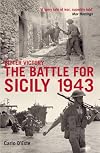
The current go-to title about the Sicily campaign from a US perspective is probably Rick Atkinson's Day of Battle, which I have yet to read. Carlo D'Este's book about Sicily follows the classic commander's and officer's perspective paradigm, a study in leadership and (lack of) strategy. The Mediterranean theater allowed the American generals and forces to slowly level up against a limited number of opponents and on non-strategic ground. Often, the American forces had to endure higher show more friendly casualties than those caused by the enemy. The USAAF bombed anything that moved, the Navy pummeled the Allied gliders and planes with incessant flak. Fortunately,. the US 7th army and the British 8th army faced only four German divisions on the island of Sicily, which could have been trapped by ingenious generalship. Unfortunately, Allied generalship was mediocre. D'Este is especially harsh on Harold Alexander who looked like a general but created a strategic and intellectual vacuum - quickly filled but not constrained by the theater's two prime donne Monty and Patton.
Monty's strong beginning quickly turned into a futile war of attrition in Eastern Sicily. Patton, meanwhile, went on a senseless goose chase in Western Sicily (conquering Palermo) that sent his troops away from the Germans. As D'Este points out, a better plan would have been to follow up the invasion of Sicily with a second one in Calabria, thus bottling up the German divisions on the island. The Allies did much worse: In a masterful operation, the Germans managed to evacuate all of their forces (and some Italians), with hardly any Allied intervention. Thus the title "Bitter victory", as apart from headlines and a poverty-stricken island, the Allies gained little more than experience (although the subsequent landings in Italy weren't showcases for lessons learned).
Overall, an interesting well-written account of the campaign that suffers a bit from German and Italian input. D'Este's unfamiliarity with German shows, for instance, on page 203 where he explains to his American readers that the German term for "one hell of a mess" is "Riesenauri", which is patent nonsense. The word he probably had in mind is "Riesensauerei", one of many, many German pork-based expressions of disapproval (Sauhaufen, Saustall, Schweinerei, Schweinehund, ...). Raising pigs was big business for the sausage mad Germans. Today, incidentally, it is Denmark that rules Europe's pig production. show less
Monty's strong beginning quickly turned into a futile war of attrition in Eastern Sicily. Patton, meanwhile, went on a senseless goose chase in Western Sicily (conquering Palermo) that sent his troops away from the Germans. As D'Este points out, a better plan would have been to follow up the invasion of Sicily with a second one in Calabria, thus bottling up the German divisions on the island. The Allies did much worse: In a masterful operation, the Germans managed to evacuate all of their forces (and some Italians), with hardly any Allied intervention. Thus the title "Bitter victory", as apart from headlines and a poverty-stricken island, the Allies gained little more than experience (although the subsequent landings in Italy weren't showcases for lessons learned).
Overall, an interesting well-written account of the campaign that suffers a bit from German and Italian input. D'Este's unfamiliarity with German shows, for instance, on page 203 where he explains to his American readers that the German term for "one hell of a mess" is "Riesenauri", which is patent nonsense. The word he probably had in mind is "Riesensauerei", one of many, many German pork-based expressions of disapproval (Sauhaufen, Saustall, Schweinerei, Schweinehund, ...). Raising pigs was big business for the sausage mad Germans. Today, incidentally, it is Denmark that rules Europe's pig production. show less
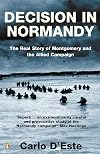
Gives a birds-eye perspective on the Normandy campaign, with an emphasis on Montgomery's leadership. One of the fairest assessments by an American, I think, concluding that Montgomery's strengths were not best suited to a campaign which required rapid readjustment and a high-degree of risk-taking. Readers who like to know what war was like for individual soliders may find the book disappointing, but those more interested in strategy and politics will enjoy it immensely.
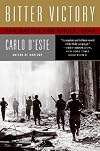
Absolutely excellent book on Operation Husky, the invasion and conquering of Sicily. Shows just much of how it was not a cake walk for our forces. Author blends big picture and visceral boots on the ground accounts flawlessly.
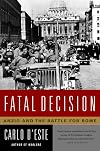
Both of my parents (now deceased) were WWII veterans. My mother was a US Army Nurse and served in North Africa, Sicily, and at Anzio. My father was an officer in the Signal Corps and also served in North Africa, Sicily, and in the Cassino section of the Italian Campaign. Throughout my life they were witnesses to the impact - good and bad - of their experiences in WWII. Since they both served in the Italian Campaign and my mother endured Anzio - I gained a lot of additional knowledge through show more this book.
It is amazingly well researched and written in a detailed but still orderly presentation of the events. I highly recommend this book to anyone interested in learning more about this chapter in military history. I especially was intrigued by the information regarding the conflict and rancor between the US commanders and their British counterparts. So much for allies (at least at the very upper levels) ! It was also quite eye-opening to read the criticism of General Mark Clark. He actually attended my parents wedding - 1944, Florence, Italy - and they always spoke about him in heroic terms.
The more I read well written history - the more my eyes are opened - the more I learn ! show less
It is amazingly well researched and written in a detailed but still orderly presentation of the events. I highly recommend this book to anyone interested in learning more about this chapter in military history. I especially was intrigued by the information regarding the conflict and rancor between the US commanders and their British counterparts. So much for allies (at least at the very upper levels) ! It was also quite eye-opening to read the criticism of General Mark Clark. He actually attended my parents wedding - 1944, Florence, Italy - and they always spoke about him in heroic terms.
The more I read well written history - the more my eyes are opened - the more I learn ! show less
Lists
You May Also Like


Associated Authors
Statistics
- Works
- 15
- Also by
- 9
- Members
- 2,683
- Popularity
- #9,572
- Rating
- 4.1
- Reviews
- 31
- ISBNs
- 65
- Languages
- 1
- Favorited
- 4