
Tim Milne (1) (1912–2010)
Author of Kim Philby: the unknown story of the KGB's master-spy
For other authors named Tim Milne, see the disambiguation page.
Works by Tim Milne
Tagged
Common Knowledge
- Legal name
- Milne, Ian Innes
- Other names
- Milne, Ian Innes 'Tim'
- Birthdate
- 1912
- Date of death
- 2010
- Gender
- male
- Education
- Westminster School
University of Oxford (Christ Church) - Awards and honors
- Order of St Michael and St George (Companion)
Order of the British Empire (Officer) - Nationality
- England
UK - Birthplace
- Brentford, Middlesex, England, UK
- Associated Place (for map)
- England, UK
Members
Reviews
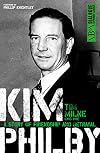
This is an unusual story of the life of the master spy, being written by his childhood friend Tim Milne in the 1970s, though not published until after Milne's death in 2010. Tim Milne was a contemporary of Philby at Westminster school in the 1920s, their fathers also having been at school together. Though Milne was at Oxford rather than Cambridge, they travelled extensively in Europe together during the summer holidays on three occasions in the early 1930s, which is when it emerged much show more later was when Philby was first recruited as a Soviet agent (they were in Germany at the time of the last pre-Nazi election, where Hitler's party did very well, and a couple of months after Hitler came to power but before Germany had become fully totalitarian). They worked together closely in the Secret Intelligence Service (MI6) and their families became fairly close, living together for periods, during and after the war. After Philby was appointed to the UK embassy in Washington in 1949, they became less close. This was Philby's last job in SIS before he was sacked in 1951 after being suspected of involvement in the defection of Burgess and Maclean to the USSR. There was no concrete proof, though, and Milne gave his friend the benefit of any doubt; Philby was cleared by an investigation in 1955 announced in the House of Commons by no less than then Foreign Secretary Harold Macmillan. Milne saw him little afterwards, as Philby became Observer correspondent in Beirut, from which he defected to the USSR in 1963 to escape definitive exposure; as Milne says, "In the world civil war we were now on opposite sides for ever."
Being himself involved in the world of secret intelligence, Milne is able to refute some of the more colourful theories espoused by other writers, and demonstrate that this secret world is by no means the glamorous and colourful life depicted in spy fiction, but much simpler, more mundane and more sordid in some ways. He points out that at many times there were rationale reasons for some actions by Philby that in hindsight were seen as signs of his spying; Philby was clever and cautious, which was why he was successful for so long, and he could not have carried out some of the daring exploits spies are sometimes credited with, without risking exposure, and thus bringing an end to his usefulness to the Soviets. Milne does not in any way condone Philby's actions, but still values their friendship. His final conclusion is: "I do not regret knowing him. He enriched my world for many years and I owed a lot to him. Certainly my association with him caused many difficulties for me but I do not feel bitterness towards him, only sadness." show less
Being himself involved in the world of secret intelligence, Milne is able to refute some of the more colourful theories espoused by other writers, and demonstrate that this secret world is by no means the glamorous and colourful life depicted in spy fiction, but much simpler, more mundane and more sordid in some ways. He points out that at many times there were rationale reasons for some actions by Philby that in hindsight were seen as signs of his spying; Philby was clever and cautious, which was why he was successful for so long, and he could not have carried out some of the daring exploits spies are sometimes credited with, without risking exposure, and thus bringing an end to his usefulness to the Soviets. Milne does not in any way condone Philby's actions, but still values their friendship. His final conclusion is: "I do not regret knowing him. He enriched my world for many years and I owed a lot to him. Certainly my association with him caused many difficulties for me but I do not feel bitterness towards him, only sadness." show less
Statistics
- Works
- 1
- Members
- 51
- Popularity
- #311,766
- Rating
- 3.3
- Reviews
- 1
- ISBNs
- 5