
Alice Thomson
Author of The Singing Line
About the Author
Alice Thomson, the great-great-granddaughter of Charles and Alice Todd, is a British journalist. She lives in England. (Bowker Author Biography)
Works by Alice Thomson
Tagged
Common Knowledge
There is no Common Knowledge data for this author yet. You can help.
Members
Reviews
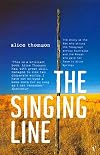
A book about the creation of the first Trans-Australia Telegraph line. Written by the great-great-granddaughter of the woman for whom Alice Springs is named. Brilliant.
I love historical non-fiction about great achievements by humans that actually made things better.
First off, for any Northern Hemisphere residents a note about the sheer size of Australia. It is bigger than you can imagine. More than twice+ the size of India, three+ times the size of Mexico and so on.
One Australian state, show more Western Australia, if it were a country, would be the 10th largest country in the world.
A telegraph line??? You may wonder what the fuss is about.
If you are old enough to remember pre-internet then the change that the internet made was nothing compared to the introduction of the telegraph.
In 1980's New Zealand I could phone my parents in England. In the 1850's, had I been alive, I could only receive letters and read newspapers that were 3 months old. If one of your family in England died at Christmas it would be April before you knew. After the introduction of the telegraph you'd know within hours at the most.
Back to the book.
The interior of Australia, roughly the size of the US was completely unknown and the few brave souls who had tried looking for a trans-continental route had all perished in the attempt. Finally in 1862, John McDouall Stuart crossed the continent by following Aboriginal trails that linked waterholes thereby forming a route that could sustain both humans and animals.
Here's a quote from the book:
“The commitment was really quite staggering. They had undertaken to build a telegraph line three thousand kilometres long through country about which they knew nothing other than what Stuart had told them many years ago, and which was unoccupied by white people for 2,250 kilometres. What they did know was that the country was dry, with long stony deserts and sandhills running at right angles to the route, that there were no tracks, that most of it contained little timber for poles, and that every item of equipment, food, building materials and other stores would have to be carted most of the way.”
The line would require 37,000 iron poles, along with insulators, batteries, wire and telegraph equipment imported from England. Poles were to be placed 80 km apart and a repeater station built every 250 km. A team of surveyors, linesman, carpenters, labourers and cooks were required; and the materials, food and supplies had to be transported to the workers by bullocks, horse drawn wagons, and Afghan cameleers."
The author, (the great-great-granddaughter of the woman for whom Alice Springs is named),, follows the original route of the telegraph line and writes of the original achievement as she goes so it's a curious mix of auto-biography, a road trip and historical fiction. It actually works quite well and her hereditary status is acknowledged at various points along the way, including Alice Springs.
It avoids the trap of long lists of dates and places, instead it focuses on the people and brings them to life and thye carry the story along.
Side note:
The Aussies are no strangers to long lengths of wire strung across impossible terrain.
The Rabbit Proof Fence ran some 2000km (?)
The Dingo Fence runs some 5600 kms, equivalent running a fence from New York City to Guatemala City. show less
I love historical non-fiction about great achievements by humans that actually made things better.
First off, for any Northern Hemisphere residents a note about the sheer size of Australia. It is bigger than you can imagine. More than twice+ the size of India, three+ times the size of Mexico and so on.
One Australian state, show more Western Australia, if it were a country, would be the 10th largest country in the world.
A telegraph line??? You may wonder what the fuss is about.
If you are old enough to remember pre-internet then the change that the internet made was nothing compared to the introduction of the telegraph.
In 1980's New Zealand I could phone my parents in England. In the 1850's, had I been alive, I could only receive letters and read newspapers that were 3 months old. If one of your family in England died at Christmas it would be April before you knew. After the introduction of the telegraph you'd know within hours at the most.
Back to the book.
The interior of Australia, roughly the size of the US was completely unknown and the few brave souls who had tried looking for a trans-continental route had all perished in the attempt. Finally in 1862, John McDouall Stuart crossed the continent by following Aboriginal trails that linked waterholes thereby forming a route that could sustain both humans and animals.
Here's a quote from the book:
“The commitment was really quite staggering. They had undertaken to build a telegraph line three thousand kilometres long through country about which they knew nothing other than what Stuart had told them many years ago, and which was unoccupied by white people for 2,250 kilometres. What they did know was that the country was dry, with long stony deserts and sandhills running at right angles to the route, that there were no tracks, that most of it contained little timber for poles, and that every item of equipment, food, building materials and other stores would have to be carted most of the way.”
The line would require 37,000 iron poles, along with insulators, batteries, wire and telegraph equipment imported from England. Poles were to be placed 80 km apart and a repeater station built every 250 km. A team of surveyors, linesman, carpenters, labourers and cooks were required; and the materials, food and supplies had to be transported to the workers by bullocks, horse drawn wagons, and Afghan cameleers."
The author, (the great-great-granddaughter of the woman for whom Alice Springs is named),, follows the original route of the telegraph line and writes of the original achievement as she goes so it's a curious mix of auto-biography, a road trip and historical fiction. It actually works quite well and her hereditary status is acknowledged at various points along the way, including Alice Springs.
It avoids the trap of long lists of dates and places, instead it focuses on the people and brings them to life and thye carry the story along.
Side note:
The Aussies are no strangers to long lengths of wire strung across impossible terrain.
The Rabbit Proof Fence ran some 2000km (?)
The Dingo Fence runs some 5600 kms, equivalent running a fence from New York City to Guatemala City. show less
Statistics
- Works
- 2
- Members
- 95
- Popularity
- #197,645
- Rating
- 3.6
- Reviews
- 1
- ISBNs
- 7