

Kate A. Boorman
Author of Winterkill
About the Author
Series
Works by Kate A. Boorman
Associated Works
Tagged
Common Knowledge
Members
Reviews
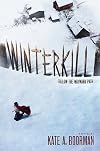
I want to love this book so badly, but I can only get as far as liking it and having a great love for the author's writing style.
Do you remember M Night Shyamalan's movie The Village? This book is similar and I think that a lot of people are under the impression that it's just a redo of the movie: there's a village/fortress/compound, scary things outside of the village, creepy or fanatical people in charge of the village, and a damaged girl breaking all the rules. But, it has it's own show more unique touches (including some influences Canadians will appreciate, like the inclusion of French and Native culture). And, besides, there are a tonne of stories/movies that follow this same template.
I always want to love the damaged girl and her need to satisfy her curiosity and question the way things are while still being pulled by honest fear, but I did get a little tired of Emmeline's overly dramatic obsession with being "stained" (subject to prejudice because of bad things her grandmother did). I also have a strong dislike for romance novel style love triangles. I had to remind myself, often, that she's just 16. In the eyes of a 16 year old love is intense, life is unfair, and parents are as much the enemy as anyone.
All that said, I did still enjoy the novel. The story and the village's lore where interesting, but more importantly, the writing was very evocative. The author drew me in and kept me intrigued enough to overlook Emmeline's drama. I could feel Emmeline's fear, I could hear the forest noises, and I could see her dreams. Boorman also peppers the dialogue with French and Native (not sure which tribe), where appropriate, instead of forcing all the characters to only speak English, which I find very refreshing. And, she trusts the reader to be smart enough to understand without constantly translating every word (she translates enough to get the point across).
While I didn't love Emmeline, I did have a hard time putting the book down. The story was thrilling and full of the ebb and flow of trust and fear that Emmeline was experiencing. I'm looking forward to reading the next in the series and have high hopes for the author. show less
Do you remember M Night Shyamalan's movie The Village? This book is similar and I think that a lot of people are under the impression that it's just a redo of the movie: there's a village/fortress/compound, scary things outside of the village, creepy or fanatical people in charge of the village, and a damaged girl breaking all the rules. But, it has it's own show more unique touches (including some influences Canadians will appreciate, like the inclusion of French and Native culture). And, besides, there are a tonne of stories/movies that follow this same template.
I always want to love the damaged girl and her need to satisfy her curiosity and question the way things are while still being pulled by honest fear, but I did get a little tired of Emmeline's overly dramatic obsession with being "stained" (subject to prejudice because of bad things her grandmother did). I also have a strong dislike for romance novel style love triangles. I had to remind myself, often, that she's just 16. In the eyes of a 16 year old love is intense, life is unfair, and parents are as much the enemy as anyone.
All that said, I did still enjoy the novel. The story and the village's lore where interesting, but more importantly, the writing was very evocative. The author drew me in and kept me intrigued enough to overlook Emmeline's drama. I could feel Emmeline's fear, I could hear the forest noises, and I could see her dreams. Boorman also peppers the dialogue with French and Native (not sure which tribe), where appropriate, instead of forcing all the characters to only speak English, which I find very refreshing. And, she trusts the reader to be smart enough to understand without constantly translating every word (she translates enough to get the point across).
While I didn't love Emmeline, I did have a hard time putting the book down. The story was thrilling and full of the ebb and flow of trust and fear that Emmeline was experiencing. I'm looking forward to reading the next in the series and have high hopes for the author. show less
If you've read any other reviews of Winterkill, you probably already know what movie this book is being compared to. I'll admit, I had the same thought originally. A hidden settlement in the middle of the forest. An unknown terror that lurks right on the fringes, terrifying the inhabitants into submission. The group of people who rise up to make sure that their submission is total. Are you with still with me? Now, as much as I agree that this has a lot of similarities, it doesn't negate the show more fact that this actually an interesting story. Winterkill does have quite a bit to offer. Don't count it out just yet.
I adored Emmeline, our main character. As one of the Stained, she has a much different view of her town than most of the other people who populate it. She's on the outside, looking in. This creates a great way to see into the corruption that simmers beneath the surface. It makes it easy to understand that nothing is what it seems. It also creates this beautiful and mysterious atmosphere, that only increases as Emmeline slowly uncovers the truth. I couldn't pull myself away. I had to see what she found next. Her innocence clashed perfectly with what was going on around her, and I loved it.
Major points also go to Boorman for creating such a believable society in the first place. Although it is hinted at, it's never quite fully explained where Emmeline's community came from. We simply know that each Winter (La Prise) they struggle to survive, and welcome the next Spring. I was easily able to make myself a part of their struggle. Everything from chores, to customs, to classes was laid out for me. I was just another cog in the machine. I feel like that was an important part of why I read this so ravenously. I felt involved.
So why the three star rating, you ask? Simply, I felt like the first half of Winterkill was spectacular, and then things went downhill. By the time I neared the ending, I knew that there wouldn't be enough time to answer all my questions. There simply weren't enough pages left to tie everything up. I watched as Emmeline finally discovered the truth, and found myself sitting there confused. It wasn't what I was expecting, at all. It didn't feel like an ending worthy of all the lovely, atmospheric writing leading up to it. Overall though? I enjoyed my time in Emmeline's world. With its mysteries and romance, I couldn't fault it for not delivering the ending that I personally wanted. Three stars it is. show less
I adored Emmeline, our main character. As one of the Stained, she has a much different view of her town than most of the other people who populate it. She's on the outside, looking in. This creates a great way to see into the corruption that simmers beneath the surface. It makes it easy to understand that nothing is what it seems. It also creates this beautiful and mysterious atmosphere, that only increases as Emmeline slowly uncovers the truth. I couldn't pull myself away. I had to see what she found next. Her innocence clashed perfectly with what was going on around her, and I loved it.
Major points also go to Boorman for creating such a believable society in the first place. Although it is hinted at, it's never quite fully explained where Emmeline's community came from. We simply know that each Winter (La Prise) they struggle to survive, and welcome the next Spring. I was easily able to make myself a part of their struggle. Everything from chores, to customs, to classes was laid out for me. I was just another cog in the machine. I feel like that was an important part of why I read this so ravenously. I felt involved.
So why the three star rating, you ask? Simply, I felt like the first half of Winterkill was spectacular, and then things went downhill. By the time I neared the ending, I knew that there wouldn't be enough time to answer all my questions. There simply weren't enough pages left to tie everything up. I watched as Emmeline finally discovered the truth, and found myself sitting there confused. It wasn't what I was expecting, at all. It didn't feel like an ending worthy of all the lovely, atmospheric writing leading up to it. Overall though? I enjoyed my time in Emmeline's world. With its mysteries and romance, I couldn't fault it for not delivering the ending that I personally wanted. Three stars it is. show less
Crossposted on my blog.
For a list of warnings, tropes, and representation for this book, check out its page on BookTriggerWarnings.com.
Thank you TBR Beyond Tours and NetGalley for providing me with a complimentary book in exchange for an honest review.
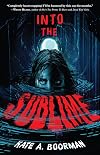
When I finished Into the Sublime, my initial reaction was simply “huh.” Not huh? but huh. It’s a book that makes you, like the police in the story, question everything that you read. What exactly happened in that underground cave and show more how much of what you’ve been told is actually real? What should you take away from the story? Into the Sublime is a book that makes you think.
We are told the story mostly through the lens of a self-admitted unreliable narrator. The police have just discovered three girls who are injured, disoriented, and distressed. According to them, they ventured into a mysterious cave where they quickly found themselves trapped and terrified. The main issue though? Four girls entered the cave and only three came out. Only one girl is ready to tell the police what happened, but in order to do it right, she has to start from the very beginning.
The timeline of the book switches back and forth between third-person scenes with the police and first-person narration of one of the girls, Amelie, explaining what happened. I thought this format worked well to provide the plot with additional suspense and pacing. As readers, we are consistently forced out of the story in ways that are sometimes jarring. I could imagine that that might be annoying for some people, but for me, it functioned as a way to keep me hooked on what would happen next.
As far as the writing goes, the book is very atmosphere-oriented, which is pretty typical in horrors and psychological thrillers. As someone who is afraid of the dark, I found the underground scenes particularly terrifying. Throughout most of the book, the characters only have very small beams of light to guide their way, and sometimes they’re pitched in absolute darkness. Nope, couldn’t be me. That being said, I did noticed that a complaint many readers had was that the characters lacked depth. Though I agree with this assessment, I ultimately think it’s what makes the most sense. They met each other just moments before entering the cave together so, as the first-person narrator, Amelie can’t actually know that much about any of them other than what she learns in the small period of time that they’re together. If the author wanted to provide more character development and background, I think a multiple POV form of storytelling would have been necessary. Honestly, multiple POVs with this book sounds like a lot of fun. I wonder how that would have turned out?
All in all, I think Into the Sublime is a book that gets in your head more than under your skin, so I would firmly place it as a psychological thriller with horror aspects. It’s got a gorgeous, yet chilling, cover photo and I think it’s worth a try if the premise sounds interesting to you! show less
For a list of warnings, tropes, and representation for this book, check out its page on BookTriggerWarnings.com.
Thank you TBR Beyond Tours and NetGalley for providing me with a complimentary book in exchange for an honest review.
When I finished Into the Sublime, my initial reaction was simply “huh.” Not huh? but huh. It’s a book that makes you, like the police in the story, question everything that you read. What exactly happened in that underground cave and show more how much of what you’ve been told is actually real? What should you take away from the story? Into the Sublime is a book that makes you think.
We are told the story mostly through the lens of a self-admitted unreliable narrator. The police have just discovered three girls who are injured, disoriented, and distressed. According to them, they ventured into a mysterious cave where they quickly found themselves trapped and terrified. The main issue though? Four girls entered the cave and only three came out. Only one girl is ready to tell the police what happened, but in order to do it right, she has to start from the very beginning.
The timeline of the book switches back and forth between third-person scenes with the police and first-person narration of one of the girls, Amelie, explaining what happened. I thought this format worked well to provide the plot with additional suspense and pacing. As readers, we are consistently forced out of the story in ways that are sometimes jarring. I could imagine that that might be annoying for some people, but for me, it functioned as a way to keep me hooked on what would happen next.
As far as the writing goes, the book is very atmosphere-oriented, which is pretty typical in horrors and psychological thrillers. As someone who is afraid of the dark, I found the underground scenes particularly terrifying. Throughout most of the book, the characters only have very small beams of light to guide their way, and sometimes they’re pitched in absolute darkness. Nope, couldn’t be me. That being said, I did noticed that a complaint many readers had was that the characters lacked depth. Though I agree with this assessment, I ultimately think it’s what makes the most sense. They met each other just moments before entering the cave together so, as the first-person narrator, Amelie can’t actually know that much about any of them other than what she learns in the small period of time that they’re together. If the author wanted to provide more character development and background, I think a multiple POV form of storytelling would have been necessary. Honestly, multiple POVs with this book sounds like a lot of fun. I wonder how that would have turned out?
All in all, I think Into the Sublime is a book that gets in your head more than under your skin, so I would firmly place it as a psychological thriller with horror aspects. It’s got a gorgeous, yet chilling, cover photo and I think it’s worth a try if the premise sounds interesting to you! show less
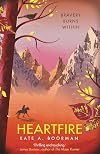
'Heartfire' is the second random book from the lucky dip selection sent by a kind friend. It's the third and final installment of a trilogy that I hadn't previously heard of, let alone read any of. This took me back to my teenage years, when I would borrow any book in the library that looked remotely interesting and cared not a bit for the order in which series should be read. It is incredibly rare for one library to have an entire series conveniently available to read chronologically show more anyway. I remember reading [b:The Subtle Knife|41637836|The Subtle Knife (His Dark Materials, #2)|Philip Pullman|https://i.gr-assets.com/images/S/compressed.photo.goodreads.com/books/1535965085l/41637836._SY75_.jpg|1570229] before [b:Northern Lights|70947|Northern Lights (His Dark Materials, #1)|Philip Pullman|https://i.gr-assets.com/images/S/compressed.photo.goodreads.com/books/1327235223l/70947._SY75_.jpg|1536771], which in no way detracted from my vast enjoyment of the His Dark Materials trilogy. After six months without libraries, I am once more becoming undiscerning. Puzzling out what happened in previous books also added interest to 'Heartfire'. I remain uncertain of what specific subgenre to place it in. Clearly it is YA, as the first person narrator is a 16 year old girl who must discover difficult truths about her home then save it from peril. But is it fantasy, sci-fi, post-apocalyptic, and/or supernatural? There's no apparent magic other than prophetic dreams. No fantastical creatures either. The setting appears influenced by frontier America, although none of the terminology is historically accurate as far as I know. The odd mix of available technologies suggests remnants of post-apocalyptic humanity. I don't necessarily mind that this is mysterious; quite possibly it was made more explicit in the two earlier books.
The plot and characters were certainly accessible without any prior knowledge. Emmeline and her friend Matisa, girls from two very different settlements, work together to resist aggressive imperialists unsubtly named the Dominion, as well as various other shady people. Their main bargaining point is knowledge of a medicine for the Bleed, a horrible plague that resembles super-fast-acting Ebola virus. Stylistically I found Emmeline's narration rather uninspiring, as reporting things like, 'I smiled' or 'I stare at him' seems somewhat awkward. That said, the action scenes were involving enough that I stopped noticing this. There are some excellent chase sequences and chaotic skirmishes in forests. Unfortunately Emmeline follows the YA trope of getting involved in an unnecessary love triangle. It is brief, but still overwrought. She becomes very upset at the possibility of her boyfriend Kane liking another girl, who he saved from sex slavery. Kane is a generic hunk who often loses his shirt and doesn't have much to say for himself. Emmeline is definitely infatuated with him and his abs, although to her credit she prioritises saving people from peril over canoodling. There are a couple of other background romances, including one between two boys.I was delighted that they both survived after being shot then swept away by a flash flood. Both Emmeline and I understandably assumed they'd died until their triumphant reappearance.
'Heartfire' was easy to read after a long and exhausting working day, as well as having quite an exciting plot. There are some positively cinematic action sequences and appealing twists. I might have appreciated the characters more with context from the two previous books. As it was, they seemed appealing enough without particularly distinguishing themselves. The style of first person narration took a bit of getting used to. Once I did so, I had fun while letting my brain relax a bit. Even the presence of a plague illness in the story didn't undermine the escapism, possibly because the Bleed is spread by contaminated water rather than human contact. show less
The plot and characters were certainly accessible without any prior knowledge. Emmeline and her friend Matisa, girls from two very different settlements, work together to resist aggressive imperialists unsubtly named the Dominion, as well as various other shady people. Their main bargaining point is knowledge of a medicine for the Bleed, a horrible plague that resembles super-fast-acting Ebola virus. Stylistically I found Emmeline's narration rather uninspiring, as reporting things like, 'I smiled' or 'I stare at him' seems somewhat awkward. That said, the action scenes were involving enough that I stopped noticing this. There are some excellent chase sequences and chaotic skirmishes in forests. Unfortunately Emmeline follows the YA trope of getting involved in an unnecessary love triangle. It is brief, but still overwrought. She becomes very upset at the possibility of her boyfriend Kane liking another girl, who he saved from sex slavery. Kane is a generic hunk who often loses his shirt and doesn't have much to say for himself. Emmeline is definitely infatuated with him and his abs, although to her credit she prioritises saving people from peril over canoodling. There are a couple of other background romances, including one between two boys.
'Heartfire' was easy to read after a long and exhausting working day, as well as having quite an exciting plot. There are some positively cinematic action sequences and appealing twists. I might have appreciated the characters more with context from the two previous books. As it was, they seemed appealing enough without particularly distinguishing themselves. The style of first person narration took a bit of getting used to. Once I did so, I had fun while letting my brain relax a bit. Even the presence of a plague illness in the story didn't undermine the escapism, possibly because the Bleed is spread by contaminated water rather than human contact. show less
Awards


You May Also Like


Associated Authors
Statistics
- Works
- 6
- Also by
- 1
- Members
- 463
- Popularity
- #53,108
- Rating
- 3.4
- Reviews
- 20
- ISBNs
- 38
- Languages
- 3