

Thomas G. Long
Author of The Witness Of Preaching, Second Edition
About the Author
Thomas G. Long is Bandy Professor of Preaching at Candler School of Theology, Emory University, in Atlanta, Georgia, and one of the most popular preachers in the United States today. He is the author of several books, including The Witness of Preaching, 2nd ed., and coauthor with Thomas Lynch of show more The Good Funeral: Death, Grief, and the Community of Care. show less
Works by Thomas G. Long
Testimony: Talking Ourselves into Being Christian (The Practices of Faith Series) (2003) 126 copies, 1 review
Connections: Year C, Volume 3: Season after Pentecost (Connections: A Lectionary Commentary for Preaching and Worship) (2019) 36 copies
Tagged
Common Knowledge
- Birthdate
- 1946-10-12
- Gender
- male
- Nationality
- USA
- Associated Place (for map)
- USA
Members
Reviews
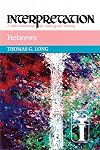
A powerful, valuable commentary on the letter to the Hebrews.
The author does well at the mission of the Interpretation series: he discusses each section of the work, provides a basic contextual interpretive framework, and excels at providing great and often even provocative "big picture" considerations of the text and what the Hebrews author is trying to accomplish.
You may not always agree with the direction he's going in, but you find the willingness to venture out refreshing. No, this is show more not a thorough commentary, but there's plenty out there for that purpose (deSilva, Bruce, etc.). This commentary is exactly what it needs to be: giving preachers and teachers something compelling to think about as they approach exhortation from Hebrews. Highly recommended. show less
The author does well at the mission of the Interpretation series: he discusses each section of the work, provides a basic contextual interpretive framework, and excels at providing great and often even provocative "big picture" considerations of the text and what the Hebrews author is trying to accomplish.
You may not always agree with the direction he's going in, but you find the willingness to venture out refreshing. No, this is show more not a thorough commentary, but there's plenty out there for that purpose (deSilva, Bruce, etc.). This commentary is exactly what it needs to be: giving preachers and teachers something compelling to think about as they approach exhortation from Hebrews. Highly recommended. show less
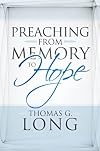
In a way, this feels like two works awkwardly joined. Chapters one, two, and five were given as the 2006 Lyman Beecher lectures, a prestigious annual guest lectureship at Yale University. In these, Long confronts recent challenges to the narrative preaching that has been dominant among most teachers and many practitioners of preaching, concluding that to the degree these criticisms are valid, they apply more to a poorly-understood and superficially-practiced form of narrative preaching. show more Further, he argues that, since the underlying Christian message comes to us wrapped in a narrative, to appropriate this for our preaching remains valid. Long then turns, in chapter two, to the loss of the present tense in preaching, that is, the sense that God is working in our lives now. In chapter five, he addresses the loss of the future tense, calling for a return — in a responsible way — to an eschatological pulpit. By this, he doesn’t mean predicting the future but seeing the present in the light of hope.
Sandwiched between chapters two and five is a discussion of what Long, following other writers such as Cyril O’Regan, diagnoses as the return of gnosticism in contemporary Christianity. Chapter three outlines the traits this manifests, whereas chapter four illustrates these through the writings of Marcus Borg. Long seems tentative, even ill-at-ease in this, for understandable reasons. He is an expert on preaching and not (although well-informed) on gnosticism. This reader felt this two-chapter excursus was not as well thought out as the other three chapters. An uncharitable reader might conclude that these are placed here to fill out the three lectures to a more acceptable book length, as well as out of a recognition that, as they are, they are the stump of a project that would not bear carrying to book length. Indeed, I felt this way at times, but I think I do grasp the connection: one of the challenges faced by those who continue to preach narratively is that merely telling stories that evoke overall Christian knowledge present in the listeners is no longer adequate. While the Biblical illiteracy of many has often been described, Long feels that, also, many of the most knowledgeable listeners are far from unknowing, but that they ascribe to an alternate narrative, one shaped by the gnostic impulse. What this calls for on the part of the preacher is nothing less than an interreligious dialogue conducted from the pulpit. I found myself agreeing with this assessment. In all, I found much to take away from this book, and hope that it will continue to find readers not only among the practitioners of preaching but consumers of it as well. show less
Sandwiched between chapters two and five is a discussion of what Long, following other writers such as Cyril O’Regan, diagnoses as the return of gnosticism in contemporary Christianity. Chapter three outlines the traits this manifests, whereas chapter four illustrates these through the writings of Marcus Borg. Long seems tentative, even ill-at-ease in this, for understandable reasons. He is an expert on preaching and not (although well-informed) on gnosticism. This reader felt this two-chapter excursus was not as well thought out as the other three chapters. An uncharitable reader might conclude that these are placed here to fill out the three lectures to a more acceptable book length, as well as out of a recognition that, as they are, they are the stump of a project that would not bear carrying to book length. Indeed, I felt this way at times, but I think I do grasp the connection: one of the challenges faced by those who continue to preach narratively is that merely telling stories that evoke overall Christian knowledge present in the listeners is no longer adequate. While the Biblical illiteracy of many has often been described, Long feels that, also, many of the most knowledgeable listeners are far from unknowing, but that they ascribe to an alternate narrative, one shaped by the gnostic impulse. What this calls for on the part of the preacher is nothing less than an interreligious dialogue conducted from the pulpit. I found myself agreeing with this assessment. In all, I found much to take away from this book, and hope that it will continue to find readers not only among the practitioners of preaching but consumers of it as well. show less
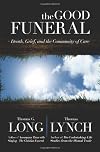
I have too much to say about this book to say it as well as I'd like to, and have already tried at length and failed, so will try to keep my review short. Thomas Long and Thomas Lynch both write well and informatively about their subject in The Good Funeral, and it was a fascinating, although, for me, a bit of a plodding read. I would love to have read it in a class, and to have had the opportunity to meet with other people to discuss each section. It will, no doubt, be useful in seminaries show more and mortuary science schools for just that purpose. For this lay reader, though, it didn't quite work. I am often drawn to books about death, and read this one as an admirer of Thomas Lynch's previous works and a veteran of many funerals. But I disagreed with the authors' conclusions (particularly on the role of faith in making meaning of death and the importance of having the deceased's body present) about what is required for a "good funeral." Still, I am grateful to have benefited from Long and Lynch's insights from their many years as pastor and funeral director, and they have given me a lot of food for thought as well as a couple of good leads on what to read next. show less
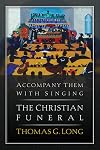
This is a very helpful book, and certainly is an aid to anyone planning their own funeral. But more importantly, it will be helpful for pastors, especially young pastors, in providing counsel and directing the focus of the the funeral service Godward.
You May Also Like


Associated Authors
Statistics
- Works
- 32
- Members
- 3,317
- Popularity
- #7,713
- Rating
- 3.9
- Reviews
- 15
- ISBNs
- 54
- Favorited
- 2