
About the Author
Image credit: via Babelio
Series
Works by Jess Keating
Shark Lady: The True Story of How Eugenie Clark Became the Ocean's Most Fearless Scientist (Women in Science Books, Marine Biology for Kids, Shark Gifts) (2017) 1,144 copies, 62 reviews
The Girl Who Built an Ocean: An Artist, an Argonaut, and the True Story of the World's First Aquarium (2022) 56 copies, 2 reviews
eat your rocks croc 1 copy
Associated Works
The Creativity Project: An Awesometastic Story Collection (2018) — Contributor — 114 copies, 3 reviews
Tagged
Common Knowledge
- Gender
- female
Members
Reviews
What Makes a Monster?: Discovering the World's Scariest Creatures (The World of Weird Animals) by Jess Keating
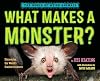
Keating returns with another humorous and thought-provoking picture book in her new series, "The World of Weird Animals." In the first book, Pink is for blobfish, she explored unusual pink animals of the world. Now she looks at animals considered monsters either because of superstition, fear, or their unusual appearance. Each spread includes a photograph of the animal in action, a funny cartoon, a description of the animal, and an additional section on the animal's unusual ability or show more appearance. A sidebar includes stats about the animal - name, species name, size, diet, habitat, and predators and threats.
Animals listed include the honey badger, Portuguese man-of-war, horror frog, cordyceps fungus, prairie dog, assassin bug, goblin shark, and finally, humans. The final pages include funny but thoughtful sections on deciding what makes a monster - are the creatures listed in the book acting according to their natures? Are they truly monsters or are they just surviving the best they can? There is also a glossary.
While this book certainly will catch the attention of kids who enjoy "weird animal" factoids and creepy photographs, underneath the humorous exterior it encourages kids to think about why they're scared of, or dislike certain animals. Do we focus on saving cute animals more than those that are weird-looking?
Verdict: A fun and interesting look at weird creatures around the world as well as a good start for critical thinking about why we behave the way we do. Recommended.
ISBN: 9780553512304; Published 2017 by Alfred A. Knopf; Purchased for the library show less
Animals listed include the honey badger, Portuguese man-of-war, horror frog, cordyceps fungus, prairie dog, assassin bug, goblin shark, and finally, humans. The final pages include funny but thoughtful sections on deciding what makes a monster - are the creatures listed in the book acting according to their natures? Are they truly monsters or are they just surviving the best they can? There is also a glossary.
While this book certainly will catch the attention of kids who enjoy "weird animal" factoids and creepy photographs, underneath the humorous exterior it encourages kids to think about why they're scared of, or dislike certain animals. Do we focus on saving cute animals more than those that are weird-looking?
Verdict: A fun and interesting look at weird creatures around the world as well as a good start for critical thinking about why we behave the way we do. Recommended.
ISBN: 9780553512304; Published 2017 by Alfred A. Knopf; Purchased for the library show less

Jess Keating is really getting into her stride with the wacky animal fact picture books, and this latest is delightfully funny and informative.
The endpages show an array of animals in a doctor's waiting room with lots of silly problems. A cat with a fishbowl (and fish) stuck on its head, a tortoise with a cracked shell (complete with bandaid) and a bear liberally covered with porcupine quills - and a porcupine. Dr. Glider, a sugar glider, stands atop a tall ladder and welcomes in the show more patients.
After a brief introduction, Dr. Glider begins to tackle their problems, after the style of an advice column. Each animal is shown in its habitat with a colored speech bubble, asking Dr. Glider for help or advice. Dr. Glider gives them a brief answer, and more information is included in a sidebar. At the end of the book is a "biography" of Dr. Glider, a glossary, and the endpages show pictures of Dr. Glider's patients and their names.
Dr. Glider handles problems like a wildebeest baby who doesn't want to run right after being born, a croc with a stomach ache, a dolphin with a scratched nose, and a pitcher plant annoyed by busy rats. Her advice always explains some aspect of the animals' behavior or abilities, and is sometimes gruesomely awesome, like when she tells Penelope Pitcher Plant to catch (and eat) those pesky rats!
Verdict: This isn't a book meant for reports, but it's perfect for browsing and oohing or groaning over cool (and gross) animal facts. Perfect for classroom libraries and elementary students.
ISBN: 9781338239881; Published May 2020 by Orchard Books; Purchased for the library show less
The endpages show an array of animals in a doctor's waiting room with lots of silly problems. A cat with a fishbowl (and fish) stuck on its head, a tortoise with a cracked shell (complete with bandaid) and a bear liberally covered with porcupine quills - and a porcupine. Dr. Glider, a sugar glider, stands atop a tall ladder and welcomes in the show more patients.
After a brief introduction, Dr. Glider begins to tackle their problems, after the style of an advice column. Each animal is shown in its habitat with a colored speech bubble, asking Dr. Glider for help or advice. Dr. Glider gives them a brief answer, and more information is included in a sidebar. At the end of the book is a "biography" of Dr. Glider, a glossary, and the endpages show pictures of Dr. Glider's patients and their names.
Dr. Glider handles problems like a wildebeest baby who doesn't want to run right after being born, a croc with a stomach ache, a dolphin with a scratched nose, and a pitcher plant annoyed by busy rats. Her advice always explains some aspect of the animals' behavior or abilities, and is sometimes gruesomely awesome, like when she tells Penelope Pitcher Plant to catch (and eat) those pesky rats!
Verdict: This isn't a book meant for reports, but it's perfect for browsing and oohing or groaning over cool (and gross) animal facts. Perfect for classroom libraries and elementary students.
ISBN: 9781338239881; Published May 2020 by Orchard Books; Purchased for the library show less
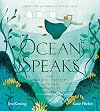
As a child, Marie helped her father as he studied the earth, but "When Marie was growing up, girls were not supposed to dream of becoming scientists or explorers." However - good luck for Marie - when many men went off to fight in a war, women got the chance to do those jobs. Unfortunately, women were still considered bad luck on ships, so Marie wasn't allowed to go with her colleagues to explore the ocean floor; she stayed behind and charted the data they sent back. But in this way, Marie show more was the one to discover a deep rift valley on the ocean floor. No one believed her at first (sigh), and Jacques Cousteau set out to prove her wrong - but ended up proving her right.
Gorgeous endpapers show a world map, including landmasses in greens, yellows, and browns, and oceans and undersea mountain ranges and depths in shades of turquoise and blue.
Back matter includes an author's note, questions and answers, and further reading.
See also: Counting on Katherine by Helaine Becker, What Miss Mitchell Saw by Hayley Barrett show less
Gorgeous endpapers show a world map, including landmasses in greens, yellows, and browns, and oceans and undersea mountain ranges and depths in shades of turquoise and blue.
Back matter includes an author's note, questions and answers, and further reading.
See also: Counting on Katherine by Helaine Becker, What Miss Mitchell Saw by Hayley Barrett show less
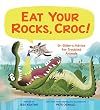
This is such a clever way to get kids interested in science facts. Jess Keating, as always, has found the most fascinating details about the animals we know and love. Each page spread has a "hook" in the form of dialogue: an animal asks Dr. Glider (a sugar glider) an advice column-style question with a surprising answer. Fact cards along the right side provide more insight into the fascinating fact. For example, male anglerfish don't need to hunt for food because they can latch onto a female show more and siphon nutrients from her bloodstream while their own organs wither from disuse. The consistent layout on the pages, coupled with the engaging dialogue and fascinating topics, make this a sure hit with the 1st- to 4th grade crowd. Pete Oswald's illustrations are the perfect pairing for the humor and science of this book. show less
Lists
Awards


Shark Lady: The True Story of How Eugenie Clark Became the Ocean's Most Fearless Scientist (Women in Science Books, Marine Biology for Kids, Shark Gifts) (Finalist – Elementary Nonfiction – 2017)


Shark Lady: The True Story of How Eugenie Clark Became the Ocean's Most Fearless Scientist (Women in Science Books, Marine Biology for Kids, Shark Gifts) (Selection – Junior Non-Fiction – 2017)
Pink Is For Blobfish: Discovering the World's Perfectly Pink Animals (Selection – Junior Non-Fiction – 2016)


Shark Lady: The True Story of How Eugenie Clark Became the Ocean's Most Fearless Scientist (Women in Science Books, Marine Biology for Kids, Shark Gifts) (Nonfiction Picture Books – 2017)
Pink Is For Blobfish: Discovering the World's Perfectly Pink Animals (Nonfiction Picture Books – 2016)


You May Also Like


Associated Authors
Statistics
- Works
- 21
- Also by
- 1
- Members
- 3,027
- Popularity
- #8,437
- Rating
- 4.2
- Reviews
- 91
- ISBNs
- 111
- Languages
- 1