
Phillip B. Williams
Author of Ours: A Novel
About the Author
Phillip B. Williams is a Chicago, Illinois native. He received scholarships from Bread Loaf Writers Conference and a 2013 Ruth Lilly Fellowship. His work has appeared or is forthcoming in Anti-, Callaloo, The Kenyon Review, Poetry, The Southern Review, West Branch and others. Phillip received his show more MFA in Writing as a Chancellor's Graduate Fellow at the Washington University in St. Louis. He is the poetry editor of the online journal Vinyl and the 2015-2017 Creative Writing Fellow in Poetry at Emory University. show less
Works by Phillip B. Williams
Lift Every Voice (Penguin Poets) 3 copies
Our Hospital 1 copy
Associated Works
Four Hundred Souls: A Community History of African America, 1619-2019 (2021) — Contributor — 1,171 copies, 25 reviews
African American Poetry: 250 Years of Struggle and Song (2020) — Contributor — 238 copies, 4 reviews
Nepantla: An Anthology Dedicated to Queer Poets of Color (2018) — Contributor — 126 copies, 2 reviews
Tagged
Common Knowledge
- Gender
- male
Members
Reviews
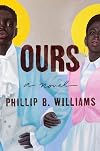
OK, January 25, and I've found my first Best Book of 2024: Phillip B. Williams' Ours. No matter what else comes out this year, Ours is not getting knocked off my list.
This is a long book that makes demands of its readers. But the effort one puts in reading Ours is repaid over and over by all the book has to give. Some reviews don't like the length, but I take the author at his word when he explains that part of the book's length reflected a commitment to portraying many characters with care show more and thoroughness, unlike books that clearly have "A List" and "B List" characters (my way of putting it). Yes, some characters get more "page time" than others, but if I had to list the characters essential to this book, I couldn't get that list below 10, and would rather leave it at 15, maybe more.
To offer a very short description of the book's content, I'll just explain that Ours begins before the Civil War and ends after it. Saint, a woman gifted in particular kinds of conjuring, travels the south, "listening" for those who want to be freed. When she finds them, she uses her powers to kill the "so-called masters" (Williams' term) and leads the now-free to a town west of St. Louis that she's founded and has protected with boundary markers that prevent outsiders from entering. (I single Saint out because she sets the novel's events in motion, not because she stands above the book's other characters.)
That town is named Ours. Some of the town's residents have powers of their own. Some don't. And none of them completely control the powers they do have. Time and memory lengthen and contract repeatedly. Loving relationships bloom in a wealth of forms, across genders and across life experiences. And failures to love, intended to protect, complicate the interactions of characters.
One of the reviews of this novel notes that because of its complexity, Ours makes an excellent candidate for a group read. The richness and depth of its offerings deserve attention and discussion beyond the individual. I had an electronic review copy of Ours (my thanks to the publisher and NetGalley) and because I read it pre-publication, I didn't read it as part of a group, but I want to reread it in that context once it's released.
Through serendipity, I read Ours at the same time that I read Walking with Our Ancestors: Contemplation and Activism by Barbara A. Holmes, which is both kin to and very different from Ours. At just 68 pages, it's roughly 1/9th Ours' length. Walking with Our Ancestors examines events and individuals from the Civil Rights Movement through the the lens of contemplative practice, which the author doesn't see as being unique to Christianity. If you're at all inclined to think about questions of spiritual practice and its furtherance of real-world change, I urge you to do the same. The pairing resonates in wonderful ways.
Even if you don't want to commit to a group read or a two-book pairing, read Ours. Have faith that Williams will have you turning things over in heart and mind long after you finish the book. show less
This is a long book that makes demands of its readers. But the effort one puts in reading Ours is repaid over and over by all the book has to give. Some reviews don't like the length, but I take the author at his word when he explains that part of the book's length reflected a commitment to portraying many characters with care show more and thoroughness, unlike books that clearly have "A List" and "B List" characters (my way of putting it). Yes, some characters get more "page time" than others, but if I had to list the characters essential to this book, I couldn't get that list below 10, and would rather leave it at 15, maybe more.
To offer a very short description of the book's content, I'll just explain that Ours begins before the Civil War and ends after it. Saint, a woman gifted in particular kinds of conjuring, travels the south, "listening" for those who want to be freed. When she finds them, she uses her powers to kill the "so-called masters" (Williams' term) and leads the now-free to a town west of St. Louis that she's founded and has protected with boundary markers that prevent outsiders from entering. (I single Saint out because she sets the novel's events in motion, not because she stands above the book's other characters.)
That town is named Ours. Some of the town's residents have powers of their own. Some don't. And none of them completely control the powers they do have. Time and memory lengthen and contract repeatedly. Loving relationships bloom in a wealth of forms, across genders and across life experiences. And failures to love, intended to protect, complicate the interactions of characters.
One of the reviews of this novel notes that because of its complexity, Ours makes an excellent candidate for a group read. The richness and depth of its offerings deserve attention and discussion beyond the individual. I had an electronic review copy of Ours (my thanks to the publisher and NetGalley) and because I read it pre-publication, I didn't read it as part of a group, but I want to reread it in that context once it's released.
Through serendipity, I read Ours at the same time that I read Walking with Our Ancestors: Contemplation and Activism by Barbara A. Holmes, which is both kin to and very different from Ours. At just 68 pages, it's roughly 1/9th Ours' length. Walking with Our Ancestors examines events and individuals from the Civil Rights Movement through the the lens of contemplative practice, which the author doesn't see as being unique to Christianity. If you're at all inclined to think about questions of spiritual practice and its furtherance of real-world change, I urge you to do the same. The pairing resonates in wonderful ways.
Even if you don't want to commit to a group read or a two-book pairing, read Ours. Have faith that Williams will have you turning things over in heart and mind long after you finish the book. show less
This is a saga and an incredible story--it also kind of bogged down in the middle for me, with lots of details that didn't quite go anywhere. It could have been tightened up, but maybe the rambling and details were part of Williams' vision of a saga. But this is an epic, a story of African and African-American resilience, bravery, skill, wisdom, and dreams.
---
This story covers decades, with looks back even further. Saint is a conjurer, former enslaved African (her memories are vague, but show more she remembers the ship), who has used her powers and skills to destroy plantations and free slaves throughout early 1800s Arkansas. The group builds their own town, Ours, north of St Louis. Saint uses stones and conjures to keep strangers out and to keep the residents safe.
Does time work the same as elsewhere? A small community forms out side Ours, led by those who cannot function under Saint's brand of control. Is being trapped in a town really safety? Is going to work in a nearby village--whose residents don't like you and cannot find your town--a functioning way to live?
Saint makes some mistakes in her conjures, and sometimes she comes up against the powers and skills of those around her. But as she becomes more forgetful, her protection stones weaken, letting others in. Her twins use their own developing skills to assist. show less
---
This story covers decades, with looks back even further. Saint is a conjurer, former enslaved African (her memories are vague, but show more she remembers the ship), who has used her powers and skills to destroy plantations and free slaves throughout early 1800s Arkansas. The group builds their own town, Ours, north of St Louis. Saint uses stones and conjures to keep strangers out and to keep the residents safe.
Does time work the same as elsewhere? A small community forms out side Ours, led by those who cannot function under Saint's brand of control. Is being trapped in a town really safety? Is going to work in a nearby village--whose residents don't like you and cannot find your town--a functioning way to live?
Saint makes some mistakes in her conjures, and sometimes she comes up against the powers and skills of those around her. But as she becomes more forgetful, her protection stones weaken, letting others in. Her twins use their own developing skills to assist. show less
Lists
Awards


You May Also Like
Associated Authors
Statistics
- Works
- 6
- Also by
- 7
- Members
- 263
- Popularity
- #87,566
- Rating
- 4.3
- Reviews
- 2
- ISBNs
- 19
- Languages
- 1