
Dominic A. Pacyga
Author of Chicago: A Biography
About the Author
Dominic A. Pacyga is professor emeritus of history in the Department of Humanities, History, and Social Sciences at Columbia College Chicago. His books include Polish Immigrants and Industrial Chicago: Workers on the South Side, 1881-1922; Chicago: A Biography; and Slaughterhouse: Chicago's Union show more Stock Yard and the World It Made; all from the University of Chicago Press. Pacyga is the 2014 Mieczyslaw Haiman Award winner for exceptional and sustained contribution to the study of Polish Americans. show less
Works by Dominic A. Pacyga
Tagged
Common Knowledge
Members
Reviews
This "biographical" approach to the story and history of a city is interesting, but ultimately it seems more a way of justifying the limitations of space rather than a coherent vision for telling a traditional biographical narrative that has definite beginning, middle, and end.
I appreciated the attempt to push back on the argument--most recently from Ta-Nehisi Coates et al--that the highways and freeways built post-WW2 simply ossified and "trapped" low-income/African-Americans in poor show more neighborhoods. The evidence presented here shows that such arguments are not only lazy and sloppy, but easily upended if one bothers to examine the evidence.
Curiously, there is a rather muted attempt here to rehabilitate the record of the first Mayor Daley. This will strike some readers as puzzling and Sisyphean if nothing else. Pacyga is a South-sider, but his bias doesn't lead to too much dumping on the Cubs--but there is a curious lack of any discussion of the Bears, Bulls, or Blackhawks here (not to mention the club, athletic, culinary, literary, artistic, etc, life of the city).
If the story of the city is to be a biography, it can't all simply be politics, but the book pretty much becomes a political history of the city, especially after the WW2 chapter. Very readable, but there's a bit missing (Capone, native New Yorker is mentioned, but Ness, native Chicagoan is not!!). show less
I appreciated the attempt to push back on the argument--most recently from Ta-Nehisi Coates et al--that the highways and freeways built post-WW2 simply ossified and "trapped" low-income/African-Americans in poor show more neighborhoods. The evidence presented here shows that such arguments are not only lazy and sloppy, but easily upended if one bothers to examine the evidence.
Curiously, there is a rather muted attempt here to rehabilitate the record of the first Mayor Daley. This will strike some readers as puzzling and Sisyphean if nothing else. Pacyga is a South-sider, but his bias doesn't lead to too much dumping on the Cubs--but there is a curious lack of any discussion of the Bears, Bulls, or Blackhawks here (not to mention the club, athletic, culinary, literary, artistic, etc, life of the city).
If the story of the city is to be a biography, it can't all simply be politics, but the book pretty much becomes a political history of the city, especially after the WW2 chapter. Very readable, but there's a bit missing (Capone, native New Yorker is mentioned, but Ness, native Chicagoan is not!!). show less
Regardless of whether you call Chicago the Second City, the City That Works, the City of Big Shoulders, the City of Neighborhoods, or any of its other names, there's no doubt that the people are the heart of the city. Not the skyscrapers, the weather or, I hesitate to even say, the baseball teams.
Dominic A. Pacyga, a Chicago expert, a local, and a college professor has written what, in theory, sounded like it could've been an outstanding book, a history of the city of Chicago, with a show more particular emphasis on the people and the things that have affected the people, such as labor struggles, housing issues etc.
At times, this was a great book. Pacyga has a knack for putting things into perspective, such as the 1919 Chicago race wars.
However, he's also got a heavy-handed writing style and, at times, I felt overwhelmed by facts. This happened on that date at this address. That happened on this date at that address. I've heard him speak on the Chicago documentary from PBS so this surprised me.
I thought things improved as I got further into the book.
One thing really annoyed me. I'm a north side/northern suburbs girl and it really bothered me that this book could have been called The South Side of Chicago: A Biography. There was even quite a bit about the west side. However, you'd barely know that there was a north side with as little attention as he gave to it. (Of course, there really is no east side--you'd be in Lake Michigan, except for a small southeast side.)
In short, this book had its moments but the reader has to go through a lot to get to them. I'd recommend it, with some reservations. show less
Dominic A. Pacyga, a Chicago expert, a local, and a college professor has written what, in theory, sounded like it could've been an outstanding book, a history of the city of Chicago, with a show more particular emphasis on the people and the things that have affected the people, such as labor struggles, housing issues etc.
At times, this was a great book. Pacyga has a knack for putting things into perspective, such as the 1919 Chicago race wars.
However, he's also got a heavy-handed writing style and, at times, I felt overwhelmed by facts. This happened on that date at this address. That happened on this date at that address. I've heard him speak on the Chicago documentary from PBS so this surprised me.
I thought things improved as I got further into the book.
One thing really annoyed me. I'm a north side/northern suburbs girl and it really bothered me that this book could have been called The South Side of Chicago: A Biography. There was even quite a bit about the west side. However, you'd barely know that there was a north side with as little attention as he gave to it. (Of course, there really is no east side--you'd be in Lake Michigan, except for a small southeast side.)
In short, this book had its moments but the reader has to go through a lot to get to them. I'd recommend it, with some reservations. show less
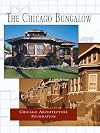
Growing up in Chicago, I was familiar with the thousands of brick bungalows that lined the streets of my hometown, Oak Park, Illinois, as ell as the other near-by Chicago suburbs. But I had no idea that they were a distinctive vernacular architectural style of the cit.
Mostly built between the end of the first world war and the beginning of the Depression in the 1930's, they transformed the open prairies surrounding the city into neat, mostly working class neighborhoods and provided an show more economical means for Chicago's working class to become homeowners.
They have stood the test of time and are still great, well-built homes today for Chicago's middle class. show less
Mostly built between the end of the first world war and the beginning of the Depression in the 1930's, they transformed the open prairies surrounding the city into neat, mostly working class neighborhoods and provided an show more economical means for Chicago's working class to become homeowners.
They have stood the test of time and are still great, well-built homes today for Chicago's middle class. show less
A fairly extensive look at how and why Chicago became the second city and its vast influence on the developing country and the midwest as its anchor. Compiled through the University of Chicago there is much to chew on here as the initial backwater emerges as the mighty city in a breathtaking speed. Many of the famed formations such as the stockyards and The Loop emerge. The structured neighborhoods and the great conflagration of the aptly named Great Fire of 1871 are here for perusal. Well show more worth the time of any one keen or passing interest in this great American city of "broad shoulders". show less
Lists
Awards

You May Also Like


Associated Authors
Statistics
- Works
- 8
- Members
- 338
- Popularity
- #70,453
- Rating
- 3.7
- Reviews
- 8
- ISBNs
- 20