

Beatrice Alemagna
Author of On a Magical Do-Nothing Day
About the Author
Series
Works by Beatrice Alemagna
Niemals Nie Nicht! 2 copies
Chi dei due? Ediz. a colori 2 copies
Chi dei due? Ediz. a colori 1 copy
Adeu, Blancaneu 1 copy
Même pas en rêve! 1 copy
Il top del TOP! 1 copy
Μια μεγάλη μέρα του τίποτα 1 copy
Meu Amor 30 1 copy
The Mud Princess /anglais 1 copy
le COSE che PASSANO 1 copy
Associated Works
Songs from the Garden of Eden: Jewish Lullabies and Nursery Rhymes (2005) — Illustrator, some editions — 19 copies
Tagged
Common Knowledge
- Canonical name
- Alemagna, Beatrice
- Legal name
- Alemagna, Beatrice
- Birthdate
- 1973
- Gender
- female
- Occupations
- artist
- Nationality
- Italy
- Birthplace
- Bologna, Italy
- Places of residence
- London, England, UK
Paris, France
Members
Reviews
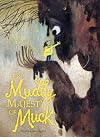
Alemagna reminds us that the feelings we hide aren’t ours alone — they’re shared, human, and worth naming.
----
Her Muddy Majesty of Muck is one of the most touching and emotionally resonant picture books I’ve read in a long time. Alemagna’s sparse, expressive illustrations carry an astonishing amount of emotional weight. They mirror the conflicted, swirling feelings inside Yuki while still holding space for the hope and joy she eventually discovers.
This is a book that speaks on show more multiple levels.
Children will see a gentle, imaginative way to name their feelings — a way to make sense of the thoughts and emotions that can feel overwhelming or too big to articulate. Adults will recognize the quieter, heavier thoughts we learn to push down, the ones we’re taught not to say aloud. Alemagna honors both experiences with such tenderness.
After a rash moment leads Yuki to drop her house keys down an open manhole, she embarks on a journey deep into the “mucky muck” of her own sad, belittling thoughts. Meeting Her Muddy Majesty of Muck helps Yuki understand that these feelings aren’t hers alone — they’re shared, universal, and even reflected in the people she loves. This realization opens a door to empathy, especially toward her brother, and reveals that there is always more beneath the surface than we assume.
And that final page — no spoilers — but it lands with a quiet, lingering truth that speaks directly to adult readers. It transforms the book into a powerful conversation starter for emotional literacy, anger management, family dynamics, or therapeutic settings.
Alemagna has created something rare: a picture book that is whimsical, unsettling, comforting, and profoundly human all at once. I can see this becoming a beloved tool for families, educators, and anyone helping children (or themselves) navigate big feelings. show less
----
Her Muddy Majesty of Muck is one of the most touching and emotionally resonant picture books I’ve read in a long time. Alemagna’s sparse, expressive illustrations carry an astonishing amount of emotional weight. They mirror the conflicted, swirling feelings inside Yuki while still holding space for the hope and joy she eventually discovers.
This is a book that speaks on show more multiple levels.
Children will see a gentle, imaginative way to name their feelings — a way to make sense of the thoughts and emotions that can feel overwhelming or too big to articulate. Adults will recognize the quieter, heavier thoughts we learn to push down, the ones we’re taught not to say aloud. Alemagna honors both experiences with such tenderness.
After a rash moment leads Yuki to drop her house keys down an open manhole, she embarks on a journey deep into the “mucky muck” of her own sad, belittling thoughts. Meeting Her Muddy Majesty of Muck helps Yuki understand that these feelings aren’t hers alone — they’re shared, universal, and even reflected in the people she loves. This realization opens a door to empathy, especially toward her brother, and reveals that there is always more beneath the surface than we assume.
And that final page — no spoilers — but it lands with a quiet, lingering truth that speaks directly to adult readers. It transforms the book into a powerful conversation starter for emotional literacy, anger management, family dynamics, or therapeutic settings.
Alemagna has created something rare: a picture book that is whimsical, unsettling, comforting, and profoundly human all at once. I can see this becoming a beloved tool for families, educators, and anyone helping children (or themselves) navigate big feelings. show less

Originally published in France as Un Lion à Paris, and translated into English for the London-based Tate Publishing, this beautiful picture-book follows a lion who, becoming bored in his grasslands home, decides to travel to the city of lights. Here he sees many extraordinary things, experiences a range of emotions, from feelings of alienation at this strange new place to joy at the sense of connection to those around him. Eventually, he settles down in the center of the Place show more Denfert-Rochereau, where he feels happy and decides to stay...
A massively oversized book, almost twice the size of an average picture-book, A Lion in Paris opens and is meant to be perused horizontally, rather than vertically. It is a visually arresting book, from its unusual size and orientation, to its expressive collage-style illustrations. Beatrice Alemagna mixes all sorts of elements on the page, and seems particularly fond of putting photographs of people's faces and heads on top of drawn/painted bodies. The lion's face is almost cartoon-like, but somehow manages to convey his changing emotional state. With the exception of the depiction of the Mona Lisa in the Louvre - talk about false advertising! Alemagna makes it look like the painting is huge, dominating the wall on which it hangs, rather than being practically the size of a postage stamp, compared to the vast blank wall on which it is to be found in real life - I loved everything about this book. It is not pretty, in any conventional sense, but it is beautiful, and offers so many interesting visual details, on every page. As someone with a great fondness for Patience and Fortitude - the stone lions that guard the 42nd Street New York Public Library - I appreciated the homage Alemagna created here, to the stone lion standing in the Place Denfert-Rochereau. Recommended to anyone looking for picture-books set in Paris, and featuring the icons of that city, as well as to fans of this immensely talented picture-book creator. show less
A massively oversized book, almost twice the size of an average picture-book, A Lion in Paris opens and is meant to be perused horizontally, rather than vertically. It is a visually arresting book, from its unusual size and orientation, to its expressive collage-style illustrations. Beatrice Alemagna mixes all sorts of elements on the page, and seems particularly fond of putting photographs of people's faces and heads on top of drawn/painted bodies. The lion's face is almost cartoon-like, but somehow manages to convey his changing emotional state. With the exception of the depiction of the Mona Lisa in the Louvre - talk about false advertising! Alemagna makes it look like the painting is huge, dominating the wall on which it hangs, rather than being practically the size of a postage stamp, compared to the vast blank wall on which it is to be found in real life - I loved everything about this book. It is not pretty, in any conventional sense, but it is beautiful, and offers so many interesting visual details, on every page. As someone with a great fondness for Patience and Fortitude - the stone lions that guard the 42nd Street New York Public Library - I appreciated the homage Alemagna created here, to the stone lion standing in the Place Denfert-Rochereau. Recommended to anyone looking for picture-books set in Paris, and featuring the icons of that city, as well as to fans of this immensely talented picture-book creator. show less

Originally published in Italian as Che cos'è un bambino?, this philosophical picture-book from author/artist Beatrice Alemagna offers a meditative examination of childhood, and the nature of the child. Each two-page spread features a description of things children do, or of how they experience the world on the one side, and a full-page illustration on the other. Occasionally, there is discussion of adults as well, either in contrast to, or in comparison with children. In the end, the show more narrative concludes, a child is a small person, one who needs kind eyes in order to fall asleep...
Unlike some of her other picture-books, from On a Magical Do-Nothing Day to The Wonderful Fluffy Little Squishy, it feels as if Alemagna is aiming What Is a Child? as much at adult readers as at children themselves. There is a sense of change here, but it is change that is seen looking backward, rather than forward - change seen in retrospect. There is a wistful quality to the narrative, as opposed to a hopeful one. It's almost as if this were the inverse of those aspirational picture-books, like Dr. Seuss' Oh, The Places You'll Go!, or Emily Winfield Martin's The Wonderful Things You Will Be. Which isn't to say it is sad or depressing, merely quiet and contemplative. The artwork is striking, and done in a slightly different style than the other Alemagna books I have picked up. I liked that there was no cuteness here, and that sometimes the children weren't depicted in an ideal sense (in one scene, a little boy is picking his nose). Although I am glad, as an admirer of Alemagna's work, to have read this one, I'm not sure to whom I would recommend it. Perhaps to those who prefer more philosophical picture-books? I could be wrong, but I suspect this is one that will have greater resonance with adult readers, than child listeners. show less
Unlike some of her other picture-books, from On a Magical Do-Nothing Day to The Wonderful Fluffy Little Squishy, it feels as if Alemagna is aiming What Is a Child? as much at adult readers as at children themselves. There is a sense of change here, but it is change that is seen looking backward, rather than forward - change seen in retrospect. There is a wistful quality to the narrative, as opposed to a hopeful one. It's almost as if this were the inverse of those aspirational picture-books, like Dr. Seuss' Oh, The Places You'll Go!, or Emily Winfield Martin's The Wonderful Things You Will Be. Which isn't to say it is sad or depressing, merely quiet and contemplative. The artwork is striking, and done in a slightly different style than the other Alemagna books I have picked up. I liked that there was no cuteness here, and that sometimes the children weren't depicted in an ideal sense (in one scene, a little boy is picking his nose). Although I am glad, as an admirer of Alemagna's work, to have read this one, I'm not sure to whom I would recommend it. Perhaps to those who prefer more philosophical picture-books? I could be wrong, but I suspect this is one that will have greater resonance with adult readers, than child listeners. show less
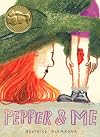
Authentic kid experience, authentic kid feelings.
When a girl has a fall and gets a bloody knee, her parents assure her it will become a scab, which will eventually fall off, but it sticks around long enough that it begins to talk to her! The girl names the scab Pepper ("after the puppy I never managed to get"). They talk to each other until one day, Pepper falls off, and the girl leaves her in a garden of poppies.
A peculiar premise with perfect execution.
When a girl has a fall and gets a bloody knee, her parents assure her it will become a scab, which will eventually fall off, but it sticks around long enough that it begins to talk to her! The girl names the scab Pepper ("after the puppy I never managed to get"). They talk to each other until one day, Pepper falls off, and the girl leaves her in a garden of poppies.
A peculiar premise with perfect execution.
Lists
Awards


You May Also Like


Associated Authors
Statistics
- Works
- 80
- Also by
- 8
- Members
- 1,372
- Popularity
- #18,747
- Rating
- 4.0
- Reviews
- 69
- ISBNs
- 178
- Languages
- 14
