
Tania Kelly Roxborogh
Author of Banquo's Son
About the Author
Series
Works by Tania Kelly Roxborogh
Banquo's Son 2 copies
Associated Works
Tagged
Common Knowledge
- Birthdate
- 1965
- Gender
- female
- Education
- Massey University
Auckland College of Education - Occupations
- English teacher
reviewer
non-fiction writer
novelist
children's book author - Organizations
- Otago Daily Times
Columbia College - Awards and honors
- Writer in Residence, Dunedin College of Education (2006)
- Nationality
- New Zealand
- Birthplace
- Christchurch, New Zealand
- Places of residence
- North Shore, Auckland, New Zealand
Dunedin, New Zealand - Associated Place (for map)
- New Zealand
Members
Reviews

Really, really good. It's the autobiography of a woman who went weighing from 116 kg to 66kg in a year, and I didn't find myself reading it for the sensationalist aspect. It was just really well written, and there were other aspects of her life that I found interesting. Of course, the book didn't focus on them (I wouldn't have really wanted to read about the sexual abuse when she was a child so I was glad that was only referred to fleetingly, but would have been interested in hearing more show more about her novels and teaching experience) but it made for very interesting and inspirational reading. show less

The idea is full of potential: to take the Shakespearean hints of the importance of Fleance (I am biased - having as a 13 year old played Fleance I have always argued he is the central character of Macbeth!) and develop an historical narrative. Perhaps alarm (alarum?) bells should have been ringing when I read the editorial hook-line on the cover: 'how do you choose between love and honour?' trumpets the publisher. Here is to be a narrative of Shakespearean weight, plumbing the depths of the show more human psyche and existential meaning.
Roxborogh offers her own words of introduction: ' I have done what Shakespeare often did: take a real story and people from history and asked "I wonder what would happen if...?"' Fleance, who makes two entrances and has two lines in Macbeth, offers fertile ground for such a task. He provides a ready narrative, a whakapapa (as it would be called in Roxborogh's New Zealand, a blood-story) with beginnings established and open endings: 'thou shalt get kings though thou be none', as the witches tell Banquo (Macbeth I:iii:68). What is their tale, left unwritten by the Baird? And so rich a history in the politics and intrigue of those warlike, hot-blooded northern Celts!
Yet there it ends. Fleance opens Roxborogh's narrative by stalking a stag, but the stag escapes when Fleance's (often and uneasily rendered "Flea's" in Roxborogh's attempt to craft an adoptive family's easy familiarity) adoptive sister Keavy in turn stalks Fleance. The stag escapes, but so, unfortunately, does any glimpse into the psyche of its would-be attacker. Fleance, obviously the central character, remains as wooden as his cross-bow. He falls in love with Rosie, but in the end the editorially-flagged tussle 'between love and honour' is no-contest. Honour wins: the princess Rachel takes the bruised and battered Fleance's hand into Scottish history while Rosie, his true love, presumably goes on to pull dark beers from behind the counter of her lowlands pub.
And that's about it, really. I mean ... there are encounters with witches, as there would be, and they make prophesies, as they would, to Donalbain, the descendant of Macbeth's victim Duncan (see Macbeth I:ii:62-64). Donalbain, who has returned from Ireland (Macbeth II:iii:140-143) has proved as vulnerable to the hags' incantations as his kinsman Macbeth, and is a somewhat ambivalent King of Scotland after the death of his ineffectual but perhaps-loved (and childless) brother Malcolm III. Fortunately, while attempting to murder Fleance, Donalbain falls over, impales himself, and conveniently dies, so Fleance's cousin Duncan can, to great rejoicing, assume the throne.
Fleance, fortunately, fatefully, had bumped into Duncan some time earlier. Banquo, even in Macbeth, has a habit of turning up at dinner parties and elsewhere, and provides the same service for his son. Along with bad dreams, his appearances inspire Fleance to undertake a quest, and he bumps into the unhorsed Duncan. Banquo doesn't seem to achieve much else, beyond looking inexplicably grumpy until at last the witches' kingly sooth-saying is fulfilled. Then, it is to be assumed, he settles down at last to sleep.
By then, though, Fleance has killed lots of wolves, miscreant knaves, feral thanes, hapless soldiers and various other inconveniences. Some seem slightly surprised to find Banquo's long-lost son re-appear, some recognize him, some don't. The witches of course don't, but they wouldn't. Fleance has saved Duncan's life, so it is all but inevitable that Duncan will one day die saving his. He has fallen in reciprocated semi-love with Duncan's sister Rachel, his true love Rosie eventually waves heartbroken hands ('the way of truth love is never smooth', intones Fleance languidly on page 162) and sets him free. Scotland is saved. Adoptive sister Keavy and Fleance's eventual sister in law Bree, an ADHD younger princess who is Duncan and Rachel's younger sister, meet briefly and instantly become as good a pair of friends as cardboard cutouts ever can be - for a paragraph or so. Bree seems otherwise to serve no purpose in the narrative. But nor does Keavy, unless it is to frighten away the stag in the opening scene. All - except of course Duncan - live happily ever after. MacDuff, by now surely an old man, wields a sword with the dexterity of an Olympic champion, but is eventually bumped on the head by a mace-wielding miscreant thug who had previously failed to kill Fleance. MacDuff is murdered from behind after mortal combat with Fleance's anglophile foster father, Keavy's 'Da' (is this what people called their fathers in the eleventh or any century?)'. Another bit player, Calum, adviser to the king, turns out to be the son of the king of Norway, but his duplicity is as predictable as his royal heritage is peripheral to the plot.
Roxborogh has missed a great opportunity. Wooden characters lead wooden lives, woodenly interact and die or live. Love interests come and go, without even the opportunity to speak of Michelangelo. Even Willow the horse, perhaps the most interesting character, eventually slides out of the narrative with all the ephemerality of a will o the wisp, leaving a younger horse to fight Fleance's battles.
The plot is thin, the characterization is barely existent; overloaded sentences with incomplete or ineffective sub-clauses, often with seemingly random punctuation, detract from any narrative pleasure. There was so much potential in this concept: Roxborogh's editors should never have let her miss it so avowedly. Perhaps the stag's escape was a warning. show less
Roxborogh offers her own words of introduction: ' I have done what Shakespeare often did: take a real story and people from history and asked "I wonder what would happen if...?"' Fleance, who makes two entrances and has two lines in Macbeth, offers fertile ground for such a task. He provides a ready narrative, a whakapapa (as it would be called in Roxborogh's New Zealand, a blood-story) with beginnings established and open endings: 'thou shalt get kings though thou be none', as the witches tell Banquo (Macbeth I:iii:68). What is their tale, left unwritten by the Baird? And so rich a history in the politics and intrigue of those warlike, hot-blooded northern Celts!
Yet there it ends. Fleance opens Roxborogh's narrative by stalking a stag, but the stag escapes when Fleance's (often and uneasily rendered "Flea's" in Roxborogh's attempt to craft an adoptive family's easy familiarity) adoptive sister Keavy in turn stalks Fleance. The stag escapes, but so, unfortunately, does any glimpse into the psyche of its would-be attacker. Fleance, obviously the central character, remains as wooden as his cross-bow. He falls in love with Rosie, but in the end the editorially-flagged tussle 'between love and honour' is no-contest. Honour wins: the princess Rachel takes the bruised and battered Fleance's hand into Scottish history while Rosie, his true love, presumably goes on to pull dark beers from behind the counter of her lowlands pub.
And that's about it, really. I mean ... there are encounters with witches, as there would be, and they make prophesies, as they would, to Donalbain, the descendant of Macbeth's victim Duncan (see Macbeth I:ii:62-64). Donalbain, who has returned from Ireland (Macbeth II:iii:140-143) has proved as vulnerable to the hags' incantations as his kinsman Macbeth, and is a somewhat ambivalent King of Scotland after the death of his ineffectual but perhaps-loved (and childless) brother Malcolm III. Fortunately, while attempting to murder Fleance, Donalbain falls over, impales himself, and conveniently dies, so Fleance's cousin Duncan can, to great rejoicing, assume the throne.
Fleance, fortunately, fatefully, had bumped into Duncan some time earlier. Banquo, even in Macbeth, has a habit of turning up at dinner parties and elsewhere, and provides the same service for his son. Along with bad dreams, his appearances inspire Fleance to undertake a quest, and he bumps into the unhorsed Duncan. Banquo doesn't seem to achieve much else, beyond looking inexplicably grumpy until at last the witches' kingly sooth-saying is fulfilled. Then, it is to be assumed, he settles down at last to sleep.
By then, though, Fleance has killed lots of wolves, miscreant knaves, feral thanes, hapless soldiers and various other inconveniences. Some seem slightly surprised to find Banquo's long-lost son re-appear, some recognize him, some don't. The witches of course don't, but they wouldn't. Fleance has saved Duncan's life, so it is all but inevitable that Duncan will one day die saving his. He has fallen in reciprocated semi-love with Duncan's sister Rachel, his true love Rosie eventually waves heartbroken hands ('the way of truth love is never smooth', intones Fleance languidly on page 162) and sets him free. Scotland is saved. Adoptive sister Keavy and Fleance's eventual sister in law Bree, an ADHD younger princess who is Duncan and Rachel's younger sister, meet briefly and instantly become as good a pair of friends as cardboard cutouts ever can be - for a paragraph or so. Bree seems otherwise to serve no purpose in the narrative. But nor does Keavy, unless it is to frighten away the stag in the opening scene. All - except of course Duncan - live happily ever after. MacDuff, by now surely an old man, wields a sword with the dexterity of an Olympic champion, but is eventually bumped on the head by a mace-wielding miscreant thug who had previously failed to kill Fleance. MacDuff is murdered from behind after mortal combat with Fleance's anglophile foster father, Keavy's 'Da' (is this what people called their fathers in the eleventh or any century?)'. Another bit player, Calum, adviser to the king, turns out to be the son of the king of Norway, but his duplicity is as predictable as his royal heritage is peripheral to the plot.
Roxborogh has missed a great opportunity. Wooden characters lead wooden lives, woodenly interact and die or live. Love interests come and go, without even the opportunity to speak of Michelangelo. Even Willow the horse, perhaps the most interesting character, eventually slides out of the narrative with all the ephemerality of a will o the wisp, leaving a younger horse to fight Fleance's battles.
The plot is thin, the characterization is barely existent; overloaded sentences with incomplete or ineffective sub-clauses, often with seemingly random punctuation, detract from any narrative pleasure. There was so much potential in this concept: Roxborogh's editors should never have let her miss it so avowedly. Perhaps the stag's escape was a warning. show less
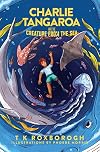
A good middle school action story where a young boy faces off against the gods. Lots to enjoy with interesting characters and a likeable hero.
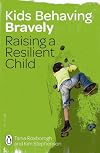
Well intentioned. Phew, got that out of the way. Now on to the book itself.
A hodgepodge collection of notes that resembled a first draft (of five). Little structure, little research (one specific other book was cited repeatedly), piles of personal anecdotes, and it got worse towards the end. Did they (there are two authors) just start at the beginning and go from there. A couple of pieces of good advice, but nothing beyond "think more".
The only addition this book has made is to its two show more authors' CVs, which - I think - is why it was produced. On the other hand, a big - BIG - black mark against its publishers, Penguin, for completely abandoning their role in the process. show less
A hodgepodge collection of notes that resembled a first draft (of five). Little structure, little research (one specific other book was cited repeatedly), piles of personal anecdotes, and it got worse towards the end. Did they (there are two authors) just start at the beginning and go from there. A couple of pieces of good advice, but nothing beyond "think more".
The only addition this book has made is to its two show more authors' CVs, which - I think - is why it was produced. On the other hand, a big - BIG - black mark against its publishers, Penguin, for completely abandoning their role in the process. show less
Lists
Awards


You May Also Like
Associated Authors
Statistics
- Works
- 27
- Also by
- 1
- Members
- 156
- Popularity
- #134,404
- Rating
- 3.6
- Reviews
- 12
- ISBNs
- 40
- Languages
- 1