
Stella Sands
Author of Exploring Natural Disasters
About the Author
Image credit: via author's website
Series
Works by Stella Sands
The Dating Game Killer: The True Story of a TV Dating Show, a Violent Sociopath, and a Series of Brutal Murders (St. Martin's True Crime Library) (2011) 71 copies, 2 reviews
The Good Son: A True Story of Greed, Manipulation, and Cold-Blooded Murder (2011) 24 copies, 1 review
Murder at Yale: The True Story of a Beautiful Grad Student and a Cold-Blooded Crime (2010) 23 copies, 2 reviews
Kids Discover Clara Barton 16 copies
Kids Discover Incas 15 copies
Kids Discover Venice 12 copies
Kids Discover Pacific Rim 12 copies
Kids Discover Eyes 9 copies
Kids Discover Language 8 copies
Kids Discover Hawaii 7 copies
Kids Discover Detectives 7 copies
Kids Discover Trees 6 copies
Kids Discover Mexico 5 copies
Kids Discover Dogs 4 copies
Kids Discover Glass 4 copies
Kids Discover North and South Poles 4 copies
Wealthy Men Only: The True Story of a Lonely Millionaire, a Gorgeous Younger Woman, and the Love Triangle that Ended in Murder (2012) 3 copies
Kids Discover Television 3 copies
Kids Discover Robots 3 copies
Kids Discover Food 2 copies
Kids Discover: Butterflies and Moths 2 copies
Kids Discover Trains 2 copies
Kids Discover Earthquakes 1 copy
Kids Discover Ponds 1 copy
Mesopotamia c.2 1 copy
Mesopotamia c.1 1 copy
Kids Discover Earth 1 copy
Kids Discover 2 Space 1 copy
Kids Discover Detectives 1 copy
KidsDiscover: Solar System 1 copy
It looked like spilt milk [by] Charles G. Shaw: A hands-on activity guide (Story world) (1991) 1 copy
Kids Discover Soil 1 copy
Associated Works
Kids Discover Flight — Editor — 2 copies
Tagged
Common Knowledge
- Birthdate
- 20th century
- Gender
- female
- Occupations
- Executive Producer
- Nationality
- USA
- Associated Place (for map)
- USA
Members
Reviews
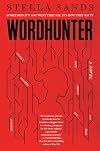
Maggie Moore is a graduate student in linguistics. She is also tattooed, pierced, and drinks too much. She is also something a genius with words. Her stress release is diagramming sentences from favorite works of literature.
Maggie is brought to the attention of the police by one of her professors who thinks she can help find a stalker turned rapist. Maggie is given the text messages that he sent to the victim which she manages to interpret to lead the police to the stalker. The chief of show more police who is just days from retirement is pleased. However, Deputy Jackson is much more skeptical.
Then a child is kidnapped, and the chief of police wants to call her in again. Maggie is most reluctant because the case brings up the disappearance of the best friend she has never stopped looking for.
Meanwhile, Maggie is trying to get through her final semester of college. She's been handpicked by a popular professor to be his teaching assistant and finds herself polishing his grant proposals and book proposals and even writing papers for him. When her success begins to outshine his, he turns on her, rapes her, and accuses her of plagiarism. His accusations though false can derail Maggie's potential career with the FBI and prevent her acceptance into any doctoral program.
This was an engaging mystery with a unique and intriguing main character. show less
Maggie is brought to the attention of the police by one of her professors who thinks she can help find a stalker turned rapist. Maggie is given the text messages that he sent to the victim which she manages to interpret to lead the police to the stalker. The chief of show more police who is just days from retirement is pleased. However, Deputy Jackson is much more skeptical.
Then a child is kidnapped, and the chief of police wants to call her in again. Maggie is most reluctant because the case brings up the disappearance of the best friend she has never stopped looking for.
Meanwhile, Maggie is trying to get through her final semester of college. She's been handpicked by a popular professor to be his teaching assistant and finds herself polishing his grant proposals and book proposals and even writing papers for him. When her success begins to outshine his, he turns on her, rapes her, and accuses her of plagiarism. His accusations though false can derail Maggie's potential career with the FBI and prevent her acceptance into any doctoral program.
This was an engaging mystery with a unique and intriguing main character. show less
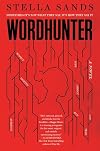
With as many unusual and somewhat contradictory characteristics as she has, I'm not sure that Maggie Moore could actually be a real person, but, nevertheless, she makes a fun protagonist in her first outing.
Maggie is a somewhat OCD grad student in forensic linguistics at a small university in Florida, not far from where she grew up. She's asked by the local police department to help solve a local murder and then, following that rapid success, she's asked to work on a regional taskforce to show more work on the kidnapping of the young daughter of the mayor of a nearby town.
As Maggie works through her cases we learn about forensic linguistics, which seems pretty interesting. I'm curious to see if Stella Sands will be able to carry Maggie farther into a career as a crime fighter. show less
Maggie is a somewhat OCD grad student in forensic linguistics at a small university in Florida, not far from where she grew up. She's asked by the local police department to help solve a local murder and then, following that rapid success, she's asked to work on a regional taskforce to show more work on the kidnapping of the young daughter of the mayor of a nearby town.
As Maggie works through her cases we learn about forensic linguistics, which seems pretty interesting. I'm curious to see if Stella Sands will be able to carry Maggie farther into a career as a crime fighter. show less
CW: The main reason I gave this title three stars was that the mystery at its center is about sexual assault and disappearances of children. The author doesn't bludgeon us with horrors, but I just feel uneasy when something like this shows up in my "entertainment." There's also an explosive character prone to physical and psychological violence.
What drew me to Wordhunter was the premise of a mystery novel whose central character is a forensic linguist. I was curious to see how the author show more would depict that field and what kind of person she's create to embody it. Maggie Moore, our forensic linguist (actually, she's still studying forensic linguistics) is rather a hot mess outside of her area of expertise. Poor self care, alcohol and drug use, a personal history of what can best be described as mind-bogglingly poor choices in sexual partners. There's effective backstory to explain this, but, goodness, she gives a reader a lot to worry about.
Like many such novels, Wordhunter explores the pairing of a professional-amateur investigative duo. Maggie is the amateur half of that team, with hopes of working in investigation/law enforcement, but no real experience yet. Detective Jackson is a deeply committed, by-the-books sort of guy (with problems of his own), who finds Maggie's baggage overwhelming. He wants to keep her in a "civilian" box. She's itching to be a "real" investigator.
The parts involving forensic linguistics were interesting—and leave me willing to try another book by this author with this character set should one appear. I appreciate the care with which Maggie insists that she can't make definitive statements about suspects. She can just offer word-based clues that may suggest bits oabout a suspect's history or the "character" the suspect is trying to come across as to the law enforcement community. Nonetheless, Maggie is able to pull key clues from very small pieces of evidence. Would this be true in real life? I don't know, but I have my doubts.
The unabomber case is offered as an example of the kinds of conclusions that forensic linguistics can lead to—but in the unabomber case analysts had a great deal of previous writing by the suspect and a 35,000-word manifesto to work with. Over the course of this case, Maggie is working with a few brief notes and a handful of equally brief text messages. So I'm not sure I buy some central elements of the puzzle, but I am curious to see where the author can take things next.
I received a free electronic review copy of this title from the publisher via Edelweiss; the opinions are my own. show less
What drew me to Wordhunter was the premise of a mystery novel whose central character is a forensic linguist. I was curious to see how the author show more would depict that field and what kind of person she's create to embody it. Maggie Moore, our forensic linguist (actually, she's still studying forensic linguistics) is rather a hot mess outside of her area of expertise. Poor self care, alcohol and drug use, a personal history of what can best be described as mind-bogglingly poor choices in sexual partners. There's effective backstory to explain this, but, goodness, she gives a reader a lot to worry about.
Like many such novels, Wordhunter explores the pairing of a professional-amateur investigative duo. Maggie is the amateur half of that team, with hopes of working in investigation/law enforcement, but no real experience yet. Detective Jackson is a deeply committed, by-the-books sort of guy (with problems of his own), who finds Maggie's baggage overwhelming. He wants to keep her in a "civilian" box. She's itching to be a "real" investigator.
The parts involving forensic linguistics were interesting—and leave me willing to try another book by this author with this character set should one appear. I appreciate the care with which Maggie insists that she can't make definitive statements about suspects. She can just offer word-based clues that may suggest bits oabout a suspect's history or the "character" the suspect is trying to come across as to the law enforcement community. Nonetheless, Maggie is able to pull key clues from very small pieces of evidence. Would this be true in real life? I don't know, but I have my doubts.
The unabomber case is offered as an example of the kinds of conclusions that forensic linguistics can lead to—but in the unabomber case analysts had a great deal of previous writing by the suspect and a 35,000-word manifesto to work with. Over the course of this case, Maggie is working with a few brief notes and a handful of equally brief text messages. So I'm not sure I buy some central elements of the puzzle, but I am curious to see where the author can take things next.
I received a free electronic review copy of this title from the publisher via Edelweiss; the opinions are my own. show less
Maggie is a main character with lots of negative traits -- she's pierced and tattooed, a drinker and user of illegal drugs - but the most important trait that Maggie has is her desire to help other people. She's also a savant with words - able to solve any linguistic puzzle. She relaxes by diagramming sentences and is the top student in her forensic linguistics class. Even with all of her flaws, she quickly became a very likable main character.
When a child goes missing in a neighboring town, show more Maggie is asked by her professor to help the police by analyzing the note that the kidnapper left for the police. It's a difficult request for her because her best friend had disappeared when they were young and she was still trying to find out what happened to her. But she knew that the police needed her expertise so she agreed to analyze the note plus texts and emails from people who the police suspected may be the kidnapper. She wasn't able to prove when someone was guilty but her skills allow her to tell who isn't a suspect. She becomes close to one of the detectives and even though they are just friends, there is a hint that they may become more than that. While she's working with the police, her life is also bogged down with charges from a professor that may cause her to be kicked out of school.
Maggie was an interesting main character and I was quite impressed with her abilities with words. I didn't know anything about forensic linguistics before reading this book and found it very interesting. I thought the plot was very well written and it kept me interested until the end. One thing that I didn't like about the book is that I had no idea that it was the first book in a new series until I got to the end of Wordhunter with several major issues left hanging. Guess I'll have to wait for book 2 to find out how these situations are solved. Other than that issue, this was a quick easy read with a lot of information about the use and understanding of words in a criminal setting. show less
When a child goes missing in a neighboring town, show more Maggie is asked by her professor to help the police by analyzing the note that the kidnapper left for the police. It's a difficult request for her because her best friend had disappeared when they were young and she was still trying to find out what happened to her. But she knew that the police needed her expertise so she agreed to analyze the note plus texts and emails from people who the police suspected may be the kidnapper. She wasn't able to prove when someone was guilty but her skills allow her to tell who isn't a suspect. She becomes close to one of the detectives and even though they are just friends, there is a hint that they may become more than that. While she's working with the police, her life is also bogged down with charges from a professor that may cause her to be kicked out of school.
Maggie was an interesting main character and I was quite impressed with her abilities with words. I didn't know anything about forensic linguistics before reading this book and found it very interesting. I thought the plot was very well written and it kept me interested until the end. One thing that I didn't like about the book is that I had no idea that it was the first book in a new series until I got to the end of Wordhunter with several major issues left hanging. Guess I'll have to wait for book 2 to find out how these situations are solved. Other than that issue, this was a quick easy read with a lot of information about the use and understanding of words in a criminal setting. show less
Lists
Awards

You May Also Like


Associated Authors
Statistics
- Works
- 167
- Also by
- 9
- Members
- 2,336
- Popularity
- #10,982
- Rating
- 3.5
- Reviews
- 34
- ISBNs
- 50
- Languages
- 1