
John E. Douglas
Author of Mind Hunter: Inside the FBI's Elite Serial Crime Unit
About the Author
Criminal profiler John E. Douglas worked for the FBI's Investigative Support Unit for 25 years. He is an Air Force veteran and doctor of education and has written or coauthored more than 100 criminology texts and research papers. In his study of the criminal mind, Douglas interviewed convicted show more murders, rapists, kidnappers and assassins that included Charles Manson, Sirhan Sirhan, Richard Speck, John Wayne Gacy, David Berkowitz, James Earl Ray and Ted Bundy, to name a few. Through this research, he learned how criminals think, and to see the world, the victims and the crime scenes through their eyes as well as perfected the art of psychological profiling to catch serial killers. Jack Crawford, a major character in the Thomas Harris novels Red Dragon and The Silence of the Lambs, was directly based on Douglas.. "Mind Hunter: Inside the FBI's Elite Serial Crime Unit," which is co-written with Mark Olshaker, is a psychological study that tells the real life story of the Investigative Support Unit of the FBI and the country's most notorious serial killers. It's a memoir of Douglas' time with the FBI and shows how this special force assisted state and local police in solving some of the most celebrated serial murder and rape cases. Olshaker and Douglas' first fictional work together was "Broken Wings." It tells how former profiler Jake Donovan and a special team of former agents investigate the apparent suicide of the director of the FBI. Also written with Olshaker were the titles "The Anatomy of Motive," "Obsession," and "Journey into Darkness." "Sexual Homicide: Patterns and Motives" was written with Robert K. Kessler and Ann W. Burgess, both former FBI agents. These three authors, along with Allen G. Burgess, also wrote "Crime Classification Manual," which classifies the three major felonies of murder, arson and sexual assault and standardizes the language and terminology used throughout the criminal justice system. (Bowker Author Biography) show less
Series
Works by John E. Douglas
The Cases That Haunt Us: From Jack the Ripper to JonBenet Ramsey, the FBI's Legendary Mindhunter Sheds Light on the Mysteries That Won't Go Away (2000) 1,137 copies, 23 reviews
Anyone You Want Me to Be: A True Story of Sex and Death on the Internet (2003) 288 copies, 11 reviews
When a Killer Calls: A Haunting Story of Murder, Criminal Profiling, and Justice in a Small Town (2022) 179 copies, 6 reviews
Crime Classification Manual: A Standard System for Investigating and Classifying Violent Crimes (2006) 178 copies, 1 review
Law and Disorder: The Legendary FBI Profiler's Relentless Pursuit of Justice (2013) 178 copies, 5 reviews
The Killer's Shadow: The FBI's Hunt for a White Supremacist Serial Killer (2020) 141 copies, 2 reviews
Tagged
Common Knowledge
- Canonical name
- Douglas, John E.
- Legal name
- Douglas, John Edward
- Other names
- Douglas, John
- Birthdate
- 1945-06-18
- Gender
- male
- Education
- Eastern New Mexico University (BA)
University of Wisconsin (MA|1977)
Nova Southeastern University (Ed.D|1989) - Occupations
- criminologist
FBI agent - Organizations
- Federal Bureau of Investigation
US Air Force - Nationality
- USA
- Birthplace
- Brooklyn, New York, USA
- Associated Place (for map)
- New York, USA
Members
Reviews
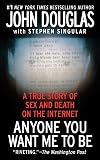
I have long admired John Douglas's work as a criminal profiler with the FBI's Behavioral Analysis Unit through his true crime books. His first book, Mindhunter, was actually influential in my own career choice. As a young adult, I devoured true crime, but once I began working with offenders in a rehabilitation setting, I rarely picked up the genre. I needed other kinds of reading to restore my energy. Now that I'm settled into retirement, I'm finally ready to dive back into the true crime show more books I've continued to collect over the years.
John Douglas's Anyone You Want Me to Be: A True Story of Sex and Death on the Internet has been sitting on my bookshelf since its 2003 publication. It's a true crime account of John Robinson, one of America's first known internet serial killers. A seemingly upstanding family man and businessman in Kansas, Robinson used early online chat rooms in the 1990s to prey on vulnerable women, luring them with promises of jobs, romance, and new beginnings — before murdering them. The book follows the investigation that eventually brought him down, drawing on Douglas's legendary career as an FBI criminal profiler to examine Robinson's psychology, his carefully constructed double life. It's a disturbing and fascinating look at how a predator adapted his methods to exploit emerging technology — and how investigators had to adapt right along with him.
Some might see this story as dated because of the vintage technology involved, but I found it more like a history lesson in the early days of the internet. It was nice to reminisce about a time period I lived through. I was also interested in how law enforcement had to work to catch up with the technology Robinson exploited, both in the investigation and the eventual prosecution.
I appreciated how Douglas traced Robinson's criminal career from its beginnings all the way to his arrest. He highlights the key moments that contributed to the escalation of his crimes — most notably the failure to hold him properly accountable for his earlier offenses. From my professional experience working with offenders, I was reminded again of the importance of holding people accountable for their actions. When individuals don't face real consequences, their behavior rarely changes. Douglas does a good job showing how Robinson's earlier crimes were not taken seriously enough, which allowed him to escalate.
The crimes themselves were deeply disturbing, and I felt real sorrow for the women Robinson victimized. I was shocked by how willing some of them were to leave their homes and relocate to Kansas based on his promises. It was surprising — and sad — how trusting people can be. I was particularly troubled by the portrayal of Robinson's wife. Her role was especially nuanced — she initially came across as frustrating for staying with him despite his infidelity and for refusing to believe he was a killer. But Douglas makes a convincing case that she was manipulated too, essentially groomed over the years for her role as wife and mother.
The book concludes with appendices that include statistics (now obviously outdated) along with practical safety suggestions from Douglas for interacting with strangers online and for parents whose children use the internet. Many of those recommendations still feel relevant and helpful today.
True crime isn't for everyone, and this one in particular carries heavy content warnings due to the violence that befell these women. That said, the authors handled the material with great respect and care for the victims and their families, even as Robinson's crimes grew increasingly horrific.
Anyone You Want Me to Be was a solid re-entry into true crime for me, and I'm looking forward to reading more of Douglas's work now that I have the mental space for it again.
I have photos and additional information that I'm unable to include here. It can all be found on my blog, in the link below.
A Book And A Dog show less
John Douglas's Anyone You Want Me to Be: A True Story of Sex and Death on the Internet has been sitting on my bookshelf since its 2003 publication. It's a true crime account of John Robinson, one of America's first known internet serial killers. A seemingly upstanding family man and businessman in Kansas, Robinson used early online chat rooms in the 1990s to prey on vulnerable women, luring them with promises of jobs, romance, and new beginnings — before murdering them. The book follows the investigation that eventually brought him down, drawing on Douglas's legendary career as an FBI criminal profiler to examine Robinson's psychology, his carefully constructed double life. It's a disturbing and fascinating look at how a predator adapted his methods to exploit emerging technology — and how investigators had to adapt right along with him.
Some might see this story as dated because of the vintage technology involved, but I found it more like a history lesson in the early days of the internet. It was nice to reminisce about a time period I lived through. I was also interested in how law enforcement had to work to catch up with the technology Robinson exploited, both in the investigation and the eventual prosecution.
I appreciated how Douglas traced Robinson's criminal career from its beginnings all the way to his arrest. He highlights the key moments that contributed to the escalation of his crimes — most notably the failure to hold him properly accountable for his earlier offenses. From my professional experience working with offenders, I was reminded again of the importance of holding people accountable for their actions. When individuals don't face real consequences, their behavior rarely changes. Douglas does a good job showing how Robinson's earlier crimes were not taken seriously enough, which allowed him to escalate.
The crimes themselves were deeply disturbing, and I felt real sorrow for the women Robinson victimized. I was shocked by how willing some of them were to leave their homes and relocate to Kansas based on his promises. It was surprising — and sad — how trusting people can be. I was particularly troubled by the portrayal of Robinson's wife. Her role was especially nuanced — she initially came across as frustrating for staying with him despite his infidelity and for refusing to believe he was a killer. But Douglas makes a convincing case that she was manipulated too, essentially groomed over the years for her role as wife and mother.
The book concludes with appendices that include statistics (now obviously outdated) along with practical safety suggestions from Douglas for interacting with strangers online and for parents whose children use the internet. Many of those recommendations still feel relevant and helpful today.
True crime isn't for everyone, and this one in particular carries heavy content warnings due to the violence that befell these women. That said, the authors handled the material with great respect and care for the victims and their families, even as Robinson's crimes grew increasingly horrific.
Anyone You Want Me to Be was a solid re-entry into true crime for me, and I'm looking forward to reading more of Douglas's work now that I have the mental space for it again.
I have photos and additional information that I'm unable to include here. It can all be found on my blog, in the link below.
A Book And A Dog show less
The Killer's Shadow: The FBI's Hunt for a White Supremacist Serial Killer (Cases of the FBI's Original Mindhunter, 1) by John E. Douglas
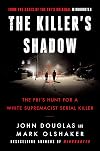
In The Killer's Shadow, John Douglas, one of the first full-time profilers to work for the FBI, recounts his role in helping to capture a serial killer who went on a racism-fuelled killing spree across the U.S. in the 1970s. Some of the methodological information is interesting, if not always for the reasons that Douglas thinks—there's quite a bit of back-patting about the success of certain techniques used, even though forensics specialists are increasingly dubious about their utility. show more (At one point Douglas mentions a case where, if his characterisation here is correct, someone was jailed for murder on the strength of a criminal profile and bitemark analysis—and that's not a standard of evidence I'm comfortable with!)
Douglas does tie what we can learn from the actions of this killer to more contemporary events linked to white supremacism, such as the Charlottesville march or the Charleston church shooting, but doesn't push his analysis far enough. At one point he seems to suggest that if the killer hadn't been blinded in one eye as a child he would have joined the local police force—and thus, it's implied, never become an avowed Nazi. I mean, maybe? But from everything I've observed about the behaviour of U.S. police over the last few years, I'm not sure that logic holds. He might just have felt free to terrorise Black and Jewish people from a position of authority. show less
Douglas does tie what we can learn from the actions of this killer to more contemporary events linked to white supremacism, such as the Charlottesville march or the Charleston church shooting, but doesn't push his analysis far enough. At one point he seems to suggest that if the killer hadn't been blinded in one eye as a child he would have joined the local police force—and thus, it's implied, never become an avowed Nazi. I mean, maybe? But from everything I've observed about the behaviour of U.S. police over the last few years, I'm not sure that logic holds. He might just have felt free to terrorise Black and Jewish people from a position of authority. show less
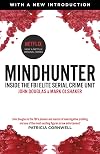
Okay, so the last book I read about true crime was like "sometimes reality is worse than fiction" and then didn't really deliver any fucked up crimes to prove that point. This book however? Jesus. Fucking. Christ. I consume A LOT of trume crime, I've watched a lot of seasons of Criminal Minds and so on, but there were things in this book where I had to take a moment and just stare out the bus window before I could continue reading. I mean ... the guy with the teeth. I will never get over show more that.
So, yeah, if you're into true crime and murder, you are going to enjoy this book. I even like the personal stories, I don't know how many people I retold the story of the failed (but not really) proposal because it's pretty hilarious. Sometimes I think it's a bit too much "he he he we're such a bunch of goofy pranksters" but you need some lightness in the book too.
I completely disagree on the death penalty though, and this book is pretty pro-death penalty in the case of really evil people. I agree that they're horrible people and I don't mourn them for a second, but a democracy cannot have the death penalty and still be a democracy. Just ... insert that Gandalf quote here I guess. But that opinion was not presented in a way that made me dislike the book and given what the author must've seen in his life, I definitely see why you'd think that. But I do not agree.
Oh, and when I picked it up I had no idea it was released like 20 years ago. It was so weird reading about how we don't know who BTK is, but obv there was a time we didn't (hell, until very recently we didn't know how the Golden State Killer was either). But you quickly adjusted to how "old" the book was, so no problem.
Next up: Mindhunter the TV series! show less
So, yeah, if you're into true crime and murder, you are going to enjoy this book. I even like the personal stories, I don't know how many people I retold the story of the failed (but not really) proposal because it's pretty hilarious. Sometimes I think it's a bit too much "he he he we're such a bunch of goofy pranksters" but you need some lightness in the book too.
I completely disagree on the death penalty though, and this book is pretty pro-death penalty in the case of really evil people. I agree that they're horrible people and I don't mourn them for a second, but a democracy cannot have the death penalty and still be a democracy. Just ... insert that Gandalf quote here I guess. But that opinion was not presented in a way that made me dislike the book and given what the author must've seen in his life, I definitely see why you'd think that. But I do not agree.
Oh, and when I picked it up I had no idea it was released like 20 years ago. It was so weird reading about how we don't know who BTK is, but obv there was a time we didn't (hell, until very recently we didn't know how the Golden State Killer was either). But you quickly adjusted to how "old" the book was, so no problem.
Next up: Mindhunter the TV series! show less
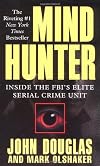
This was a fascinating look at how criminal profiling got started in the FBI, written by the man who was so integral to its application. Douglas discusses in detail how profiling was used in many infamous, as well as lesser-known, cases (so detailed that it sometimes got hard to read because of what he was describing). I did feel the book, particularly the early chapters, sometimes felt too much like a biography of Douglas, as opposed to a focus on profiling, and that Douglas sometimes came show more across as bragging a little too much. But everything he accomplished with his team is amazing, and so interesting. show less
Lists
Awards


You May Also Like


Associated Authors
Statistics
- Works
- 30
- Members
- 9,642
- Popularity
- #2,483
- Rating
- 3.8
- Reviews
- 138
- ISBNs
- 241
- Languages
- 14
- Favorited
- 7