
David Klass
Author of You Don't Know Me
About the Author
Image credit: By Christinebail25 at en.wikipedia - self-made, Public Domain, https://commons.wikimedia.org/w/index.php?curid=15591675
Series
Works by David Klass
Associated Works
Places I Never Meant to Be : Original Stories by Censored Writers (1999) — Contributor — 337 copies, 7 reviews
No Easy Answers: Short Stories About Teenagers Making Tough Choices (1997) — Contributor — 155 copies, 1 review
Ultimate Sports: Short Stories by Outstanding Writers for Young Adults (1995) — Contributor — 78 copies
Tagged
Common Knowledge
- Canonical name
- Klass, David
- Birthdate
- 1960-03-08
- Gender
- male
- Education
- Yale University
- Relationships
- Klass, Judy (sister)
Klass, Morton (father)
Tenn, William (uncle)
Klass, Sheila (mother) - Nationality
- USA
- Birthplace
- Bennington, Vermont, USA
- Places of residence
- New Jersey, USA
Vermont, USA - Associated Place (for map)
- Vermont, USA
Members
Discussions
Found: Sci-fi/Fantasy from the early 2000 in Name that Book (October 2023)
Found: YA contemporary setting. young man in abusive home in Name that Book (April 2022)
Reviews
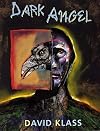
Jeff Hastings' family harbors a dark secret. 5 years ago, the oldest brother killed a boy at school with a knife, and was sent to prison with a life sentence. They've moved on with their lives in a new town, trying to forget the terrible things Troy did, but on a technicality he is being released from prison, and now they have to confront the thing they've tried so hard to avoid.
Dark Angel is a story about good and evil, but not in the sense that the lines are clearly drawn. Jeff has to show more decide if his brother is truly a bad person or merely a victim of circumstance, and whether or not he is deserving of redemption.
Though on the surface the book definitely feels as though it is intended for teens, it has a surprising amount of depth that was as welcome as it was unexpected. What I thought initially was just going to be a story about a boy dealing with social problems in a high school setting quickly became so much more than that. Sure, there are scenes about bullying and dating problems, but overall plot was much more complex and interesting than that, and I really enjoyed it. show less
Dark Angel is a story about good and evil, but not in the sense that the lines are clearly drawn. Jeff has to show more decide if his brother is truly a bad person or merely a victim of circumstance, and whether or not he is deserving of redemption.
Though on the surface the book definitely feels as though it is intended for teens, it has a surprising amount of depth that was as welcome as it was unexpected. What I thought initially was just going to be a story about a boy dealing with social problems in a high school setting quickly became so much more than that. Sure, there are scenes about bullying and dating problems, but overall plot was much more complex and interesting than that, and I really enjoyed it. show less
Posted to my Livejournal in April 2008, saved here for posterity:
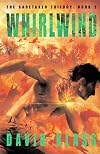
This sequel lived up to the first one in the series. I won't say it exceeded it, but it was definitely as strong. It continues Klass's tradition of high intensity thrills and heartbreaking depictions of ecological disasters. In this one, Jack has managed to save the world's oceans, and he returns to his hometown to check in on the girl he left behind -- only to find out that she has been kidnapped by another ruthless, show more Machiavellian killer from the future who wants revenge. Oh, and this guy is purposely destroying the Amazon rain forests just to wreck the future again after Jack saved it. Okay, that makes the series sound nutso, but it's actually really good, and manages to be thoughtful and exciting. Klass brings even the most remote of environmental issues to eye level, really showing how it affects the people nearby and then ripples outward to the rest of the world. He makes you feel it, through his character Jack, who is still sensitive and smart despite being an all-American jock at the outset of the series. I can't wait for the next one. show less
This sequel lived up to the first one in the series. I won't say it exceeded it, but it was definitely as strong. It continues Klass's tradition of high intensity thrills and heartbreaking depictions of ecological disasters. In this one, Jack has managed to save the world's oceans, and he returns to his hometown to check in on the girl he left behind -- only to find out that she has been kidnapped by another ruthless, show more Machiavellian killer from the future who wants revenge. Oh, and this guy is purposely destroying the Amazon rain forests just to wreck the future again after Jack saved it. Okay, that makes the series sound nutso, but it's actually really good, and manages to be thoughtful and exciting. Klass brings even the most remote of environmental issues to eye level, really showing how it affects the people nearby and then ripples outward to the rest of the world. He makes you feel it, through his character Jack, who is still sensitive and smart despite being an all-American jock at the outset of the series. I can't wait for the next one. show less
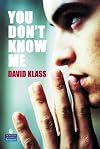
Klass is an American screenwriter (for adults) and novelist (for teens). This book focuses on the difficulties of a 14 year old boy, John, who is abused at home and drifts through school. I read this book because I was given the opportunity to teach it to a group of 13-14 year olds.
The premise
John is angry. His mother is too caught up in the man-who-is-not-his-father to see how miserable his life is. This man also beats him when his mother is not around. School is not much better: he has a show more crush on a seemingly unattainable girl and his best friend is an eggroll thief. His other friend cannot speak to girls, algebra is gobblydegook and music practice is an on-going battle with a frog pretending to be a tuba. John normally copes by applying lashings of irony and some fantasy to his situation, but in a dramatic turn of events he dares to ask out the girl of his dreams. Could things be about to change for the better?
Nothing is as it seems
John’s anger is immediately and powerfully in evidence from the opening lines of the first chapter. He insists repeatedly that ‘you don’t know me’, and although it gradually becomes clear that he is talking to his mother, the reader is likely to feel a little under attack in the first few pages. I felt that this device worked well to ensure that readers are immediately pulled into John’s world and his way of thinking. We quickly learn about all the key elements of John’s life and this prepares us well for the story to follow.
Writing that the book deals with John’s anger makes the book sound heavy-going, but in fact it is written in a very humorous tone which means that although the reader feels the weight of John’s bitterness, it doesn’t weigh them down. In particular, frequent reference is made to the Lahasha Palulu, a fictitious tribe who have interesting ways of dealing with the situations that John finds himself in. I felt that Klass did well to create this kind of levity and that teens would respond well to the style of writing and John’s desire for things to be different.
This is not a ground-breaking story. John’s crush is, predictably, not worthy of his attention, and he completely fails to notice the more suitable, pleasant girl who is in his orbit. However, the characters are handled well: Gloria (known to John in his imagination as Glory Hallelujah) is convincingly airheaded and Violet is pleasingly practical. It is interesting that someone as open to irony as John does not ‘see through’ Gloria earlier on and one of the things I liked about teaching this book was that young readers have to learn to detach themselves from the narrative perspective – which can be quite challenging in a story with first-person narration – and form their own opinions about the other characters. This is a good skill for young people to be developing.
There is plenty of plot to keep young readers interested but it never overwhelms the strong narrative voice and the characters behave in believable, although gradually more melodramatic, ways as the tension ratchets up. The last section of the story is perhaps rather over-the-top and the final events are a little predictable for an adult reader, but most of my teenage readers did not accurately predict the ending and felt that the story was still convincing. Personally, I would have liked a little less melodrama and action, but I think the views of the intended audience are probably more important here than mine!
What I did like about the ending of the story is that I felt it promoted a good morality and would help to encourage young people who were being abused to speak out. I think that this is important and that Klass has handled a difficult topic very well.
Descriptions of the abuse within the book are not graphically gory or extensive, but are present at a couple of key points. I am very squeamish and was able to read these accounts of violence without difficulty, so I do not think this would present a problem to other readers. Perhaps similarly, the youth of the characters means that there are only limited references to sexual experience, and this becomes more a focus for comedy than anything a parent might rather their child wasn’t reading. Pleasingly for a teen book there are no diversions into alcohol or drug abuse. (This definitely isn’t ‘Skins’!)
Conclusions
This is a great YA book that deals effectively with a difficult topic and could even encourage teenagers who are suffering abuse to want to seek help. Certainly it encourages readers to develop their empathy for others and to be wary of simply accepting other people’s story of themselves. John’s character is convincing and Klass gives him a strong narrative voice that grips readers throughout. The other characters are suitably developed, although an adult reader might feel that a couple border on being mere caricatures. The ending is perhaps a little melodramatic and predictable for very mature teens, but is a suitable ending thematically and is likely to please as it is very heart-warming. This story would be particularly well-suited to 13-16 year olds (girls and boys). Although I found it a pleasant enough read, it is not a crossover book that adults are also likely to enjoy. This is certainly not a criticism of this book, which the majority of my class really enjoyed reading. Recommended. show less
The premise
John is angry. His mother is too caught up in the man-who-is-not-his-father to see how miserable his life is. This man also beats him when his mother is not around. School is not much better: he has a show more crush on a seemingly unattainable girl and his best friend is an eggroll thief. His other friend cannot speak to girls, algebra is gobblydegook and music practice is an on-going battle with a frog pretending to be a tuba. John normally copes by applying lashings of irony and some fantasy to his situation, but in a dramatic turn of events he dares to ask out the girl of his dreams. Could things be about to change for the better?
Nothing is as it seems
John’s anger is immediately and powerfully in evidence from the opening lines of the first chapter. He insists repeatedly that ‘you don’t know me’, and although it gradually becomes clear that he is talking to his mother, the reader is likely to feel a little under attack in the first few pages. I felt that this device worked well to ensure that readers are immediately pulled into John’s world and his way of thinking. We quickly learn about all the key elements of John’s life and this prepares us well for the story to follow.
Writing that the book deals with John’s anger makes the book sound heavy-going, but in fact it is written in a very humorous tone which means that although the reader feels the weight of John’s bitterness, it doesn’t weigh them down. In particular, frequent reference is made to the Lahasha Palulu, a fictitious tribe who have interesting ways of dealing with the situations that John finds himself in. I felt that Klass did well to create this kind of levity and that teens would respond well to the style of writing and John’s desire for things to be different.
This is not a ground-breaking story. John’s crush is, predictably, not worthy of his attention, and he completely fails to notice the more suitable, pleasant girl who is in his orbit. However, the characters are handled well: Gloria (known to John in his imagination as Glory Hallelujah) is convincingly airheaded and Violet is pleasingly practical. It is interesting that someone as open to irony as John does not ‘see through’ Gloria earlier on and one of the things I liked about teaching this book was that young readers have to learn to detach themselves from the narrative perspective – which can be quite challenging in a story with first-person narration – and form their own opinions about the other characters. This is a good skill for young people to be developing.
There is plenty of plot to keep young readers interested but it never overwhelms the strong narrative voice and the characters behave in believable, although gradually more melodramatic, ways as the tension ratchets up. The last section of the story is perhaps rather over-the-top and the final events are a little predictable for an adult reader, but most of my teenage readers did not accurately predict the ending and felt that the story was still convincing. Personally, I would have liked a little less melodrama and action, but I think the views of the intended audience are probably more important here than mine!
What I did like about the ending of the story is that I felt it promoted a good morality and would help to encourage young people who were being abused to speak out. I think that this is important and that Klass has handled a difficult topic very well.
Descriptions of the abuse within the book are not graphically gory or extensive, but are present at a couple of key points. I am very squeamish and was able to read these accounts of violence without difficulty, so I do not think this would present a problem to other readers. Perhaps similarly, the youth of the characters means that there are only limited references to sexual experience, and this becomes more a focus for comedy than anything a parent might rather their child wasn’t reading. Pleasingly for a teen book there are no diversions into alcohol or drug abuse. (This definitely isn’t ‘Skins’!)
Conclusions
This is a great YA book that deals effectively with a difficult topic and could even encourage teenagers who are suffering abuse to want to seek help. Certainly it encourages readers to develop their empathy for others and to be wary of simply accepting other people’s story of themselves. John’s character is convincing and Klass gives him a strong narrative voice that grips readers throughout. The other characters are suitably developed, although an adult reader might feel that a couple border on being mere caricatures. The ending is perhaps a little melodramatic and predictable for very mature teens, but is a suitable ending thematically and is likely to please as it is very heart-warming. This story would be particularly well-suited to 13-16 year olds (girls and boys). Although I found it a pleasant enough read, it is not a crossover book that adults are also likely to enjoy. This is certainly not a criticism of this book, which the majority of my class really enjoyed reading. Recommended. show less
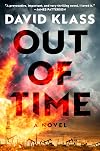
This techno-thriller is told from two points of view. The Green Man, an environmental terrorist who has caused billions of dollars worth of damage and many, many deaths, tells about why he is doing what he is doing despite his anxiety and conscience and fear for his family. Rookie FBI Agent Tom Smith, who graduated from Stanford and could be making tons more money working in Silicon Valley, has some other ideas about the course of the investigation and avenues that those involved haven't show more gone down.
Tom actually admires the Green Man because Tom is also concerned about the environment and fears for the planet's future. However, despite hating his FBI Agent father, Tom has gone into the family business though he isn't doing it his father's way.
The story is fast-paced and very tense as the FBI team tries to find out who the Green Man is and what his next target it. It is filled with the many minute details that make up a complex investigation. It is also filled with the politics that surround any large investigation. The President wants a quick solution that provides him with great photo ops and positive publicity for his reelection campaign and, if the FBI doesn't turn up something soon, he'll transfer the case to Homeland Security.
Meanwhile, Tom is tracking down obscure leads and actually coming closer to finding out what the FBI needs to know and the Green Man is starting to make mistakes in the run-up to his biggest act of terrorism.
I enjoyed the story and especially like Tom who is a brilliant investigator who sort of admires Green Man. But for Tom, the end doesn't justify the means and stopping Green Man is his major concern. show less
Tom actually admires the Green Man because Tom is also concerned about the environment and fears for the planet's future. However, despite hating his FBI Agent father, Tom has gone into the family business though he isn't doing it his father's way.
The story is fast-paced and very tense as the FBI team tries to find out who the Green Man is and what his next target it. It is filled with the many minute details that make up a complex investigation. It is also filled with the politics that surround any large investigation. The President wants a quick solution that provides him with great photo ops and positive publicity for his reelection campaign and, if the FBI doesn't turn up something soon, he'll transfer the case to Homeland Security.
Meanwhile, Tom is tracking down obscure leads and actually coming closer to finding out what the FBI needs to know and the Green Man is starting to make mistakes in the run-up to his biggest act of terrorism.
I enjoyed the story and especially like Tom who is a brilliant investigator who sort of admires Green Man. But for Tom, the end doesn't justify the means and stopping Green Man is his major concern. show less
Lists
Awards


You May Also Like


Associated Authors
Statistics
- Works
- 28
- Also by
- 5
- Members
- 3,653
- Popularity
- #6,927
- Rating
- 3.8
- Reviews
- 91
- ISBNs
- 161
- Languages
- 11
- Favorited
- 3