
Sheila Weller
Author of Girls Like Us: Carole King, Joni Mitchell, Carly Simon--and the Journey of a Generation
About the Author
Sheila Weller is the author of many books. A five-time winner of the Newswomen's Club of New York Front Page Award, she is Senior Contributing Editor at Glamour and has written for New York, Vanity Fair, The Village Voice, Self, Redbook, Cosmopolitan, Ms., and Rolling Stone. She lives in New York show more City show less
Image credit: Photo credit: Gaspar Tringale
Works by Sheila Weller
Girls Like Us: Carole King, Joni Mitchell, Carly Simon--and the Journey of a Generation (2008) 712 copies, 28 reviews
The News Sorority: Diane Sawyer, Katie Couric, Christiane Amanpour--and the (Ongoing, Imperfect, Complicated) Triumph of Women in TV News (2014) 85 copies, 4 reviews
Associated Works
Reader's Digest Today's Best Nonfiction 22 1993: A Bus of My Own / Kissinger / The Happy Isles of Oceania / Marrying the Hangman (1993) — Author — 9 copies, 1 review
Tagged
Common Knowledge
- Birthdate
- 20th century
- Gender
- female
- Occupations
- journalist
- Organizations
- New York
Glamour - Nationality
- USA
- Associated Place (for map)
- USA
Members
Reviews
Girls Like Us: Carole King, Joni Mitchell, Carly Simon---and the Journey of a Generation by Sheila Weller

Carole King, Joni Mitchell, and Carly Simon---why not Judy Collins, or even Laura Nyro? I am sure selecting any such triumvirate is open to criticism and I applaud Weller's courageous choice and the elegant way the trinity's career-life biographies are stitched together, switching back and forth, in an engaging and enlightening way without being confusing or off putting. Collins and Nyro make frequent cameos, as do Jackson Browne and James Taylor. Each woman had serious obstacles to show more overcome, not limited to Mitchell's early pregnancy, Simon's crippling insecurities and King's encounters with sexism from career limitations to abuse. Each woman built success and stability in spite of this during turbulent decades. The book I felt was especially interesting on Mitchell for her reunion with her daughter and tracking the varied artistic directions of her key albums. For King, it was fascinating to see the arc of her work from early pop success to determined environmental activism. At first, I felt Simon was the odd duck, but she was definitely part of that scene and being formerly married to singer-songwriter James Taylor tied together the biographies. Also, Simon's mastectomy, chemotherapy and reconstructive dovetailed with the theme of tribulation and triumph and her long, largely critically acclaimed recording career marks her as an equal, too. show less
Girls Like Us: Carole King, Joni Mitchell, Carly Simon--and the Journey of a Generation by Sheila Weller
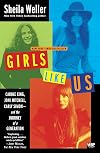
'Girls Like Us' is a monumental undertaking that ultimately collapses under its own weight. Author Sheila Weller’s attempt to write three simultaneous biographies of young female singer-songwriters whose works upset the male-dominated apple cart of pop music is an ambitious look at too many topics, with too many characters, and not enough editorial oversight.
Weller has chosen as her subjects three significant female voices that emerged from the saccharine pop music scene of the late 1950s, show more tapping the deep roots of American folk music and thriving in the upturned soil of second-wave feminism. Carole King, Joni Mitchell, and Carly Simon were all babies of the early mid-1940s, all children of the Gray Flannel 50s, and all began to find their own voices and their own identities in the turbulent 60s. Each came into her own via a different path – King married early and cranked out pop hits from the time she herself was still a teen; Mitchell fled the stultifying life of Canadian small towns and poured out a series of autobiographical lyrics that eventually caught the current of the times; Simon grew up in a moneyed family whose social set included the Manhattan literati. All ultimately wound up creating music that served as a soundtrack to the lives of millions of Baby Boomers struggling through the Vietnam War era in a world that was profoundly different than that of their parents.
There are enough significant commonalities in the career paths of these women and in the struggles they faced to make a certain sense of attempting this tripartite biography, and enough differences to make it necessary to follow each one as a separate, intertwining path.
And that’s where the trouble starts. Weller wants to use a microscope on her subjects instead of a wide-angle lens. Her prose is breezy and gossipy, often degenerating into little more than a who’s who list of the 60s and 70s music scene from Greenwich Village to the Haight-Ashbury and Laurel Canyon, with few stops in between. She can’t resist dropping every name on the list, often piling them into a single paragraph or sentence like toppings on a pizza. Here’s a brief example, a partial sentence from a paragraph describing the attendees at a glossy Greenwich Village party, including: “…Jerry Schatzberg's rapier-cheekboned hipster actress girlfriend, in months to be shot-out-of-a-cannon famous in 'Bonnie and Clyde': Faye Dunaway." Neither Schatzberg nor Dunaway have anything to do with the careers of the main characters, nor do they ever make another appearance in the book. The full sentence is just a 101-word conglomerate cramming in 30 unnecessary adjectives and eight semi-recognizable names, apparently to prove how in-the-know and hip the writer is. After a few hundred pages of this breathless, over-adjectivized prose, often recounting little more of substance than who was sleeping with whom, the whole thing becomes overwhelming.
There’s definitely a story line in here, but it’s buried so deeply under the trivial that it asks the reader to do the excavation job that should have fallen to the author. Like virtually every young woman coming of age at the time, King, Mitchell, and Simon were all asked to re-evaluate the traditional male-female roles they had grown up with. As artists, they had to fight battles for self-determination in an industry that was utterly controlled and directed by men. Mitchell was savvy enough and determined enough to retain all the rights to her own work, from the very beginning – an unheard-of demand from a wispy little girl singer from the Canadian sticks that no one had ever heard of. All three had relationships destroyed when the men they had chosen to love were unable to cope with being the lesser-known, lesser-successful half of the partnership. Each of the three women enthusiastically embraced the sexual freedom rising from a combination of factors – the empowering message of feminism, the introduction of the birth control pill, and the rising social acceptance of non-marital relationships. Their combined list of lovers could sustain a book all its own, and there are enough names that would appear on all three lists as to make diagrams and timelines helpful, if not downright necessary.
Weller also chooses to follow her subjects into the 21st century, where all struggle to cope with changing musical tastes, the fallout from failed relationships, and the inevitable reality of physical aging. It’s a sad and largely depressing end to the book, which was published in 2008.
At its best, 'Girls Like Us' will send Baby Boomer readers digging through their music collections to revisit old favorites. At its worst, it will simply bore them. And that is something its subjects, for all their professional ups and downs, never did. show less
Weller has chosen as her subjects three significant female voices that emerged from the saccharine pop music scene of the late 1950s, show more tapping the deep roots of American folk music and thriving in the upturned soil of second-wave feminism. Carole King, Joni Mitchell, and Carly Simon were all babies of the early mid-1940s, all children of the Gray Flannel 50s, and all began to find their own voices and their own identities in the turbulent 60s. Each came into her own via a different path – King married early and cranked out pop hits from the time she herself was still a teen; Mitchell fled the stultifying life of Canadian small towns and poured out a series of autobiographical lyrics that eventually caught the current of the times; Simon grew up in a moneyed family whose social set included the Manhattan literati. All ultimately wound up creating music that served as a soundtrack to the lives of millions of Baby Boomers struggling through the Vietnam War era in a world that was profoundly different than that of their parents.
There are enough significant commonalities in the career paths of these women and in the struggles they faced to make a certain sense of attempting this tripartite biography, and enough differences to make it necessary to follow each one as a separate, intertwining path.
And that’s where the trouble starts. Weller wants to use a microscope on her subjects instead of a wide-angle lens. Her prose is breezy and gossipy, often degenerating into little more than a who’s who list of the 60s and 70s music scene from Greenwich Village to the Haight-Ashbury and Laurel Canyon, with few stops in between. She can’t resist dropping every name on the list, often piling them into a single paragraph or sentence like toppings on a pizza. Here’s a brief example, a partial sentence from a paragraph describing the attendees at a glossy Greenwich Village party, including: “…Jerry Schatzberg's rapier-cheekboned hipster actress girlfriend, in months to be shot-out-of-a-cannon famous in 'Bonnie and Clyde': Faye Dunaway." Neither Schatzberg nor Dunaway have anything to do with the careers of the main characters, nor do they ever make another appearance in the book. The full sentence is just a 101-word conglomerate cramming in 30 unnecessary adjectives and eight semi-recognizable names, apparently to prove how in-the-know and hip the writer is. After a few hundred pages of this breathless, over-adjectivized prose, often recounting little more of substance than who was sleeping with whom, the whole thing becomes overwhelming.
There’s definitely a story line in here, but it’s buried so deeply under the trivial that it asks the reader to do the excavation job that should have fallen to the author. Like virtually every young woman coming of age at the time, King, Mitchell, and Simon were all asked to re-evaluate the traditional male-female roles they had grown up with. As artists, they had to fight battles for self-determination in an industry that was utterly controlled and directed by men. Mitchell was savvy enough and determined enough to retain all the rights to her own work, from the very beginning – an unheard-of demand from a wispy little girl singer from the Canadian sticks that no one had ever heard of. All three had relationships destroyed when the men they had chosen to love were unable to cope with being the lesser-known, lesser-successful half of the partnership. Each of the three women enthusiastically embraced the sexual freedom rising from a combination of factors – the empowering message of feminism, the introduction of the birth control pill, and the rising social acceptance of non-marital relationships. Their combined list of lovers could sustain a book all its own, and there are enough names that would appear on all three lists as to make diagrams and timelines helpful, if not downright necessary.
Weller also chooses to follow her subjects into the 21st century, where all struggle to cope with changing musical tastes, the fallout from failed relationships, and the inevitable reality of physical aging. It’s a sad and largely depressing end to the book, which was published in 2008.
At its best, 'Girls Like Us' will send Baby Boomer readers digging through their music collections to revisit old favorites. At its worst, it will simply bore them. And that is something its subjects, for all their professional ups and downs, never did. show less
Girls Like Us: Carole King, Joni Mitchell, Carly Simon--and the Journey of a Generation by Sheila Weller
When I listened to these women's music in my teenage years, I had no idea how much they were enacting on my behalf all the changes in society and women's roles that were taking place in such a volcanic way. The world in which Carole King and Joni Mitchell and Carly Simon were born and raised was so different from the one they and I live in today - and those changes are due in great part to the way in which they forged and shaped a new world for women, albeit filled with old-fashioned show more longings and ambivalences and uncertainties, all of which come through in their music, things I used to think of as corny but which I now see were so true to who they were as women. Yes, this is a gossipy book, but why not? Women have always known that the truth about the world rests in gossip - how do people treat one another? what are their secrets? how do they get what they want? what are people like when others are not watching? This is the stuff of life, of music and of this book. I love it. show less
Girls Like Us: Carole King, Joni Mitchell, Carly Simon--And the Journey of a Generation by Sheila Weller
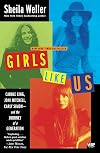
An interesting look at the lives and times of these three women. Sometimes in the parts where shes setting the scene changes or explaining about the people around them, things get a little drawn out and meandering. Overall very enjoyable though.
Lists
Awards


You May Also Like


Associated Authors
Statistics
- Works
- 10
- Also by
- 2
- Members
- 1,158
- Popularity
- #22,186
- Rating
- 3.6
- Reviews
- 39
- ISBNs
- 47
- Languages
- 2