
John Lind
Author of Best of Comix Book: When Marvel Comics Went Underground
Works by John Lind
Busted! The Official Newsletter of the Comic Book Legal Defense Fund - January 1997 (1997) — Editor — 1 copy
Associated Works
Tagged
Common Knowledge
There is no Common Knowledge data for this author yet. You can help.
Members
Reviews

Historically significant, but basically a sneering and superficial response to one of America’s most profound founding documents. This is pretty much an instruction manual on how to lose an empire.
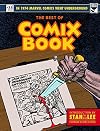
In his introduction, original series editor Denis Kitchen writes of conceiving the idea with Stan Lee, “I proposed a ‘hybrid’ magazine that would tap into the energy and zeitgeist of undergrounds, muscled by the clout of Marvel’s newsstand distribution…A magazine format avoided the auspices of the dreaded Comics Code Authority, but no Marvel-published title could possibly contain the unrestricted content defining undergrounds” (pg. 11). For that reason, the magazine was published show more under the Curtis Publishing Logo. (At the time, both Curtis and Marvel belonged to Cadence Industries.) When Lee and Kitchen set about creating Comix Book, the underground comix scene was suffering from a glutted market and fears of arrest following “the US Supreme Court’s June 1973 Miller v. California decision” that “effectively [threw] the definition and prosecution of obscenity back to the states,” thereby placing “the fate of every artist in the nation in the hands of every blue-nosed prosecutor eager to make a reputation in every small town in each of the fifty states” (pg. 14).
James Vance writes in his history of the magazine, “It was a slick package, entertaining and occasionally confounding, but was it underground? If the reader was expecting the raw sexuality and over-the-top violence that had flourished on the head shop comix racks, the answer was no… For the most part, the contributors were satisfied with the end result” (pg. 22). Questions over the legitimacy of Comix Book led to a rival publication, Arcade, “the brainchild of Art Spiegelman and Bill Griffith, whose unhappiness with the compromises of Comix Book had convinced them to put out a magazine of their own” (pg. 30). More to the point, Arcade successfully persuaded R. Crumb to publish in their magazine while Comix Book could not. Vance concludes, “During Comix Book’s brief lifespan, the comix glut sorted itself out as the inferior titles that had caused the problem slowly went out of business. The widespread obscenity busts feared by head shop owners failed to materialize. Though sales would never again equal the figures achieved in the early seventies, business began to pick up” (pg. 31).
Standouts in this volume include Justin Green’s “We Fellow Traveleers,” some Snappy Sammy Smoot stories from Skip Williamson, Art Spiegelman’s “Maus” (the three-page version from 1972 that preceded the later graphic novel), some of Howard Cruse’s “Barefootz” stories, the “Panthea” saga from Trina Robbins, and Havey Pekar and Robert Armstrong’s “Famous Street Fights.” In addition to many of the stories that originally appeared in Comix Book, this volume prints an Alex Toth story, “39/74,” which was originally intended for Comix Book, but that “Lee, already nervous about the new magazine, found…too much of a departure from the rest of the contents. Opposed by a publisher who’d unexpectedly become a champion of the purity of the underground, a bemused and embarrassed Kitchen” had to demure. The work appeared in the fanzine witzend in 1976 and French magazine L’Écho des savanes special U.S.A., though this is its “professional American debut” (pg. 29). Further, “this volume includes an unpublished [Trina] Robbins story created for Comix Book, ‘Wonder Person Gets Knocked Up!’” (pg. 31) Marvel rejected it out of fears of DC suing them for copyright infringement. show less
James Vance writes in his history of the magazine, “It was a slick package, entertaining and occasionally confounding, but was it underground? If the reader was expecting the raw sexuality and over-the-top violence that had flourished on the head shop comix racks, the answer was no… For the most part, the contributors were satisfied with the end result” (pg. 22). Questions over the legitimacy of Comix Book led to a rival publication, Arcade, “the brainchild of Art Spiegelman and Bill Griffith, whose unhappiness with the compromises of Comix Book had convinced them to put out a magazine of their own” (pg. 30). More to the point, Arcade successfully persuaded R. Crumb to publish in their magazine while Comix Book could not. Vance concludes, “During Comix Book’s brief lifespan, the comix glut sorted itself out as the inferior titles that had caused the problem slowly went out of business. The widespread obscenity busts feared by head shop owners failed to materialize. Though sales would never again equal the figures achieved in the early seventies, business began to pick up” (pg. 31).
Standouts in this volume include Justin Green’s “We Fellow Traveleers,” some Snappy Sammy Smoot stories from Skip Williamson, Art Spiegelman’s “Maus” (the three-page version from 1972 that preceded the later graphic novel), some of Howard Cruse’s “Barefootz” stories, the “Panthea” saga from Trina Robbins, and Havey Pekar and Robert Armstrong’s “Famous Street Fights.” In addition to many of the stories that originally appeared in Comix Book, this volume prints an Alex Toth story, “39/74,” which was originally intended for Comix Book, but that “Lee, already nervous about the new magazine, found…too much of a departure from the rest of the contents. Opposed by a publisher who’d unexpectedly become a champion of the purity of the underground, a bemused and embarrassed Kitchen” had to demure. The work appeared in the fanzine witzend in 1976 and French magazine L’Écho des savanes special U.S.A., though this is its “professional American debut” (pg. 29). Further, “this volume includes an unpublished [Trina] Robbins story created for Comix Book, ‘Wonder Person Gets Knocked Up!’” (pg. 31) Marvel rejected it out of fears of DC suing them for copyright infringement. show less
You May Also Like
Associated Authors
Statistics
- Works
- 11
- Also by
- 2
- Members
- 41
- Popularity
- #363,651
- Rating
- 4.1
- Reviews
- 2
- ISBNs
- 13
- Languages
- 2