
Rene Bergh
Author of Make Your Own Patterns: An Easy Step-By-Step Guide To Making Over 60 Patterns
About the Author
Rene Bergh is a highly skilled dress designer with a broad range of experience in the fashion industry. She spent many years travelling extensively around the world to increase her knowledge of the trade. More recently, she was the author of the very successful Make Your Own Patterns and the show more co-author of The Complete Book of Soft Furnishings. She is currently designing patterns for exclusive fashion houses, working from her seaside studio. show less
Works by Rene Bergh
Make Your Own Patterns: An Easy Step-By-Step Guide To Making Over 60 Patterns (1995) 148 copies, 2 reviews
Kids' Clothes Sew Easy: Easy to Sew T-Shirts, Tracksuits, Leggings, Trousers, Shorts, Dungarees, Anoraks, Skirts and Dresses (2003) 14 copies, 1 review
Vuur vir 'n donker aand 1 copy
Tagged
Common Knowledge
- Legal name
- Bergh-Labuschagne, René
- Gender
- female
- Education
- Cape Town School of Fashion Design
- Places of residence
- Green Point, Western Cape, South Africa
Stellenbosch, Western Cape, South Africa - Map Location
- South Africa
Members
Reviews

I had picked this book up hoping it had instructions for drafting the basic sloper pieces. Sadly, even with my still limited knowledge of pattern drafting, I was able to spot a number of omissions. Such as, the importance of squaring up corners where pieces will join to create a smooth joined edge, or for the need of alterations to the sloper after drafting (like for square shoulders). I guess I will be continuing my search to locate one of the harder-to-find but more complete texts on the show more topic. show less
Kids' Clothes Sew Easy: Easy to Sew T-Shirts, Tracksuits, Leggings, Trousers, Shorts, Dungarees, Anoraks, Skirts and Dresses by Rene Bergh

The garments discussed are classic, comfortable and worn by all children at some stage of their lives. Whether you're a mom, a gran or a friend of the parent, whether you need to save a buck or just enjoy sewing for a children, you will benefit from this book by applying a few simple skills to create any number of fashionable, yet comfortable garments.
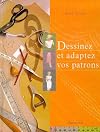
Nombreuses sont les femmes qui s'habillent en 43... une taille intermédiaire qui n'existe pas mais qui signifie que 42, c'est trop petit et 44 c'est top grand.
Aussi, les utilisatrices de Burda ou les femmes qui achètent des patrons de couture sauront vite tout sur la façon de transformer, voire confectionner les patrons de leurs vêtements (et de ceux de leurs enfants) sans se prendre vraiment la tête. En effet, pour augmenter ou diminuer la taille d'un pantalon, ajouter deux show more centimètres ici ou là ou allonger les jambes n'est pas suffisant pour obtenir le tombé souhaitable.
Pour profiter à plein de l'ouvrage, il faut du papier, des crayons à mine graphite, des crayons de couleur, une règle, une règle de couturière (celle qui donne les courbes). Le papier centimétrique est préférable afin d'agrandir les gabarits fournis dans l'ouvrage. Pour passer à l'acte du non-tissé centimétrique est un investissement que personne ne regrettera parce qu'il permet d'essayer le patron obtnu par ses propres soins.
Au bout des exercices proposés par le livre, on peut tout faire même les drapés. show less
Aussi, les utilisatrices de Burda ou les femmes qui achètent des patrons de couture sauront vite tout sur la façon de transformer, voire confectionner les patrons de leurs vêtements (et de ceux de leurs enfants) sans se prendre vraiment la tête. En effet, pour augmenter ou diminuer la taille d'un pantalon, ajouter deux show more centimètres ici ou là ou allonger les jambes n'est pas suffisant pour obtenir le tombé souhaitable.
Pour profiter à plein de l'ouvrage, il faut du papier, des crayons à mine graphite, des crayons de couleur, une règle, une règle de couturière (celle qui donne les courbes). Le papier centimétrique est préférable afin d'agrandir les gabarits fournis dans l'ouvrage. Pour passer à l'acte du non-tissé centimétrique est un investissement que personne ne regrettera parce qu'il permet d'essayer le patron obtnu par ses propres soins.
Au bout des exercices proposés par le livre, on peut tout faire même les drapés. show less
You May Also Like


Statistics
- Works
- 10
- Members
- 233
- Popularity
- #96,931
- Rating
- 3.6
- Reviews
- 3
- ISBNs
- 24
- Languages
- 2