
David Page Coffin (1949–2021)
Author of Shirtmaking: Developing Skills For Fine Sewing
About the Author
Works by David Page Coffin
The Shirtmaking Workbook: Pattern, Design, and Construction Resources - More than 100 Pattern Downloads for Collars, Cuffs & Plackets (2015) 54 copies, 1 review
Sewing Shirts with a Perfect Fit: The Ultimate Guide to Fit, Style, and Construction from Collared and Cuffed to Blouses and Tunics (2018) 44 copies, 3 reviews
On making pants 1 copy
Tagged
Common Knowledge
- Birthdate
- 1949
- Date of death
- 2021-05-02
- Gender
- male
- Relationships
- Ellen (wife)
- Nationality
- USA
- Places of residence
- Brookings, Oregon, USA
- Associated Place (for map)
- Oregon, USA
Members
Reviews
Sewing shirts for a perfect fit : the ultimate guide to fit, style, and construction from collared and cuffed to blouses and tunics by David Page Coffin
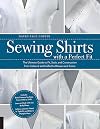
Thanks to NetGalley, I was able to read Sewing Shirts With A Perfect Fit by David Page Coffin. The book is split into two main sections, the first section has 5 chapters on fit and draping, the second section covers various projects. Rather unexpectedly, Coffin’s book is all about sewing woven shirts that fit using draping rather than flat patterns, or taking measurements.
Section 1 begins with a chapter on the basics of shirts and how they fit, while chapter 2 delves deep into draping. The show more remaining chapters of section one are about how to drape shirts for specific shirt styles, loose-fitting, fitted and tight-fitting shirts respectively. It also includes information on cloning bodies using foil, and making body forms from the resulting foil wrap.
Section 2 is dedicated to 4 projects to practice the skills you’ve picked up; a loose, lined shirt jacket, a fitted v-neck dress shirt, a fitted wrapped shirtdress, and a tight denim western shirt.
This is a great book, it is absolutely packed with information and photos. The writing, photos, and explanatory diagrams are clear and easy to understand, and made me want to try. And, not only am I seriously considering trying to sew a shirt using the techniques taught, but definitely going to try making a body form from a foil wrap. I will absolutely be adding this to my collection of sewing books as soon as possible. show less
Section 1 begins with a chapter on the basics of shirts and how they fit, while chapter 2 delves deep into draping. The show more remaining chapters of section one are about how to drape shirts for specific shirt styles, loose-fitting, fitted and tight-fitting shirts respectively. It also includes information on cloning bodies using foil, and making body forms from the resulting foil wrap.
Section 2 is dedicated to 4 projects to practice the skills you’ve picked up; a loose, lined shirt jacket, a fitted v-neck dress shirt, a fitted wrapped shirtdress, and a tight denim western shirt.
This is a great book, it is absolutely packed with information and photos. The writing, photos, and explanatory diagrams are clear and easy to understand, and made me want to try. And, not only am I seriously considering trying to sew a shirt using the techniques taught, but definitely going to try making a body form from a foil wrap. I will absolutely be adding this to my collection of sewing books as soon as possible. show less
Sewing Shirts with a Perfect Fit: The Ultimate Guide to Fit, Style, and Construction from Collared and Cuffed to Blouses and Tunics by David Page Coffin
This books provides guidance on how to modify shirts to gain a better fit. The method is based on draping, rather than how to cut patterns for better fit. As such it is very accessible to most sewers. It is a more intuitive approach and one based less on maths to get a result.
The actual process of fitting shirts set out in this books is somewhere between classical pattern drafting and draping. The starting point is an already cut pattern, this could be a commercial pattern, one taken from show more an existing garment or one you have drafted yourself. The process of how to fit is very well described and with lots of useful pictures. You are taken through four examples of shirt types and how to fit each one (basic shirt, loose shirt, fitted shirt, tight shirt)
The book also includes four sewing projects to extend the techniques taught; a shirt jacket, fitted dress shirt, wrapped shirt dress and a western shirt.
I found the book very well explained, detailed and easy to follow. I shall be looking forward to better fitting shirts in my handmade wardrobe very soon.
Additional information was supposed to be available on a given website however at the time of writing it was not, so I have not been able to review the supporting information in additional to that contained within the book.
Thank you to NetGalley for an ARC of this book in exchange for an honest review. show less
The actual process of fitting shirts set out in this books is somewhere between classical pattern drafting and draping. The starting point is an already cut pattern, this could be a commercial pattern, one taken from show more an existing garment or one you have drafted yourself. The process of how to fit is very well described and with lots of useful pictures. You are taken through four examples of shirt types and how to fit each one (basic shirt, loose shirt, fitted shirt, tight shirt)
The book also includes four sewing projects to extend the techniques taught; a shirt jacket, fitted dress shirt, wrapped shirt dress and a western shirt.
I found the book very well explained, detailed and easy to follow. I shall be looking forward to better fitting shirts in my handmade wardrobe very soon.
Additional information was supposed to be available on a given website however at the time of writing it was not, so I have not been able to review the supporting information in additional to that contained within the book.
Thank you to NetGalley for an ARC of this book in exchange for an honest review. show less
Sewing Shirts with a Perfect Fit: The Ultimate Guide to Fit, Style, and Construction from Collared and Cuffed to Blouses and Tunics by David Page Coffin
Disclaimer: I received an advance copy via NetGalley in exchange for a review.
CAVEAT: The book promises that more detailed patterns are available from the publisher's website. Since I'm reviewing an advance copy, those digital extras aren't available yet. This review is based on the ebook without the digital extras.
I have only basic skills in sewing, though I'm hoping to improve. When I saw this book available for review, I was eager to request it so I can learn more about garment show more sewing.
Overall, I liked this book but didn't love it. It has introductory info on why the author prefers draping instead of sewing from a paper pattern and then goes into different shirt styles, fitting issues, etc. There are detailed lessons for several styles of shirt, and then at the end there are some projects.
PROS:
1) LOTS of photos.
2) I appreciate that the author's example garments are made with contrasting pieces of fabric (for example, the yoke is yellow, left sleeve red, right sleeve blue, and so on). This makes it immediately clear what is connecting to what. It really helped me picture the steps.
3) The patterns and techniques cover a range of sizes and body shapes. Unlike most pattern books, this one has patterns for men and women, too.
4) If you decide you don't like draping, there are instructions (in the supplemental digital material) for how to make a flat paper pattern using the author's techniques.
5) The draping techniques shown can be used for garments other than shirts, so if shirts aren't your thing, there's still useful info here.
CONS: The only con for me is the separation of pattern details and instructions. The basic construction explanation is on the first page of the projects section. The first page of each project also refers to you a PDF you can get with the digital materials for more details (sizing, etc.). Then the project pages in the book roughly explain what to do draping-wise and have a lot of pictures. I don't find this setup very helpful, because it means several sets of instructions to flip between. It's not convenient when it comes time to actually try to sew one of the projects. I would prefer one set with everything all in one place.
This is a nice pattern book if you're looking to learn draping techniques, whether you're a beginner like me or already experienced sewing from typical paper patterns. show less
CAVEAT: The book promises that more detailed patterns are available from the publisher's website. Since I'm reviewing an advance copy, those digital extras aren't available yet. This review is based on the ebook without the digital extras.
I have only basic skills in sewing, though I'm hoping to improve. When I saw this book available for review, I was eager to request it so I can learn more about garment show more sewing.
Overall, I liked this book but didn't love it. It has introductory info on why the author prefers draping instead of sewing from a paper pattern and then goes into different shirt styles, fitting issues, etc. There are detailed lessons for several styles of shirt, and then at the end there are some projects.
PROS:
1) LOTS of photos.
2) I appreciate that the author's example garments are made with contrasting pieces of fabric (for example, the yoke is yellow, left sleeve red, right sleeve blue, and so on). This makes it immediately clear what is connecting to what. It really helped me picture the steps.
3) The patterns and techniques cover a range of sizes and body shapes. Unlike most pattern books, this one has patterns for men and women, too.
4) If you decide you don't like draping, there are instructions (in the supplemental digital material) for how to make a flat paper pattern using the author's techniques.
5) The draping techniques shown can be used for garments other than shirts, so if shirts aren't your thing, there's still useful info here.
CONS: The only con for me is the separation of pattern details and instructions. The basic construction explanation is on the first page of the projects section. The first page of each project also refers to you a PDF you can get with the digital materials for more details (sizing, etc.). Then the project pages in the book roughly explain what to do draping-wise and have a lot of pictures. I don't find this setup very helpful, because it means several sets of instructions to flip between. It's not convenient when it comes time to actually try to sew one of the projects. I would prefer one set with everything all in one place.
This is a nice pattern book if you're looking to learn draping techniques, whether you're a beginner like me or already experienced sewing from typical paper patterns. show less
The Shirtmaking Workbook: Pattern, Design, and Construction Resources - More than 100 Pattern Downloads for Collars, Cuffs & Plackets by David Page Coffin
As usual, I'll rate and review when I've had a chance to try it out. :)
You May Also Like


Statistics
- Works
- 10
- Members
- 594
- Popularity
- #42,286
- Rating
- 4.4
- Reviews
- 5
- ISBNs
- 14
- Languages
- 1
- Favorited
- 1