
Yael Politis
Author of Olivia, Mourning
Series
Works by Yael Politis
Olivia, Mourning 3 copies
Tagged
Common Knowledge
- Gender
- female
Members
Reviews
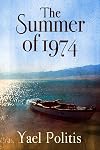
History and culture breathe very naturally through the pages of Yael Politis’ The Summer of 1974. It’s a tale of contrasts, rich and poor, friend and foe, African American and Jewish. But it’s a tale of unity too, as a young woman hides from relationship and a young man actively seeks new people to relate to. Their connection blossoms and dances, impossible, improbable, and totally delightful, against a backdrop of war and death, tangible danger, and a Jewish conflict that’s all too show more easily seen, from our Western safety, as distant, constant and unreal.
Author Yael Politis weaves well-researched history into all her stories, bringing depth to all her characters and places, and drawing her readers in. The birth of a nation and the birth of a child; the Six Day War and the dangerous peace; deaths of strangers and the death of a friend; the curious mysteries of Jewish jewelers and the jewel of life in the desert… it all comes together in the quest for family that turns into a quest for purpose.
There’s wisdom in this story and its people, as well as excitement, mystery, love and fear: “God gave your life to you, not to your parents. Up to you to do somethin’ good with it,” the older woman proclaims, meaning more than she seems.
The Summer of 1974 stands alone as a complete and enthralling novel, but ends with the promise of more. I, for one, will look forward to learning more of Gavrielle and Charlie.
Disclosure: I was given a pre-release copy and I love it. show less
Author Yael Politis weaves well-researched history into all her stories, bringing depth to all her characters and places, and drawing her readers in. The birth of a nation and the birth of a child; the Six Day War and the dangerous peace; deaths of strangers and the death of a friend; the curious mysteries of Jewish jewelers and the jewel of life in the desert… it all comes together in the quest for family that turns into a quest for purpose.
There’s wisdom in this story and its people, as well as excitement, mystery, love and fear: “God gave your life to you, not to your parents. Up to you to do somethin’ good with it,” the older woman proclaims, meaning more than she seems.
The Summer of 1974 stands alone as a complete and enthralling novel, but ends with the promise of more. I, for one, will look forward to learning more of Gavrielle and Charlie.
Disclosure: I was given a pre-release copy and I love it. show less

This is an intricate tale of a Jewish family living in Palestine during the British Mandate and the horrors of war. It is a story rich in drama and one that will not soon leave your mind with its strong cast of multi-layered characters. And the story unfolds from 1946 - 1967 with many historical facts revealed throughout.
Fifteen year old Tonia Shulman definitely has a mind of her own and is rather hard to like early on in the story. She and her family move from Poland to Palestine, first to show more Tel Aviv and later to a religious kibbutz, Kfar Etzion, that her father helped to establish.
There are extreme hardships living here at the kibbutz, and Tonia felt trapped with no way out, and a father who was so stubborn. Josef was obsessed with the creation of an independent Jewish state. Everyone knew that five Arab armies would invade as soon as the British pulled out and it was a war they'd never win. The Jews had problems - no money, no weapons, and little experience in fighting, surrounded by a sea of Arabs. This was not the life Tonia wanted. She longed for a life of comfort and security. Her dream is to escape Palestine and make her home in America.
Tonia felt ashamed of Abba, who would not provide for her education. He only cared about his kibbutz and Tonia had to beg from strangers. Ilana Rozman and her wealthy family provided Tonia's way to a prestigious Hebrew school in Jerusalem, a school that was occupied by kids of doctors, professors and government officials. They were spoiled, rich kids and this annoyed Tonia, but she realizes she is dependent on the Rozman family's good will to make her dreams come true. She was hoping to earn her diploma and apply for a student visa to the United States and admittance to an American University.
Tonia meets Amos Amrani, a handsome Yemenite, who fights in the Jewish underground. Amos was bright, proud, and ambitious. A love blossoms between Amos and Tonia and Josef is strongly opposed to their relationship. Tonia would need to relinquish her dreams if she allowed herself to fall in love with Amos. He would constantly be called to arms, and she would live in dread.
There are many struggles and surprises along the way as Tonia fights to overcome a myriad of obstacles and finally finds her way to Grand Rapids, Michigan.
The book goes through stages of terror, sorrows, and joys - a very emotional read. There is a large cast of characters with complex issues and a storyline that builds to a stunning conclusion. Just extraordinary! Definitely a 5 star rating for this incredible novel.
I received a complimentary copy of this book from the publisher in exchange for an honest review. show less
Fifteen year old Tonia Shulman definitely has a mind of her own and is rather hard to like early on in the story. She and her family move from Poland to Palestine, first to show more Tel Aviv and later to a religious kibbutz, Kfar Etzion, that her father helped to establish.
There are extreme hardships living here at the kibbutz, and Tonia felt trapped with no way out, and a father who was so stubborn. Josef was obsessed with the creation of an independent Jewish state. Everyone knew that five Arab armies would invade as soon as the British pulled out and it was a war they'd never win. The Jews had problems - no money, no weapons, and little experience in fighting, surrounded by a sea of Arabs. This was not the life Tonia wanted. She longed for a life of comfort and security. Her dream is to escape Palestine and make her home in America.
Tonia felt ashamed of Abba, who would not provide for her education. He only cared about his kibbutz and Tonia had to beg from strangers. Ilana Rozman and her wealthy family provided Tonia's way to a prestigious Hebrew school in Jerusalem, a school that was occupied by kids of doctors, professors and government officials. They were spoiled, rich kids and this annoyed Tonia, but she realizes she is dependent on the Rozman family's good will to make her dreams come true. She was hoping to earn her diploma and apply for a student visa to the United States and admittance to an American University.
Tonia meets Amos Amrani, a handsome Yemenite, who fights in the Jewish underground. Amos was bright, proud, and ambitious. A love blossoms between Amos and Tonia and Josef is strongly opposed to their relationship. Tonia would need to relinquish her dreams if she allowed herself to fall in love with Amos. He would constantly be called to arms, and she would live in dread.
There are many struggles and surprises along the way as Tonia fights to overcome a myriad of obstacles and finally finds her way to Grand Rapids, Michigan.
The book goes through stages of terror, sorrows, and joys - a very emotional read. There is a large cast of characters with complex issues and a storyline that builds to a stunning conclusion. Just extraordinary! Definitely a 5 star rating for this incredible novel.
I received a complimentary copy of this book from the publisher in exchange for an honest review. show less

This is the story of Tonia Shulman, a young Jewish girl growing up on the Kfar Etzion Kibbutz,, in Jerusalem, British Mandate Palestine.
The story starts in 1946, and we meet Tonia, her brother and sister Rina and Natan, and her parents Leah and Josef. Her father is one of the men who helped found the kibbutz, and his passion for establishing a Labour Zionist movement means that he is often absent from family life. While the rest of the family will follow their father fairly willingly, Tonia show more dreams of escape to America, where she can have her own house and freedom from persecution. When Tonia meets Amos Amrani, they are instantly drawn to one another, but Amos is a member of an underground Jewish movement, which her father detests.
We follow Tonia throughout her life and witness her making some important and difficult decisions, and never letting go of her ambition to move to America. But even if she fulfils her dream, will it really make her happy? She truly wants to be with Amos, but will their moment ever come?
I thoroughly enjoyed this book. Initially I wondered if it would be slightly hard going, but in fact I flew through it. I loved the character of Tonia, who was so determined and clever, and who loved her own family so much, but felt conflicted between what they wanted for her and what she wanted for herself. Yael Politis has created an entirely believable heroine, who I warmed to and grew to care for. I couldn’t always agree with some of the choices Tonia made, but in her position, who is to know what any of us would do? The rest of her family were all very well fleshed out; I particularly liked her mother and sister.
Amos was a complex character. He was intelligent and brave, and sometimes very arrogant, which almost made me dislike him at times. It was refreshing to see two people in a story who felt so much for each other, but yet realised that there were aspects of each other that they didn’t necessarily like. This is no ‘hearts and flowers’ love story, and it is all the better for it.
There is a section of the book which describes in vivid and painful detail the real life siege of the Kfar Etzion Kibbutz. The anguish and fear felt by the men left on the kibbutz to fight was so well depicted, and I found that part particularly moving.
The effects of the wars and turbulent time are felt by all, and the reader is privy not just to its effects on Tonia and Amos, but also their families.
The writing is very eloquent and the story flowed beautifully. The narrative is moving, with humour and pathos, and is also very informative about a specific part of Jewish history.
I would highly recommend this book. show less
The story starts in 1946, and we meet Tonia, her brother and sister Rina and Natan, and her parents Leah and Josef. Her father is one of the men who helped found the kibbutz, and his passion for establishing a Labour Zionist movement means that he is often absent from family life. While the rest of the family will follow their father fairly willingly, Tonia show more dreams of escape to America, where she can have her own house and freedom from persecution. When Tonia meets Amos Amrani, they are instantly drawn to one another, but Amos is a member of an underground Jewish movement, which her father detests.
We follow Tonia throughout her life and witness her making some important and difficult decisions, and never letting go of her ambition to move to America. But even if she fulfils her dream, will it really make her happy? She truly wants to be with Amos, but will their moment ever come?
I thoroughly enjoyed this book. Initially I wondered if it would be slightly hard going, but in fact I flew through it. I loved the character of Tonia, who was so determined and clever, and who loved her own family so much, but felt conflicted between what they wanted for her and what she wanted for herself. Yael Politis has created an entirely believable heroine, who I warmed to and grew to care for. I couldn’t always agree with some of the choices Tonia made, but in her position, who is to know what any of us would do? The rest of her family were all very well fleshed out; I particularly liked her mother and sister.
Amos was a complex character. He was intelligent and brave, and sometimes very arrogant, which almost made me dislike him at times. It was refreshing to see two people in a story who felt so much for each other, but yet realised that there were aspects of each other that they didn’t necessarily like. This is no ‘hearts and flowers’ love story, and it is all the better for it.
There is a section of the book which describes in vivid and painful detail the real life siege of the Kfar Etzion Kibbutz. The anguish and fear felt by the men left on the kibbutz to fight was so well depicted, and I found that part particularly moving.
The effects of the wars and turbulent time are felt by all, and the reader is privy not just to its effects on Tonia and Amos, but also their families.
The writing is very eloquent and the story flowed beautifully. The narrative is moving, with humour and pathos, and is also very informative about a specific part of Jewish history.
I would highly recommend this book. show less

Tonia is a teenage girl whose family immigrates to British Mandate Palestine from Poland, only to be faced with the hardships of adjusting to a new language, a harsh land, and the constant threat of war and destruction. It is against this backdrop that she starts to doubt the ideology of her father, Joseph Shulman, who wishes to take root in this place. And as befits a young woman with a rebellious twist of mind, she goes against his wishes and finds herself drawn to Amos Amrani, a young man show more of Yemenite background, with “Large heavily lashed green eyes above hollow cheeks.” The contrasts between them are undeniable in more ways than one. Their political views and cultural upbringing are vastly different. Yet despite—or maybe because—of all this, they are destined to fall in love.
The plot resonates so well with me, because it brings back to me the place I grew up and because it reminds me of similar stories I have heard from my parents about this era. The descriptions and the references to historical events are authentic, and Tonia is a fascinating character. I find it particularly interesting that her path in the story traces the steps the author has taken in life—but in some places, in reverse. The paths of Ms. Politis and her character have crossed, reality and fiction have been brought together, which makes for a vivid and accurate historical detail. It also yields an intimate familiarity with the turmoil during this time, both politically and personally. Torn between love and the need for a safe place, Tonia must make tough decisions. She leaves Kfar Etzion in Israel, hoping to find the security she longs for in Michigan.
The title is deceptively simple. Named by the first settlers, the Lonely Tree stands for a large oak tree that in their minds, has become a symbol of the Etzion Bloc. Perhaps, to reflect the title more accurately, the cover should have featured a single, lonely tree instead of five in a row. The author describes the siege and fall of Kfar Etzion to the Arab Legion during hostilities, just before Israel’s War of Independence. Tonia’s father, Joseph Shulman is one of the fallen during the massacre that ensues. It is his voice, expressing faith in the future of the nation, that comes back from beyond the grave years later, when she goes back to visit the site. “Would you believe that we are too weak, too unworthy, to seize for ourselves a common destiny?”
Five stars. show less
The plot resonates so well with me, because it brings back to me the place I grew up and because it reminds me of similar stories I have heard from my parents about this era. The descriptions and the references to historical events are authentic, and Tonia is a fascinating character. I find it particularly interesting that her path in the story traces the steps the author has taken in life—but in some places, in reverse. The paths of Ms. Politis and her character have crossed, reality and fiction have been brought together, which makes for a vivid and accurate historical detail. It also yields an intimate familiarity with the turmoil during this time, both politically and personally. Torn between love and the need for a safe place, Tonia must make tough decisions. She leaves Kfar Etzion in Israel, hoping to find the security she longs for in Michigan.
The title is deceptively simple. Named by the first settlers, the Lonely Tree stands for a large oak tree that in their minds, has become a symbol of the Etzion Bloc. Perhaps, to reflect the title more accurately, the cover should have featured a single, lonely tree instead of five in a row. The author describes the siege and fall of Kfar Etzion to the Arab Legion during hostilities, just before Israel’s War of Independence. Tonia’s father, Joseph Shulman is one of the fallen during the massacre that ensues. It is his voice, expressing faith in the future of the nation, that comes back from beyond the grave years later, when she goes back to visit the site. “Would you believe that we are too weak, too unworthy, to seize for ourselves a common destiny?”
Five stars. show less
Awards


Statistics
- Works
- 8
- Members
- 170
- Popularity
- #125,473
- Rating
- 3.9
- Reviews
- 25
- ISBNs
- 11
