
Jim Boyd
Author of The Steam Locomotive: A Century of North American Classics
About the Author
Born in Dixon, Illinois, in 1941, Jim Boyd had a deep interest in railroading almost from the start. This fascination with railroads and how they operated eventually manifested itself into a career for Jim, who in the 1960s worked as a traveling locomotive inspector for the Electro-Motive Division show more of General Motors. Early in the 1970s he also worked in freight-train service on the Illinois Central Railroad, and then went on to covering railroads from a journalistic aspect. From 1974 to 1997, Jim served as editor of Railfan and Railroad Magazine, documenting the ever-changing railroad industry. In addition, Jim has authored a number of railroad books--this being his sixth--and scripted and narrated more than two dozen rail videotapes show less
Works by Jim Boyd
Baldwin Diesels-3 In Color (Baldwin Owners Q-Z) (Baldwin Diesels in Color, 3 (of 3)) (2002) 5 copies
Unity 1 copy
One Breath Poems 1 copy
Passenger ALCOs in Color 1 copy
Associated Works
Tagged
Common Knowledge
There is no Common Knowledge data for this author yet. You can help.
Members
Reviews
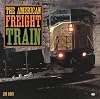
Everybody has been stuck waiting at a grade crossing for a freight train, but as the author of this book points out, the first thing that comes to most people’s mind when you mention “train” is passenger service. (The second thing is the nostalgic lament that there isn’t any. Not that they would take one themselves, but they figure it would make the airports less crowded if everybody else did.).
I rate this attempt to rectify that a modest success. All train books have to have show more pictures, so we have the obligatory ones here. There’s an interesting if selective discussion of the history of rail freight in the US, with a lot of detail about gravity freight lines in the Pennsylvania coal fields. And there’s a chapter that does a much better job of explaining what a freight classification yard does than a whole book purportedly on that subject (North American Railyards) which I reviewed earlier. Of course, if you’re looking for train pictures what you really want to see is locomotives - specifically steam locomotives. Thus there are several chapters devoted to freight locomotives with a lot of 2-8-2s and such.
Another chapter discusses coal moving, with a dramatic picture why coal hopper cars don’t have bottom dump doors anymore. Coupled with Infrastructure’s (also reviewed earlier) discussion of the coal consumption rate at a large electric plant, this gives quite a bit of insight into what needs to get done to turn on a light switch.
What the book lacks is a real in-depth discussion of anything; a little too many pictures, not quite enough explanation (I know, half the time I’m complaining about too many pictures; the other half not enough.) Still, if you’re trying to explain to a neoLuddite exactly what has to happen to get a crate of certified organic carrots from the Imperial Valley to Philadelphia, this isn’t too bad a way to start. I love the opening line: “Stuff tends to be heavy, and it usually has to be somewhere else to be of use to anybody.” About two thirds of civilization right there. show less
I rate this attempt to rectify that a modest success. All train books have to have show more pictures, so we have the obligatory ones here. There’s an interesting if selective discussion of the history of rail freight in the US, with a lot of detail about gravity freight lines in the Pennsylvania coal fields. And there’s a chapter that does a much better job of explaining what a freight classification yard does than a whole book purportedly on that subject (North American Railyards) which I reviewed earlier. Of course, if you’re looking for train pictures what you really want to see is locomotives - specifically steam locomotives. Thus there are several chapters devoted to freight locomotives with a lot of 2-8-2s and such.
Another chapter discusses coal moving, with a dramatic picture why coal hopper cars don’t have bottom dump doors anymore. Coupled with Infrastructure’s (also reviewed earlier) discussion of the coal consumption rate at a large electric plant, this gives quite a bit of insight into what needs to get done to turn on a light switch.
What the book lacks is a real in-depth discussion of anything; a little too many pictures, not quite enough explanation (I know, half the time I’m complaining about too many pictures; the other half not enough.) Still, if you’re trying to explain to a neoLuddite exactly what has to happen to get a crate of certified organic carrots from the Imperial Valley to Philadelphia, this isn’t too bad a way to start. I love the opening line: “Stuff tends to be heavy, and it usually has to be somewhere else to be of use to anybody.” About two thirds of civilization right there. show less

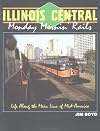
Boyd’s book is, for want of a term, a technical-personal history of the Illinois Central from the 1950’s to the 1980’s. Boyd was born in Dixon, Illinois in 1941 and grew up a few blocks from the IC depot. The book describes his involvement with the railroad, first as a railfan, then as a field instructor for EMD (essentially a field reporter for the EMD service department who was responsible for being present when new diesel locomotives were delivered to customers to make sure that the show more new owner had properly set them up before using them on their line), and then as a brakeman on the IC itself.
The book is 132 pages in length and is approximately 50% text and 50% photographs. The railfan side of the author is evident in the profusion of roster shots (black and white and color) and in the technical descriptions of the engines or scenes depicted. In addition to descriptions of personal exploits the author describes the corporate, financial, and technical changes in the Illinois Central he witnessed both as an outside railfan observer and as an employee.
The book is well written and, while I’m not a fan of corporate/financial history, I will give the author credit for making his forays into this aspect of the IC tolerable. I found those first person accounts of his railroad work which he did include to be very interesting. The end result, for me, was an acceptable read (see Common Knowledge for an example of the first person side of the book). (Text length - 128 pages, Total length - 132 pages) show less
The book is 132 pages in length and is approximately 50% text and 50% photographs. The railfan side of the author is evident in the profusion of roster shots (black and white and color) and in the technical descriptions of the engines or scenes depicted. In addition to descriptions of personal exploits the author describes the corporate, financial, and technical changes in the Illinois Central he witnessed both as an outside railfan observer and as an employee.
The book is well written and, while I’m not a fan of corporate/financial history, I will give the author credit for making his forays into this aspect of the IC tolerable. I found those first person accounts of his railroad work which he did include to be very interesting. The end result, for me, was an acceptable read (see Common Knowledge for an example of the first person side of the book). (Text length - 128 pages, Total length - 132 pages) show less
This is an interesting coffee table, or in my case, nightstand book. A pleasant read a few pages at a time. The author defines many common terms of the day. Through his definitions you begin to gleam a glimpse of his personality. It's a mixed bag kind of book. By the way, he defines "mixed bag" as a self-professed saint and a skulking scoundrel compartmentalized in the same human being. It is definitions like that which caused me to nod my head and smile in recognition (not of him show more personally, mind you!) It's a delightful light read. I can see myself sneaking a few peeks again later on.
I received this book free as part of Goodreads First Reads program. show less
I received this book free as part of Goodreads First Reads program. show less
Merry Christmas 1994- Enjoy! Kathy, Missy, Bernadette
You May Also Like


Associated Authors
Statistics
- Works
- 46
- Also by
- 2
- Members
- 260
- Popularity
- #88,385
- Rating
- 3.9
- Reviews
- 5
- ISBNs
- 38