
Andrei Lankov
Author of The real North Korea
About the Author
Andrei Lankov is a lecturer at the China and Korea Centre, Faculty of Asian Studies, Australian National University.
Image credit: Andrei Lankov
Works by Andrei Lankov
Tagged
Common Knowledge
- Legal name
- Ланьков, Андрей Николаевич
- Other names
- Lankow, Andrei Nikolajewitsch
Lanʹkov, A. N. - Birthdate
- 1963-07-26
- Gender
- male
- Education
- Kim Il-sung University (exchange student)
Leningrad State University - Nationality
- Russia
- Birthplace
- Saint Petersburg, Russia
- Associated Place (for map)
- Saint Petersburg, Russia
Members
Reviews
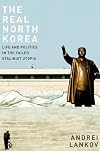
Lankov makes the compelling argument that, rather than the group of lunatics they are often perceived to be, the governing elites of North Korea are actually quite strategic and calculating in terms of how they govern, how they present themselves to world and to their people, etc. They have to show a united face to their people and to the world, or else their regime would collapse under the weight of its own absurdity and inability to be self-sufficient. Lankov argues that occasionally show more flare-ups between North and South Korea are, at the North's instigation, a way to ensure that the world continues to pay attention, so that it continues to receive humanitarian aid, money, etc. The world at large likewise has a grudging interest in the North Korean elites retaining power because of its nuclear capability.
Lankov believes reunification with the South is, ultimately, almost inevitable, though when it will occur he is unable to say. The regime of Kim Jong Un is already perceived to have a looser grip on public access to information about the outside world, and so the reunification may come sooner rather than later. In any case, it will be a long and painful process for the South to reabsorb the North due to 60-odd years of constant political tension and the standard of living disparity between the two.
A truly fascinating book that is occasionally a bit repetitive. Lankov also, perhaps due to a dearth of sources, does not spend a great deal time talking about day to day life for the average North Korean -- he feels on surer ground discussing geopolitical maneuvering, which he handles deftly and with a clarity that belies the fact that his first language is Russian and not English. show less
Lankov believes reunification with the South is, ultimately, almost inevitable, though when it will occur he is unable to say. The regime of Kim Jong Un is already perceived to have a looser grip on public access to information about the outside world, and so the reunification may come sooner rather than later. In any case, it will be a long and painful process for the South to reabsorb the North due to 60-odd years of constant political tension and the standard of living disparity between the two.
A truly fascinating book that is occasionally a bit repetitive. Lankov also, perhaps due to a dearth of sources, does not spend a great deal time talking about day to day life for the average North Korean -- he feels on surer ground discussing geopolitical maneuvering, which he handles deftly and with a clarity that belies the fact that his first language is Russian and not English. show less
(Disclaimer: Received this book through the Early Reviewer program.)
Insightful and descriptive, sums up this academic and well-researched work.
Even though I could expect to see this as a successful textbook in a college class, I never felt "talked down to" or anything like that. The book has a lot of information, arguments, and hypotheses, but doesn't push anything specific onto the reader, this was not a one-sided propaganda type presentation. Well thought out and presented quite a few show more stories or real-life depictions as given to the author by the people who lived through them.
The author mentions that he spent a time in the country as, I believe, an exchange student or student, which was acceptable to North Korea due to him being from Leningrad, Russia. So it seems as he has a good network of connections or friendships kept up even after he left the country.
I especially enjoyed Parts 5 & 6:' What to Do about the North?' & ' Being Ready for What We Wish for'
These sections were very interesting and made me appreciate the quandry that North Korea and the international body of countries dealing with it are in. This portion of the book really brought the issues and possibilities into stark "reality" for me. It presented a variety of potential futures for the world & North Korea's part in it. Also gave several different angles on the whys/why nots that certain approaches may be of use in bringing unification of the Koreas into being and/or at least the betterment of life for the North Korean populace until the regime were to fall or drastically change it's current structure and behaviors.
I did find a handful or so of my pet peeves: spelling, grammar, missing word typos. They were not drastic and I do make allowance that the author is Russian and the beginning of the piece does state a translator/interpreter was used in the writing. There were some small instances of the definite article missing (a, an, the) which actually, I think, is representative of the Russian language, which doesn't have them. Just mentioning this, I was impressed with the book nonetheless. This is though, technically an uncorrected proof, so hopefully the finished product will shine like the content does.
I'd recommend this book to students of History, especially Asian history, also could be recommended to those interested in Political Science (especially those specializing in dictatorships). show less
Insightful and descriptive, sums up this academic and well-researched work.
Even though I could expect to see this as a successful textbook in a college class, I never felt "talked down to" or anything like that. The book has a lot of information, arguments, and hypotheses, but doesn't push anything specific onto the reader, this was not a one-sided propaganda type presentation. Well thought out and presented quite a few show more stories or real-life depictions as given to the author by the people who lived through them.
The author mentions that he spent a time in the country as, I believe, an exchange student or student, which was acceptable to North Korea due to him being from Leningrad, Russia. So it seems as he has a good network of connections or friendships kept up even after he left the country.
I especially enjoyed Parts 5 & 6:' What to Do about the North?' & ' Being Ready for What We Wish for'
These sections were very interesting and made me appreciate the quandry that North Korea and the international body of countries dealing with it are in. This portion of the book really brought the issues and possibilities into stark "reality" for me. It presented a variety of potential futures for the world & North Korea's part in it. Also gave several different angles on the whys/why nots that certain approaches may be of use in bringing unification of the Koreas into being and/or at least the betterment of life for the North Korean populace until the regime were to fall or drastically change it's current structure and behaviors.
I did find a handful or so of my pet peeves: spelling, grammar, missing word typos. They were not drastic and I do make allowance that the author is Russian and the beginning of the piece does state a translator/interpreter was used in the writing. There were some small instances of the definite article missing (a, an, the) which actually, I think, is representative of the Russian language, which doesn't have them. Just mentioning this, I was impressed with the book nonetheless. This is though, technically an uncorrected proof, so hopefully the finished product will shine like the content does.
I'd recommend this book to students of History, especially Asian history, also could be recommended to those interested in Political Science (especially those specializing in dictatorships). show less
 This review was written for LibraryThing Early Reviewers.
This is a really fascinating book into one of the world's geopolitical curiosities: the hereditary Communist monarchy of North Korea. The author, Andrei Lankov, was born in the USSR, studied in Pyongyang in the 1980s, and is presently a professor at a university in Seoul, which means that he writes about this closed-off country with particular insight. There were times when it got a little repetitive (for example, I lost track of the number of times Lankov pointed out that DVDs and USB show more drives were allowing information about the outside world to enter North Korea in previously unheard-of quantities), but I found Lankov's conclusions to be pragmatic and largely persuasive. He argues that North Korea's leaders are not moustache-twirling madmen, but that their actions are driven by very rational considerations—indeed, the responses of international governments (largely South Korea, China and the U.S.) have spurred on their sabre-rattling and made them far less likely to give up their nuclear weapons. Definitely interesting and accessible to a popular audience. show less
This review was written for LibraryThing Early Reviewers.Excellent and historically based analysis of the development of North Korean politics, and what the current situation of North Korea means. It was interesting and often surprising in its conclusions about the likelihood of regime collapse and reunification. The author is an historian and does a great job about warning of speculations about the future. Nevertheless some of the scenarios are fascinating. Among the most interesting points: Collapse is likely to happen for economic not political show more reasons. Ironically, Income Inequality in North Korea will lead to the inevitable resentment and distress among the working class. Just as increasing contact with the west led to the eventual fall of the Iron curtain and Soviet empire, the same will happen as North Korea increasingly engages with the world.
Reunification may work the same way as Germany's did, but the gap between North and South Korea culturally and economically is much bigger. It would necessitate an 'affirmative action' of sorts and retraining for North Koreans to assimilate to a new society.
I am a history teacher, and I imagine the utter impossibility of my counterpart in North Korea suddenly being exposed to the rest of society. Since most North Koreans are unaware that a man has een walked on the moon this sudden knowledge wave would cause a culture shock akin to nothing the Western mind can imagine. A great and though provoking read. show less
Reunification may work the same way as Germany's did, but the gap between North and South Korea culturally and economically is much bigger. It would necessitate an 'affirmative action' of sorts and retraining for North Koreans to assimilate to a new society.
I am a history teacher, and I imagine the utter impossibility of my counterpart in North Korea suddenly being exposed to the rest of society. Since most North Koreans are unaware that a man has een walked on the moon this sudden knowledge wave would cause a culture shock akin to nothing the Western mind can imagine. A great and though provoking read. show less
Lists
Awards

You May Also Like


Statistics
- Works
- 8
- Members
- 390
- Popularity
- #62,075
- Rating
- 4.1
- Reviews
- 20
- ISBNs
- 17
- Languages
- 1
- Favorited
- 1
