
John Flavel (–1691)
Author of The Mystery of Providence
About the Author
John Flavel (1628-1691) was an English Puritan who became a non-conformist after the Great Ejection of 1662. It was ten years before he was licensed to preach again, and then only in his own home. When collected in the nineteenth century, his writings filed six volumes. Flavel's writings are known show more for their practical nature. He was instrumental in promoting the happy union of Presbyterians and Congregationalists. show less
Image credit: Courtesy of the NYPL Digital Gallery (image use requires permission from the New York Public Library)
Series
Works by John Flavel
The Fountain of Life; or, A Display of Christ in His Essential and Mediatorial Glory (1830) 139 copies, 2 reviews
Consuelo para los Desconsolados: El consuelo de Cristo a una madre en angustia (Clásicos Reformados) (Spanish Edition) (2018) 6 copies
A token for mourners, or, The advice of Christ to a distressed mother bewailing the death of her dear and only son : whe (2010) 5 copies
Husbandry Spiritualized: Or, the Heavenly use of Earthly Things. ... By John Flavel, ... A new Edition (2018) 5 copies
Guardando el corazón: El deber de todo creyente (Clásicos Reformados) (Spanish Edition) (2018) 4 copies
The Whole Works of John Flavel, Vol. 5 of 6 (Classic Reprint): Late Minister of the Gospel at Dartmouth, Devon (2015) 4 copies
Le Saint-Esprit & l'application du salut: L'esprit de Dieu unit le croyant à Christ (French Edition) (2021) 3 copies
Navigation spiritualized, or, A new compass for seamen : consisting of XXXII points of pleasant observations, profi (2010) 3 copies
THE WORKS OF JOHN FLAVEL 3 copies
Guarda o teu coração 2 copies
The Righteous Man's Refuge 2 copies
Guardando el corazón - John Flavel: Un punto de vista puritano acerca de cómo mantener el amor por Dios (Spanish Edition) 2 copies, 1 review
The Treasures of John Flavel 2 copies
A Token for Mourners, Annotated 2 copies
Een ware heilige 1 copy
Saint Indeed 1 copy
Works of John Flavel 1 copy
A Practical Treatise of Fear 1 copy
De zeven kruiswoorden 1 copy
המשגיח 1 copy
Guardando o coração 1 copy
Divine conduct: Or, The mystery of providence, opened in a treatise upon Psalm lvii. 2 (1935) 1 copy
Major Works of John Flavel 1 copy
Practical treatise of fear 1 copy
Providência um mistério 1 copy
Tagged
Common Knowledge
Members
Reviews

This is a great work from the puritan era. John Flavel is a true physician of the soul. He diagnoses various sinful, natural, and religious fears with deftness and clarity. He outlines ways in which God uses fear to bring about his purposes along with the negative personal effects fear can bring into the Christian life. The majority of the second portion of the book is composed of biblical remedies for fear in the Christian life. This is the true meat of the book and the most helpful section show more overall. For counselors, Flavel’s entire body of work is especially good, and this book is without exception. All believers will pick up something that can benefit their own soul, especially the healthy remedies laid out in the latter half of the book.
In today’s world there are a lot of names floating around for fears that are labeled sinful according to the Scriptures. Many are innately accepted as givens by the mental health world. Various phobias, anxieties, and worries pose as disorders or diseases. Their objective existence, or lack thereof, is not in view inside Flavel’s book directly, but he rightly brings the theme of the fear of God into consideration at many turns. This point is his overarching emphasis. The fear of God is a fear that drives out other fears. Flavel’s remedies are not one dimensional, however. There are twelve remedies he would prescribe to the sinfully fearful and he unpacks each in the pages that follow. Some include the study of the covenant of grace (Ps. 118:6, Rom. 8:31), consideration of the misery of sinful fear, mortifying affections to the world, imitating faithful saints, recording experiences of God’s faithfulness, and subjecting carnal reasoning to faith. If these seem bland at first glance, read and watch Flavel bring each remedy alive.
He closes by anticipating potential objections. For the man or woman who believes their natural disposition of tenderness and sensitivity inclines them to fear and anxiety, Flavel simply says this, “It is a great mistake to think that the strength of natural constitution can carry anyone through suffering for Christ...our ability to bear suffering does not come from nature, but grace” (114). Flavel pastored battle hardened Christians who were in danger of great suffering inflicted from the hands of the state. Today’s fear of man is paltry in comparison. Yet, however small or great one’s fear is, God’s remedies prove true and effective. He is a refuge, strength, and shield. Fear of God drives away all others. show less
In today’s world there are a lot of names floating around for fears that are labeled sinful according to the Scriptures. Many are innately accepted as givens by the mental health world. Various phobias, anxieties, and worries pose as disorders or diseases. Their objective existence, or lack thereof, is not in view inside Flavel’s book directly, but he rightly brings the theme of the fear of God into consideration at many turns. This point is his overarching emphasis. The fear of God is a fear that drives out other fears. Flavel’s remedies are not one dimensional, however. There are twelve remedies he would prescribe to the sinfully fearful and he unpacks each in the pages that follow. Some include the study of the covenant of grace (Ps. 118:6, Rom. 8:31), consideration of the misery of sinful fear, mortifying affections to the world, imitating faithful saints, recording experiences of God’s faithfulness, and subjecting carnal reasoning to faith. If these seem bland at first glance, read and watch Flavel bring each remedy alive.
He closes by anticipating potential objections. For the man or woman who believes their natural disposition of tenderness and sensitivity inclines them to fear and anxiety, Flavel simply says this, “It is a great mistake to think that the strength of natural constitution can carry anyone through suffering for Christ...our ability to bear suffering does not come from nature, but grace” (114). Flavel pastored battle hardened Christians who were in danger of great suffering inflicted from the hands of the state. Today’s fear of man is paltry in comparison. Yet, however small or great one’s fear is, God’s remedies prove true and effective. He is a refuge, strength, and shield. Fear of God drives away all others. show less
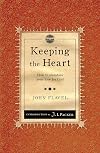
Flavel is a shepherd of souls. This book is his exposition on Proverbs 4:23 which says, “Keep the heart with all vigilance for from it flow the springs of life.” Just as a musical instrument requires constant tuning, so Flavel believes the heart also requires regular attention. He believes it is a perpetual work during all the days and seasons of a Christian’s life, for as long as the issues of life flow out of the heart, we are obliged to keep it. This business of keeping the heart is show more the great work of the Christian, he says.
He gives many exhortations and inducements toward that end, not content to leave his instruction without motivation to propel the believer toward this weighty business of heart watching. He mentions that a well kept heart frees us from burdensome diversions, helps us maintain liveliness and sweetness of communion with God, fits us for any condition or service God directs us to, provides us with a fountain of matter in prayer, helps us know the deep mysteries of Scripture, and furnishes us with the word which is the best preservative against sin.
He goes on to give counsel in specific seasons by which the Christian must especially keep, watch, and guard their own souls. These include times of prosperity, adversity, revenge, seasons of suffering, temptation, doubts, and death. In all, he walks through twelve directives for keeping the heart in various seasons of life.
Flavel also warns that Christians ought not allow the heart to be overrun with earthly business. The heart must be called to account frequently. Saints cannot afford to be a stranger to their own hearts and a well kept heart will enliven Christian conversation and sweeten fellowship with other believers.
I found Flavel’s chapter on keeping the heart during times of humble prosperity to be especially good. For believers living at the apex of wealth in the history of the world, keeping the heart during seasons of well being and prosperity can easily escape attention.
It is a commendable work and also free on the world wide web. show less
He gives many exhortations and inducements toward that end, not content to leave his instruction without motivation to propel the believer toward this weighty business of heart watching. He mentions that a well kept heart frees us from burdensome diversions, helps us maintain liveliness and sweetness of communion with God, fits us for any condition or service God directs us to, provides us with a fountain of matter in prayer, helps us know the deep mysteries of Scripture, and furnishes us with the word which is the best preservative against sin.
He goes on to give counsel in specific seasons by which the Christian must especially keep, watch, and guard their own souls. These include times of prosperity, adversity, revenge, seasons of suffering, temptation, doubts, and death. In all, he walks through twelve directives for keeping the heart in various seasons of life.
Flavel also warns that Christians ought not allow the heart to be overrun with earthly business. The heart must be called to account frequently. Saints cannot afford to be a stranger to their own hearts and a well kept heart will enliven Christian conversation and sweeten fellowship with other believers.
I found Flavel’s chapter on keeping the heart during times of humble prosperity to be especially good. For believers living at the apex of wealth in the history of the world, keeping the heart during seasons of well being and prosperity can easily escape attention.
It is a commendable work and also free on the world wide web. show less
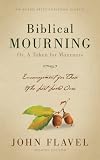
I wasn't quite sure what to expect. I admit I didn't recognize the author, and I almost planned to write that the book seemed written for academics and had a tone that held the reader distant from the subject matter. It wasn't until I came online planning to write a review that I realized the book was not a modern-day nonfiction. In my mind, that accounted for the difference in the tone of the book, so I gave it a second chance.
The basic idea is that it is okay to mourn but we shouldn't show more wallow in our sorrow--either letting that sorrow go on indefinitely or allowing it to drag us down to the point that it is our entire life. That said, I do think mourning takes a varying amount of time depending on the person and the relationship, but as long as one is moving toward healing/wholeness then he/she is probably on the right track.
I think I found the last chapter more helpful than some of the earlier chapters. show less
The basic idea is that it is okay to mourn but we shouldn't show more wallow in our sorrow--either letting that sorrow go on indefinitely or allowing it to drag us down to the point that it is our entire life. That said, I do think mourning takes a varying amount of time depending on the person and the relationship, but as long as one is moving toward healing/wholeness then he/she is probably on the right track.
I think I found the last chapter more helpful than some of the earlier chapters. show less
One of the worst things anyone can experience is the death of a loved one, and when it occurs, a state of mourning ensues since someone we value has been taken from us, creating a state of grieving deeply. While the act of mourning might be painful, I've learned in my journey of trying to be a good Christian woman that it's capable of bringing our hearts into line with that of the heart of our Lord, for according to MATTHEW 5:4 [NKJV]: "Blessed are those who mourn, For they shall be show more comforted."
Mourning is not supposed to be perpetual, and we're reminded of this in ECCLESIASTES 3:1-8 [NKJV]:
[1] To everything there is a season, A time for every purpose under heaven:
[2] A time to be born, And a time to die; A time to plant, And a time to pluck what is planted;
[3] A time to kill, And a time to heal; A time to break down, And a time to build up;
[4] A time to weep, And a time to laugh; A time to mourn, And a time to dance;
[5] A time to cast away stones, And a time to gather stones; A time to embrace, And a time to refrain from embracing;
[6] A time to gain, And a time to lose; A time to keep, And a time to throw away;
[7] A time to tear, And a time to sew; A time to keep silence, And a time to speak;
[8] A time to love, And a time to hate; A time of war, And a time of peace.
As a Christian woman, I've found that when a loved one of a Christian dies, we have our own unique way of mourning, unlike the rest of the world, since we possess an everlasting hope of what is to come that they don't possess. According to Scripture, we're reminded in 1 THESSALONIANS 4:13 that death isn't the end since we're in Christ and that grieving is only a passing situation. As Christians, we realize that while our mourning isn't a pleasant situation, it's still a part of our existence; for with the relationship we have with the Lord, we know what we're told in REVELATION 7:17 [NKJV]:
"For the Lamb who is in the midst of the throne will shepherd them and lead them to living fountains of waters. And God will wipe away every tear from their eyes."
The author, John Flavel, who lived from 1628-1691, wrote the following about mourning, which is part of the description for this book:
"To be above feelings and emotions is a condition equal to the angels and to be in a state of sorrow without the sense of sorrow is a disposition beneath the beasts. But to correctly regulate our sorrows and bind our passions under suffering is a Christian's wisdom, duty, and excellency.
Even though you and your afflictions had a sad meeting, I desire that you and they may have a comfortable parting. If your afflictions do the work in your hearts that God sent them for, I have no doubt you will give them a fair testimony when they leave. What you endured with fear, you will dismiss with praise. How sweet it is when God is losing his hands to hear the afflicted soul say, "It is good for me that I have been afflicted!"
While this book was written about 350 years ago, it is still a viable source of encouragement for any Christian going through their mourning period, which is why, as a voracious reviewer of nonfiction Christian books, I've given this book 5 STARS for its timeliness. show less
Mourning is not supposed to be perpetual, and we're reminded of this in ECCLESIASTES 3:1-8 [NKJV]:
[1] To everything there is a season, A time for every purpose under heaven:
[2] A time to be born, And a time to die; A time to plant, And a time to pluck what is planted;
[3] A time to kill, And a time to heal; A time to break down, And a time to build up;
[4] A time to weep, And a time to laugh; A time to mourn, And a time to dance;
[5] A time to cast away stones, And a time to gather stones; A time to embrace, And a time to refrain from embracing;
[6] A time to gain, And a time to lose; A time to keep, And a time to throw away;
[7] A time to tear, And a time to sew; A time to keep silence, And a time to speak;
[8] A time to love, And a time to hate; A time of war, And a time of peace.
As a Christian woman, I've found that when a loved one of a Christian dies, we have our own unique way of mourning, unlike the rest of the world, since we possess an everlasting hope of what is to come that they don't possess. According to Scripture, we're reminded in 1 THESSALONIANS 4:13 that death isn't the end since we're in Christ and that grieving is only a passing situation. As Christians, we realize that while our mourning isn't a pleasant situation, it's still a part of our existence; for with the relationship we have with the Lord, we know what we're told in REVELATION 7:17 [NKJV]:
"For the Lamb who is in the midst of the throne will shepherd them and lead them to living fountains of waters. And God will wipe away every tear from their eyes."
The author, John Flavel, who lived from 1628-1691, wrote the following about mourning, which is part of the description for this book:
"To be above feelings and emotions is a condition equal to the angels and to be in a state of sorrow without the sense of sorrow is a disposition beneath the beasts. But to correctly regulate our sorrows and bind our passions under suffering is a Christian's wisdom, duty, and excellency.
Even though you and your afflictions had a sad meeting, I desire that you and they may have a comfortable parting. If your afflictions do the work in your hearts that God sent them for, I have no doubt you will give them a fair testimony when they leave. What you endured with fear, you will dismiss with praise. How sweet it is when God is losing his hands to hear the afflicted soul say, "It is good for me that I have been afflicted!"
While this book was written about 350 years ago, it is still a viable source of encouragement for any Christian going through their mourning period, which is why, as a voracious reviewer of nonfiction Christian books, I've given this book 5 STARS for its timeliness. show less
You May Also Like


Statistics
- Works
- 104
- Members
- 4,768
- Popularity
- #5,266
- Rating
- 4.5
- Reviews
- 27
- ISBNs
- 158
- Languages
- 5
- Favorited
- 3
