
Janet Taylor Lisle
Author of Afternoon of the Elves
About the Author
Image credit: Simon & Schuster
Series
Works by Janet Taylor Lisle
Looking for Juliette 1 copy
Associated Works
Scholastic Book Clubs Chapters - A Special Sampling of Novels By Newbery Authors (2001) — Contributor — 17 copies, 1 review
Tagged
Common Knowledge
- Birthdate
- 1947
- Gender
- female
- Education
- Smith College (B.A. | English Literature | 1969)
Georgia State University - Nationality
- USA
- Places of residence
- Englewood, New Jersey, USA (Birth)
Farmington, Connecticut, USA
Atlanta, Georgia, USA
Rhode Island, USA - Associated Place (for map)
- USA
Members
Reviews
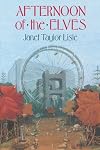
This 1990 Newbery Honor award winner, is hauntingly complex.
Hillary is a child of comfortable middle class who is curious about Sara Kate, the neighbor girl who wears raggedy clothes, sporadically attends school and lives in a dilapidated house.
The story becomes darker as Hillary is enticed to explore Sara Kate's magical elfin village, complete with tiny houses of autumn leaves for roofs, bottle caps used for swimming pools and teeny stones for bitty lawn ornaments.
When the little village show more becomes an obsession for Hillary, she finds that secrets abound in the larger ramshackle house inhabited by Sara. Forbidden to play next door, Sara disobeys her parents and is increasingly drawn to the magic of the village and her elfin, waif-like neighbor whose mother hides behind the darkened windows in the unmagical abode.
This is an excellent tale of societal impressions, of doors that are closed and windows that are barred, of judgment rather than assistance. It is a tale of magic vs. cold, cruel reality. It is a story of friendship, but it is ever so much more than this. When Hillary's eyes are opened she sees things that her comfortable, safe life never dreamed possible.
Highly recommended! show less
Hillary is a child of comfortable middle class who is curious about Sara Kate, the neighbor girl who wears raggedy clothes, sporadically attends school and lives in a dilapidated house.
The story becomes darker as Hillary is enticed to explore Sara Kate's magical elfin village, complete with tiny houses of autumn leaves for roofs, bottle caps used for swimming pools and teeny stones for bitty lawn ornaments.
When the little village show more becomes an obsession for Hillary, she finds that secrets abound in the larger ramshackle house inhabited by Sara. Forbidden to play next door, Sara disobeys her parents and is increasingly drawn to the magic of the village and her elfin, waif-like neighbor whose mother hides behind the darkened windows in the unmagical abode.
This is an excellent tale of societal impressions, of doors that are closed and windows that are barred, of judgment rather than assistance. It is a tale of magic vs. cold, cruel reality. It is a story of friendship, but it is ever so much more than this. When Hillary's eyes are opened she sees things that her comfortable, safe life never dreamed possible.
Highly recommended! show less

In her ragged clothes and oversized boots, Sarah-Kate is a figure of ridicule at school. However, she has a magic elf village in her neglected back yard, as Hillary discovers one day when Sarah-Kate invites her over to see it. The two girls spend the fall "helping" the elves by making tiny improvements to their village, and Hillary hopes, more than anything, to see an elf for herself, if she is careful and quiet and looks deeply at the natural world as Sarah-Kate instructs. Sarah-Kate can be show more strange and temperamental, but Hillary is completely taken with this new friendship . . . until the day Sarah-Kate disappears.
There are hints of magic to this story, which is what I think I gravitated toward when I read this as a child (I'm pretty certain I read this as a child?), but as an adult it's a darkly bittersweet book about child neglect and a family in need of help. It feels a tiny bit dated now, but there's still the lovely allure of the elf village and the compelling character of Sarah-Kate to give the story its appeal. show less
There are hints of magic to this story, which is what I think I gravitated toward when I read this as a child (I'm pretty certain I read this as a child?), but as an adult it's a darkly bittersweet book about child neglect and a family in need of help. It feels a tiny bit dated now, but there's still the lovely allure of the elf village and the compelling character of Sarah-Kate to give the story its appeal. show less
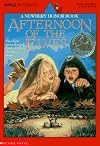
Sara-Kate is a fifth grader who stayed behind a year and everyone knows she's bad news. But one day, she invites fourth-grader Hillary over to see a village built by elves. Hillary's yard, with its carefully tended garden, backs up to Sara-Kate's, which is a mess of weeds and poison ivy, and Hillary is intrigued by the possibility of elves. Though her parents aren't so sure about it, Hillary and Sara-Kate strike up an unlikely friendship and begin to play together in the yard.
This was an odd show more sort of story that I think perhaps did not work well for me both on audio and as an adult. It left a tension of whether or not the elves were real or just Sara-Kate's imagination (or, perhaps more insidiously, a lie to get Hillary to play with her). Her father is "away on a trip" and her mother doesn't leave the house, which may have seemed like delicious freedom to a child reader and immediately sends up red flags to an adult. The ending is ambiguous in a few ways, both leaving open the possibility of magic and never really resolving Sara-Kate's problems. I think as a result, I would've believed in the magic as a child but I'm left rather unsettled instead. show less
This was an odd show more sort of story that I think perhaps did not work well for me both on audio and as an adult. It left a tension of whether or not the elves were real or just Sara-Kate's imagination (or, perhaps more insidiously, a lie to get Hillary to play with her). Her father is "away on a trip" and her mother doesn't leave the house, which may have seemed like delicious freedom to a child reader and immediately sends up red flags to an adult. The ending is ambiguous in a few ways, both leaving open the possibility of magic and never really resolving Sara-Kate's problems. I think as a result, I would've believed in the magic as a child but I'm left rather unsettled instead. show less

When nine-year-old Olivia and her five-year-old sister Nellie’s mother dies, their father sends them to live with their great-aunt Minty. This arrangement seems less than promising to Olivia, who worries about the demanding and difficult Nellie. When the girls find a beautiful blue teacup in Aunt Minty’s garden however, they are drawn into a summer-long quest to find the entire set, a necessary part of the counter-charm needed to free the Lost Flower Children, spoken of in a story Olivia show more has read about this very garden.
A moving story about two young girls and how they come to terms with their mother’s death, The Lost Flower Children possesses Lisle’s characteristic blend of fantasy and reality, in which the reader is never sure if the magic is real or imagined. The faintest touch of real magic at the end, another Lisle characteristic, gives emphasis to the book’s journey of imagination. show less
A moving story about two young girls and how they come to terms with their mother’s death, The Lost Flower Children possesses Lisle’s characteristic blend of fantasy and reality, in which the reader is never sure if the magic is real or imagined. The faintest touch of real magic at the end, another Lisle characteristic, gives emphasis to the book’s journey of imagination. show less
Lists
Awards


You May Also Like


Associated Authors
Statistics
- Works
- 22
- Also by
- 5
- Members
- 4,975
- Popularity
- #5,037
- Rating
- 3.6
- Reviews
- 92
- ISBNs
- 198
- Languages
- 6
- Favorited
- 1