
Lisa Gabriele
Author of The Winters
About the Author
Series
Works by Lisa Gabriele
Associated Works
When I Was a Loser: True Stories of (Barely) Surviving High School (2007) — Contributor — 36 copies, 2 reviews
Sex and Sensibility: 28 True Romances from the Lives of Single Women (2005) — Contributor — 28 copies
Tagged
Common Knowledge
- Other names
- L. Marie Adeline
- Gender
- female
- Occupations
- author
- Agent
- Cooke Agency International
Suzanne Brandreth
Ron Eckel - Nationality
- Canada
- Associated Place (for map)
- Canada
Members
Reviews

Do you know that feeling when a book leaves you reeling, defying your expectations, demanding to be read at all hours and staying with you long after you finish? That for me was The Winters. Wow! Daphne Du Maurier's Rebecca has long been one of my favourite novels, and I when I came across the title of this book, my first thought was 'Oh no, someone has tried to update my beloved book'. I haven't been impressed by previous sequels and prequels - Susan Hill's Mrs De Winter was deathly dull show more and Sally Beauman's Rebecca's Tale was cracked - but I had to give this a try, ready to post a three star review - or worse.
How wrong I was! This is how seriously impressed I am - I think Lisa Gabriele's retelling might actually be better than the original! Shock horror! The nameless narrator in Du Maurier's book is primarily why I love the story so much, because I can identify with such crippling shyness and lack of confidence, and I wondered how such a nonentity could ever be successfully dragged into the modern day, but once again, I was wrong. Still nameless, but now of Cuban heritage, Lisa Gabriele has crafted a narrator with slightly more independence that her predecessor, but the overpowering need to be loved, to be safe remains, only for different reasons: 'Imagine having the courage to talk back to people you don’t like, who don’t like you, or better yet, not reacting at all, simply shrugging it off and moving on with your day'.
“Born on a boat, lives on an island, now an orphan, working for a witch. You’re a Grimms’ fairy tale set in the Caribbean," Max Winter summarises his new fiancee's life. They meet in the Cayman Islands, where the narrator works for an Aussie businesswoman who runs a boat rental service for tourists. Max Winter, a state senator from Long Island, is still in mourning for his glamorous wife Rebekah, who died in a car crash near their home, Asherley, two years ago. He meets the narrator and falls in love with her, wining and dining her on the island until she is forced to choose between her livelihood and her love for Max. He proposes and takes her home to his own island in East Hampton, where his magnificent gated property waits - and so does Max's daughter, Dani.
The twists and turns in this version of Du Maurier's classic both took me by surprise and improved on the original for me, so I won't say any more. BUT - for modern readers who hate that Max apparently gets away with murder in Rebecca, and his new wife supports him, there is a satisfying turn of events. Dani was the real delight for me, however. Obviously she is the updated Mrs Danvers, coming between Max and his new wife with memories of his beautiful lost love, but she has the stronger claim - she is Max's teenage daughter, lately bereaved of her beloved mother, and not just the housekeeper who could easily be dismissed. She is catty, vindictive and unbalanced, living in her mother's old bedroom and wearing her clothes. When she seems to soften and allow her stepmother into her life, there is always the suspicion that she cannot be trusted. And when she claimed the kitten that the second Mrs W saves from imminent dispatch with an axe, my heart was constantly in my mouth that she was going to hurt the poor thing (I can't animal cruelty as a shorthand for psychopathy). I was relying too much on my knowledge of the original novel, however.
There are some worthy references to Rebecca, especially the dress scene, which almost tips over into Jane Eyre territory (not one of my favourite novels). My favourite moment, when the narrator forgets that she is Mrs [De] Winter now is missing, but her internal fantasies are just as strong: “I’m telling you, a little drama just played itself out on your face. I saw it. What were you thinking?” Max asks. I love that spilling over of daydream into reality, when her face journey betrays her thoughts!
I can't really say more about the plot, but READ READ READ! Even the familiar opening chapter, with the narrator in exile, is not what you think. I'm going to buy the paperback version with the roses on the cover, just so I can return to this amazing retelling in the future. Rebecca has been replaced once again! show less
How wrong I was! This is how seriously impressed I am - I think Lisa Gabriele's retelling might actually be better than the original! Shock horror! The nameless narrator in Du Maurier's book is primarily why I love the story so much, because I can identify with such crippling shyness and lack of confidence, and I wondered how such a nonentity could ever be successfully dragged into the modern day, but once again, I was wrong. Still nameless, but now of Cuban heritage, Lisa Gabriele has crafted a narrator with slightly more independence that her predecessor, but the overpowering need to be loved, to be safe remains, only for different reasons: 'Imagine having the courage to talk back to people you don’t like, who don’t like you, or better yet, not reacting at all, simply shrugging it off and moving on with your day'.
“Born on a boat, lives on an island, now an orphan, working for a witch. You’re a Grimms’ fairy tale set in the Caribbean," Max Winter summarises his new fiancee's life. They meet in the Cayman Islands, where the narrator works for an Aussie businesswoman who runs a boat rental service for tourists. Max Winter, a state senator from Long Island, is still in mourning for his glamorous wife Rebekah, who died in a car crash near their home, Asherley, two years ago. He meets the narrator and falls in love with her, wining and dining her on the island until she is forced to choose between her livelihood and her love for Max. He proposes and takes her home to his own island in East Hampton, where his magnificent gated property waits - and so does Max's daughter, Dani.
The twists and turns in this version of Du Maurier's classic both took me by surprise and improved on the original for me, so I won't say any more. BUT - for modern readers who hate that Max apparently gets away with murder in Rebecca, and his new wife supports him, there is a satisfying turn of events. Dani was the real delight for me, however. Obviously she is the updated Mrs Danvers, coming between Max and his new wife with memories of his beautiful lost love, but she has the stronger claim - she is Max's teenage daughter, lately bereaved of her beloved mother, and not just the housekeeper who could easily be dismissed. She is catty, vindictive and unbalanced, living in her mother's old bedroom and wearing her clothes. When she seems to soften and allow her stepmother into her life, there is always the suspicion that she cannot be trusted. And when she claimed the kitten that the second Mrs W saves from imminent dispatch with an axe, my heart was constantly in my mouth that she was going to hurt the poor thing (I can't animal cruelty as a shorthand for psychopathy). I was relying too much on my knowledge of the original novel, however.
There are some worthy references to Rebecca, especially the dress scene, which almost tips over into Jane Eyre territory (not one of my favourite novels). My favourite moment, when the narrator forgets that she is Mrs [De] Winter now is missing, but her internal fantasies are just as strong: “I’m telling you, a little drama just played itself out on your face. I saw it. What were you thinking?” Max asks. I love that spilling over of daydream into reality, when her face journey betrays her thoughts!
I can't really say more about the plot, but READ READ READ! Even the familiar opening chapter, with the narrator in exile, is not what you think. I'm going to buy the paperback version with the roses on the cover, just so I can return to this amazing retelling in the future. Rebecca has been replaced once again! show less
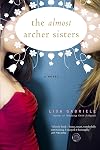
knew I had a doctor's appointment after work the other day, so I quickly stuck The Almost Archer Sisters in my bag to take with me. My doctor is invariably behind, so an hour and a half later, it was my turn. But honestly, I was so engrossed in this book, I really didn't notice how much time had passed. (I was in a much better place than those stuck reading outdated Sports Illustrated)
Releasing tomorrow from Random House Canada, this second novel from Lisa Gabriele is one of those books that show more is a found gem - one you have to let your friends know about.
It tells the story of two sisters who were raised on a farm in Ontario. Beth is a wild child who pushed the boundaries of everything growing up and continues to do so as an adult. She fled the farm and moved to New York to pursue a successful career. The other sister Georgia, but known to all as Peachy, stayed at home. She got pregnant and married before she finished her social work degree. Her husband, Beau, was Beth's first lover. Their father, Lou, a draft dodging hairdresser, also lives on the farm in a trailer.
Beth's life seems be unravelling and she is coming home to the farm for more frequent visits. Peachy's life is stressful as well. Her son Sam has severe epilepsy. Her focus lately has been on his health, not on her other son and husband.
Things come to a head during one Beth's visits. Peachy gets up in the night and walks in on her sister and Beau - and they're not playing cards.
What could have precipitated such a betrayal? Can any relationship - the siblings, the husband and wife, the father and daughters - ever recover or be rebuilt after such perfidy?
Gabriele's writing is at turns funny and poignant but above all else it is real. I was captivated by the characters and could not put the book down. It was Peachy who captured my heart - she's someone you would love to really know. The ending isn't cut and dried, leaving you to form your own conclusions. This would be a great selection for a book club. And I have another wonderful Canadian author to put on my favourites list! show less
Releasing tomorrow from Random House Canada, this second novel from Lisa Gabriele is one of those books that show more is a found gem - one you have to let your friends know about.
It tells the story of two sisters who were raised on a farm in Ontario. Beth is a wild child who pushed the boundaries of everything growing up and continues to do so as an adult. She fled the farm and moved to New York to pursue a successful career. The other sister Georgia, but known to all as Peachy, stayed at home. She got pregnant and married before she finished her social work degree. Her husband, Beau, was Beth's first lover. Their father, Lou, a draft dodging hairdresser, also lives on the farm in a trailer.
Beth's life seems be unravelling and she is coming home to the farm for more frequent visits. Peachy's life is stressful as well. Her son Sam has severe epilepsy. Her focus lately has been on his health, not on her other son and husband.
Things come to a head during one Beth's visits. Peachy gets up in the night and walks in on her sister and Beau - and they're not playing cards.
What could have precipitated such a betrayal? Can any relationship - the siblings, the husband and wife, the father and daughters - ever recover or be rebuilt after such perfidy?
Gabriele's writing is at turns funny and poignant but above all else it is real. I was captivated by the characters and could not put the book down. It was Peachy who captured my heart - she's someone you would love to really know. The ending isn't cut and dried, leaving you to form your own conclusions. This would be a great selection for a book club. And I have another wonderful Canadian author to put on my favourites list! show less

Although she is content in the life she made for herself after her alcoholic/abusive husband dies, Cassie Robichaud feels there is something missing from her life. She has co-workers and acquaintances, but really, no friends, certainly, no dates. All in all, with the exception of her cat, her life is very solitary. As Cassie is clearing a table after a café customer leaves she realizes the woman has left behind a notebook. Not wanting to read it, yet feeling somehow compelled to do so the show more diary leads her to a life that she could only have imagined. No … even Cassie herself would admit she could never have imagined the series of erotic fantasies to which she was introduced.
I’ve enjoyed a good “bodice-ripper” every once in a while, but despite all the hype and hoopla “Shades of Grey” totally put me off the pop-erotica that is available lately. My hairdresser, of all people, recommended this book so I felt I had to read it. Knowing I am an avid reader, she would no doubt ask about it at my next appointment. I have to say; this book pleasantly surprised me. There are no quivering virgins and although there is a slightly Christian-esque character he has a minor role (big sigh of relief). Cassie is a mature woman who makes an informed choice to experience, unapologetically, a series of erotic encounters. Cassie is a fun character that I got to like as the book progressed. This book had a little more meat on its bones than some erotic fiction out there. I will definitely pick up the sequel. show less
I’ve enjoyed a good “bodice-ripper” every once in a while, but despite all the hype and hoopla “Shades of Grey” totally put me off the pop-erotica that is available lately. My hairdresser, of all people, recommended this book so I felt I had to read it. Knowing I am an avid reader, she would no doubt ask about it at my next appointment. I have to say; this book pleasantly surprised me. There are no quivering virgins and although there is a slightly Christian-esque character he has a minor role (big sigh of relief). Cassie is a mature woman who makes an informed choice to experience, unapologetically, a series of erotic encounters. Cassie is a fun character that I got to like as the book progressed. This book had a little more meat on its bones than some erotic fiction out there. I will definitely pick up the sequel. show less
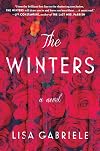
The Winters is a page-turning tribute to Rebecca, with a blend of modern and gothic secrets.
Our unnamed protagonist is working as a crew hand in the Cayman Islands, when a handsome, recently widowed banker comes in looking for a boat, and it’s love at first sight. After a speedy courtship, Max Winters asks her to marry him and move back to New York with him.
But the Cinderella story twists on Long Island, where she finds her new home is a monument to her husband’s first wife, and show more inhabited by their moody, hostile daughter. There’s a contrast between the subtle distance from the household servants (telling her to enjoy her visit, for example) and the open animosity from Dani, but the house is unfriendly and unfamiliar. Max has secrets, too, in case being a New York banker with undisclosed business in the Cayman Islands didn’t tip you off.
This is such a gothic story — the family estate is only accessible by a winding, deserted bridge, part of the house is a locked-off memorial to the first Mrs. Winter, there are loads of dark roses delivered constantly in her memory, there’s the threat of insanity and imprisonment, and there’s a massive greenhouse that no one may ever enter again. This isn’t a historical novel, this is a modern-day Long Island banker and politician, living his best brooding-gothic life.
The narrator is never named, and she doesn’t say her age or at times, even her appearance is vague. I often find this kind of device a bit gimmicky (I want to read a story, not watch a trick), but it works here because for so much of the story, she is passive, mostly acted-on by others and not really a driving force. By the time she develops some agency, I’d forgotten the omission.
I loved the reveals and secrets, even though if you’ve read Rebecca, there are some clues. There are also hints of Jane Eyre here, which adds to the mood. The modern setting makes it harder to accept some of gothic-horror red flags (Surely there’s some rational, everyday reason no one can ever enter the greenhouse? Maybe it’s structurally unsound and Max just wants her to be safe?) which adds another layer of suspense because the narrator’s never quite able to trust what she sees, hears, and discovers in the mansion. show less
Our unnamed protagonist is working as a crew hand in the Cayman Islands, when a handsome, recently widowed banker comes in looking for a boat, and it’s love at first sight. After a speedy courtship, Max Winters asks her to marry him and move back to New York with him.
But the Cinderella story twists on Long Island, where she finds her new home is a monument to her husband’s first wife, and show more inhabited by their moody, hostile daughter. There’s a contrast between the subtle distance from the household servants (telling her to enjoy her visit, for example) and the open animosity from Dani, but the house is unfriendly and unfamiliar. Max has secrets, too, in case being a New York banker with undisclosed business in the Cayman Islands didn’t tip you off.
This is such a gothic story — the family estate is only accessible by a winding, deserted bridge, part of the house is a locked-off memorial to the first Mrs. Winter, there are loads of dark roses delivered constantly in her memory, there’s the threat of insanity and imprisonment, and there’s a massive greenhouse that no one may ever enter again. This isn’t a historical novel, this is a modern-day Long Island banker and politician, living his best brooding-gothic life.
The narrator is never named, and she doesn’t say her age or at times, even her appearance is vague. I often find this kind of device a bit gimmicky (I want to read a story, not watch a trick), but it works here because for so much of the story, she is passive, mostly acted-on by others and not really a driving force. By the time she develops some agency, I’d forgotten the omission.
I loved the reveals and secrets, even though if you’ve read Rebecca, there are some clues. There are also hints of Jane Eyre here, which adds to the mood. The modern setting makes it harder to accept some of gothic-horror red flags (Surely there’s some rational, everyday reason no one can ever enter the greenhouse? Maybe it’s structurally unsound and Max just wants her to be safe?) which adds another layer of suspense because the narrator’s never quite able to trust what she sees, hears, and discovers in the mansion. show less
Lists
Awards


You May Also Like


Associated Authors
Statistics
- Works
- 10
- Also by
- 4
- Members
- 924
- Popularity
- #27,776
- Rating
- 3.5
- Reviews
- 125
- ISBNs
- 93
- Languages
- 11
- Favorited
- 1
