
L. Ann Jervis
Author of Galatians (New International Biblical Commentary, 9.)
About the Author
L. Ann Jervis is a professor of New Testament at Toronto School of Theology.
Works by L. Ann Jervis
Gospel in Paul : studies on Corinthians, Galatians, and Romans for Richard N. Longenecker (1994) — Editor — 16 copies
Associated Works
The Colonized Apostle: Paul in Postcolonial Eyes (Paul in Critical Contexts) (2011) — Contributor — 9 copies
Tagged
Common Knowledge
- Gender
- female
Members
Reviews
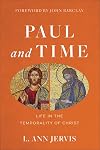
Summary: A proposal that believers live, not at the intersection and the age to come, but that we have been delivered from the present evil age to live in Christ, including living in his time.
We understand time in the light of Christ’s saving work. We understand that Christ’s coming inaugurated “the age to come” That age will reach its telos when Christ returns. Some explain it in terms of already and not yet. Others use the analogy of living between D-Day, the decisive battle of show more World War II and V-Day, the final victory. Those who believe live in an overlap of the ages.
L. Ann Jervis argues that this is not Paul’s view of time. For her, there is no overlap. Either we live in this present evil age, what she calls “death-time” or we live in Christ, in the time of the crucified, risen and exalted Son. She calls this “life-time.”
She begins with the two most popular approaches to Paul, the salvation historical or the more recent apocalyptic. While they differ in whether Christ represents fulfillment or he represents an in-breaking, both have in common the two age idea. She challenges this, arguing that believers live exclusively in Christ. They live in a time or temporality distinct from the present evil age, the temporality of Christ.
Christ’s time is different in at least two ways. As risen Lord, it is a time of life without end, that begins for the believer when they believe. Death is only a transition in that life. Hence, she calls this “life-time.” It is also different because it is in God, for whom past, present, and future are not discrete or sequential. Hence we experience both his past sufferings and anticipate resurrection in our present. The future only reveals the present of Christ’s life, already present to us. Jervis demonstrates this in studies of 1 Corinthians 15 and Romans 8, showing that what is chronologically future for us is in the present in Christ’s victory and glory.
Finally, she addresses the implications of this idea for how we understand sin, suffering, and death. She argues that for believers, these are not symptoms of a yet to be vanquished evil age, but are transformed by those who are in Christ. She writes:
“This knowledge has an existential power–believers can live in the embrace of transformative hope. Hope for Paul is the capacity through faith to be aware of what is. Believers’ knowledge that God through Christ shares God’s time and life with them means life now is transfused with the God-given capacity to hope and so to see the glory that is and will be forever….Lives lived without fear of physical death, in awareness that sinning is not obligatory and that suffering is in company with Christ, promise to be lives of creative and healing love for all” (p. 163).
Jervis challenges us to not reframe Paul’s “in Christ” language that so dominates his thought into a two age framework. She offers an approach that seems truer to Paul’s language. She denies we are in a battle with Satan or the powers who have been defeated in Christ, a point at which I would differ. I contend that even in her framework, we participate in Christ’s victory through battle, just as we do through suffering.
Jervis offers a fresh paradigm worth consideration and development. She proclaims a liberty and victory for believers in this present life instead of making concessions to the enemy. Jervis reminds us of what a powerful truth it is to say we are “in Christ.” She does this with concision and clarity in writing that is a pleasure to read. I look forward to reading more of this theologian!
____________________
Disclosure of Material Connection: I received a complimentary copy of this book from the publisher for review. show less
We understand time in the light of Christ’s saving work. We understand that Christ’s coming inaugurated “the age to come” That age will reach its telos when Christ returns. Some explain it in terms of already and not yet. Others use the analogy of living between D-Day, the decisive battle of show more World War II and V-Day, the final victory. Those who believe live in an overlap of the ages.
L. Ann Jervis argues that this is not Paul’s view of time. For her, there is no overlap. Either we live in this present evil age, what she calls “death-time” or we live in Christ, in the time of the crucified, risen and exalted Son. She calls this “life-time.”
She begins with the two most popular approaches to Paul, the salvation historical or the more recent apocalyptic. While they differ in whether Christ represents fulfillment or he represents an in-breaking, both have in common the two age idea. She challenges this, arguing that believers live exclusively in Christ. They live in a time or temporality distinct from the present evil age, the temporality of Christ.
Christ’s time is different in at least two ways. As risen Lord, it is a time of life without end, that begins for the believer when they believe. Death is only a transition in that life. Hence, she calls this “life-time.” It is also different because it is in God, for whom past, present, and future are not discrete or sequential. Hence we experience both his past sufferings and anticipate resurrection in our present. The future only reveals the present of Christ’s life, already present to us. Jervis demonstrates this in studies of 1 Corinthians 15 and Romans 8, showing that what is chronologically future for us is in the present in Christ’s victory and glory.
Finally, she addresses the implications of this idea for how we understand sin, suffering, and death. She argues that for believers, these are not symptoms of a yet to be vanquished evil age, but are transformed by those who are in Christ. She writes:
“This knowledge has an existential power–believers can live in the embrace of transformative hope. Hope for Paul is the capacity through faith to be aware of what is. Believers’ knowledge that God through Christ shares God’s time and life with them means life now is transfused with the God-given capacity to hope and so to see the glory that is and will be forever….Lives lived without fear of physical death, in awareness that sinning is not obligatory and that suffering is in company with Christ, promise to be lives of creative and healing love for all” (p. 163).
Jervis challenges us to not reframe Paul’s “in Christ” language that so dominates his thought into a two age framework. She offers an approach that seems truer to Paul’s language. She denies we are in a battle with Satan or the powers who have been defeated in Christ, a point at which I would differ. I contend that even in her framework, we participate in Christ’s victory through battle, just as we do through suffering.
Jervis offers a fresh paradigm worth consideration and development. She proclaims a liberty and victory for believers in this present life instead of making concessions to the enemy. Jervis reminds us of what a powerful truth it is to say we are “in Christ.” She does this with concision and clarity in writing that is a pleasure to read. I look forward to reading more of this theologian!
____________________
Disclosure of Material Connection: I received a complimentary copy of this book from the publisher for review. show less
Some of the most fruitful and profitable studies come from fundamentally re-assessing the assumptions which undergird certain core concepts in the faith.
I am currently in the middle of John Barclay’s Paul and the Gift and am very much appreciating his very deep investigation into how gifts and grace were understood in ancient contexts and in the history of interpretation. It helps to show how people have been talking above and past each other and very much tied into the framework of their show more place and time.
Not for nothing, then, does Barclay provide a forward for another book doing something similar: L. Ann Jervis’ Paul and Time: Life in the Temporality of Christ (galley received as part of early review program).
What Barclay does for gift and grace, Jervis does with time. She explores the two predominant perspectives on how Paul views time: the kind of “now/not yet” paradigm popularized by N.T. Wright and others (and one which I have favored), and the “apocalyptic” time viewpoint also common today.
Jervis does well at attempting to not bring any preconceived notions of how time “must work” for Paul in reading Paul’s works. She explores many of the ways in which Paul talks about who Jesus is and what He did in terms of time and temporality.
She well establishes her conclusions: for Paul, there is “death-time” and “life-time.” “Death-time” involves the ways of this world, the powers and principalities, and its corruption and decay. “Life-time” is what God has and is accomplishing in Jesus. She notes well how there is nothing which Jesus needs to be do in order for death to be defeated; He has already done what was necessary in His life, death, resurrection, and ascension. Thus believers are called to live in “life-time” and share in “life-time.” It is not as if she denies that Jesus will return and we will share in the resurrection of life; if anything, it is in her full affirmation of the resurrection and its power which leads her to conclude we already share in “life-time” and simply await for it to be made good in terms of our bodies.
One could strain to continue to justify a “now” but “not yet” framework, but as Jervis well notes, such gives a bit too much credence to that which Jesus has already overcome and defeated. “Apocalyptic” time is rendered irrelevant, because Jesus has been revealed and is revealed in His Lordship and work among His people. There’s no comfort here for a realized eschatology perspective since there is a robust affirmation of the resurrection of the body.
I definitely appreciated this study and have begun working to incorporate it more effectively into the presentation of the Gospel as it relates to where we find ourselves as believers in this moment. We have passed from death to life, and thus from “death-time” into “life-time”; we should live and act like it! show less
I am currently in the middle of John Barclay’s Paul and the Gift and am very much appreciating his very deep investigation into how gifts and grace were understood in ancient contexts and in the history of interpretation. It helps to show how people have been talking above and past each other and very much tied into the framework of their show more place and time.
Not for nothing, then, does Barclay provide a forward for another book doing something similar: L. Ann Jervis’ Paul and Time: Life in the Temporality of Christ (galley received as part of early review program).
What Barclay does for gift and grace, Jervis does with time. She explores the two predominant perspectives on how Paul views time: the kind of “now/not yet” paradigm popularized by N.T. Wright and others (and one which I have favored), and the “apocalyptic” time viewpoint also common today.
Jervis does well at attempting to not bring any preconceived notions of how time “must work” for Paul in reading Paul’s works. She explores many of the ways in which Paul talks about who Jesus is and what He did in terms of time and temporality.
She well establishes her conclusions: for Paul, there is “death-time” and “life-time.” “Death-time” involves the ways of this world, the powers and principalities, and its corruption and decay. “Life-time” is what God has and is accomplishing in Jesus. She notes well how there is nothing which Jesus needs to be do in order for death to be defeated; He has already done what was necessary in His life, death, resurrection, and ascension. Thus believers are called to live in “life-time” and share in “life-time.” It is not as if she denies that Jesus will return and we will share in the resurrection of life; if anything, it is in her full affirmation of the resurrection and its power which leads her to conclude we already share in “life-time” and simply await for it to be made good in terms of our bodies.
One could strain to continue to justify a “now” but “not yet” framework, but as Jervis well notes, such gives a bit too much credence to that which Jesus has already overcome and defeated. “Apocalyptic” time is rendered irrelevant, because Jesus has been revealed and is revealed in His Lordship and work among His people. There’s no comfort here for a realized eschatology perspective since there is a robust affirmation of the resurrection of the body.
I definitely appreciated this study and have begun working to incorporate it more effectively into the presentation of the Gospel as it relates to where we find ourselves as believers in this moment. We have passed from death to life, and thus from “death-time” into “life-time”; we should live and act like it! show less
You May Also Like


Associated Authors
Statistics
- Works
- 5
- Also by
- 1
- Members
- 309
- Popularity
- #76,231
- Rating
- 4.0
- Reviews
- 3
- ISBNs
- 13