
Etta Kaner
Author of Do Frogs Drink Hot Chocolate? How Animals Keep Warm
About the Author
Etta Kaner is a teacher and an author of books for children. She lives in Toronto, Ontario.
Image credit: Author’s home page
Series
Works by Etta Kaner
Tagged
Common Knowledge
- Birthdate
- 1947-10-17
- Gender
- female
Members
Reviews
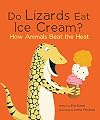
The cover alone is adorable, let alone the great story Etta Kaner presents in Do Lizard Eat Ice Cream?
This book shows us the many ways animals keep themselves cool to beat the summer heat! Like ostriches wearing flip flops and lizards eating ice cream! Unfortunately (or fortunately, I guess, depending on if you wanted comedy or non-fiction), you get the actual answers to how animals keep cool! So no ice cream for our lizard buddies, instead they dance!
I think this book is cute and smart - show more not only does it present some goofy ideas with funny pictures, but it gives us some teachable moments too. I can really appreciate a book that can mix the non-fiction goodness of learning and some silly pictures!
Overall, this book is a really great addition to your picture book shelf! It's fun, educational and colourful!
Four out of five stars!
Thank you to NetGalley and OwlKids for giving me an opportunity to read this book! show less
This book shows us the many ways animals keep themselves cool to beat the summer heat! Like ostriches wearing flip flops and lizards eating ice cream! Unfortunately (or fortunately, I guess, depending on if you wanted comedy or non-fiction), you get the actual answers to how animals keep cool! So no ice cream for our lizard buddies, instead they dance!
I think this book is cute and smart - show more not only does it present some goofy ideas with funny pictures, but it gives us some teachable moments too. I can really appreciate a book that can mix the non-fiction goodness of learning and some silly pictures!
Overall, this book is a really great addition to your picture book shelf! It's fun, educational and colourful!
Four out of five stars!
Thank you to NetGalley and OwlKids for giving me an opportunity to read this book! show less
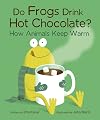
With a question-and-answer format, this picture book-style title teaches children about how various animals survive winter's cold.
In addition to the title question, the book asks "Do butterflies sunbathe?," "Do foxes wear earmuffs?," "Do monkeys take hot baths to keep warm?," and more. After each question, an exclamatory "yes" or "no" follows, along with more information about the specifics.
This format, along with the cartoon-ish illustrations, makes learning very engaging and interesting. show more My only quibble is I think the question and answer shouldn't be on the same page spread; instead, readers should be able to pause for a moment and think about what the answer might be before turning the page to reveal it. show less
In addition to the title question, the book asks "Do butterflies sunbathe?," "Do foxes wear earmuffs?," "Do monkeys take hot baths to keep warm?," and more. After each question, an exclamatory "yes" or "no" follows, along with more information about the specifics.
This format, along with the cartoon-ish illustrations, makes learning very engaging and interesting. show more My only quibble is I think the question and answer shouldn't be on the same page spread; instead, readers should be able to pause for a moment and think about what the answer might be before turning the page to reveal it. show less
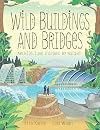
Wild Buildings and Bridges is an incredible informational book. The book discusses how the things we have observed in nature have influenced architects for years. For example, when architects designed the Health Sciences Education Building in Phoenix, they went to the desert for ideas. They learned how slot canyons and saguaro cactuses stayed cool in the desert and used this knowledge to design a building using similar principles. The book has several “meet the architect” sections show more throughout where children are exposed to famous architects. I love the section on nature’s patterns where the author zooms in on patterns we see in buildings and relates them to patterns in nature. The book includes illustrations, diagrams, and photographs to showcase the architecture. show less

Have you ever wondered what inspired some of the innovative architecture you see? As it turns out, the ideas for a number of buildings and bridges were influenced by a study of what works well in nature, as this fascinating book points out.
The author observes:
“Many architects look to nature to help them solve their building challenges. And they’ve found some incredible solutions, including a cactus-inspired way to cool a building without using a lot of energy and an earthquake-proof show more bridge design based on the roots of a special type of grass!”
As a website on biomimicry points out:
"The central idea is that nature has already fixed many problems society is facing. Animals, plants, and microorganisms are experienced engineers. They know what works, what’s appropriate, and most importantly, what lasts on Earth. The main belief of the biomimicry approach is that after 3,8 billion years of research and development, what did not work is now a fossil and what is around us is the secret to survival."
Some notable structures and the natural elements on which they are based are described in the book, including the famous “Gherkin” in London, the Rion-Antirion Bridge in Greece, and the Sky Gate Bridge in Osaka, Japan.
For each creation, the author reviews how and why it was made and what phenomenon in nature led the architect to think of it. There are even some activities readers can do to see for themselves why these natural solutions work so well. Readers will also discover how triangles and hexagons, so commonly found in nature (such as the hexagonal shape of honeycombs) add to the efficiency of buildings. For those who think math has no application in the real world in these days when computers can do all your sums, this book will prove that is not the case at all!
Speaking of math, readers will learn about fractals and how they are used in building, and of the interesting fact that Venice, Italy has so many palaces with fractal structures it is sometimes called "Fractal Venice.”
A few architects who rely heavily on nature for ideas are also highlighted, such as Frank Gehry, Frank Lloyd Wright, and Santiago Calatrava.
Those who have been to Milwaukee will be aware of Calatrava’s art museum there, which has a moveable sunscreen with wings that mimic the birds on the nearby lake. It has a wingspan of a Boeing 747 airplane, and can open or close in just three and half minutes, as it does every day at noon to the delight of all the visitors who make sure they are there at the right time.
Another activity for readers on a two-page spread shows a number of natural objects, like a lotus flower and a bird nest, and suggests studying them and creating ideas for structures based on their attributes. The next two-page spread reveals structures that have done exactly that, such as the Beijing National Stadium, also known as The Bird’s Nest.
Back matter includes a glossary and list of further sources.
Excellent illustrations by Carl Wiens show readers the “ins and outs" of all that is being discussed.
Evaluation: This book for readers 7 and up provides examples of and justification for biomimicry that will give readers a new way of looking at the world, both natural and created. The material is clearly written and entertaining, and provides an excellent STEM resource for lessons on math, technology and biology. show less
The author observes:
“Many architects look to nature to help them solve their building challenges. And they’ve found some incredible solutions, including a cactus-inspired way to cool a building without using a lot of energy and an earthquake-proof show more bridge design based on the roots of a special type of grass!”
As a website on biomimicry points out:
"The central idea is that nature has already fixed many problems society is facing. Animals, plants, and microorganisms are experienced engineers. They know what works, what’s appropriate, and most importantly, what lasts on Earth. The main belief of the biomimicry approach is that after 3,8 billion years of research and development, what did not work is now a fossil and what is around us is the secret to survival."
Some notable structures and the natural elements on which they are based are described in the book, including the famous “Gherkin” in London, the Rion-Antirion Bridge in Greece, and the Sky Gate Bridge in Osaka, Japan.
For each creation, the author reviews how and why it was made and what phenomenon in nature led the architect to think of it. There are even some activities readers can do to see for themselves why these natural solutions work so well. Readers will also discover how triangles and hexagons, so commonly found in nature (such as the hexagonal shape of honeycombs) add to the efficiency of buildings. For those who think math has no application in the real world in these days when computers can do all your sums, this book will prove that is not the case at all!
Speaking of math, readers will learn about fractals and how they are used in building, and of the interesting fact that Venice, Italy has so many palaces with fractal structures it is sometimes called "Fractal Venice.”
A few architects who rely heavily on nature for ideas are also highlighted, such as Frank Gehry, Frank Lloyd Wright, and Santiago Calatrava.
Those who have been to Milwaukee will be aware of Calatrava’s art museum there, which has a moveable sunscreen with wings that mimic the birds on the nearby lake. It has a wingspan of a Boeing 747 airplane, and can open or close in just three and half minutes, as it does every day at noon to the delight of all the visitors who make sure they are there at the right time.
Another activity for readers on a two-page spread shows a number of natural objects, like a lotus flower and a bird nest, and suggests studying them and creating ideas for structures based on their attributes. The next two-page spread reveals structures that have done exactly that, such as the Beijing National Stadium, also known as The Bird’s Nest.
Back matter includes a glossary and list of further sources.
Excellent illustrations by Carl Wiens show readers the “ins and outs" of all that is being discussed.
Evaluation: This book for readers 7 and up provides examples of and justification for biomimicry that will give readers a new way of looking at the world, both natural and created. The material is clearly written and entertaining, and provides an excellent STEM resource for lessons on math, technology and biology. show less
Awards


Earth-Friendly Buildings, Bridges and More: The Eco-Journal of Corry Lapont (Finalist – Diamond Willow – 2014)
Friend or Foe: The Whole Truth about Animals That People Love to Hate (Finalist – Diamond Willow – 2016)


You May Also Like


Associated Authors
Statistics
- Works
- 50
- Members
- 1,585
- Popularity
- #16,274
- Rating
- 3.9
- Reviews
- 36
- ISBNs
- 89
- Languages
- 4