

Pamela Hickman
Author of Animal Senses: How Animals See, Hear, Taste, Smell and Feel
About the Author
Pamela Hickman is the author of over 30 books about nature and wildlife for children
Image credit: kidscanpress.com
Series
Works by Pamela Hickman
Associated Works
Tagged
Common Knowledge
- Legal name
- Hickman, Pamela M.
- Gender
- female
- Education
- University of Waterloo ( BS|Hons|Environmental Studies and Biology)
- Occupations
- Education Co-ordinator for the Federation of Ontario Naturalists (for seven years)
- Awards and honors
- Lilla Sterling Memorial Award (1995)
Green Prize for Sustainable Literature Award (2007) - Nationality
- Canada
- Birthplace
- Mississauga, Ontario, Canada
- Places of residence
- Mississauga, Ontario, Canada
Canning, Nova Scotia, Canada - Associated Place (for map)
- Canada
Members
Reviews
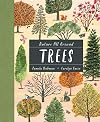
This is an attractive and informative children’s nonfiction book about trees, part of Kids Can Press’s new Nature All Around series. The text is probably best suited to older kids (aged 9-12) as there is an assumption that readers will have some familiarity with atmospheric gases (oxygen, carbon dioxide, ozone, etc.) as well as with the male and female parts of plants. Author Pamela Hickman (who holds a degree in environmental science and biology) begins by clarifying how trees are show more different from other plants: their height for one thing—trees grow at least 3 metres (10 feet) tall. She describes the key features of the two main types of trees: deciduous (broad-leafed) and evergreen (needle- or scale-leafed) and points to the unusual larch tree (we call it a “tamarack” in Canada) which is an interesting combination of both types. (Other “strange trees”, including 2000-year-old “General Sherman”—a giant, middle-aged sequoia in California—bigleaf maples, and toxic manchineel trees are also featured in the book.) Hickman moves on to name and describe the basic functions of each part of a tree, and she briefly discusses photosynthesis, respiration, reproduction, and a tree’s growing cycle.
I was interested and enlightened by the details Hickman provides about the flowering of deciduous trees in springtime. Most of us know that fruit trees blossom in spring, but we’re less aware that other deciduous trees also flower. Because spring in Ontario this year was cold, rainy, and slow to arrive, the budding and flowering of the maple in our front yard was quite protracted, and for the first time in my life I actually observed the tree’s green flowers, which open well before the maple’s leaves. The heavy spring rains made the flowers particularly lush and noticeable. (The fruits, of course, are the keys, which helicopter down later.) Hickman explains that large-leafed deciduous trees tend to put out their flowers before their leaves, as the big leaves can interfere with the dispersal of pollen by insects and the wind. Deciduous with smaller leaves may put out blossoms after leaves have unfurled, or flowers and leaves may open simultaneously.
The author describes deciduous trees’ work and the changes they undergo through the seasons, offering some of the clearest explanations I’ve read of how trunks and branches thicken in summer, why leaves change colour and fall in autumn, and how already formed buds are protected during the cold of winter. I now know why the oak in my backyard hangs on to so many of its leaves through the winter.
Nature All Around: Trees concludes with pages that provide a map of Canadian and American forest regions, a consideration of some of the many creatures whose lives are sustained by a single sugar maple, and a beginner tree-watching guide, which includes some new scientific vocabulary for describing the shapes of leaves: lanceolate, ovate, spatulate, and cordate. The reader is also given some guidance about how to help and protect trees, including instructions for planting one. A comprehensive glossary and an index are also provided..
All in all, I was delighted by Hickman’s clearly written text and Carolyn Gavin’s lovely illustrations, though it would have been nice to see more information on evergreens. The nice balance of information and art makes the book very appealing. More than that, though, the book wakes the reader up. Whether you’re an adult or a child, if you give this book a go, you’ll come away from it more observant, attentive, and alive to these beautiful living things we so often take for granted.
Rating: 4.5
Highly recommended.
Thanks to Kids Can Press for providing me with a free digital copy for review purposes. show less
I was interested and enlightened by the details Hickman provides about the flowering of deciduous trees in springtime. Most of us know that fruit trees blossom in spring, but we’re less aware that other deciduous trees also flower. Because spring in Ontario this year was cold, rainy, and slow to arrive, the budding and flowering of the maple in our front yard was quite protracted, and for the first time in my life I actually observed the tree’s green flowers, which open well before the maple’s leaves. The heavy spring rains made the flowers particularly lush and noticeable. (The fruits, of course, are the keys, which helicopter down later.) Hickman explains that large-leafed deciduous trees tend to put out their flowers before their leaves, as the big leaves can interfere with the dispersal of pollen by insects and the wind. Deciduous with smaller leaves may put out blossoms after leaves have unfurled, or flowers and leaves may open simultaneously.
The author describes deciduous trees’ work and the changes they undergo through the seasons, offering some of the clearest explanations I’ve read of how trunks and branches thicken in summer, why leaves change colour and fall in autumn, and how already formed buds are protected during the cold of winter. I now know why the oak in my backyard hangs on to so many of its leaves through the winter.
Nature All Around: Trees concludes with pages that provide a map of Canadian and American forest regions, a consideration of some of the many creatures whose lives are sustained by a single sugar maple, and a beginner tree-watching guide, which includes some new scientific vocabulary for describing the shapes of leaves: lanceolate, ovate, spatulate, and cordate. The reader is also given some guidance about how to help and protect trees, including instructions for planting one. A comprehensive glossary and an index are also provided..
All in all, I was delighted by Hickman’s clearly written text and Carolyn Gavin’s lovely illustrations, though it would have been nice to see more information on evergreens. The nice balance of information and art makes the book very appealing. More than that, though, the book wakes the reader up. Whether you’re an adult or a child, if you give this book a go, you’ll come away from it more observant, attentive, and alive to these beautiful living things we so often take for granted.
Rating: 4.5
Highly recommended.
Thanks to Kids Can Press for providing me with a free digital copy for review purposes. show less
This is a superb book. I would have pored over and over this as a child. As a lifelong city dweller with only occasional forays into remote nature areas I am not as skilled as I’d like at naming various kinds of trees and other plant life as I see them. So even at my age I thoroughly enjoyed this book. This is a textbook for kids about trees. I think it should be in every elementary school library/classroom and most homes where kids live.
Children curious about trees/botany and those who show more enjoy nature and/or the sciences will learn a lot and get a lot of pleasure from this book.
Its information is presented in a wonderfully organized and interesting way.
The illustrations are lovely and educational. I love them.
Contents: Trees Are All Around; Trees Up Close; Looking at Leaves; A Tree’s Life; Trees in Spring; Trees in Summer; Trees in Fall; Trees in Winter; Forest Regions; A Terrific Tree House; Beginner Tree-Watching; More Strange Trees; Endangered Trees; Plant a Tree; Glossary; Index
The focus is on trees that grow in the United States and Canada. Other areas of the world are not covered, but even in just the areas of the United States and Canada thee is great diversity. One of the illustrations is a detailed drawing of a map that shows this.
Highly recommended. show less
Children curious about trees/botany and those who show more enjoy nature and/or the sciences will learn a lot and get a lot of pleasure from this book.
Its information is presented in a wonderfully organized and interesting way.
The illustrations are lovely and educational. I love them.
Contents: Trees Are All Around; Trees Up Close; Looking at Leaves; A Tree’s Life; Trees in Spring; Trees in Summer; Trees in Fall; Trees in Winter; Forest Regions; A Terrific Tree House; Beginner Tree-Watching; More Strange Trees; Endangered Trees; Plant a Tree; Glossary; Index
The focus is on trees that grow in the United States and Canada. Other areas of the world are not covered, but even in just the areas of the United States and Canada thee is great diversity. One of the illustrations is a detailed drawing of a map that shows this.
Highly recommended. show less
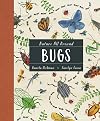
This is a nonfiction book about bugs. The best part of it is how passionate the author is about bugs. She describes a moth bigger than my hand as having a beautiful, hairy body. She is also always encouraging readers to go explore and look for bugs and insects and isopods and such, but to also be very careful not to harm or disturb them. This is good for research, but I can also see children just reading it cover-to-cover for fun.
Nature All Around: Trees by Pamela Hickman & Carolyn Gavin is part of the Nature All Around series that showcases different aspects of nature. As the title suggests, this book explores trees. From life cycles, to tree parts, and distinguishing between species, young nature explorers get the full scoop on a most vital part of nature. This book is informative without being technical, and gorgeous art graces the pages. There's even a map of the world detailing forest regions and the trees found show more there. I read this with my cubs and we all enjoyed it. Even I learned new things! I had no idea pinecones could open and close to protect seeds.
***Many thanks to Netgalley & Kids Can Press for providing an ecopy in exchange for a fair and honest review. show less
***Many thanks to Netgalley & Kids Can Press for providing an ecopy in exchange for a fair and honest review. show less
Awards


You May Also Like


Associated Authors
Statistics
- Works
- 53
- Also by
- 1
- Members
- 2,005
- Popularity
- #12,840
- Rating
- 4.1
- Reviews
- 18
- ISBNs
- 134
- Languages
- 3