
Leonardo Manco
Author of John Constantine, Hellblazer: All His Engines
Series
Works by Leonardo Manco
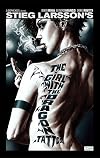
The Girl with the Dragon Tattoo Volume 1 [graphic novel] (2012) — Illustrator — 213 copies, 16 reviews
John Constantine, Hellblazer: Stations of the Cross (2006) — Illustrator (194-195, 200) — 156 copies, 3 reviews
Deathlok [1999] #2 — Illustrator — 2 copies
Deathlok [1999] #3 — Illustrator — 2 copies
Deathlok [1999] #5 — Illustrator — 1 copy
Associated Works
Tagged
Common Knowledge
There is no Common Knowledge data for this author yet. You can help.
Members
Reviews

A fairly weak entry in the Hellblazer series (along with the first part, [b:Hellblazer: Empathy is the Enemy|133019|Hellblazer Empathy is the Enemy|Denise Mina|http://photo.goodreads.com/books/1172015795s/133019.jpg|128141]) -- hey, I'm all in favor for multiverses where superheroes get to save their particular universe every few weeks, but Hellblazer has always been rooted in a very specific time (the grimy present, mostly) and place (a grimy London), and doesn't quite lend itself to the show more usual sorts of global apocalyptic meltdowns. There's a reason Garth Ennis' [b:Hellblazer: Dangerous Habits|133018|Hellblazer Dangerous Habits|Garth Ennis|http://photo.goodreads.com/books/1172015795s/133018.jpg|128140] is still one of the best story arcs in the series: Constantine as grubby mortal, not as man of steel.
This time around, it's Glasgow that's infected by an epidemic of over-empathy; the poor Glaswegians end up overdosing on the terrible memories of the people around them. Chas and Gemma are dutifully trotted out, as always, but they have nothing better to do than to guilt-trip our Johnny into saving the universe (again). Mina's Empathy Engine sounds an awful lot like Jamie Delano's [b:Hellblazer: The Fear Machine|2382804|Hellblazer The Fear Machine|Jamie Delano|http://ecx.images-amazon.com/images/I/51jpkNF9THL._SL75_.jpg|2389816], an arc that never worked in the first place, and the ending fizzles out, predictably, in an anticlimactic fashion. show less
This time around, it's Glasgow that's infected by an epidemic of over-empathy; the poor Glaswegians end up overdosing on the terrible memories of the people around them. Chas and Gemma are dutifully trotted out, as always, but they have nothing better to do than to guilt-trip our Johnny into saving the universe (again). Mina's Empathy Engine sounds an awful lot like Jamie Delano's [b:Hellblazer: The Fear Machine|2382804|Hellblazer The Fear Machine|Jamie Delano|http://ecx.images-amazon.com/images/I/51jpkNF9THL._SL75_.jpg|2389816], an arc that never worked in the first place, and the ending fizzles out, predictably, in an anticlimactic fashion. show less

A whole new storyarc begins in this collection, with a whole new demonic foe. The story begins with a rather odd group of monks off the coast of Scotland who discover that beside Heaven and Hell there is a third place in the afterlife. It is a place where there is no feeling - as an alternative to the joy of Heaven and the pain of Hell - and it looks like the ruling being (not sure what he is yet) has a plan to saturate the world with empathy to overwhelm the population with feeling so that show more they crave the non-feeling of his realm in the afterlife. It's an interesting situation for Constantine to be mixed up in, since he is known for caring too much and yet not at all... show less
Not nearly as engrossing as the books...
(Trigger warning for discussions of rape.)
Stieg Larsson's Millennium Trilogy gets the graphic novel treatment in this adaptation penned by Denise Mina. The first of two volumes (each book is to span two graphic novel collections) The Girl with the Dragon Tattoo, Book 1 covers the first book in the series. A murder mystery slash rape revenge story, The Girl with the Dragon Tattoo is not for the faint of heart: there's quite a bit of violence (including show more violence of a sexual nature) and not a little sex and nudity. (I prefer to think of the series as The Men Who Hate Women Trilogy; after all, the series' focus isn't independent journalism, but MISOGYNY. Consequently, rape - or the threat of it - is present throughout the series.)
Book 1 covers the events of The Girl with the Dragon Tattoo from the time Henrik Vanger summons disgraced journalist Mikael Blomkvist to his estate on Hedeby Island, to the sexual assault and brutal rape of Lisbeth Salander at the hands of her court-appointed guardian, Nils Bjurman. By the end of this collection, Blomkvist has begun to serve his jail term for slandering businessman Hans-Erik Wennerström (another hater of women) while Lisbeth exacts revenge (in an equally brutal fashion) on her rapist. I won't delve into the plot any further; I assume that, if you're reading this, you're already a fan of the books. (No? What are you waiting for?!)
The difficulty inherent in distilling such a long and complex story into just 312 pages of artwork is on display here, as Mina omits some scenes and combines others, sometimes changing the characters' personalities in fundamental ways. For example, Cecilia Vanger propositions Blomkvist within hours of meeting him. As a result, comic book Cecilia seems like a woman who sleeps around, rather than a lonely, would-be divorcee who eventually finds her way to Blomkvist's bed for some much-needed casual sex. Not that there's anything wrong with having lots of sex, but that's not who Cecilia is. And when she dumps Blomkvist at the beginning of his stint in jail, she seems much needier than Book Cecilia. Book Cecelia is much more reluctant to help him solve the mystery of Harriet's disappearance, thus making her more ambivalent about Blomkvist in general.
Likewise, after the rape, Lisbeth is shown interacting with other people, most notably girlfriend Mimi. Book Lisbeth mostly went into hiding, at least until her visible wounds healed and she was able to formulate an action plan. Fiercely protective, Book Lisbeth didn't want to be subjected to anyone's questioning or pity, hence the seclusion. Comic book Lisbeth, while she still refuses to confide in anyone, seems much too comfortable displaying her vulnerabilities to others.
(For what it's worth, I had the same problem with the American film adaptation: by story's end, Lisbeth was telling a naked, post-coital Blomkvist about "all the evil" when, in the books, the audience was left to guess about Lisbeth's childhood until well into The Girl Who Played with Fire. Simply put, Lisbeth would NEVER do that!)
While I understand the need to condense certain parts of the story, some of the changes are downright puzzling, since they don't move the plot along any more quickly. Case in point: Lisbeth's tattoo, which is changed from a small band around her ankle (reminiscent of the restraints Bjurman used during the rape) to the word "BYE" superimposed over a rose. The scene is actually a bit more drawn out in the graphic novel, as Lisbeth must spend several panels convincing the tattoo artist that this is not, in fact, a suicide note. Weird, right? Given the importance placed on tattoos throughout the trilogy, the alteration is not just confusing, but also doesn't ring true.
(Bjurman's minor tattoo change, on the other hand, is totally understandable: "I am a sadistic pig, a pervert, and a rapist" is shortened to the more manageable "I am a rapist.")
The story, while recognizable, also lacks much of the suspense and sense of discovery of the original. I've seen episodes of Investigation Discovery that are more gripping in this regard.
As far as the artwork goes, it's dark and moody, and well-suited for the book. My only complaint is that Lisbeth is much taller than she should be. In the books, she's described as quite short, seemingly frail and almost childlike in stature. This is important because Lisbeth's physical appearance impacts both her behavior (i.e., because she was constantly bullied as a child, she went on the offense in order to stave off attacks) and life circumstances (perhaps if she looked the part, the court might have rescinded Lisbeth's guardianship when she became an adult). Yet, in one panel, Lisbeth appears to be nearly as tall as both Dragan Armansky and Dirch Frode.
Overall, I'm a little disappointed by the adaptation, but not enough so that I'll stop reading it. I already own Book 2, so that's moot; but neither have I cancelled my pre-order of The Girl Who Played With Fire, Book 1. This is a series that deserves much thicker comic books - but hey, I'll take what I can get! Those who've never read the books might enjoy the comics a bit more, but that's only because you're not hip to the original materials. Seriously, check 'em out.
http://www.easyvegan.info/2013/12/22/the-girl-with-the-dragon-tattoo-book-1-by-d... show less
(Trigger warning for discussions of rape.)
Stieg Larsson's Millennium Trilogy gets the graphic novel treatment in this adaptation penned by Denise Mina. The first of two volumes (each book is to span two graphic novel collections) The Girl with the Dragon Tattoo, Book 1 covers the first book in the series. A murder mystery slash rape revenge story, The Girl with the Dragon Tattoo is not for the faint of heart: there's quite a bit of violence (including show more violence of a sexual nature) and not a little sex and nudity. (I prefer to think of the series as The Men Who Hate Women Trilogy; after all, the series' focus isn't independent journalism, but MISOGYNY. Consequently, rape - or the threat of it - is present throughout the series.)
Book 1 covers the events of The Girl with the Dragon Tattoo from the time Henrik Vanger summons disgraced journalist Mikael Blomkvist to his estate on Hedeby Island, to the sexual assault and brutal rape of Lisbeth Salander at the hands of her court-appointed guardian, Nils Bjurman. By the end of this collection, Blomkvist has begun to serve his jail term for slandering businessman Hans-Erik Wennerström (another hater of women) while Lisbeth exacts revenge (in an equally brutal fashion) on her rapist. I won't delve into the plot any further; I assume that, if you're reading this, you're already a fan of the books. (No? What are you waiting for?!)
The difficulty inherent in distilling such a long and complex story into just 312 pages of artwork is on display here, as Mina omits some scenes and combines others, sometimes changing the characters' personalities in fundamental ways. For example, Cecilia Vanger propositions Blomkvist within hours of meeting him. As a result, comic book Cecilia seems like a woman who sleeps around, rather than a lonely, would-be divorcee who eventually finds her way to Blomkvist's bed for some much-needed casual sex. Not that there's anything wrong with having lots of sex, but that's not who Cecilia is. And when she dumps Blomkvist at the beginning of his stint in jail, she seems much needier than Book Cecilia. Book Cecelia is much more reluctant to help him solve the mystery of Harriet's disappearance, thus making her more ambivalent about Blomkvist in general.
Likewise, after the rape, Lisbeth is shown interacting with other people, most notably girlfriend Mimi. Book Lisbeth mostly went into hiding, at least until her visible wounds healed and she was able to formulate an action plan. Fiercely protective, Book Lisbeth didn't want to be subjected to anyone's questioning or pity, hence the seclusion. Comic book Lisbeth, while she still refuses to confide in anyone, seems much too comfortable displaying her vulnerabilities to others.
(For what it's worth, I had the same problem with the American film adaptation: by story's end, Lisbeth was telling a naked, post-coital Blomkvist about "all the evil" when, in the books, the audience was left to guess about Lisbeth's childhood until well into The Girl Who Played with Fire. Simply put, Lisbeth would NEVER do that!)
While I understand the need to condense certain parts of the story, some of the changes are downright puzzling, since they don't move the plot along any more quickly. Case in point: Lisbeth's tattoo, which is changed from a small band around her ankle (reminiscent of the restraints Bjurman used during the rape) to the word "BYE" superimposed over a rose. The scene is actually a bit more drawn out in the graphic novel, as Lisbeth must spend several panels convincing the tattoo artist that this is not, in fact, a suicide note. Weird, right? Given the importance placed on tattoos throughout the trilogy, the alteration is not just confusing, but also doesn't ring true.
(Bjurman's minor tattoo change, on the other hand, is totally understandable: "I am a sadistic pig, a pervert, and a rapist" is shortened to the more manageable "I am a rapist.")
The story, while recognizable, also lacks much of the suspense and sense of discovery of the original. I've seen episodes of Investigation Discovery that are more gripping in this regard.
As far as the artwork goes, it's dark and moody, and well-suited for the book. My only complaint is that Lisbeth is much taller than she should be. In the books, she's described as quite short, seemingly frail and almost childlike in stature. This is important because Lisbeth's physical appearance impacts both her behavior (i.e., because she was constantly bullied as a child, she went on the offense in order to stave off attacks) and life circumstances (perhaps if she looked the part, the court might have rescinded Lisbeth's guardianship when she became an adult). Yet, in one panel, Lisbeth appears to be nearly as tall as both Dragan Armansky and Dirch Frode.
Overall, I'm a little disappointed by the adaptation, but not enough so that I'll stop reading it. I already own Book 2, so that's moot; but neither have I cancelled my pre-order of The Girl Who Played With Fire, Book 1. This is a series that deserves much thicker comic books - but hey, I'll take what I can get! Those who've never read the books might enjoy the comics a bit more, but that's only because you're not hip to the original materials. Seriously, check 'em out.
http://www.easyvegan.info/2013/12/22/the-girl-with-the-dragon-tattoo-book-1-by-d... show less

In this one off adventure, John Constantine goes up against one of the biggest demons besides Nergal - and who might actually be more powerful due to his franchise of Hell-on-Earth. It’s kind of an odd concept, since clearly life on Earth is already Hell for a lot of people, but having a physical manifestation kind of preps people for the expectation of the coming Hell. Or warns them away in some cases I assume. This kind of metaphysical theology is typical of Mike Carey, since he is show more clearly incapable of having a story that is as simple as “there’s a bunch of people falling into sleep-comas.” He manages to wrap this storyline up a little more simply than usual (thankfully), with the introduction of a god native to North America, who’s followers take precedence over Western ideologies that define Heaven and Hell. It’s surprising how easily this god allies himself with Constantine, but the gods of the New World are a lot more complex than their Christian counterparts; instead of being good or evil, they’re willing to do fight for their own people even if they are after souls in the long term as well, so there’s a much more complex dichotomy. show less
Lists
You May Also Like
Associated Authors
Statistics
- Works
- 21
- Also by
- 7
- Members
- 1,073
- Popularity
- #23,963
- Rating
- 3.7
- Reviews
- 33
- ISBNs
- 29
- Languages
- 10