

Agnes von Krusenstjerna (1894–1940)
Author of Kvinnogatan
About the Author
Image credit: Author Agnes von Krusenstjerna. This photo was published in print in 1935. By Unknown author - http://sok.riksarkivet.se/sbl/Presentation.aspx?id=11824, Public Domain, https://commons.wikimedia.org/w/index.php?curid=38602161
Series
Works by Agnes von Krusenstjerna
Frøknerne von Pahlen 9 copies
I livets vår : 4 copies
En ung dam far till Djurgårdsbrunn 2 copies
Händelser på vägen 2 copies
Sagoprinsessan (1921) 1 copy
Gitterporten 1 copy
Associated Works
Svenske fortællere fra August Strindberg til Harry Martinson — Author, some editions — 1 copy, 1 review
Tagged
Common Knowledge
- Canonical name
- Krusenstjerna, Agnes von
- Other names
- Krusenstjerna, Agnes Julie Frederica von
- Birthdate
- 1894-10-09
- Date of death
- 1940-03-10
- Gender
- female
- Occupations
- novelist
aristocrat - Short biography
- Agnes von Krusenstjerna was born into an aristocratic family. She was educated in Stockholm and made her publishing debut in 1917 with a girl's novel. She then aroused considerable controversy by writing several sexually explicit novels, such as the series Tonybockerna ("The Tony Books") from 1922 to 1936, and the seven-volume work Froknarna von Pahlen ("The Misses von Pahlen") from 1930 to 1935. Her books ignited public debate about freedom of speech, the right of female expression, and the right to sexual freedom. Some of her work was inspired by her own life and may be partially autobiographical, especially her last, unfinished cycle of books, Fattigadel ("Poor Nobility").
Agnes von Krusenstjerna was admitted to mental hospitals on several occasions. In 1940, she was diagnosed with a brain tumor and died during surgery. - Nationality
- Sweden
- Birthplace
- Växjö, Sweden
- Places of residence
- Gävle, Sweden
- Place of death
- Stockholm, Sweden
- Associated Place (for map)
- Sweden
Members
Reviews
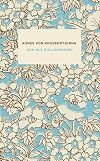
Petra von Pahlen, after having her heart broken by her way too ambitious fiancée (he never came home from his expedition to South America, the bastard), settles for a solitary life in the country, running an inherited farm. She surprises everyone, including herself, with taking in Angela, a young orphaned relative. The growing friendship between this woman and this girl forms the core of “Den blå rullgardinen”, first of seven books about the von Pahlen family. But there is a lot going show more on in just 160 pages here – a rich and interesting cast, flawed and human, that I will look forward to getting to know better. I really like Adéle, deliciously petty, bitter and vindictive. And Elsa, living humbly in the spoils of love lost. And I feel perhaps a little too close to Hans, who despite having a good life spends way too much time longing for something unspecific, something “more”.
These books, now modern classics in Sweden, caused controversy when they were published in the 30ies, with their questioning of marriage as an institution, and (for their time) rather candid descriptions of sex out of wedlock. For a modern reader, this story comes across unpredictable and human, if at times a tad too lyrical for my particular taste. I’m looking forward to spending more time with this fragile and flawed lot. show less
These books, now modern classics in Sweden, caused controversy when they were published in the 30ies, with their questioning of marriage as an institution, and (for their time) rather candid descriptions of sex out of wedlock. For a modern reader, this story comes across unpredictable and human, if at times a tad too lyrical for my particular taste. I’m looking forward to spending more time with this fragile and flawed lot. show less

Time is running out, or so they feel, the people around Eka estate. Petra falls in love again, almost by choice, to Tord, a married man. And Tord’s wife, deliciously nasty Adéle – the definitive wild card of this series – snares a poor preacher in parasitic love. And world-weary Hans, always full of longing for something more, gets word he is in fact dying of cancer, and makes the shaky decision not to tell his family.
This is a weaker book than the previous parts, perhaps because show more hasty passion as a theme isn’t necessarily my favorite one. But the boldness with which Krusenstjerna, in the 1930ies, tackles some rather sordid subject matter slices right through time, and her way with characters is sensitive and raw. I’ll absolutely go on reading this classic Swedish series. show less
This is a weaker book than the previous parts, perhaps because show more hasty passion as a theme isn’t necessarily my favorite one. But the boldness with which Krusenstjerna, in the 1930ies, tackles some rather sordid subject matter slices right through time, and her way with characters is sensitive and raw. I’ll absolutely go on reading this classic Swedish series. show less

The second book in the Fröknarna von Pahlen series, which I started last year. These books caused a big controversy when they were originally published in the 30ies, and it’s quite easy to see why. Krusenstjerna seems to almost deliberately step into all sensitive areas she can – abortion, lesbianism, sibling incest – and some things, like her description of masochism, are rare in mainstream fiction even today. The book runs a risk of becoming a sample menu of things shocking, but show more Krusenstjerna handles her subjects with understanding and subtleness.
There is a definite sense of following a hiking trail though, station to station. Dealing mostly with the young orphan Angela leaving the country estate to go to housekeeping school, this second book makes almost no use of the rich cast from the first installment. Instead we follow her through her first school year, from big life event to big life event, occasionally swapping perspectives to tell someone else’s life story. It’s more a string of anecdotes than a plot, and I’m more than a little worried this whole book will become a parenthesis in the series , all isolated events with little to do with the overall arcs. Still, the handling of the situations in themselves is mostly really good, with several strong moments that will linger. An unexpected bonus is that the housekeeping school is in Strängnäs, my new home town. The sense of place isn’t very strong, but pondering which streets and beaches the characters are walking added to my enjoyment. show less
There is a definite sense of following a hiking trail though, station to station. Dealing mostly with the young orphan Angela leaving the country estate to go to housekeeping school, this second book makes almost no use of the rich cast from the first installment. Instead we follow her through her first school year, from big life event to big life event, occasionally swapping perspectives to tell someone else’s life story. It’s more a string of anecdotes than a plot, and I’m more than a little worried this whole book will become a parenthesis in the series , all isolated events with little to do with the overall arcs. Still, the handling of the situations in themselves is mostly really good, with several strong moments that will linger. An unexpected bonus is that the housekeeping school is in Strängnäs, my new home town. The sense of place isn’t very strong, but pondering which streets and beaches the characters are walking added to my enjoyment. show less

ISBN: (inb.) ;
Publication:
Other authors: Agnes von Krusenstjerna Agnes von Krusenstjerna Agnes von Krusenstjerna
Dewey: 496 .394 21
Subjects: nf9512s / 9512s / skönlitteratur
General note: Original uppl. 1933, 1935 och 1935
Formatted contents: Innehåll: Älskande par ; Bröllop på Ekered ; Av samma blod
Publication:
Other authors: Agnes von Krusenstjerna Agnes von Krusenstjerna Agnes von Krusenstjerna
Dewey: 496 .394 21
Subjects: nf9512s / 9512s / skönlitteratur
General note: Original uppl. 1933, 1935 och 1935
Formatted contents: Innehåll: Älskande par ; Bröllop på Ekered ; Av samma blod
Awards

You May Also Like


Associated Authors
Statistics
- Works
- 40
- Also by
- 2
- Members
- 385
- Popularity
- #62,809
- Rating
- 3.6
- Reviews
- 9
- ISBNs
- 58
- Languages
- 1