
F. M. Bailey (1882–1967)
Author of Mission to Tashkent
About the Author
Works by F. M. Bailey
Associated Works
Tagged
Common Knowledge
- Legal name
- Bailey, Frederick Marshman
- Birthdate
- 1882-02-03
- Date of death
- 1967-04-17
- Gender
- male
- Education
- Royal Military Academy, Sandhurst
Wellington College
Edinburgh Academy - Occupations
- soldier
trade agent (British)
explorer
naturalist
political officer - Organizations
- Indian Army (lieutenant-colonel)
Indian Political Department, British Civil Service
17th Bengal Lancers
33rd Sikh Pioneers
Cheka - Awards and honors
- Royal Geographical Society (Gold medal)
Order of the Indian Empire (Companion)
MacGregor Medal (1914) - Nationality
- UK
- Birthplace
- Lahore, India
- Places of residence
- Stiffkey, Norfolk, England, UK
Lahore, Pakistan
Gyantse, Tibet
France
Gallipoli, Turkey
Shushtar, Persia (show all 11)
India
Kashgar, Turkestan, China
Tashkent, Uzbek SSR, USSR
Chumbi, Tibet
Gangtok, Sikkim, India - Place of death
- Norfolk, England, UK
Members
Reviews
A fascinating book that gives an insight into the lifestyle if a British Officer during the Pax Britannica, which isn't its purpose, far from it, but none-the-less is possibly the biggest takeaway from it. I cannot conceive how he managed to catch and then retain his collection of butterflies through everything, yet he did - and found it so natural that it barely gets a passing mention beyond where his collections ended up.
The insights Bailey was trying to give are no less fascinating, show more giving a glimpse into the double-faced amateurishness of the Bolsheviks and the absolute terror and horror they practiced, which may, of course, be linked. The chaos of the immediate post-war (WWI) period are also wonderfully evoked almost as a by-product of the multitudinous ex-PoWs of all sort of nationalities (sometimes nationals of nations that no longer exist).
For the modern reader the changes in national boundaries as well as the changes in lifestyle make it slightly difficult to follow at times, but none-the-less it's a hugely rewarding read, especially if one thinks a little beyond the page. show less
The insights Bailey was trying to give are no less fascinating, show more giving a glimpse into the double-faced amateurishness of the Bolsheviks and the absolute terror and horror they practiced, which may, of course, be linked. The chaos of the immediate post-war (WWI) period are also wonderfully evoked almost as a by-product of the multitudinous ex-PoWs of all sort of nationalities (sometimes nationals of nations that no longer exist).
For the modern reader the changes in national boundaries as well as the changes in lifestyle make it slightly difficult to follow at times, but none-the-less it's a hugely rewarding read, especially if one thinks a little beyond the page. show less

Mission to Tashkent is a great story. Colonel Bailey, who had already had an interesting and varied career, was sent, in March 1918 on a secret mission to Tashkent. He was to try to discover what was going on there following the Russian revolution and the Bolshevik seizure of power; the underlying purpose of the mission being to try to keep Turkestan in the war against Germany. The lack of knowledge is nicely summed up in this statement:
"The position of Russian Turkestan was obscure. We show more knew that Bolsheviks were in control but no one quite knew what a Bolshevik was or what were his aims and objectives. It seemed that it would be useful to go and see them, and find out what sort of people they were and to try to persuade them to continue the war against Germany, or at least not to help the Central Powers in the war against us."
The mission was not easy from the beginning with the Bolsheviks very suspicious of what Bailey was up to, plus all the political currents swirling around the civil war with the Whites, Moscow's attempts to assert control over Turkestan, the general opposition to communism and the Bolsheviks, the incredibly complex cultural and historical ties that bound varies groups together, and the constant shifting of alliances and allegiances such that it was very difficult to find and have confidence in people you could trust. After being in Tashkent for some months, Bailey learned that he was to be arrested, so with the help of a number of friends he disappeared into the hinterland, living in small villages and in the mountains in the guise of a Romanian and later an Albanian prisoner of war (there were many such people wandering about in Turkestan). He returned to Tashkent, still in hiding, and then in an amazing twist, through an accomplice who also wanted to escape from Soviet Turkestan, he became a member of the Soviet Army's counter-espionage service. He was sent to Bokhara, then still independent and fiercely opposed to the Bolsheviks, to report on the situation there; 16 previous Bolshevik spies sent to Bokhara had all failed to return! From Bokhara, again in company of his accomplice, he traveled across the desert to safety in Persia, arriving there in January, 1920.
The story is well, and modestly, told, replete with the colour of the towns and cities and countryside, and the amazingly complicated and dangerous lives that people had to live in the struggle to stay alive as the Bolsheviks slowly, but surely, extended their control over the country. The book is a cornucopia of characters, any one of which could provide the basis for an amazing adventure story. It is like a time capsule: a glimpse into a time and circumstances long gone, but the effects of which echo still today. show less
"The position of Russian Turkestan was obscure. We show more knew that Bolsheviks were in control but no one quite knew what a Bolshevik was or what were his aims and objectives. It seemed that it would be useful to go and see them, and find out what sort of people they were and to try to persuade them to continue the war against Germany, or at least not to help the Central Powers in the war against us."
The mission was not easy from the beginning with the Bolsheviks very suspicious of what Bailey was up to, plus all the political currents swirling around the civil war with the Whites, Moscow's attempts to assert control over Turkestan, the general opposition to communism and the Bolsheviks, the incredibly complex cultural and historical ties that bound varies groups together, and the constant shifting of alliances and allegiances such that it was very difficult to find and have confidence in people you could trust. After being in Tashkent for some months, Bailey learned that he was to be arrested, so with the help of a number of friends he disappeared into the hinterland, living in small villages and in the mountains in the guise of a Romanian and later an Albanian prisoner of war (there were many such people wandering about in Turkestan). He returned to Tashkent, still in hiding, and then in an amazing twist, through an accomplice who also wanted to escape from Soviet Turkestan, he became a member of the Soviet Army's counter-espionage service. He was sent to Bokhara, then still independent and fiercely opposed to the Bolsheviks, to report on the situation there; 16 previous Bolshevik spies sent to Bokhara had all failed to return! From Bokhara, again in company of his accomplice, he traveled across the desert to safety in Persia, arriving there in January, 1920.
The story is well, and modestly, told, replete with the colour of the towns and cities and countryside, and the amazingly complicated and dangerous lives that people had to live in the struggle to stay alive as the Bolsheviks slowly, but surely, extended their control over the country. The book is a cornucopia of characters, any one of which could provide the basis for an amazing adventure story. It is like a time capsule: a glimpse into a time and circumstances long gone, but the effects of which echo still today. show less
Don't you hate it when you infiltrate the enemies spy service and then they send you to find and arrest yourself?
Well that really happened to this British diplomat who spent a significant amount of time dodging the Bolsheviks in Teshkent who probably would have killed him if they caught him. It's great being reminded about the horrors of communism every once and again as it's easy to forget how terrible it must be to live under such social agony. For instance, he mentioned a couple who were show more arrested. He was sentenced to three years in prison for saying something negative about the state. The wife was sentenced to a year in jail for failing to denounce him when he said it. How would you like to live in a society like that?
This takes place from 1918 to 1921ish. show less
Well that really happened to this British diplomat who spent a significant amount of time dodging the Bolsheviks in Teshkent who probably would have killed him if they caught him. It's great being reminded about the horrors of communism every once and again as it's easy to forget how terrible it must be to live under such social agony. For instance, he mentioned a couple who were show more arrested. He was sentenced to three years in prison for saying something negative about the state. The wife was sentenced to a year in jail for failing to denounce him when he said it. How would you like to live in a society like that?
This takes place from 1918 to 1921ish. show less
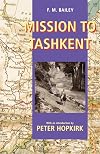
A stirring tale of boys own courage from a different age. Particular amusing when he is recruited by the Cheka to search for himself. Remarkable be died only forty years ago.
Lists
Folio Society (1)
You May Also Like


Associated Authors
Statistics
- Works
- 3
- Also by
- 1
- Members
- 349
- Popularity
- #68,499
- Rating
- 3.7
- Reviews
- 4
- ISBNs
- 5