

Karl E. Meyer (1928–2019)
Author of Tournament of Shadows: The Great Game and the Race for Empire in Central Asia
About the Author
Works by Karl E. Meyer
Tournament of Shadows: The Great Game and the Race for Empire in Central Asia (1999) — Author — 741 copies, 4 reviews
The China Collectors: America's Century-Long Hunt for Asian Art Treasures (2015) 65 copies, 3 reviews
The Maya Crisis. A Report on the Pillaging of Maya Sites...and a Proposal for a Rescue Fund (1972) 4 copies
Newsweek Condensed Books: Real Lace | Buried Alive | The Plundered Past| The Imperial Presidency (1974) 2 copies
World Law with a human face.(Books)(Book Review): An article from: World Policy Journal (2003) 1 copy
Senator fullbright 1 copy
Associated Works
MHQ: The Quarterly Journal of Military History — Summer 1999 (1999) — Author "To the Last Man" — 12 copies
MHQ: The Quarterly Journal of Military History — Autumn 2002 (2002) — Author "Standoff in Afghanistan" — 9 copies
Tagged
Common Knowledge
- Canonical name
- Meyer, Karl E.
- Legal name
- Meyer, Karl Ernest
- Birthdate
- 1928-05-22
- Date of death
- 2019-12-22
- Gender
- male
- Education
- University of Wisconsin (BA|1951)
Princeton University (MPA|1953|Ph.D|1956) - Occupations
- journalist
editorialist
author
editor
foreign correspondent - Organizations
- New York Times
New Statesman
Washington Post
World Policy Journal - Nationality
- USA
- Birthplace
- Madison, Wisconsin, USA
- Places of residence
- New York, New York, USA
- Place of death
- New York, New York, USA
- Associated Place (for map)
- New York, USA
Members
Reviews
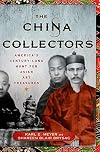
This was both fascinating and infuriating, not necessarily because of the the writing but the content. The China Collectors focuses on American collectors of Chinese art, which is sort of a niche thing to write about except it spans centuries from the early 1800s through today. There's echoes of the nineteenth century naturalists' attitude that art collectors seemed to share with the 'If we don't take this now to preserve, no one will see it in the future!' as an excuse to take priceless show more cave paintings and bas reliefs from walls of the Dunhuang caves. The modern new age trend towards the east as exotic mysticism is really only a historical rhyme of previous trends towards an Asian aesthetic. Bookending historical record are cases of how modern China is now a player in the art collecting world, full of both the newly rich looking to collect and a nationalist group looking to repatriate stolen goods.
I'm a tad bit torn because some of the looting is about as bad as the theft of the Elgin Marbles from Greece, but on the other hand having collections stateside means they're much more accessible to me in the future. show less
I'm a tad bit torn because some of the looting is about as bad as the theft of the Elgin Marbles from Greece, but on the other hand having collections stateside means they're much more accessible to me in the future. show less
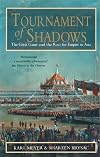
The exploreres, scientists, geographers, cartographers, adventurers and chancers who ranged across India's North West Frontier into Afhanistan and Tibet while the British and Russian Emprie faced off in ultimately futile advances and retreats and feints and skirmishes over the heart of Asia is an absoutely fascinating, if not always edifying, and all too often tragic tale. The men who ranged back and forth driven by fascination, obsession and ambition are not all admirable, but most of them show more had admirable qualities of endurance and courage and an affinity for the rugged terrain and its peoples, while the powers that be wrangled and manouvered and often as not worked hard to restrain them or just throw away their work. Also, there were Nazis. show less

Written in the early 1970s, so it is a little dated but nonetheless informative and well researched, The sub title is "the traffic iin art treasures ". Meyer was a journalist who specialized in archaeology. the style is that of careful but slightly sensationalizing investigative journalism . It is about questionable museums policies in purchase, acquisitions and disposals of works of art and antiquities , where reputations are made on discovery, identification research and pronouncements show more about works of art. Money underpins risk in thefts , illicit transactions and international trade.... With a good many middlemen taking cuts before the specific artifact is lauded and displayed to the innocent but culture hungry museum goer. The message is be wary of anyone offering you antique treasures in local bazaars, markets and street corners or rushing at you as you emerge from a pyramid. It had happened to all of us who travel in search of archaeological sites and a deeper knowledge of the human condition. This work raises questions about why people are acquisitive and why collect and why societies have museums . It also gives a sense of the huge transfer of material wealth from old world and ancient civilization to America and the new world. Good photographs, detailed case studies, comprehensive bibliographies and detailed appendices make this an authoritative text for its time and one that despite the time span is still worth owing, The author is on less sure ground when proposing solutions . Sadly illegal and undercounted trade in artifacts still happens though today I wonder how many antiquities have been recently manufactured to supply human greed? show less
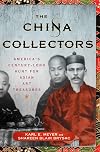
If you are fascinated by Chinese art, you must read this book. North American museums actually house an amazing array of Chinese art, due to numerous expeditions by sea captains, missionaries, and museum curators over the years. Reading of the art throughout the ages, I got a better grasp of Chinese history -- the Opium Wars, the Boxer Rebellion, the Cultural Revolution. The book is not easy to read but it is fascinating.
Lists
Awards


You May Also Like


Associated Authors
Statistics
- Works
- 17
- Also by
- 3
- Members
- 1,629
- Popularity
- #15,783
- Rating
- 4.1
- Reviews
- 11
- ISBNs
- 36
- Languages
- 2
- Favorited
- 1
