
Samuel Cohen
Author of 50 Essays: A Portable Anthology
About the Author
Works by Samuel Cohen
Associated Works
Tagged
Common Knowledge
Members
Reviews
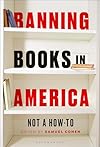
Banning Books in America, edited by Samuel Cohen, is a wide-ranging collection of essays that address the attempts, past and especially present, to ban or censor books in the US.
The strengths of this book is having all of the essays being accessible to any reader interested in the topic coupled with the range of writers. We have authors as well as those coming at the issue from historical and/or policy perspectives. Underlying most of it is the type of people and the form of government that show more would choose censorship or outright banning, or even just entertain them.
It is a collection of essays from different people, so not every one will be equally appealing to you. Even the one I have seen the most comments about needs to at least be taken seriously. I agree with many people that sensitivity readers are not now acting as de facto censors. Most are still freelancers and their recommendations are just that, recommendations. That doesn't mean the potential isn't there, in the future, for that position to be abused by a publisher or some other group to advance censorship. It is better to help create a solid space for them to operate rather than wait ignorantly and then try to fix it after it is too late. Is it now censorship? No. Is the potential there for abuse? Yes. Is it ignorant to be dismissive? Absolutely.
If you are concerned about the current movements to censor what people can read and want to better understand the topic from a variety of perspectives, and also aren't opposed to opening your mind to potentialities that exist, then this will be a wonderful read for you.
Reviewed from a copy made available by the publisher via NetGalley. show less
The strengths of this book is having all of the essays being accessible to any reader interested in the topic coupled with the range of writers. We have authors as well as those coming at the issue from historical and/or policy perspectives. Underlying most of it is the type of people and the form of government that show more would choose censorship or outright banning, or even just entertain them.
It is a collection of essays from different people, so not every one will be equally appealing to you. Even the one I have seen the most comments about needs to at least be taken seriously. I agree with many people that sensitivity readers are not now acting as de facto censors. Most are still freelancers and their recommendations are just that, recommendations. That doesn't mean the potential isn't there, in the future, for that position to be abused by a publisher or some other group to advance censorship. It is better to help create a solid space for them to operate rather than wait ignorantly and then try to fix it after it is too late. Is it now censorship? No. Is the potential there for abuse? Yes. Is it ignorant to be dismissive? Absolutely.
If you are concerned about the current movements to censor what people can read and want to better understand the topic from a variety of perspectives, and also aren't opposed to opening your mind to potentialities that exist, then this will be a wonderful read for you.
Reviewed from a copy made available by the publisher via NetGalley. show less
This is the first installment of a review. It is a personal response sparked by Jonathan Franzen's statement from this collection, his informal remarks from the DFW memorial service in New York on Oct. 23, 2008.
I felt very engaged with DFW after seeing "The End of the Tour" and went to B&N to see if I could find "Although of Course You End Up Becoming Yourself: A Road Trip With David Foster Wallace,” David Lipsky's memoir upon which the film was based. They didn't have it, but had this show more volume. I was attracted to this volume because, unusually, it has a mix of texts, including academic papers, part of Lipsky's interview with Wallace, and statements by various people from the memorial service, including Don DeLillo's.
I have not read a lot of Wallace's work, but have begun to form a heightened appreciation of his thinking, and his ways with words and ideas. It's clear that he had a deep humanistic concern for American culture in the largest sense. I felt a sense of loss at the end of the film, and wanted to know more about his life and death. I had been very dissatisfied with the reported fact that Wallace committed suicide after stopping taking his medication: how did he come to do this?
Of the statements from the DFW memorial in NY in this volume, only Franzen's mentions the highly charged fact that Wallace committed suicide. It is clear from his statement that Franzen was fully up to the task of providing an affirmative account of his friend's death. He had the intimacy with Wallace to know what was really going on with him in psychological terms, the affection for him to want to provide some kind explanation, and the depth of human understanding to have the insight needed to create a heartfelt narrative of Wallace's suicide as part of his desire for a healthier life. This sounds paradoxical, but Franzen makes it very clear in terms of Wallace's conflicts and aspirations.
Franzen's account is not lengthy and is elegantly straightforward. And Franzen is of course a gifted writer. I will not make any attempt to further describe Franzen's account, which would only muddy the troubled waters that Franzen has succeeded in rendering with love and bracing clarity. show less
I felt very engaged with DFW after seeing "The End of the Tour" and went to B&N to see if I could find "Although of Course You End Up Becoming Yourself: A Road Trip With David Foster Wallace,” David Lipsky's memoir upon which the film was based. They didn't have it, but had this show more volume. I was attracted to this volume because, unusually, it has a mix of texts, including academic papers, part of Lipsky's interview with Wallace, and statements by various people from the memorial service, including Don DeLillo's.
I have not read a lot of Wallace's work, but have begun to form a heightened appreciation of his thinking, and his ways with words and ideas. It's clear that he had a deep humanistic concern for American culture in the largest sense. I felt a sense of loss at the end of the film, and wanted to know more about his life and death. I had been very dissatisfied with the reported fact that Wallace committed suicide after stopping taking his medication: how did he come to do this?
Of the statements from the DFW memorial in NY in this volume, only Franzen's mentions the highly charged fact that Wallace committed suicide. It is clear from his statement that Franzen was fully up to the task of providing an affirmative account of his friend's death. He had the intimacy with Wallace to know what was really going on with him in psychological terms, the affection for him to want to provide some kind explanation, and the depth of human understanding to have the insight needed to create a heartfelt narrative of Wallace's suicide as part of his desire for a healthier life. This sounds paradoxical, but Franzen makes it very clear in terms of Wallace's conflicts and aspirations.
Franzen's account is not lengthy and is elegantly straightforward. And Franzen is of course a gifted writer. I will not make any attempt to further describe Franzen's account, which would only muddy the troubled waters that Franzen has succeeded in rendering with love and bracing clarity. show less
I had to use this book in my AP English Class and I absolutely loved it. It had a wide range of essays on a variety of topics ranging from race relations to fatherhood by a variety of authors both classic and modern. It exemplifies good writing and even if you dont like one particular essay there is always another one that you will like. I highly recomend this book, even as a casual read.
You May Also Like


Associated Authors
Statistics
- Works
- 13
- Also by
- 1
- Members
- 630
- Popularity
- #39,983
- Rating
- 4.1
- Reviews
- 6
- ISBNs
- 24