
Bill Mauldin (1921–2003)
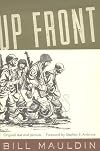
Author of Up Front
About the Author
Image credit: World Telegram photo by Fred Palumbo, 1945 (Library of Congress Prints and Photographs Division, LC-USZ62-127496)
Works by Bill Mauldin
Giving Predestination a Decent Burial: New and compelling reasons to put the ghost of John Calvin to rest forever (2020) 5 copies
Drawing Fire 2 copies
[Airplanes] 1 copy
Sort of a Saga 1 copy
Sicily Sketchbook 1 copy
Associated Works
Reporting World War II Part Two : American Journalism 1944-1946 (1995) — Contributor — 435 copies, 3 reviews
Male Call: The Complete War Time Strip 1942-1946 (2011) — Foreword, some editions — 74 copies, 5 reviews
The Sunday Best of B.C. — Foreword, some editions — 7 copies
Behind the Wheel: Stories of Cars on Road and Track — Contributor — 1 copy
Tagged
Common Knowledge
- Canonical name
- Mauldin, Bill
- Legal name
- Mauldin, William Henry
- Birthdate
- 1921-10-29
- Date of death
- 2003-01-22
- Gender
- male
- Education
- Chicago Academy of Fine Arts
- Occupations
- cartoonist
illustrator
freelance writer - Organizations
- United States Army
Stars and Stripes
St. Louis Post-Dispatch
Chicago Sun-Times - Awards and honors
- Purple Heart (1943)
Legion of Merit (1945)
Pulitzer Prize (Editorial Cartooning, 1945, 1959)
Reuben Award (1961)
Walter Cronkite Award for Excellence in Journalism (1985)
St Louis Walk of Fame (1991) (show all 7)
Oklahoma Cartoonists Hall of Fame (2005) - Short biography
- Bill Mauldin, who served in World War II, became famous for his editorial cartoons of American soldiers like himself. His most famous characters were Willie and Joe, two weary and stoical infantrymen.
- Cause of death
- Alzheimer's disease
- Nationality
- USA
- Birthplace
- Mountain Park, New Mexico, USA
- Places of residence
- Mountain Park, New Mexico, USA
Chicago, Illinois, USA
Phoenix, Arizona, USA - Place of death
- Newport Beach, California, USA
- Burial location
- Arlington National Cemetery, Arlington, Virginia, USA
- Associated Place (for map)
- USA
Members
Reviews

Thoughts from an opinionated veteran upon his return after WWII along with a selection of his cartoons. They progress from essays dealing with the economic difficulties of returning soldiers, to criticism of the American Legion as serving only the top board and not listening to their members, to our treatment of immigrants, to the House Unamerican Activites Commission, to our relationship with Russia. Some essays are, unfortunately, still relevant. We as a nation haven't learned yet how to show more value anyone who is different from us or how to implement true democracy. Still, as a whole, this book mainly has value for readers interested in the history of our American society. That isn't me, so I'm giving it away. show less

FIRST READING 2014
"I feel like a fugitive from th' law of averages" (Willy to Joe, hunkered down in rubble with tracers mapping a spiderweb above their heads.) [39]
Mauldin's essay a plaintive defense of the dogface infantryman, seemingly prompted by his observation of their treatment at home, and perhaps some criticism directed at his own work. Mauldin's focus in his comics is on infantry over other soldiers; he was an infantry sergeant, but apart from that chose to describe the wartime life show more of the everyday soldier.
Mauldin notes he's a cartoonist not a writer, and the essay is by way of background for the comics. It serves that purpose quite well, skillfully introducing individual comics on nearby pages without stopping to say so, but Mauldin's a better writer than this implies. He wrote for the Stars and Stripes for years during the war, and who knows what other roles besides.
The result is a war mosaic built from micro-history tiles, a view of WWII from the perspective of soldiers: not strategy, campaigns, or even specific battles, but life for soldiers participating in same. Mud, a guarded optimism, a persistence if not dedication, the closest thing to family until they get back home. Wonder if this perspective influenced others celebrated for it: John Keegan for The Face of Battle, or indirectly, Howard Zinn. On the other hand, none of these writers invented the idea of telling history from the standpoint of the masses rather than the rulers.
SECOND READING 2024
Having read The Thin Red Line in the interval between my two readings of Up Front, Mauldin's implicitly agreeable outlook on U.S. military leadership during WWII (whether the officer class or civilian) is suddenly very evident. James Jones's view of military ineptitude is far more caustic and deep-lying. Part of this, I realise, is Mauldin's intent to capture the experience of the doggies he portrays, and portray them such his readers look on sympathetically, rather than critique the military per se. The contrast is striking, nevertheless. show less
"I feel like a fugitive from th' law of averages" (Willy to Joe, hunkered down in rubble with tracers mapping a spiderweb above their heads.) [39]
Mauldin's essay a plaintive defense of the dogface infantryman, seemingly prompted by his observation of their treatment at home, and perhaps some criticism directed at his own work. Mauldin's focus in his comics is on infantry over other soldiers; he was an infantry sergeant, but apart from that chose to describe the wartime life show more of the everyday soldier.
Mauldin notes he's a cartoonist not a writer, and the essay is by way of background for the comics. It serves that purpose quite well, skillfully introducing individual comics on nearby pages without stopping to say so, but Mauldin's a better writer than this implies. He wrote for the Stars and Stripes for years during the war, and who knows what other roles besides.
The result is a war mosaic built from micro-history tiles, a view of WWII from the perspective of soldiers: not strategy, campaigns, or even specific battles, but life for soldiers participating in same. Mud, a guarded optimism, a persistence if not dedication, the closest thing to family until they get back home. Wonder if this perspective influenced others celebrated for it: John Keegan for The Face of Battle, or indirectly, Howard Zinn. On the other hand, none of these writers invented the idea of telling history from the standpoint of the masses rather than the rulers.
SECOND READING 2024
Having read The Thin Red Line in the interval between my two readings of Up Front, Mauldin's implicitly agreeable outlook on U.S. military leadership during WWII (whether the officer class or civilian) is suddenly very evident. James Jones's view of military ineptitude is far more caustic and deep-lying. Part of this, I realise, is Mauldin's intent to capture the experience of the doggies he portrays, and portray them such his readers look on sympathetically, rather than critique the military per se. The contrast is striking, nevertheless. show less
The essays and cartoons in this book are an American treasure.
I've read a lot of books about war, but this is the truest one. Bill Mauldin was a soldier in WW2 who saw action in North Africa, Italy, and France. An infantryman with a talent for drawing, he was selected for the 45th Division paper and then Stars & Stripes, where his "Willie and Joe" cartoons became instant classics, depicting the truth of life on the front lines, where ordinary men struggled through mud, bad food, long show more marches, and the all too present threat of random death. There heroism is in their endurance, their ability to deal with the absurdity of war while remaining human, and never letting their buddies down. show less
I've read a lot of books about war, but this is the truest one. Bill Mauldin was a soldier in WW2 who saw action in North Africa, Italy, and France. An infantryman with a talent for drawing, he was selected for the 45th Division paper and then Stars & Stripes, where his "Willie and Joe" cartoons became instant classics, depicting the truth of life on the front lines, where ordinary men struggled through mud, bad food, long show more marches, and the all too present threat of random death. There heroism is in their endurance, their ability to deal with the absurdity of war while remaining human, and never letting their buddies down. show less

I really enjoyed this one and the text helped clarify a lot of the cartoons which I didn’t get at first pass. I got this book via the death of a family friend from her hoarded family home. It still reeks of mildew even after cleaning and deodorizing and many of the pages are scribbled on with pencil and crayon by an anonymous toddler. It’s in rough shape, but this is going to sit on the shelves of my library as long as I’m around. The cartoons were well-rendered imho and the text was show more clear, concise, and very informative. Here’s a particularly powerful passage early on in the book:
Many celebrities and self-appointed authorities have returned from quick tours of war zones […] and have put out their personal theories to photographers and reporters. Some say the American soldier is the same clean-cut young man who left his home; others say morale is sky-high at the front because everybody’s face is shining for a great cause.
They are wrong. The combat man isn’t the same clean-cut lad because you don’t fight a kraut by Marquis of Queensbury rules. You shoot him in the back. You blow him apart with mines, you kill or maim him the quickest and most effective way you can with the least danger to yourself. He does the same to you. He tricks you and cheats you, and if you don’t beat him at his own game you don’t live to appreciate your own nobleness.
But you don’t become a killer. No normal man who has smelled and associated with death ever wants to see any more of it. In fact, only men who are even going to want bloody noses in a fist fight after this war will be those who want people to think they were tough combat men, when they weren’t. The surest way to become a pacifist is to join the infantry. [pgs.12-14, emphasis mine]
I really don’t have much to say about this one, other than more people need to take some time and read this one. I have another six quotes I noted and would have included them here if I had more to say but instead, I’ll leave you with this one:
I’ve lost friends who were ordinary people and just wanted to live and raise a family and pay their taxes and cuss the politicians. I’ve also lost friends who had brilliant futures. Gregor Duncan, one of the finest and most promising artists I’ve ever known, was killed at Anzio while making sketches for Stars and Stripes. It’s a pretty tough kick in the stomach when you realize what people like Greg could have done if they had lived. It’s one of the costs of war we don’t often remember. [pg.57] show less
Many celebrities and self-appointed authorities have returned from quick tours of war zones […] and have put out their personal theories to photographers and reporters. Some say the American soldier is the same clean-cut young man who left his home; others say morale is sky-high at the front because everybody’s face is shining for a great cause.
They are wrong. The combat man isn’t the same clean-cut lad because you don’t fight a kraut by Marquis of Queensbury rules. You shoot him in the back. You blow him apart with mines, you kill or maim him the quickest and most effective way you can with the least danger to yourself. He does the same to you. He tricks you and cheats you, and if you don’t beat him at his own game you don’t live to appreciate your own nobleness.
But you don’t become a killer. No normal man who has smelled and associated with death ever wants to see any more of it. In fact, only men who are even going to want bloody noses in a fist fight after this war will be those who want people to think they were tough combat men, when they weren’t. The surest way to become a pacifist is to join the infantry. [pgs.12-14, emphasis mine]
I really don’t have much to say about this one, other than more people need to take some time and read this one. I have another six quotes I noted and would have included them here if I had more to say but instead, I’ll leave you with this one:
I’ve lost friends who were ordinary people and just wanted to live and raise a family and pay their taxes and cuss the politicians. I’ve also lost friends who had brilliant futures. Gregor Duncan, one of the finest and most promising artists I’ve ever known, was killed at Anzio while making sketches for Stars and Stripes. It’s a pretty tough kick in the stomach when you realize what people like Greg could have done if they had lived. It’s one of the costs of war we don’t often remember. [pg.57] show less
Lists
Awards


You May Also Like


Associated Authors
Statistics
- Works
- 26
- Also by
- 13
- Members
- 2,266
- Popularity
- #11,329
- Rating
- 4.2
- Reviews
- 55
- ISBNs
- 30
- Languages
- 1
- Favorited
- 5


