
Shane Jones
Author of Light Boxes
About the Author
Image credit: photo by Erin Pihlaja
Works by Shane Jones
The Little Book of Breaking 80 - How to Shoot in the 70s (Almost) Every Time You Play Golf (2013) 6 copies
Confessions of a Japanese Linguist - How to Master Japanese: (The Journey to Fluent, Functional, Marketable Japanese) (2014) 5 copies, 1 review
The People I Know 4 copies
The Nightmare Filled You With Scary 3 copies
Maybe Tomorrow 2 copies
Lead 1 copy
Raging Boars II; VHS 1 copy
Jones Shane 1 copy
Associated Works
Fairy Tale Review: The Grey Issue — Contributor — 2 copies
Tagged
Common Knowledge
- Birthdate
- 1980-02-22
- Gender
- male
- Education
- State University of New York, Buffalo (BA, English)
- Occupations
- writer
poet - Agent
- Dunow, Carlson, and Lerner
- Birthplace
- Albany, New York, USA
- Associated Place (for map)
- New York, USA
Members
Reviews
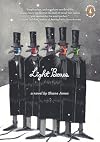
A small town has been experiencing February with all it's snow and darkness, for two years. The townspeople are fed up enough to fight back, which makes February even more angry, and he begins stealing the town's children. When Thaddeus' young daughter is taken, he and his wife come apart, and all the schemes to stop February fail. Through his grief, Thaddeus makes a plan to confront and end February at any cost.
Highly surreal, this story sometimes has to be pieces together. Normally that show more would annoy me, but not here, as I was so taken with the original style and strange story. show less
Highly surreal, this story sometimes has to be pieces together. Normally that show more would annoy me, but not here, as I was so taken with the original style and strange story. show less

I'm not the first reviewer to admit I loved Jones' Light Boxes (a must read for anyone who gets to experience a seemingly never-ending cold, grey, snow- and ice-filled winter year after year after year...) and I eagerly embraced Daniel Fights A Hurricane.
Like its predecessor, Daniel also employs a quirky, boundary-pushing style and fantastical settings and situations. However, in this book, due to the fact that Daniel is suffering from delusions and some sort of mental health break with show more reality, the narrative style really flies wild. Imagine what reading a literal transcription of a dream or hallucination would be like - that's a close approximation to what you'll find here. If you're paying attention, and not being a lazy reader, you can follow it and understand (and maybe even see some of the connections to Daniel's "real" lucid life) but it certainly gets a bit exhausting.
With Lightboxes, I didn't want to put the book down. With Daniel, I was glad to parcel out a few chapters at a time. Which, in and of itself, makes a point: dealing with mental illness is hard. Really hard. It's hard when you're in the middle of it and it's hard when you're on the outside trying to understand what's going on in a person's inner landscape. If there's anything a reader can take away from this story, that's it for certain. show less
Like its predecessor, Daniel also employs a quirky, boundary-pushing style and fantastical settings and situations. However, in this book, due to the fact that Daniel is suffering from delusions and some sort of mental health break with show more reality, the narrative style really flies wild. Imagine what reading a literal transcription of a dream or hallucination would be like - that's a close approximation to what you'll find here. If you're paying attention, and not being a lazy reader, you can follow it and understand (and maybe even see some of the connections to Daniel's "real" lucid life) but it certainly gets a bit exhausting.
With Lightboxes, I didn't want to put the book down. With Daniel, I was glad to parcel out a few chapters at a time. Which, in and of itself, makes a point: dealing with mental illness is hard. Really hard. It's hard when you're in the middle of it and it's hard when you're on the outside trying to understand what's going on in a person's inner landscape. If there's anything a reader can take away from this story, that's it for certain. show less

From the epigraph:
The most serious charge which can be brought against New England is not Puritanism but February. -- Joseph Wood Krutch
Light Boxes opens as hot-air balloonist Thaddeus Lowe, his wife Selah and young daughter Bianca, and their whole close-knit town are enjoying the last evenings of pleasant weather before February arrives. But then February does descend, and worse than ever -- ordering the destruction of all forms and creatures of flight and refusing to vacate and make way show more for spring -- eventually prompting the town to organize an underground resistance.
I loved it in the beginning -- intriguing, with poetic imagery and emotion, for example from Thaddeus:
“I closed my eyes. I imagined Selah and Bianca in a canoe so narrow they had to lie down with their arms folded on their stomachs, their heads at opposite ends, their toes touching. I dreamed two miniature suns. I set one each upon their foreheads. I dreamed a waterfall and a calm lake of my arms below to catch them.”
I also like its experimental structure (multiple narrators; odd fonts and formatting; chapters comprised of single sentences, partial pages, and lists), which is sometimes used to marvelous effect (and sometimes grows tiresome). I liked the story less as hundreds of days of February pass and things turn from mysterious to dystopian and war-ish -- but that’s what really happens in February, yes? And that's what fans of dystopian fiction may like the most.
(Review based on an advance reading copy provided by the publisher.) show less
The most serious charge which can be brought against New England is not Puritanism but February. -- Joseph Wood Krutch
Light Boxes opens as hot-air balloonist Thaddeus Lowe, his wife Selah and young daughter Bianca, and their whole close-knit town are enjoying the last evenings of pleasant weather before February arrives. But then February does descend, and worse than ever -- ordering the destruction of all forms and creatures of flight and refusing to vacate and make way show more for spring -- eventually prompting the town to organize an underground resistance.
I loved it in the beginning -- intriguing, with poetic imagery and emotion, for example from Thaddeus:
“I closed my eyes. I imagined Selah and Bianca in a canoe so narrow they had to lie down with their arms folded on their stomachs, their heads at opposite ends, their toes touching. I dreamed two miniature suns. I set one each upon their foreheads. I dreamed a waterfall and a calm lake of my arms below to catch them.”
I also like its experimental structure (multiple narrators; odd fonts and formatting; chapters comprised of single sentences, partial pages, and lists), which is sometimes used to marvelous effect (and sometimes grows tiresome). I liked the story less as hundreds of days of February pass and things turn from mysterious to dystopian and war-ish -- but that’s what really happens in February, yes? And that's what fans of dystopian fiction may like the most.
(Review based on an advance reading copy provided by the publisher.) show less
Confessions of a Japanese Linguist - How to Master Japanese: (The Journey to Fluent, Functional, Marketable Japanese) by Shane Jones
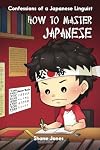
An engaging, fast-paced, and practical account of the author's own experiences of learning Japanese. Has numerous hints and suggestions for more effective learning, such as watching Japanese J-drama serials - and getting Japanese girlfriends (the author is a male)!
Lists
You May Also Like


Associated Authors
Statistics
- Works
- 19
- Also by
- 4
- Members
- 658
- Popularity
- #38,342
- Rating
- 3.5
- Reviews
- 38
- ISBNs
- 29
- Languages
- 5