
Tenzing Norgay (1914–1986)
Author of Man of Everest
About the Author
Works by Tenzing Norgay
Conquest of Everest 1 copy
Primi sull’Everest 1 copy
Associated Works
Touching My Father's Soul: A Sherpa's Journey to the Top of Everest (2001) — Associated Name — 384 copies, 1 review
Tagged
Common Knowledge
- Canonical name
- Norgay, Tenzing
- Other names
- Wangdi, Namgyal
NORGAY, Tenzing - Birthdate
- 1914-05-29
- Date of death
- 1986-05-09
- Gender
- male
- Occupations
- mountaineer
- Organizations
- Himalayan Mountaineering Institute
- Awards and honors
- George Medal (1953)
Queen Elizabeth II Coronation Medal
Order of the Star of Nepal
Padma Bhushan
Tiger Medal - Relationships
- Norgay, Jamling Tenzing (son)
Hillary, Sir Edmund (friend) - Cause of death
- cerebral hemorrhage
- Nationality
- Nepal
- Birthplace
- Khumbu, Nepal
- Places of residence
- Darjeeling, India
- Place of death
- Darjeeling, West Bengal, India
- Burial location
- Himalayan Mountaineering Institute, Darjeeling, India
- Associated Place (for map)
- India
Members
Reviews
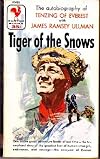
An excellent, if somewhat old-fashioned, read. Tenzing Norgay -- better known, perhaps, as Tenzing of Everest -- was illiterate, so it's difficult to know how much of this story is his and how much of it can be attributed to this book's co-author. While other reviewers have complained, what "Tiger of the Snows" isn't, really, is a book about climbing. There are a few technical terms here, but this is clearly a book for a general audience. That didn't bother me in the least. As a person who's show more walked with a crutch since my mid-thirties, it's all I can do to climb a flight of stairs. To be fair, "Tiger of the Snows" does describe a large number of instances of high drama that took place at high altitude, and the authors have a real talent for describing how the human body can be pushed to its very limits by the enormous physical and mental strain that extreme forms of mountaineering. But, as it usually is with me, it was the cultural information that was included as background in this one that interested me most. And Tenzing has a lot of interesting stuff to talk about, from his impoverished childhood in a tiny Sherpa village to his days tending yaks in the shadow of Everest to the adventures had and relationships he built on the various expeditions that he participated in before he became ultra-famous for being one of the first two climbers to successfully summit Mount Everest. By the time he climbed the world's highest mountain. He was both an ace climber and an experienced sirdar -- or expedition manager -- and his impressions of his employers and his stories of how he kept the peace between Nepali porters, sherpas, and Western climbers are more captivating than you'd expect. We even learn about Tibetan tea -- which is brewed with salt and rancid yak butter -- and whether Tenzing thinks the Yeti exists. He is, for the record, a believer. This book takes its time getting to, and then up, Everest, but I didn't mind at all.
But we hear mostly about Tenzing himself, and this book makes a good case that he is, in some sense, an interesting and admirable person. He disdains politics throughout "Tiger of the Snows" and speaks with reverence of the "mountain way. His love for both the mountains he climbed and the people he climbed them with are obviously genuine. "Tiger of the Snows" is also interesting because both Tenzing's country of origin and his country of residence went from being British colonies to independent states during his lifetime, but he consistently downplays concepts of nationality or parochial exclusivity. It occurred to me that these sections of the book may reflect some brotherhood-of-man ideas that were popular during the late-modern period, but Tenzing seems to consider himself a part of a larger alpine brotherhood made up only of those who've risked their lives together on seriously difficult mountains. He seems to have deep reverence for the divine, though he isn't exactly an orthodox Bhuddist and seems familiar enough with Hindu ideas. Over the course of this book, he speaks clearly and forthrightly about how he put himself in danger for the good of his climbing companions and for the sheer glory of mountaineering. I've never understood why people feel the need to climb mountains, and, at one point in "Tiger of the Snows," Tenzig admits that he and other sherpas are essentially glorified baggage handlers. Still, his love for the for mountains in which he grew up and his enthusiasm for mountain climbing is impossible to doubt. He seems like the kind of man who would have wanted to climb Everest -- or any other challenging peak -- for the sheer joy of it. I got to thinking that his adventures in the high Himalayas had gotten him close to some sort of universal human experience.
I don't know if they write books like "Tiger of the Snows" anymore. It often seems precisely like the sort of book that motivated young people who read it to think about how big the world was and how much of it they might get to see. In its closing pages, Tenzing reflects on how little of the world he would have seen had he stayed in the village in Nepal where he had been born. Just a few paragraphs previously, he tells us how proud he was that his English was fluent enough to have a brief conversation with the newly coronated Queen Elizabeth II. He also married and had at least two daughters. Now that's a life well-lived.
In closing, I'd like to say that I wouldn't have been shocked if my own father might have once been part o the target market for this book. He grew up in a Massachusetts mill town, joined the Peace Corps to avoid the draft during the Vietnam War, and ended up living in the high Andes for a couple of years. He's lived in Latin America for the last fifty years or so and seen all sorts of things. My uncle once told me that this never really surprised him: as a kid, my father had loved travel features and adventure literature. Maybe my dad's got a bit of Tenzig's spirit in him. Oh, and according to LibraryThing's legacy libraries project, Ernest Hemingway bought this one. Now, that doesn't surprise me at all. show less
But we hear mostly about Tenzing himself, and this book makes a good case that he is, in some sense, an interesting and admirable person. He disdains politics throughout "Tiger of the Snows" and speaks with reverence of the "mountain way. His love for both the mountains he climbed and the people he climbed them with are obviously genuine. "Tiger of the Snows" is also interesting because both Tenzing's country of origin and his country of residence went from being British colonies to independent states during his lifetime, but he consistently downplays concepts of nationality or parochial exclusivity. It occurred to me that these sections of the book may reflect some brotherhood-of-man ideas that were popular during the late-modern period, but Tenzing seems to consider himself a part of a larger alpine brotherhood made up only of those who've risked their lives together on seriously difficult mountains. He seems to have deep reverence for the divine, though he isn't exactly an orthodox Bhuddist and seems familiar enough with Hindu ideas. Over the course of this book, he speaks clearly and forthrightly about how he put himself in danger for the good of his climbing companions and for the sheer glory of mountaineering. I've never understood why people feel the need to climb mountains, and, at one point in "Tiger of the Snows," Tenzig admits that he and other sherpas are essentially glorified baggage handlers. Still, his love for the for mountains in which he grew up and his enthusiasm for mountain climbing is impossible to doubt. He seems like the kind of man who would have wanted to climb Everest -- or any other challenging peak -- for the sheer joy of it. I got to thinking that his adventures in the high Himalayas had gotten him close to some sort of universal human experience.
I don't know if they write books like "Tiger of the Snows" anymore. It often seems precisely like the sort of book that motivated young people who read it to think about how big the world was and how much of it they might get to see. In its closing pages, Tenzing reflects on how little of the world he would have seen had he stayed in the village in Nepal where he had been born. Just a few paragraphs previously, he tells us how proud he was that his English was fluent enough to have a brief conversation with the newly coronated Queen Elizabeth II. He also married and had at least two daughters. Now that's a life well-lived.
In closing, I'd like to say that I wouldn't have been shocked if my own father might have once been part o the target market for this book. He grew up in a Massachusetts mill town, joined the Peace Corps to avoid the draft during the Vietnam War, and ended up living in the high Andes for a couple of years. He's lived in Latin America for the last fifty years or so and seen all sorts of things. My uncle once told me that this never really surprised him: as a kid, my father had loved travel features and adventure literature. Maybe my dad's got a bit of Tenzig's spirit in him. Oh, and according to LibraryThing's legacy libraries project, Ernest Hemingway bought this one. Now, that doesn't surprise me at all. show less
Tiger of the Snows : The Autobiography of Tenzing of Everest with James Ramsey Ullman by Tenzing Norgay
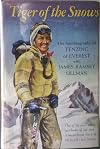
As he says in this book, Tenzing Norgay climbed Mt. Everest and experienced a whole new world when he came down. Part of the two-man team who were the first to step foot on the world's highest peak, Norgay went from eking out a poverty-level living to becoming in demand public speaker and guest, as well as a focus of a tussle between Nepal and India over the Sherpa's nationality.
Tiger of the Snows isn't a particularly easy read-- co-author James Ramsey Ullman does his best to turn Norgay's show more oral history into a written one, but the style of the book gets in the way. It also takes a long time to get to what everyone is interested in -- the climb of Everest. The book doesn't disappoint at the point -- Norgay's recollections of the expedition are interesting and occasionally divergent from the "official" accounts.
The latter chapters were the most interesting to me, as they delve into the rapid transformation of Norgay's circumstances following the biggest climb of his life. It is nice to hear a Sherpa's perspective for a change. show less
Tiger of the Snows isn't a particularly easy read-- co-author James Ramsey Ullman does his best to turn Norgay's show more oral history into a written one, but the style of the book gets in the way. It also takes a long time to get to what everyone is interested in -- the climb of Everest. The book doesn't disappoint at the point -- Norgay's recollections of the expedition are interesting and occasionally divergent from the "official" accounts.
The latter chapters were the most interesting to me, as they delve into the rapid transformation of Norgay's circumstances following the biggest climb of his life. It is nice to hear a Sherpa's perspective for a change. show less

The story of Sherpa Tenzing who successfully scaled Everest in 1953. A few b/w illustrations. I found this book at home, and really can't remember buying it. It is a Book club edition, though,

Lists
Awards


You May Also Like


Associated Authors
Statistics
- Works
- 4
- Also by
- 1
- Members
- 240
- Popularity
- #94,568
- Rating
- 3.8
- Reviews
- 6
- ISBNs
- 10
- Languages
- 2
- Favorited
- 1