
Thomas R. Nevin
Author of Ernst Junger and Germany: Into the Abyss, 1914-1945
About the Author
Works by Thomas R. Nevin
Associated Works
Tagged
Common Knowledge
- Canonical name
- Nevin, Thomas R.
- Birthdate
- 1944-10-27
- Gender
- male
- Education
- University of Wisconsin (MA|Ph.D)
University of Colorado (BA) - Occupations
- classicist
professor - Organizations
- John Carroll University
Anglican Church
Clare Hall, University of Cambridge - Awards and honors
- George Grauel Faculty Fellowships (2011-2012)
- Nationality
- USA
- Places of residence
- Brittany, France
- Associated Place (for map)
- Brittany, France
Members
Reviews
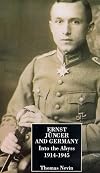
Nevin produces a perhaps overly generous but nevertheless useful account of one of the last century's most important European intellectuals, giving powerful insights into the 'German mind'.
Of course, Junger was an exceptional - a hysterical personality hidden behind an icy persona. His morbid and intense fanaticism presented in cool and refined terms, the aesthete of collectivised death.
The book only covers half his life. This would mean the story of a young man in most cases but here covers show more five decades at the heart of a terrible history. Junger's responses to them have things to tell us.
The master works are two-fold - immediate post-war and then polished memoirs of what a fanatic feels and does in mechanised trench warfare and diaries of Nazi occupation from a consummate aesthete.
The first, notably 'Storm of Steel', created an hysterical mythology that undoubtedly helped fuel the Radical Right capture of power in Germany in 1933.
The second, the 'Paris Diaries', should be reissued as an insight of immense value into what it means to occupy and what it means to resist.
But how to evaluate this important figure who represented the German haute bourgeoisie's adoption of faux-aristocratic elitism and its subsequent conversion, after trauma, into conservative revolutionism?
The writings in the interwar era bear all the hall marks of a form of literary post-traumatic stress response - the violence and morbidity packaged into grand schemes detached from all observable reality.
During that period, like many committed ideologues, Junger would find that national socialism was somehow not quite right, too demotic, too pragmatic, not cosmic enough perhaps.
He entered into what we now identify as National Bolshevik circles - the Left critics within the broad national socialist ideology associated with Niekisch and the Strassers.
Junger - a minor political figure as much as he was a major cultural figure - was by-passed by the Night of the Long Knives as he escaped the terror after the July bomb plot. He was both lucky and protected.
In the 1930s, his aestheticism dominates. He writes the spectacularly effective and misunderstood 'Auf den Marmorklippen' and sees through Hitler early but his politics remain fundamentally militarist.
Back in military service in the early 1940s, without changing his radical conservative views, merely adapting them, aesthetic distaste for the modern techno-brutality of demotic Hitlerism grows.
Does this redeem him? That case is hard to make. He is complicit. His aestheticism of elite domination, his disregard for the ordinary person, his sentiment - all these remain.
All he does is write beautifully and with acute observational skill (to the delight or horror of other highly educated intellectuals) about monstrosities and what the rich do on their holidays.
As a result of his brutal and cold honesty, there is far more to be learned about the human condition, however, than there is from the worthy whining and dishonesty of liberals.
The only place where this author's writings (which are not covered after 1945) filled me with an almost physical repulsion was at the very end when he discovers 'religion'.
Nevin tries his best to make this 'turn' interesting but the effect is part deadening and part visceral gut-wrenching disgust. In the midst of hell, with defeat on the horizon, he turns intellectual coward.
But the malign political influence does not stop with this intense new round of hogwash - it starts all over again.
We have written elsewhere of the attempt to whitewash the conservative nationalist hog in today's Europe. Here we see more of the origins of that whitewash in the 'programme' for post-war Europe.
Junger's interwar influence is still to be found reborn, alongside Evola's, in the rise of the political soldier and National Bolshevik activists' dabbling in Kiev and the undergrowth of European Rightism.
What is not so well appreciated is the influence of the wartime conservative nationalist idea of a united Europe based on 'Christian' values - little more than a ploy to win back the alienated occupied.
Junger's programme was not alone in this but it was part of the implicit strategy of the July plotters. Nevin's description of its main thesis is worth quoting at length.
... Junger seeks an authoritarian state that will unify Europe. He cites as visionaries of this union Richelieu, Cromwell [sic], and Bismarck, champions of statism but not certain friends of individual conscience. Suggesting that a democracy can be both authoritarian and liberal, he likens the state's security and the individual's prosperity to a mussel: hard outside so that the pearl may grow. .... He envisages an imperial state in tandem with a virtually established church, a tableau that conjures authoritarian Prussia.
We must always remember that Junger is rarely an original thinker on politics. What he does is take the general belief of his broader circle and the National Right and extend it into imaginative extremity.
He does this with the enthusiasm for war in 1914 and its ideology of the disciplined violence. And with the demand for integralist fascist order on the 1930s. And now with conservative survival.
The model for Europe, nurtured in the viper's nest of the German conservative elite and amongst complicit church-goers, the lesser evil to the satanic hatreds of national socialism, is that of today's Right.
The demand for peace - the leitmotif of the pro-European movement - is still cast on the Right in terms developed before 1914 by anti-Bolshevist conservatives under conditions of impending defeat.
This is the ultimate 'detournement' - turning defeat into ultimate victory. One wonders if the distaste of German liberal intellectuals for Junger is partly awareness of his partial victory.
The implication is that German violence can only be straight-jacketed by Europeanism and the Church (to the Right) and can never be a free liberal and democratic nation in its own right.
I want to praise Nevin for one minor innovation. When he cites an article or a book at the back he describes what is in it and whether he thinks it stands up to scrutiny or not.
I wish more academic authors would do this. It helps us get a better sense of controversy and the possible differences of opinion on how a work is to be interpreted. Junger must be seen in this way.
Finally, I think this book reminds us why books should never be banned or forgotten. Junger's work is very important and not as an 'object lesson' (as left-liberals might like it to be).
They are important because they are emotionally and intellectually 'true'. The blood-lust, grand schemes, detachment, controlled hysteria and fantastic essentialism are true to what we are as a species.
The paradox is that Junger is in good faith about laying out his limitations and bad faith. It is no accident that Celine and Bloy appear in the pages on occupation.
We need to know not only what we are but what we could be and therefore what others could be if we give them authority and power. Junger is what we all could be under certain conditions.
I find I cannot relate to some aspects of this conservative extremist but that he does speak to other aspects of me as possibly no other writer can.
Junger dances around the dark demonic without ever becoming quite satanic himself. His world visions are fusions of pessimism and dark hope, clear observation and the fantastic.
At one point, some passage or other triggers thoughts of the cosmic despair of a Ligotti. At another, he appears to get into the very heart of what it is to be compassionate, almost by accident.
But remember that the story ends in 1945. There is another 53 years of life to go - some may consider that long and full life mere proof of a godless universe but his work remains of inestimable value. show less
Of course, Junger was an exceptional - a hysterical personality hidden behind an icy persona. His morbid and intense fanaticism presented in cool and refined terms, the aesthete of collectivised death.
The book only covers half his life. This would mean the story of a young man in most cases but here covers show more five decades at the heart of a terrible history. Junger's responses to them have things to tell us.
The master works are two-fold - immediate post-war and then polished memoirs of what a fanatic feels and does in mechanised trench warfare and diaries of Nazi occupation from a consummate aesthete.
The first, notably 'Storm of Steel', created an hysterical mythology that undoubtedly helped fuel the Radical Right capture of power in Germany in 1933.
The second, the 'Paris Diaries', should be reissued as an insight of immense value into what it means to occupy and what it means to resist.
But how to evaluate this important figure who represented the German haute bourgeoisie's adoption of faux-aristocratic elitism and its subsequent conversion, after trauma, into conservative revolutionism?
The writings in the interwar era bear all the hall marks of a form of literary post-traumatic stress response - the violence and morbidity packaged into grand schemes detached from all observable reality.
During that period, like many committed ideologues, Junger would find that national socialism was somehow not quite right, too demotic, too pragmatic, not cosmic enough perhaps.
He entered into what we now identify as National Bolshevik circles - the Left critics within the broad national socialist ideology associated with Niekisch and the Strassers.
Junger - a minor political figure as much as he was a major cultural figure - was by-passed by the Night of the Long Knives as he escaped the terror after the July bomb plot. He was both lucky and protected.
In the 1930s, his aestheticism dominates. He writes the spectacularly effective and misunderstood 'Auf den Marmorklippen' and sees through Hitler early but his politics remain fundamentally militarist.
Back in military service in the early 1940s, without changing his radical conservative views, merely adapting them, aesthetic distaste for the modern techno-brutality of demotic Hitlerism grows.
Does this redeem him? That case is hard to make. He is complicit. His aestheticism of elite domination, his disregard for the ordinary person, his sentiment - all these remain.
All he does is write beautifully and with acute observational skill (to the delight or horror of other highly educated intellectuals) about monstrosities and what the rich do on their holidays.
As a result of his brutal and cold honesty, there is far more to be learned about the human condition, however, than there is from the worthy whining and dishonesty of liberals.
The only place where this author's writings (which are not covered after 1945) filled me with an almost physical repulsion was at the very end when he discovers 'religion'.
Nevin tries his best to make this 'turn' interesting but the effect is part deadening and part visceral gut-wrenching disgust. In the midst of hell, with defeat on the horizon, he turns intellectual coward.
But the malign political influence does not stop with this intense new round of hogwash - it starts all over again.
We have written elsewhere of the attempt to whitewash the conservative nationalist hog in today's Europe. Here we see more of the origins of that whitewash in the 'programme' for post-war Europe.
Junger's interwar influence is still to be found reborn, alongside Evola's, in the rise of the political soldier and National Bolshevik activists' dabbling in Kiev and the undergrowth of European Rightism.
What is not so well appreciated is the influence of the wartime conservative nationalist idea of a united Europe based on 'Christian' values - little more than a ploy to win back the alienated occupied.
Junger's programme was not alone in this but it was part of the implicit strategy of the July plotters. Nevin's description of its main thesis is worth quoting at length.
... Junger seeks an authoritarian state that will unify Europe. He cites as visionaries of this union Richelieu, Cromwell [sic], and Bismarck, champions of statism but not certain friends of individual conscience. Suggesting that a democracy can be both authoritarian and liberal, he likens the state's security and the individual's prosperity to a mussel: hard outside so that the pearl may grow. .... He envisages an imperial state in tandem with a virtually established church, a tableau that conjures authoritarian Prussia.
We must always remember that Junger is rarely an original thinker on politics. What he does is take the general belief of his broader circle and the National Right and extend it into imaginative extremity.
He does this with the enthusiasm for war in 1914 and its ideology of the disciplined violence. And with the demand for integralist fascist order on the 1930s. And now with conservative survival.
The model for Europe, nurtured in the viper's nest of the German conservative elite and amongst complicit church-goers, the lesser evil to the satanic hatreds of national socialism, is that of today's Right.
The demand for peace - the leitmotif of the pro-European movement - is still cast on the Right in terms developed before 1914 by anti-Bolshevist conservatives under conditions of impending defeat.
This is the ultimate 'detournement' - turning defeat into ultimate victory. One wonders if the distaste of German liberal intellectuals for Junger is partly awareness of his partial victory.
The implication is that German violence can only be straight-jacketed by Europeanism and the Church (to the Right) and can never be a free liberal and democratic nation in its own right.
I want to praise Nevin for one minor innovation. When he cites an article or a book at the back he describes what is in it and whether he thinks it stands up to scrutiny or not.
I wish more academic authors would do this. It helps us get a better sense of controversy and the possible differences of opinion on how a work is to be interpreted. Junger must be seen in this way.
Finally, I think this book reminds us why books should never be banned or forgotten. Junger's work is very important and not as an 'object lesson' (as left-liberals might like it to be).
They are important because they are emotionally and intellectually 'true'. The blood-lust, grand schemes, detachment, controlled hysteria and fantastic essentialism are true to what we are as a species.
The paradox is that Junger is in good faith about laying out his limitations and bad faith. It is no accident that Celine and Bloy appear in the pages on occupation.
We need to know not only what we are but what we could be and therefore what others could be if we give them authority and power. Junger is what we all could be under certain conditions.
I find I cannot relate to some aspects of this conservative extremist but that he does speak to other aspects of me as possibly no other writer can.
Junger dances around the dark demonic without ever becoming quite satanic himself. His world visions are fusions of pessimism and dark hope, clear observation and the fantastic.
At one point, some passage or other triggers thoughts of the cosmic despair of a Ligotti. At another, he appears to get into the very heart of what it is to be compassionate, almost by accident.
But remember that the story ends in 1945. There is another 53 years of life to go - some may consider that long and full life mere proof of a godless universe but his work remains of inestimable value. show less

I can certainly say that I've never met the subject, but I found the biographer from my own--albeit heathen--point of view, to be something of a mediocrity. In fact, the kindest thing that I can think of to say about him is that he is a long-winded mediocrity. But I must allow myself to indulge in a little controlled viciousness, or restrained savagery...despite my fears of sounding like some class of Protestant as far as Catholicism is concerned. For I must elaborate by saying that I find show more him to be pompous, snobbish, bogus, and fake, despite all his protestations to the contrary. I must notice that it seems to be some sort of trend or fashion among Catholic scholars who choose to be vitriolic little pricks as well, to crucify long-dead Renan, while embalming and embodying, in their own particular, Popish way, all that is most corrupt and dead, (dead bones wrapped in robes of pedantry), in such disenchanted scholars of the crypt, and scribes of the tomb. I accuse this false biographer of bringing no-one to life, and by stifling life with smothering blankets of non-sense, of irrelevancies which kill the truth as swiftly as any set of lies ever could. I accuse him of abandoning his subject, neglecting the life he was to tend to, while floating away in a hot-air balloon of reveries about Classical clouds, Ancient this, and 19th-century that...a sort of mal-practice.
I think that the only thing that I learned from this book was that I learned nothing from it...and, of course, that I am glad that I do not live in the 19th century--but I suppose even I knew that.
But perhaps I should specify that, when I say that he tells me nothing about her, I mean, more specifically, that he speaks FAR TOO MUCH without saying *anything*. Although it is true that he has a morbid fascination with the illnesses that killed her, but maybe he'd have rather just written a biography of some cancer cells...but perhaps that's revealing too much daylight to the inside of the vampire's cave, where dwell those with *such brittle nerves*.
Comme des enfants.
(5/10) show less
I think that the only thing that I learned from this book was that I learned nothing from it...and, of course, that I am glad that I do not live in the 19th century--but I suppose even I knew that.
But perhaps I should specify that, when I say that he tells me nothing about her, I mean, more specifically, that he speaks FAR TOO MUCH without saying *anything*. Although it is true that he has a morbid fascination with the illnesses that killed her, but maybe he'd have rather just written a biography of some cancer cells...but perhaps that's revealing too much daylight to the inside of the vampire's cave, where dwell those with *such brittle nerves*.
Comme des enfants.
(5/10) show less
Awards

You May Also Like
Associated Authors
Statistics
- Works
- 6
- Also by
- 2
- Members
- 112
- Popularity
- #174,305
- Rating
- 4.0
- Reviews
- 2
- ISBNs
- 21
- Languages
- 1