

Rob Penn
Author of It's All About the Bike: The Pursuit of Happiness on Two Wheels
About the Author
Image credit: Rob Penn
Works by Rob Penn
Associated Works
An Antidote To Indifference: A Caught By The River Diversion To Wales (2013) — Contributor — 1 copy, 1 review
Tagged
Common Knowledge
- Canonical name
- Penn, Rob
- Birthdate
- 1967
- Gender
- male
- Education
- University of Bristol
- Nationality
- UK
- Birthplace
- Birmingham, England, UK
- Associated Place (for map)
- England, UK
Members
Reviews

An agreeable, finely-balanced book that sees the author, Robert Penn, cut down an ash tree in his local forest and then seek to make (or rather, commission people to make) all sorts of tools and artefacts from the timber. This allows Penn to guide us through a gentle education in logging, woodworking, carpentry, crafting and environmental sustainability, teaching the reader more things about wood than we thought we'd even want to know – and finding it's actually quite interesting to learn. show more Penn is adept enough as a writer to go off onto eclectic tangents, and I was pleased to learn tidbits of information like how fletchers would use feathers from the same bird's wing on their wooden arrows (left-wing or right-wing) so that they flew straight and true (pg. 132).
A key strength of the book is that it's sincere; Penn mostly avoids the limp comedy and faux-jauntiness that usually characterises books of this type and which only highlight their authors' (or, more likely, their publishers') lack of confidence. The book is well-written, even if it's not especially remarkable; it's quiet without being especially profound. I kept expecting it to take on a higher gear that it never found and the journey ended before I was ready for it. That said, if the book had been twice the length it may have become tedious; the book's 240 pages was just about enough to hear someone talk about wood.
It's quite a wonderful book, in its way, never outstaying its welcome but never demanding our attention either. There's a relaxed serenity about it, and about the growth and use of wood as a material in itself. One homeware craftsman Penn speaks to in the Epilogue remarks how customers at their market stand are always keen to touch and smell their wooden wares (pg. 225), and there's an honesty and earthiness to our relationship with wood that Penn is looking to highlight. "The pleasure we take from things made from natural materials is an extension of the pleasure we take from nature itself," he writes on page 12, and I think it's for this reason that, where possible, I personally have always sought wooden objects over metal and plastic, regardless of cost, and always read paper books over e-books. In a world of disposable plastic objects and mass-produced impermanence and isolation, an item that has been crafted, thought out, and which you retain for perhaps your whole life becomes something to cherish. Penn's book goes further than this, extolling the virtues of forests and walking in nature, but I will remember it primarily as a paean to these simple acts of consumerism we can take to reintroduce a bit of quality and resonance back into our atomised modern lives. show less
A key strength of the book is that it's sincere; Penn mostly avoids the limp comedy and faux-jauntiness that usually characterises books of this type and which only highlight their authors' (or, more likely, their publishers') lack of confidence. The book is well-written, even if it's not especially remarkable; it's quiet without being especially profound. I kept expecting it to take on a higher gear that it never found and the journey ended before I was ready for it. That said, if the book had been twice the length it may have become tedious; the book's 240 pages was just about enough to hear someone talk about wood.
It's quite a wonderful book, in its way, never outstaying its welcome but never demanding our attention either. There's a relaxed serenity about it, and about the growth and use of wood as a material in itself. One homeware craftsman Penn speaks to in the Epilogue remarks how customers at their market stand are always keen to touch and smell their wooden wares (pg. 225), and there's an honesty and earthiness to our relationship with wood that Penn is looking to highlight. "The pleasure we take from things made from natural materials is an extension of the pleasure we take from nature itself," he writes on page 12, and I think it's for this reason that, where possible, I personally have always sought wooden objects over metal and plastic, regardless of cost, and always read paper books over e-books. In a world of disposable plastic objects and mass-produced impermanence and isolation, an item that has been crafted, thought out, and which you retain for perhaps your whole life becomes something to cherish. Penn's book goes further than this, extolling the virtues of forests and walking in nature, but I will remember it primarily as a paean to these simple acts of consumerism we can take to reintroduce a bit of quality and resonance back into our atomised modern lives. show less
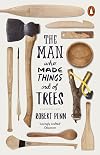
It seems hard to believe that a book about a man cutting down a tree and getting people to make things out of it would be enthralling and moving, but it is. It expertly taps into some deep human need to have to own things made well out of wood. As I was reading I was lamenting that there was no such ode to our native New Zealand trees, many of them with beautiful hard-wearing timber that doesn't seem to be used or appreciated the way northern hemisphere trees are, with thousands of years of show more coexistence with people. I'm sending this book straight off to a timber engineer I know who makes his own furniture, and hoping he hasn't read it already. show less
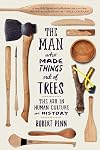
I would not have thought a book about the ash tree would be that interesting. It's sort of a long-term human favorite wood due to its properties. It's all around us as tool handles, baseball bats, kitchen implements, sporting gear, trim, hoops - a generic white wood that is both strong and able to bend without snapping. The writing quality is high with a mix of biography, travel, cultural and natural history. There's a ton of interesting stuff here well told. I became so interested in the show more section about the medieval practice of eating from ash plates and bowls that I found a maker (in France none in the US) and ordered one. Such are the unexpected costs of reading. show less
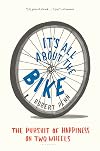
I had no special expectations for the surprising and wonderful All About the Bike: The Pursuit of Happiness on Two Wheels by Robert Penn. Little did I know that, as an active cyclist, I would not resist its charms.
If you are someone who has ever exulted in the joy that comes from a bicycle, and you can follow along as a first-rate bicycle lover goes in pursuit of his own bespoke bike, this book is for you. Penn mixes in the fascinating history of the bicycle, and offers a primer on the show more mechanical intricacies of this ingenious machine as part of the bargain. None of this reads as didactic instruction; it’s all woven into THE QUEST: Penn’s transcontinental search for the pieces and components of the bike he will ride for the rest of his life.
If this doesn't sound appealing, then get a bike, ride it several thousand miles, and you'll have a different perspective!
The danger in reading this is that, like I did, you will probably contract a terminal case of bike envy!
I knew I was hooked at the end of the prologue:
“The bicycle saves my life every day. If you’ve ever experienced a moment of awe or freedom on a bicycle; if you’ve ever taken flight from sadness to the rhythm of two spinning wheels, or felt the resurgence of hope pedalling to the top of a hill with the dew of effort on your forehead; if you’ve ever wondered, swooping bird-like down a long hill on a bicycle, if the world was standing still; if you have ever, just once, sat on a bicycle with a singing heart and felt like an ordinary human touching the gods, then we share something fundamental. We know it’s all about the bike.”
I know. show less
If you are someone who has ever exulted in the joy that comes from a bicycle, and you can follow along as a first-rate bicycle lover goes in pursuit of his own bespoke bike, this book is for you. Penn mixes in the fascinating history of the bicycle, and offers a primer on the show more mechanical intricacies of this ingenious machine as part of the bargain. None of this reads as didactic instruction; it’s all woven into THE QUEST: Penn’s transcontinental search for the pieces and components of the bike he will ride for the rest of his life.
If this doesn't sound appealing, then get a bike, ride it several thousand miles, and you'll have a different perspective!
The danger in reading this is that, like I did, you will probably contract a terminal case of bike envy!
I knew I was hooked at the end of the prologue:
“The bicycle saves my life every day. If you’ve ever experienced a moment of awe or freedom on a bicycle; if you’ve ever taken flight from sadness to the rhythm of two spinning wheels, or felt the resurgence of hope pedalling to the top of a hill with the dew of effort on your forehead; if you’ve ever wondered, swooping bird-like down a long hill on a bicycle, if the world was standing still; if you have ever, just once, sat on a bicycle with a singing heart and felt like an ordinary human touching the gods, then we share something fundamental. We know it’s all about the bike.”
I know. show less
 This review was written for LibraryThing Early Reviewers.
You May Also Like


Associated Authors
Statistics
- Works
- 14
- Also by
- 1
- Members
- 585
- Popularity
- #42,855
- Rating
- 4.0
- Reviews
- 30
- ISBNs
- 48
- Languages
- 7
