
Gail E. Hawisher
Author of Passions Pedagogies And 21St Century Technologies
About the Author
Works by Gail E. Hawisher
Literate Lives in the Information Age: Narratives of Literacy From the United States (2004) 13 copies
Evolving Perspectives on Computers and Composition Studies: Questions for the 1990's (1991) 12 copies
On Literacy and Its Teaching: Issues in English Education (Suny Series in Literacy, Culture, and Learning) (1990) 9 copies
Computers and the Teaching of Writing in American Higher Education, 1979–1994: A History (1995) 8 copies
Critical Perspectives on Computers and Composition Instruction (Computers and Education Series) (1989) 4 copies
Tagged
Common Knowledge
- Gender
- female
Members
Reviews
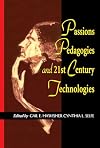
In "The Haunting Story of J: Genealogy As a Critical Category in Understanding How a Writer Composes," Sarah J. Sloane argues that we approach new writing environments and technologies with our prior assumptions, experiences, and emotions (52). In a way, our writing is "haunted" by our prior experiences (53).
In "'English' at the Crossroads," Gunther Kress questions the curriculum of English departments, arguing that students need access to public communication, including the visual (66-67). show more Although visuals have existed for a long time, Kress sees the shift from the logic of page to screen as important, in that our semiotics is becoming increasingly synaesthetic. He argues that we need to shift from a pedagogy of critique to one of design (which still includes critique. "Design," he writes, "takes the results of past production as the resource for new shaping, and for remaking" (87).
In "Hyper-readers and their Reading Engines," James Sosnoski taxonomizes types of reading on the screen, arguing that the "search engine" affects how we read. He claims we read through filtering (selectivity), skimming, pecking (reading but not in a linear fashion), imposing (context), filming (meaning from graphic elements), trespassing (loosening of textual boundaries), de-authoring (privileging the author less), and fragmenting (163).
In "Les We Think the Revolution is a Revolution: Images of Technology and the Nature of Change," Cynthia L. Selfe analyzes visual representations of technology, showing how Americans have difficulty viewing new technology in ways different from prior narratives and social forces. For example, many of these images privilege Americans as "the smart ones" who use technology and connect others (295), and that these technologies fit into a romantic story of American landscape and gendered notions of technology users.
In "Blinded by the Letter: Why Are We Using Literacy as a Metaphor for Everything Else?", Anne Frances Wysocki and Johndan Johnson-Eilola question the assumptions of literacy that we carry when we carry the term over to other interpretive acts, including the notion that literacy brings economic and social privileges (352). "Literacy" is deceptive in its connotations with skills, so why do we want to carry it over to new technologies (355)? They argue that we should re-conceive literacy "primarily as a spatial relation to information" (362), and the ability to move within information and make connections (363). show less
In "'English' at the Crossroads," Gunther Kress questions the curriculum of English departments, arguing that students need access to public communication, including the visual (66-67). show more Although visuals have existed for a long time, Kress sees the shift from the logic of page to screen as important, in that our semiotics is becoming increasingly synaesthetic. He argues that we need to shift from a pedagogy of critique to one of design (which still includes critique. "Design," he writes, "takes the results of past production as the resource for new shaping, and for remaking" (87).
In "Hyper-readers and their Reading Engines," James Sosnoski taxonomizes types of reading on the screen, arguing that the "search engine" affects how we read. He claims we read through filtering (selectivity), skimming, pecking (reading but not in a linear fashion), imposing (context), filming (meaning from graphic elements), trespassing (loosening of textual boundaries), de-authoring (privileging the author less), and fragmenting (163).
In "Les We Think the Revolution is a Revolution: Images of Technology and the Nature of Change," Cynthia L. Selfe analyzes visual representations of technology, showing how Americans have difficulty viewing new technology in ways different from prior narratives and social forces. For example, many of these images privilege Americans as "the smart ones" who use technology and connect others (295), and that these technologies fit into a romantic story of American landscape and gendered notions of technology users.
In "Blinded by the Letter: Why Are We Using Literacy as a Metaphor for Everything Else?", Anne Frances Wysocki and Johndan Johnson-Eilola question the assumptions of literacy that we carry when we carry the term over to other interpretive acts, including the notion that literacy brings economic and social privileges (352). "Literacy" is deceptive in its connotations with skills, so why do we want to carry it over to new technologies (355)? They argue that we should re-conceive literacy "primarily as a spatial relation to information" (362), and the ability to move within information and make connections (363). show less
You May Also Like
Associated Authors
Statistics
- Works
- 13
- Members
- 153
- Popularity
- #136,479
- Rating
- 3.1
- Reviews
- 1
- ISBNs
- 28