
Sara Jaffe
Author of Dryland
Works by Sara Jaffe
Hurricane Envy 4 copies
Associated Works
Tagged
Common Knowledge
- Gender
- female
- Organizations
- Reed College
- Places of residence
- Portland, Oregon, USA
- Associated Place (for map)
- Oregon, USA
Members
Reviews
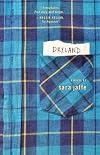
This brief novel is a tightly written coming-of-age/quest/identity novel. In contrast to the nearly-seamless narrative, the main character is loose at every seam, verging on self-destructive behavior. It's an odd contrast-- an integrated narrative and a disintegrated character-- and it works.
Julie Winter is a teenager coming to terms (or not) with her queerness in 90s Portland. In contrast to many novels today, where characters have celebratory realizations and revelations, she has show more awkwardness, evasions, and a general lack of any clue (or vocabulary-- it's the 90s, pre-Internet) to explain what she's starting to tune into. The predominant narrative of queerness she's aware of is the one of gay men and AIDS, and there's an ongoing sense that she is trying to force the most vaguely similar storyline she can on her own identity. Needless to say, this doesn't work.
A casual read might make it seem as if the "mystery" in the plot concerns Julie's brother, Ben, a former champion swimmer who is now essentially AWOL. I'd suggest that this is a misreading: Julie is certainly concerned about her brother, but, in many ways, her desperate search for him and answers about his life is a red herring for what she's trying to figure out about herself. To focus on this part of the plotline as central is to fall prey to Julie's own red herring, the one's she's depending on to keep her head above water (sorry about that).
I certainly enjoyed this novel for its "the way things were" (even if a lot of the answer to that is "not so great") quality, but it's not an historical artifact or remember the days? piece. Rather, by forcing the setting into the 90s, the novel forces questions of identity to front and center. They're stripped of any illusion that they're easy to answer or that an answer is a click or TV program away: this may be a comfortable illusion now, but, when the setting is such that these things don't even exist, wrestling with one's own gender identity in all its confusion, cluelessness, and misinformation is starkly depicted. It's interesting, too, that Julie is not always a sympathetic character, doesn't always (or even often) make good decisions, and isn't entirely honest: she's extremely fallible and prone to stumbles.
The novel has an open ending, but it's about a high school student. Complete closure would seem artificial. I did have to look up "dryland" to figure out exactly what it is; in the course of doing so, I learned that it's ideal to plant seeds during the rainy season. Make of that what you will. I'm content to have watched a protagonist change, not necessarily emerge fully formed, over the course of the novel. show less
Julie Winter is a teenager coming to terms (or not) with her queerness in 90s Portland. In contrast to many novels today, where characters have celebratory realizations and revelations, she has show more awkwardness, evasions, and a general lack of any clue (or vocabulary-- it's the 90s, pre-Internet) to explain what she's starting to tune into. The predominant narrative of queerness she's aware of is the one of gay men and AIDS, and there's an ongoing sense that she is trying to force the most vaguely similar storyline she can on her own identity. Needless to say, this doesn't work.
A casual read might make it seem as if the "mystery" in the plot concerns Julie's brother, Ben, a former champion swimmer who is now essentially AWOL. I'd suggest that this is a misreading: Julie is certainly concerned about her brother, but, in many ways, her desperate search for him and answers about his life is a red herring for what she's trying to figure out about herself. To focus on this part of the plotline as central is to fall prey to Julie's own red herring, the one's she's depending on to keep her head above water (sorry about that).
I certainly enjoyed this novel for its "the way things were" (even if a lot of the answer to that is "not so great") quality, but it's not an historical artifact or remember the days? piece. Rather, by forcing the setting into the 90s, the novel forces questions of identity to front and center. They're stripped of any illusion that they're easy to answer or that an answer is a click or TV program away: this may be a comfortable illusion now, but, when the setting is such that these things don't even exist, wrestling with one's own gender identity in all its confusion, cluelessness, and misinformation is starkly depicted. It's interesting, too, that Julie is not always a sympathetic character, doesn't always (or even often) make good decisions, and isn't entirely honest: she's extremely fallible and prone to stumbles.
The novel has an open ending, but it's about a high school student. Complete closure would seem artificial. I did have to look up "dryland" to figure out exactly what it is; in the course of doing so, I learned that it's ideal to plant seeds during the rainy season. Make of that what you will. I'm content to have watched a protagonist change, not necessarily emerge fully formed, over the course of the novel. show less
The strength of this novel arises from Sara Jaffe’s intimate treatment of her heroine’s painful self-questioning and doubt. Fifteen year-old Julie holds forth in Dryland; her just-awakening attractions and aversions play perfectly true. The somber, expect-the-worst tone of her monolog suits her situation perfectly. Julie is genuine and has kindness in her soul and we root for the best for her.
At story’s outset she misses her brother, nine years her senior, and purportedly living in show more Europe. His departure is wrapped in mystery for Julie, and at the newsstand she looks through swimming magazines for him pictures that might look like him - he was a notable athlete, a hero made of multiple school records and loads of trophies, some still displayed in the school lobby. It isn’t until she joins the swim team herself that her perspective begins to change.
This novel encompasses a passage for Julie. She tries to balance friends from different camps while still forging her own path. She grapples with her attraction to other students, and tries to make sense of her friend’s sometimes baffling crushes. This is the stuff of millions of young people’s lives, and Ms. Jaffe makes Julie’s journey special by couching it in unmistakable teen language. It’s a language built with rebellion, and an immanent maturity, but its largest ingredient is of course uncertainty. It all too clearly and accurately demonstrates that an adolescent’s life is brutally difficult.
The author keeps her descriptions to the bare minimum. That and the young girl’s narration of her own process give the book a dream-like quality, but at the same time certain scenes have an indelibility that will stay with you. Swimming scenes are few, actually, and while I expected at least the possibility that competitive swimming would give Julie some transcendent moments, this is not the case. Julie is being born to everything. She needs to experience all the trials and triumphs first-hand, and experience these she does.
Dryland is soulful, honest work. It lives up to fiction’s highest calling: it is an accurate, sympathetic telling of a person’s progress through life. Take it up!
http://bassoprofundo1.blogspot.com/2017/06/dryland-by-sara-jaffe.html show less
At story’s outset she misses her brother, nine years her senior, and purportedly living in show more Europe. His departure is wrapped in mystery for Julie, and at the newsstand she looks through swimming magazines for him pictures that might look like him - he was a notable athlete, a hero made of multiple school records and loads of trophies, some still displayed in the school lobby. It isn’t until she joins the swim team herself that her perspective begins to change.
This novel encompasses a passage for Julie. She tries to balance friends from different camps while still forging her own path. She grapples with her attraction to other students, and tries to make sense of her friend’s sometimes baffling crushes. This is the stuff of millions of young people’s lives, and Ms. Jaffe makes Julie’s journey special by couching it in unmistakable teen language. It’s a language built with rebellion, and an immanent maturity, but its largest ingredient is of course uncertainty. It all too clearly and accurately demonstrates that an adolescent’s life is brutally difficult.
The author keeps her descriptions to the bare minimum. That and the young girl’s narration of her own process give the book a dream-like quality, but at the same time certain scenes have an indelibility that will stay with you. Swimming scenes are few, actually, and while I expected at least the possibility that competitive swimming would give Julie some transcendent moments, this is not the case. Julie is being born to everything. She needs to experience all the trials and triumphs first-hand, and experience these she does.
Dryland is soulful, honest work. It lives up to fiction’s highest calling: it is an accurate, sympathetic telling of a person’s progress through life. Take it up!
http://bassoprofundo1.blogspot.com/2017/06/dryland-by-sara-jaffe.html show less
I've seen this described as a YA coming-of-age story, which I think is a misnomer all around. It feels very much like it was written for adults, not teens, and it's a piece of the main character's coming of age, surely, but it definitely doesn't feel like Julie has demonstrably "grown up" by the end. None of which is a criticism. I liked much about this short novel--the early 90s Seattle setting was nicely evoked, the details about swimming competitively (especially the actual in-the-water show more stuff) was lovely and familiar, and the exploration of Julie's understanding of her sexuality and of her place in her family and the world was compelling. In the end though I didn't love the book, mostly because the style--though it felt appropriate for the subject matter and the "feel" of the book--rubbed me the wrong way. Some of the details about Julie's absent brother also felt unusefully murky for too long. As the only real reason this wasn't a four-plus-star read for me was my subjective unhappiness with the style, reservedly recommended if the book sounds interesting to you. show less
Julie is a high school sophomore in the early 90s in Portland, OR. She hangs around with her best friend, Erika. She joins the swim team. She worries about her older brother, a former Olympic hopeful, who isn't really in touch with his family these days. She tries not to think too much about her own sexuality, but ends up exploring it some, anyway. She thinks a lot of things she doesn't say, because she doesn't want people to think she's weird. She listens to a lot of R.E.M. She eats a lot show more of chicken.
All of which sounds pretty dull, or at least like the kind of teenagery stuff that's really only interesting when you're still a teenager. But I was really surprised by how much I liked this book. It's so well-written, in an elegantly pared-down kind of way, that it just carries you effortlessly along. I'm particularly impressed by Jaffe's ability to describe music in words, in a way that captures it perfectly. There's some kind of weird magic in that. But the effective, quiet subtlety with which she handles the drama of being a teenager is darned impressive too. show less
All of which sounds pretty dull, or at least like the kind of teenagery stuff that's really only interesting when you're still a teenager. But I was really surprised by how much I liked this book. It's so well-written, in an elegantly pared-down kind of way, that it just carries you effortlessly along. I'm particularly impressed by Jaffe's ability to describe music in words, in a way that captures it perfectly. There's some kind of weird magic in that. But the effective, quiet subtlety with which she handles the drama of being a teenager is darned impressive too. show less
Awards


You May Also Like
Associated Authors
Statistics
- Works
- 2
- Also by
- 1
- Members
- 149
- Popularity
- #139,412
- Rating
- 3.4
- Reviews
- 8
- ISBNs
- 5