
Stuart Lake (1889–1964)
Author of Wyatt Earp: Frontier Marshal
About the Author
Works by Stuart Lake
In the paths of the padres. 1 copy
Associated Works
Tagged
Common Knowledge
- Birthdate
- 1889-09-23
- Date of death
- 1964-01-27
- Gender
- male
- Places of residence
- Rome, New York, USA
San Diego, California, USA - Associated Place (for map)
- USA
Members
Reviews
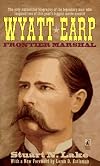
"Get your facts first, and then you can distort them as much as you please," Mark Twain quipped to Rudyard Kipling in 1899. Western fans have had their choice of facts about Wyatt Earp long before the film roundups of Kurt Russell, Kevin Costner and Hugh O'Brian. In 1996 I visited Tombstone, Ariz., 30 miles from the Mexican border and scene of Earp's 1881 OK Corral gunfight, to tell Twain's frontier journalism tales and dedicate the Tombstone Epitaph newspaper office as a Historic Site in show more Journalism. (The Epitaph still covers local news as a University of Arizona journalism project.) There I sampled the Republican Epitaph, published by the mayor who backed the Earp brothers, and the Democrat Nugget, owned by the sheriff sympathetic to the Clanton clan. Stuart Lake's own findings backed the Earp narrative 50 years later but would be unlikely to resolve their debate, as he was punching up Earp's unpublished autobiography to duel with Billy Breakenridge's unflattering "Helldorado." Lake is charged with embellishment, and his prose certainly shows plenty of embroidery: Boot Hill victims are "buried with their footgear in place," and there's no need for horse or jail when words like cayuse or calaboose are available. Newspaper prose of the day was just as purple though, and twice as opinionated. Much of the fun therein lies. Lake is skeptical of elements of the Earp legend, noting for example that keeping Dodge safe was a job limited to the more prosperous side of the tracks, but does not plumb dark corners of his subject's resume as peace officer, law student, surveyor, teamster, buffalo hunter, politician, miner and owner of casinos and racehorses. Earp ranged widely, which makes this a satisfying survey of frontier life, and the author comes as close to capturing cowboy cadence as any writer before David Milch. Out of print and pricey on Amazon, I picked up the paperback for a buck at a Newberry Library book fair. show less

No one can review this book better than a man who was in the thick of it — a man who not only knew, but was a close personal friend of Wyatt Earp:
A letter dated October 26, 1931, written to Stuart N. Lake from Fred Dodge about the book "Wyatt Earp, Frontier Marshal"
"Dear Mr. Lake:
. . . Now for the Book. You may be sure that I have read it with the greatest care and interest, but before I comment on it I want to thank you for it, and for the presentation you wrote in it. It will be doubly show more precious to me always because of it, and to Son Fred after me.
As you know, until I met the Earp boys in Tombstone I knew none of them personally. And all that I know of Wyatt previous to that time is what he and his brothers have told me, and the various stories of them that were current. Of course I am thoroughly familiar with the Tombstone part of their lives. So that part of your material I know is accurate, and handled in a most masterly manner. I must congratulate you in the way you have made Wyatt to stand out from his background without in any way changing values or atmosphere.
You have drawn an accurate picture of one of the coolest and bravest men I have ever known, and made it alive. It is a pity he could not have lived to see this book, which should go so far to refute the many blood and thunder stories that have been told about him.
Naturally the part that was familiar to me was of deepest interest to me — and right here I want to thank you for the way you have handled my double life in Tombstone — but the whole book is so interesting and so true that I feel that you have done a real service to my generation on the frontier. Fred Jr. knows that the Book is here, and he and I are planning to read it aloud together during his first vacation. We have only had time for little bits, so far, and are looking forward to making the whole a family affair.
Mrs. Dodge joins me in kindest regards to you and Mrs. Lake. You couldn't be human without being a bit puffed up, for you have done a good job of work, and I hope sales are satisfactory and that you are having a good time after your hard work.
Sincerely your friend,
Fred Dodge"
Fred Dodge (August 29, 1854 — December 16, 1938), was an undercover Wells Fargo detective and a former constable in Tombstone, Arizona—and longtime friend of Wyatt and Virgil Earp.
In December 1879, Dodge was working in Tombstone and recommended that Wyatt Earp be hired as a guard and messenger for the stage line. The two quickly became good friends and Dodge supported Wyatt and his brothers in their troubles in Tombstone including those that led up to the Gunfight at the O.K. Corral. He was a personal friend of Wyatt and Virgil Earp and remained friends with them the rest of their lives.
The author of this book, Stuart N. Lake, corresponded regularly with Fred Dodge while writing this book. This letter and many others can be found in Fred Dodge's autobiography. "Under Cover for Wells Fargo: The Unvarnished Recollections of Fred Dodge", which is a compilation of Dodge's diaries and correspondence, edited by Stuart N. Lake's daughter, Carolyn Lake. show less
A letter dated October 26, 1931, written to Stuart N. Lake from Fred Dodge about the book "Wyatt Earp, Frontier Marshal"
"Dear Mr. Lake:
. . . Now for the Book. You may be sure that I have read it with the greatest care and interest, but before I comment on it I want to thank you for it, and for the presentation you wrote in it. It will be doubly show more precious to me always because of it, and to Son Fred after me.
As you know, until I met the Earp boys in Tombstone I knew none of them personally. And all that I know of Wyatt previous to that time is what he and his brothers have told me, and the various stories of them that were current. Of course I am thoroughly familiar with the Tombstone part of their lives. So that part of your material I know is accurate, and handled in a most masterly manner. I must congratulate you in the way you have made Wyatt to stand out from his background without in any way changing values or atmosphere.
You have drawn an accurate picture of one of the coolest and bravest men I have ever known, and made it alive. It is a pity he could not have lived to see this book, which should go so far to refute the many blood and thunder stories that have been told about him.
Naturally the part that was familiar to me was of deepest interest to me — and right here I want to thank you for the way you have handled my double life in Tombstone — but the whole book is so interesting and so true that I feel that you have done a real service to my generation on the frontier. Fred Jr. knows that the Book is here, and he and I are planning to read it aloud together during his first vacation. We have only had time for little bits, so far, and are looking forward to making the whole a family affair.
Mrs. Dodge joins me in kindest regards to you and Mrs. Lake. You couldn't be human without being a bit puffed up, for you have done a good job of work, and I hope sales are satisfactory and that you are having a good time after your hard work.
Sincerely your friend,
Fred Dodge"
Fred Dodge (August 29, 1854 — December 16, 1938), was an undercover Wells Fargo detective and a former constable in Tombstone, Arizona—and longtime friend of Wyatt and Virgil Earp.
In December 1879, Dodge was working in Tombstone and recommended that Wyatt Earp be hired as a guard and messenger for the stage line. The two quickly became good friends and Dodge supported Wyatt and his brothers in their troubles in Tombstone including those that led up to the Gunfight at the O.K. Corral. He was a personal friend of Wyatt and Virgil Earp and remained friends with them the rest of their lives.
The author of this book, Stuart N. Lake, corresponded regularly with Fred Dodge while writing this book. This letter and many others can be found in Fred Dodge's autobiography. "Under Cover for Wells Fargo: The Unvarnished Recollections of Fred Dodge", which is a compilation of Dodge's diaries and correspondence, edited by Stuart N. Lake's daughter, Carolyn Lake. show less
While “Stagecoach” cost 530 thousand dollars, “The Westerner” had a budget of two million dollars, (half of what “Gone with the Wind” had cost) Critic Jose Lino Grunewald included 'The westerner' among his ten preferred westerns. It's good, but my list (excluding modern westerns such as ¨Treasure of Sierra Madre¨or ¨Greed¨or ¨The wind¨or post-modern westerns such as 'Yellowstone') would be as follows:
1. The searchers
2. The wild bunch
3. Justified
4. Deadwood
5. My darling show more Clementine
6. Winchester 73
7. The Ox-bow incident
8. The naked spur
9. La Rivière du Hibou
10. Godless show less
1. The searchers
2. The wild bunch
3. Justified
4. Deadwood
5. My darling show more Clementine
6. Winchester 73
7. The Ox-bow incident
8. The naked spur
9. La Rivière du Hibou
10. Godless show less
Awards

You May Also Like
Associated Authors
Statistics
- Works
- 4
- Also by
- 2
- Members
- 149
- Popularity
- #139,412
- Rating
- 3.8
- Reviews
- 3
- ISBNs
- 3
- Languages
- 1