
Laurie Lears
Author of Ian's Walk: A Story about Autism
Works by Laurie Lears
Ben Has Something to Say: A Story About Stuttering (Concept Books (Albert Whitman)) (2000) 25 copies, 2 reviews
Ian's Walk Autism 1 copy
Megan's Birthday Tree 1 copy
Tagged
Common Knowledge
There is no Common Knowledge data for this author yet. You can help.
Members
Reviews
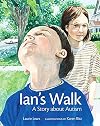
"Ian's Walk" was a great story that did a wonderful job of explaining how children who are autistic experience senses differently from others. In the story, Ian's two older sisters take him on their walk. At first they are confused by his behavior such as fixating on a ceiling fan or sniffing bricks instead of flowers. During the story, they grow to appreciate his differences and allow him to lead their walk so they can better understand his behavior.
I liked this book because it doesn't show more mention Ian talking, but he responds to his sister's at the end with a smile. To them, this means he enjoyed his time with them, and it shows readers the importance of expressing and reading emotions. It also teaches children a valuable lesson that just because someone doesn't like the same things you do that doesn't mean you can't form a connection or friendship with them. show less
I liked this book because it doesn't show more mention Ian talking, but he responds to his sister's at the end with a smile. To them, this means he enjoyed his time with them, and it shows readers the importance of expressing and reading emotions. It also teaches children a valuable lesson that just because someone doesn't like the same things you do that doesn't mean you can't form a connection or friendship with them. show less
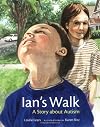
You know how you read The Cat in the Hat and you thought, that's fun, but why were these small children left at home all alone? That's how I feel about this picture book. Why did the two young girls have to take their younger brother Ian who is autistic to the park all by themselves? Of course, he gets lost and it's really scary. The sisters ask a couple adults if they've seen a little boy and the adults are totally unhelpful. ("No, perhaps he's watching the baseball game.") These grown-ups show more are so uncaring! Don't you think if you met two frantic girls looking for a lost little boy that you might want to assist them instead of carrying on with your life in this blase fashion? The basic message I got from this book is that if you have an autistic sibling your life is really stressful and you have too many responsibilities for a kid your age and no grown-ups will help you. Which I don't think is necessarily the case at all and is a big downer. So I wish this book had been a little more positive.
On the plus side, the illustrations are beautiful and look true-to-life. And the book also explains in simple terms that a little kid can understand some sensory and communication issues that an autistic person might have. show less
On the plus side, the illustrations are beautiful and look true-to-life. And the book also explains in simple terms that a little kid can understand some sensory and communication issues that an autistic person might have. show less
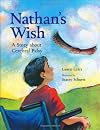
Overall, I really enjoyed Nathan’s Wish. One thing I absolutely loved was the metaphor and overall message throughout the story. Nathan, the main character, was born with cerebral palsy and he can only walk with a walker or must use a wheelchair. He spends a lot of time with neighbor, Miss Sandy, who is a Raptor Rehabilitator. Nathan learned a lot about resilience by watching and helping an owl named Fire recover from a wing injury. Fire’s resilience in recovery was used as a metaphor to show more Nathan’s life with cerebral palsy because though it was difficult for Fire to recover and her life wouldn’t be the same as before, she continued to work hard and recover a little bit, which is similar to how Nathan’s cerebral palsy affects his life and makes everyday tasks such as helping Miss Sandy more difficult. The overall message of the story was that people with disabilities need to work a little harder to try to do things that people without disabilities can do, but they can still achieve those same aspirations.
Another thing I liked about this book were the illustrations. I can’t tell what medium the illustrations were created out of, but I love how big they are because they really help tell the story. With there being little text on each page, you can really get into the story because your eyes are drawn to the illustrations.
Finally, I loved the author’s voice and tone throughout the story. When Nathan, the main character and narrator, spoke it sounded like something a kid with a disability would say. For instance, at the beginning of the story Nathan says, “More than anything I wish I could walk. Then I would help Miss Sandy with her chores instead of just watching her. But I have cerebral palsy and my muscles don’t work well enough for me to get around without my wheelchair or walker.” Nathan just sounds like any other kid, but is open about his disability, which I think helps students relate to and learn from this story because they are learning about disabilities their classmates or other people they know may have.
I would recommend this story for kids in second and third grade. I think it’s a great story that isn’t too difficult to comprehend, but the metaphor with Fire’s injury and recovery might be a little deeper for students, so it’d be a great whole-class read-aloud activity. show less
Another thing I liked about this book were the illustrations. I can’t tell what medium the illustrations were created out of, but I love how big they are because they really help tell the story. With there being little text on each page, you can really get into the story because your eyes are drawn to the illustrations.
Finally, I loved the author’s voice and tone throughout the story. When Nathan, the main character and narrator, spoke it sounded like something a kid with a disability would say. For instance, at the beginning of the story Nathan says, “More than anything I wish I could walk. Then I would help Miss Sandy with her chores instead of just watching her. But I have cerebral palsy and my muscles don’t work well enough for me to get around without my wheelchair or walker.” Nathan just sounds like any other kid, but is open about his disability, which I think helps students relate to and learn from this story because they are learning about disabilities their classmates or other people they know may have.
I would recommend this story for kids in second and third grade. I think it’s a great story that isn’t too difficult to comprehend, but the metaphor with Fire’s injury and recovery might be a little deeper for students, so it’d be a great whole-class read-aloud activity. show less

Although she loves her younger brother Ian, who has Autism, Julie sometimes feels embarrassed by the fact that he doesn't react the way the other children do - he likes different smells (bricks rather than lilacs), and is fascinated by different things (like the movement of a ceiling fan) - and she gets impatient when he needs special care or attention. Look away for a minute, as Julie does when she, her older sister Tara, and Ian all walk to the park, and he vanishes! Now Julie, whose show more mother told her that she must take good care of Ian, must put herself in his shoes, if she is to find him again...
I have little first-hand knowledge of this subject, so I am not sure how accurate Laurie Lears' depiction of a young boy with Autism is. It seems, looking through the online reviews, to be quite well received by readers who do have some experience in the area. For my part, I thought the story really highlighted how a sibling might feel and react if their brother or sister had this disorder, and that it managed to address those concerns without being either overly sanguine ("everything's just fine!") or too negative. The result is a narrative that will affirm such siblings' experiences, offering them emotional support, while also providing a vehicle for discussion. The accompanying artwork by Karen Ritz ably captures the emotional pitch of each scene.
All in all, this is a most engaging story, one that addresses an important topic with sensitivity and compassion. I recommend it to families with autistic children, and to young readers who have either been touched by Autism themselves, or who want to learn more about the subject. show less
I have little first-hand knowledge of this subject, so I am not sure how accurate Laurie Lears' depiction of a young boy with Autism is. It seems, looking through the online reviews, to be quite well received by readers who do have some experience in the area. For my part, I thought the story really highlighted how a sibling might feel and react if their brother or sister had this disorder, and that it managed to address those concerns without being either overly sanguine ("everything's just fine!") or too negative. The result is a narrative that will affirm such siblings' experiences, offering them emotional support, while also providing a vehicle for discussion. The accompanying artwork by Karen Ritz ably captures the emotional pitch of each scene.
All in all, this is a most engaging story, one that addresses an important topic with sensitivity and compassion. I recommend it to families with autistic children, and to young readers who have either been touched by Autism themselves, or who want to learn more about the subject. show less
Lists
Awards


You May Also Like


Associated Authors
Statistics
- Works
- 9
- Members
- 560
- Popularity
- #44,619
- Rating
- 4.3
- Reviews
- 118
- ISBNs
- 33
- Languages
- 2