
F. X. Martin (1922–2000)
Author of The Course of Irish History
Series
Works by F. X. Martin
A New History of Ireland, Volume IX: Maps, Genealogies, Lists: A Companion to Irish History, Part II (1984) — Editor — 21 copies
The scholar revolutionary: Eoin MacNeill, 1867-1945, and the making of the new Ireland (1973) 12 copies
The Howth gun-running and the Kilcoole gun-running, 1914 : recollections & documents (2014) 8 copies
1916 and University College Dublin 2 copies
Friar, reformer, and Renaissance scholar : life and work of Giles of Viterbo, 1469-1532 (1992) 2 copies
Friar Nugent : a study of Francis Lavalin Nugent (1569-1635), agent of the Counter-Reformation / F.X. Martin. (1963) 2 copies
From Augustine to Eriugena: Essays on Neoplatonism and Christianity in Honor of John O'Meara (English, French and German Edition) (1991) — Editor — 1 copy
The Howth gun-running and the Kilcoole gun-running, 1914. Recollections and documents edited by F. X. Martin (1964) 1 copy
Irish volunteers, 1913-15 1 copy
Associated Works
Expugnatio Hibernica: The Conquest of Ireland (New History of Ireland) (1978) — Editor, some editions — 25 copies, 1 review
Settlement and Society in Medieval Ireland: Studies Presented to F.X. Martin, O.S.A. (1988) — honoree — 12 copies
Tagged
Common Knowledge
- Legal name
- Martin, Francis Xavier
- Other names
- Martin, Frank
- Birthdate
- 1922-10-02
- Date of death
- 2000-02-13
- Gender
- male
- Education
- Holy Faith School, Clontarf, Ireland
Belvedere College, Dublin, Ireland
University College Dublin - Occupations
- historian
archivist - Organizations
- Order of St Augustine
University College Dublin - Relationships
- Martin, Malachi (brother)
- Nationality
- Ireland
- Birthplace
- Ballylongford, County Kerry, Ireland
- Places of residence
- Dublin, Ireland
- Place of death
- County Dublin, Ireland
- Burial location
- Glasnevin Cemetery, Dublin, Ireland
- Associated Place (for map)
- Ireland
Members
Reviews
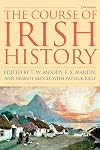
This book bears a certain resemblance to Ireland before the English conquest: A lot of small domains ruled by different people. The editors had created a television series on Irish history, and broke that history up into chapters which they then assigned to different historians.
That sort of approach can result in very choppy books, if the styles of the writers are sufficiently different. Happily, that is not a problem here. Almost all the sections are well-written. There are occasional show more overlaps, but not enough to pose a real problem.
One of the great tests of a history of Ireland is how it handles the problem of the relationship with England. Far too many histories by Irish historians are bitterly anti-English -- understandable, but polemic is not history. English histories tend to skip lightly over the fact that the English did oppress Ireland, and frankly did so very incompetently. The trick is to realize that there was fault on both sides (the English were brutal and stupid; the Irish intransigent and incapable of organization) and to try to see how these faults interacted to produce the sad, sad outcomes of Irish history.
This book does this well. The authors seem to bend over backward to try to see the English side. There is little evidence of anger or prejudice. They should be proud.
And yet, this seems to me to be the most Irish history of Ireland I have ever read. There is very little looking beyond -- little appeal to outsiders studying Irish history, or to those who come from other nations and want to understand how those nations interacted with Ireland. Is that a defect? Hard to say.
There are a few other such quirks. For example, there are several early chapters about the Church in Ireland. Having material on the Church is of course important; the Catholic question, more than anything else, was what made Ireland what it was. And we too often see histories of the United States, e.g., which ignore religious matters for fear of getting excluded from the schools or the like. But the material on the church struck me as rather undigested; it could have been better integrated into the history as a whole.
There were a few more serious defects. I almost went crazy trying to decipher the manuscript photograph on page 42 before I realized that it was upside down. And the one section of the book that strikes me as genuinely weak is that on the decades immediately preceding independence. I couldn't believe how short this section is -- until I checked the index and found only two references to Michael Collins. This is the man who won Irish independence -- and he is almost written out of history. I know that the issue of Collins versus De Valera still provokes arguments in Ireland, but this is absurd.
Also, the section on recent history is too long. It's simply too early to write the history of the years since 2000; we don't have the perspective yet. These chapters will surely have to be revised heavily in future. It was a strange decision to devote so much attention to these years.
But these are quibbles. This is the fifth edition of this book. Histories that last through that many editions usually have something going for them that keeps them in print. This book is no exception. show less
That sort of approach can result in very choppy books, if the styles of the writers are sufficiently different. Happily, that is not a problem here. Almost all the sections are well-written. There are occasional show more overlaps, but not enough to pose a real problem.
One of the great tests of a history of Ireland is how it handles the problem of the relationship with England. Far too many histories by Irish historians are bitterly anti-English -- understandable, but polemic is not history. English histories tend to skip lightly over the fact that the English did oppress Ireland, and frankly did so very incompetently. The trick is to realize that there was fault on both sides (the English were brutal and stupid; the Irish intransigent and incapable of organization) and to try to see how these faults interacted to produce the sad, sad outcomes of Irish history.
This book does this well. The authors seem to bend over backward to try to see the English side. There is little evidence of anger or prejudice. They should be proud.
And yet, this seems to me to be the most Irish history of Ireland I have ever read. There is very little looking beyond -- little appeal to outsiders studying Irish history, or to those who come from other nations and want to understand how those nations interacted with Ireland. Is that a defect? Hard to say.
There are a few other such quirks. For example, there are several early chapters about the Church in Ireland. Having material on the Church is of course important; the Catholic question, more than anything else, was what made Ireland what it was. And we too often see histories of the United States, e.g., which ignore religious matters for fear of getting excluded from the schools or the like. But the material on the church struck me as rather undigested; it could have been better integrated into the history as a whole.
There were a few more serious defects. I almost went crazy trying to decipher the manuscript photograph on page 42 before I realized that it was upside down. And the one section of the book that strikes me as genuinely weak is that on the decades immediately preceding independence. I couldn't believe how short this section is -- until I checked the index and found only two references to Michael Collins. This is the man who won Irish independence -- and he is almost written out of history. I know that the issue of Collins versus De Valera still provokes arguments in Ireland, but this is absurd.
Also, the section on recent history is too long. It's simply too early to write the history of the years since 2000; we don't have the perspective yet. These chapters will surely have to be revised heavily in future. It was a strange decision to devote so much attention to these years.
But these are quibbles. This is the fifth edition of this book. Histories that last through that many editions usually have something going for them that keeps them in print. This book is no exception. show less
 This review was written for LibraryThing Early Reviewers.
True confession time. Mea culpa. I received an ARC of this book as an early reviewer in 2012. I am an avid reader and an avid fan of Ireland. Supposedly written for both the academic and popular market, it came across only as a dry, boring and fusty old textbook. It is/was assigned reading for some college courses on Ireland. It definitely is not pop lit.
Interestingly, this book (the fifth edition) has a grand total of 15 reviews on Amzn - all glowing except one which also seemed the most show more discerning and accurate. Most Irish-Americans can't get enough of good Irish reads. With only 15 reviews, it appears I am not the only member of the pop lit market that is resoundingly uninterested in this text.
There are very few books I DNF. This is one of them. Yet I still have it on my shelves thinking (but not really believing) one day, I shall plow through it. Most likely, it shall just sit there for possible reference if ever needed.
There are 1250 books on Irish History rated on GoodReads. I'd recommend choosing a more reader-friendly text.
Or check out Marianne Elliott, director of the Institute of Irish Studies at Liverpool University and author, who recommends her top ten Irish History books.
Well, better late than never. I have finally eased my Irish - (formerly) Catholic guilt by finally posting this long past due review. show less
Interestingly, this book (the fifth edition) has a grand total of 15 reviews on Amzn - all glowing except one which also seemed the most show more discerning and accurate. Most Irish-Americans can't get enough of good Irish reads. With only 15 reviews, it appears I am not the only member of the pop lit market that is resoundingly uninterested in this text.
There are very few books I DNF. This is one of them. Yet I still have it on my shelves thinking (but not really believing) one day, I shall plow through it. Most likely, it shall just sit there for possible reference if ever needed.
There are 1250 books on Irish History rated on GoodReads. I'd recommend choosing a more reader-friendly text.
Or check out Marianne Elliott, director of the Institute of Irish Studies at Liverpool University and author, who recommends her top ten Irish History books.
Well, better late than never. I have finally eased my Irish - (formerly) Catholic guilt by finally posting this long past due review. show less
This review was written for LibraryThing Early Reviewers.An excellent overview of the history of Ireland. Each chapter was written by a different author, giving many different perspectives on the history of the country. Provides an excellent starting point for gaps of knowledge in history as much could be considered basic. It all depends on what you know about the history of the country. We don't learn a lot about Ireland over here in the States unless we learn it on our own or take elective classes in college. My focus had always been on very show more early Ireland. I really had no idea exactly how confusing the situation with Northern Ireland was after partition. Granted, it really never should have been done, but for those who ended up being moved there, a united Ireland would have put Protestants in a country that lived under Catholic laws in terms of things like divorce and abortion--something I never really thought about and as an American I find the idea of abhorrent. I just always assumed Ireland should be one country, a black and white issue. So this book really opened my eyes. show less
This review was written for LibraryThing Early Reviewers.This is a review of the 2012 5th Edition.
This book has been a classic go-to text for Irish History, which is a strength but also a problem. The new content brings us up to the present in time but the book's ethos remains in the past. The new chapters deal mostly with political events; social history gets short shrift. There are no entries in the index for Women, Homosexuality, or Abortion, all topics that seem worth discussing in any contemporary history. Women are mentioned, but mostly as show more individual political leaders rather than as a broader group. One key women's issue in Ireland, divorce, gets less than a page and then is discussed purely on political grounds; the reader gets no sense for what the social issues behind the push for legalized divorce were.
This might be a good place to start or firm up your knowledge of Irish history, but this is by no means where you should stop. show less
This book has been a classic go-to text for Irish History, which is a strength but also a problem. The new content brings us up to the present in time but the book's ethos remains in the past. The new chapters deal mostly with political events; social history gets short shrift. There are no entries in the index for Women, Homosexuality, or Abortion, all topics that seem worth discussing in any contemporary history. Women are mentioned, but mostly as show more individual political leaders rather than as a broader group. One key women's issue in Ireland, divorce, gets less than a page and then is discussed purely on political grounds; the reader gets no sense for what the social issues behind the push for legalized divorce were.
This might be a good place to start or firm up your knowledge of Irish history, but this is by no means where you should stop. show less
This review was written for LibraryThing Early Reviewers.You May Also Like
Associated Authors
Statistics
- Works
- 27
- Also by
- 3
- Members
- 861
- Popularity
- #29,720
- Rating
- 3.7
- Reviews
- 20
- ISBNs
- 29
- Languages
- 2
