
Jim Starlin
Author of Infinity Gauntlet
About the Author
Series
Works by Jim Starlin
The Thanos Quest- Book One, Schemes and Dreams (Volume 1, Number 1) (1990) — Writer — 33 copies, 2 reviews
Marvel Masterworks, Volume 095: Captain Marvel Volume 3 [#22-33 + The Invincible Iron Man #55] (2007) 24 copies
Gilgamesh II 10 copies
The Infinity Gauntlet, Vol. 1 #4: Cosmic Battle on the Edge of the Universe! (1991) — Author — 10 copies, 1 review
Batman Vol. 1 #424 7 copies
Batman Vol. 1 #418 6 copies
Batman Vol. 1 #421 6 copies
Batman Vol. 1 #415 5 copies
Warlock and the Infinity Watch #2 5 copies
Batman Vol. 1 #417 5 copies
Batman Vol. 1 #414 5 copies
Thanos: The Final Threat #1 4 copies
Thor, Vol. 1, # 460 4 copies
Strange Tales (1951-1968) #179 4 copies
Dreadstar: a odisseia da metamorfose 4 copies
Batman Vol. 1 #425 4 copies
Thor, Vol. 1, # 462 3 copies
Batman: White Gold and Truth 3 copies
Strange Tales (1951-1968) #181 3 copies
La muerte del Capitán Marvel 2 copies
Doctor Strange (1974-1987) #26 — Author — 2 copies
A Saga do Batman # 03 2 copies
A Saga do Batman # 04 2 copies
A Saga do Batman Vol. 7 2 copies
Doctor Strange (1974-1987) #25 — Author — 2 copies
The Life and Death of Captain Marvel Part Two (Marvel Graphic Novel Collection issue 77) (2014) 2 copies, 1 review
'Breed II # 6 2 copies
Silver Surfer [1987] #42 2 copies
Warlock #11 (Death of Warlock) 2 copies
The Life and Death of Captain Marvel Part One (Marvel Graphic Novel Collection issue 73) (2014) 2 copies, 1 review
Strange Adventures [2009] #8 2 copies
Strange Adventures [2009] #5 2 copies
Silver Surfer [1987] #48 2 copies
Spaceknight #4 2 copies
Batman #s 417-420 FIRST EDITION ("Ten Nights of the Beast" Parts 1 through 4, Volume 1) (1987) 1 copy
Order and Outrage #1 1 copy
Stormwatch (2011-2014) #19 1 copy
Stormwatch (2011-2014) #21 1 copy
Stormwatch (2011-2014) #22 1 copy
Stormwatch (2011-2014) #23 1 copy
Stormwatch (2011-2014) #24 1 copy
Stormwatch (2011-2014) #25 1 copy
Stormwatch (2011-2014) #26 1 copy
Stormwatch (2011-2014) #27 1 copy
Stormwatch (2011-2014) #28 1 copy
Stormwatch (2011-2014) #29 1 copy
Stormwatch (2011-2014) #30 1 copy
A Saga do Batman Vol. 8 1 copy
Stormwatch (2011-2014) #20 1 copy
Spaceknights #2 1 copy
'Breed Omnibus 1 copy
Punisher POV Editon #4 1 copy
"Die offizielle Marvel-Comic-Sammlung Ausgabe XXIV: Leben und Tod von Captain Marvel: Teil Eins" 1 copy
"Die offizielle Marvel-Comic-Sammlung Ausgabe XXV: Leben und Tode von Captain Marvel: Teil Zwei" 1 copy
The Shambler From The Stars! 1 copy
Spaceknights #5 1 copy
Dreadstar 50 1 copy
Mănușa Infinitului 1 copy
Krucjata nieskończoności 1 copy
Thanos (2003-2004) #5 1 copy
Thanos (2003-2004) #4 1 copy
Thanos (2003-2004) #3 1 copy
Thanos (2003-2004) #2 1 copy
Wojna nieskończoności 1 copy
Biblioteca superman 08 1 copy
New Gods (1989-1991) #2 1 copy
Strange Adventures [2009] #4 1 copy
Thanos: The Final Threat 1 copy
Strange Adventures [2009] #3 1 copy
Strange Adventures [2009] #2 1 copy
Strange Adventures [2009] #1 1 copy
Thanos the First #1 1 copy
Hardcore Station : Mindgames 1 copy
Las manos de Shang-Chi 1 copy
Warlock Classic 2 1 copy
Thanos Infinity Saga 1 copy
Silver Surfer [1987] #43 1 copy
Batman 4/1989 1 copy
Batman 5/1989 1 copy
Batman 5/1990 1 copy
Batman álbum (2) 1 copy
Batman n. 11 1 copy
Batman n. 10 1 copy
Batman n. 09 1 copy
Batman n. 05 1 copy
Strange Adventures [2009] #7 1 copy
Warlock Issue #1 (Vol 2) 1 copy
Thanos Issue #4 1 copy
Strange Adventures [2009] #6 1 copy
Warlock Classic 1 1 copy
Infinity Abyss #2 (of 6) 1 copy
Infinity Abyss #3 (of 6) 1 copy
Infinity Abyss #4 (of 6) 1 copy
Infinity Abyss #6 (of 6) 1 copy
Infinity Abyss #5 (of 6) 1 copy
Warlock (1972 series) #13 1 copy
Warlock (1972 series) #14 1 copy
Warlock #2 (1992) 1 copy
Infinity Abyss #1 (of 6) 1 copy
Captain Marvel, Vol. 1, #26 1 copy
Docteur Strange 1 copy
Associated Works
Superboy and the Legion of Super-Heroes, Volume Two (2018) — Contributor; Illustrator — 29 copies, 1 review
Killraven Epic Collection: Warrior of the Worlds (2021) — Illustrator; Cover artist, some editions — 20 copies
Werewolf by Night [1972] #35 — Cover artist — 2 copies
Star Reach number 1 1974 — Cover artist, some editions — 2 copies
Marvel Premiere #19 (Iron Fist) — Cover Art — 1 copy
Tagged
Common Knowledge
- Canonical name
- Starlin, Jim
- Legal name
- Starlin, James P.
- Other names
- Apollo, Steve
Minirats, J. L.
Starlin, James
Gemini - Birthdate
- 1949-10-09
- Gender
- male
- Occupations
- inker
penciler - Awards and honors
- Shazam Award (Outstanding New Talent, 1973 )
Haxtur Award (Author That We Loved, 2005) - Relationships
- Graziunas, Daina (Ex-Wife)
- Nationality
- USA
- Birthplace
- Detroit, Michigan, USA
- Places of residence
- Detroit, Michigan, USA (birth)
- Associated Place (for map)
- Detroit, Michigan, USA
Members
Reviews

Whether this book should even exist is pretty debatable: it's supposed to tie into Final Crisis, but like most Final Crisis tie-ins, it would ultimately do so in a way not very consistent with that book. To wit: all the New Gods die here, in front of Superman, but no one seems to know about this when Final Crisis rolls around.
The book has bigger crimes, though, and those are that it takes Jack Kirby's amazing cosmic epic and crams it into a procedural. The Death of the New Gods should be an show more operatic tragedy... instead it's a murder mystery? It's a weird misjudging of genre that transforms something mythic into something ordinary. These characters don't feel like gods, but squabbling aliens from any number of mid-range science fiction television shows. Plus, it's not even a good mystery; ten minutes after reading it, and I couldn't have explained to you what had happened exactly, and the revelation of the "villain" is beyond silly. Jack Kirby knew characters had to be reinvented to keep them vital, but this was not the way to reinvent the New Gods-- and I'm surprised that after his runs on cosmic titles for both Marvel and DC, Jim Starlin couldn't do better than this.
DC Comics Crises: « Previous in sequence | Next in sequence » show less
The book has bigger crimes, though, and those are that it takes Jack Kirby's amazing cosmic epic and crams it into a procedural. The Death of the New Gods should be an show more operatic tragedy... instead it's a murder mystery? It's a weird misjudging of genre that transforms something mythic into something ordinary. These characters don't feel like gods, but squabbling aliens from any number of mid-range science fiction television shows. Plus, it's not even a good mystery; ten minutes after reading it, and I couldn't have explained to you what had happened exactly, and the revelation of the "villain" is beyond silly. Jack Kirby knew characters had to be reinvented to keep them vital, but this was not the way to reinvent the New Gods-- and I'm surprised that after his runs on cosmic titles for both Marvel and DC, Jim Starlin couldn't do better than this.
DC Comics Crises: « Previous in sequence | Next in sequence » show less
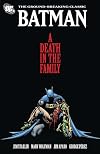
This was such a goofy fever dream of a read.
The inciting event is that the Joker escapes Arkham using cleaning supplies, then to raise funds (his assets were seized and he claims to be a victim of Reganomics), he takes a nuke (that he just happens to have) to the Middle East to sell to terrorists.
Also, at one point, Batman lets one of the costumed bad guys go because “training terrorists is not against the law” in that country.
It was super cool to have fans vote on if Jason Todd were to show more live or die by calling in, and it’s amusing to me that they chose to “team up” with the Joker to get rid of the character.
In the end, the Joker becomes an Iranian ambassador, providing him with diplomatic immunity. Thus, Batman cannot touch the Joker… until after he bombs the U.N. Building in New York. show less
The inciting event is that the Joker escapes Arkham using cleaning supplies, then to raise funds (his assets were seized and he claims to be a victim of Reganomics), he takes a nuke (that he just happens to have) to the Middle East to sell to terrorists.
Also, at one point, Batman lets one of the costumed bad guys go because “training terrorists is not against the law” in that country.
It was super cool to have fans vote on if Jason Todd were to show more live or die by calling in, and it’s amusing to me that they chose to “team up” with the Joker to get rid of the character.
In the end, the Joker becomes an Iranian ambassador, providing him with diplomatic immunity. Thus, Batman cannot touch the Joker… until after he bombs the U.N. Building in New York. show less
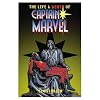
This was a fun revisit. I was never a massive Captain Marvel fan, and I think I was just getting into comics around the time Starlin was doing his run on the series. I remember picking up an issue and kind of being lost, so I didn't really follow up on it.
Reading this now, I realized the issue I'd picked up was the final one. So, there's a fifty year old mystery solved.
I was in time for Starlin's incredible run on Warlock, however, and that still remains one of my favourite comic reading show more experiences ever. I even wrote a high school essay on that run (and got an A+ for it, too!), so, when I saw this collection in a bargain bin in a comic shop, I figured it was time to get my Starlin on again.
I'd read the Death of Captain Marvel when it first came out, but didn't catch a lot of the subtext, despite Starlin's excellent recap at the beginning of that graphic novel. But now, I got the full run, and I enjoyed it immensely.
Yes, it's very obvious that either Starlin was under the influence of some psychedelics as he wrote this series, or was at least acquainted with them, because there's times when it gets quite trippy. Then again, so did Warlock, so it wasn't unexpected. But I appreciated that Starlin was really doing a solid deep dive into not just the Mar-Vell character, but also Rick Jones, and a few other secondary characters.
And the Thanos storyline, while a touch drawn out, was epic and fun.
If I have any complaint about any of the pages of this entire saga, it's the extended, and rather gratuitous fight scene toward the end of the Death of Captain Marvel piece. It was unnecessary, and it messed with both the emotion and the pacing.
But, take out those four or five pages, and this is just a great run. show less
Reading this now, I realized the issue I'd picked up was the final one. So, there's a fifty year old mystery solved.
I was in time for Starlin's incredible run on Warlock, however, and that still remains one of my favourite comic reading show more experiences ever. I even wrote a high school essay on that run (and got an A+ for it, too!), so, when I saw this collection in a bargain bin in a comic shop, I figured it was time to get my Starlin on again.
I'd read the Death of Captain Marvel when it first came out, but didn't catch a lot of the subtext, despite Starlin's excellent recap at the beginning of that graphic novel. But now, I got the full run, and I enjoyed it immensely.
Yes, it's very obvious that either Starlin was under the influence of some psychedelics as he wrote this series, or was at least acquainted with them, because there's times when it gets quite trippy. Then again, so did Warlock, so it wasn't unexpected. But I appreciated that Starlin was really doing a solid deep dive into not just the Mar-Vell character, but also Rick Jones, and a few other secondary characters.
And the Thanos storyline, while a touch drawn out, was epic and fun.
If I have any complaint about any of the pages of this entire saga, it's the extended, and rather gratuitous fight scene toward the end of the Death of Captain Marvel piece. It was unnecessary, and it messed with both the emotion and the pacing.
But, take out those four or five pages, and this is just a great run. show less

Access a version of the below that includes illustrations on my blog.
This is my last Jason Todd story prior to his death. The Cult concerns the rise of a charismatic speaker in Gotham City, who organizes the underclass and seals the city off from the outside world; large parts of this plot were adapted for the film The Dark Knight Rises, though instead of Batman being gone while this happens, Batman is being broken. Not physically, but emotionally. The book opens with Batman already captured show more by Deacon Blackfire and his cult, and the brainwashing well underway.
What makes this book works so well is Bernie Wrightson. I primarily know Wrightson from his contributions to DC horror comics like The House of Mystery, The House of Secrets, and The Witching Hour!, and The Cult puts him to good use depicting the existential horror that is Batman's mental breakdown, as well as the collapse of all Gotham society. His Batman is a devastated man, and despite the fact that a cowl covers half his face, his Batman communicates the anguish he is experiencing quite well. Panel transitions are used quite well, too, to show how Batman is flickering back and forth between different mental states: we'll jump between the world-as-it-is and the world-as-Batman-sees-it quite rapidly, showing his struggle. Wrightson's art (especially aided by colorist Bill Wray) is grotesque when it needs to be. I hate to complain about someone with the skills of Jim Aparo, but Wrightson is clearly a much better match for Jim Starlin's Batman sensibilities, and it's a shame there's not much more Batman work from him.
This is one of those books that succeeds if it makes you feel the struggle of its protagonist, and this one does: not just in Batman's travails, but in those of Robin, Jim Gordon, and the city of Gotham itself. Jason Todd acquits himself really well here, refusing to give up even when Batman himself has given up. The only thing one might wish for is a little more sympathy, given that Robin himself was once a homeless street kids like many that Deacon Blackfire brings into his army. (Like The Dark Knight Rises, The Cult posits armed insurrection as a disproportionate response to a very real problem.) Gordon is the same as always: the hard, dedicated cop, and it shocks when he's attacked, even though intellectually you know they can't kill him off here. And finally, Starlin and Wrightson use Miller-esque television broadcasts to good effect to show the deterioration of Gotham society.
Of everything I've read, The Cult reads the most like a mission statement for Jim Starlin's Batman. It's an excellent read of what it would take for you to break Batman-- and how Batman will always break you right back.
Batman "Year One" Stories: « Previous in sequence | Next in sequence » show less
This is my last Jason Todd story prior to his death. The Cult concerns the rise of a charismatic speaker in Gotham City, who organizes the underclass and seals the city off from the outside world; large parts of this plot were adapted for the film The Dark Knight Rises, though instead of Batman being gone while this happens, Batman is being broken. Not physically, but emotionally. The book opens with Batman already captured show more by Deacon Blackfire and his cult, and the brainwashing well underway.
What makes this book works so well is Bernie Wrightson. I primarily know Wrightson from his contributions to DC horror comics like The House of Mystery, The House of Secrets, and The Witching Hour!, and The Cult puts him to good use depicting the existential horror that is Batman's mental breakdown, as well as the collapse of all Gotham society. His Batman is a devastated man, and despite the fact that a cowl covers half his face, his Batman communicates the anguish he is experiencing quite well. Panel transitions are used quite well, too, to show how Batman is flickering back and forth between different mental states: we'll jump between the world-as-it-is and the world-as-Batman-sees-it quite rapidly, showing his struggle. Wrightson's art (especially aided by colorist Bill Wray) is grotesque when it needs to be. I hate to complain about someone with the skills of Jim Aparo, but Wrightson is clearly a much better match for Jim Starlin's Batman sensibilities, and it's a shame there's not much more Batman work from him.
This is one of those books that succeeds if it makes you feel the struggle of its protagonist, and this one does: not just in Batman's travails, but in those of Robin, Jim Gordon, and the city of Gotham itself. Jason Todd acquits himself really well here, refusing to give up even when Batman himself has given up. The only thing one might wish for is a little more sympathy, given that Robin himself was once a homeless street kids like many that Deacon Blackfire brings into his army. (Like The Dark Knight Rises, The Cult posits armed insurrection as a disproportionate response to a very real problem.) Gordon is the same as always: the hard, dedicated cop, and it shocks when he's attacked, even though intellectually you know they can't kill him off here. And finally, Starlin and Wrightson use Miller-esque television broadcasts to good effect to show the deterioration of Gotham society.
Of everything I've read, The Cult reads the most like a mission statement for Jim Starlin's Batman. It's an excellent read of what it would take for you to break Batman-- and how Batman will always break you right back.
Batman "Year One" Stories: « Previous in sequence | Next in sequence » show less
Lists
Awards


You May Also Like


Associated Authors
Statistics
- Works
- 532
- Also by
- 40
- Members
- 6,422
- Popularity
- #3,833
- Rating
- 3.6
- Reviews
- 154
- ISBNs
- 350
- Languages
- 13
- Favorited
- 5
